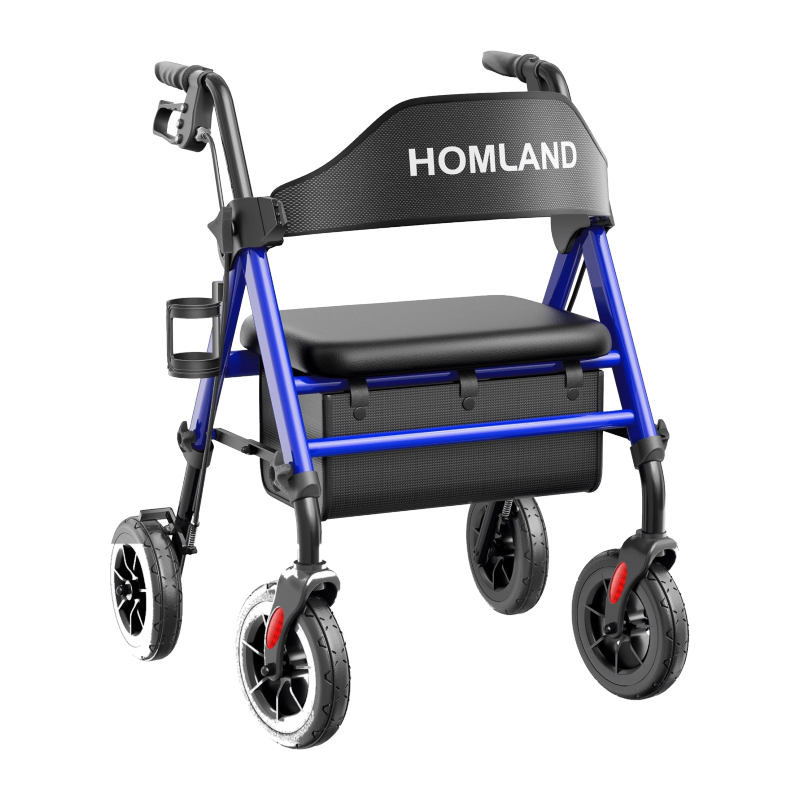
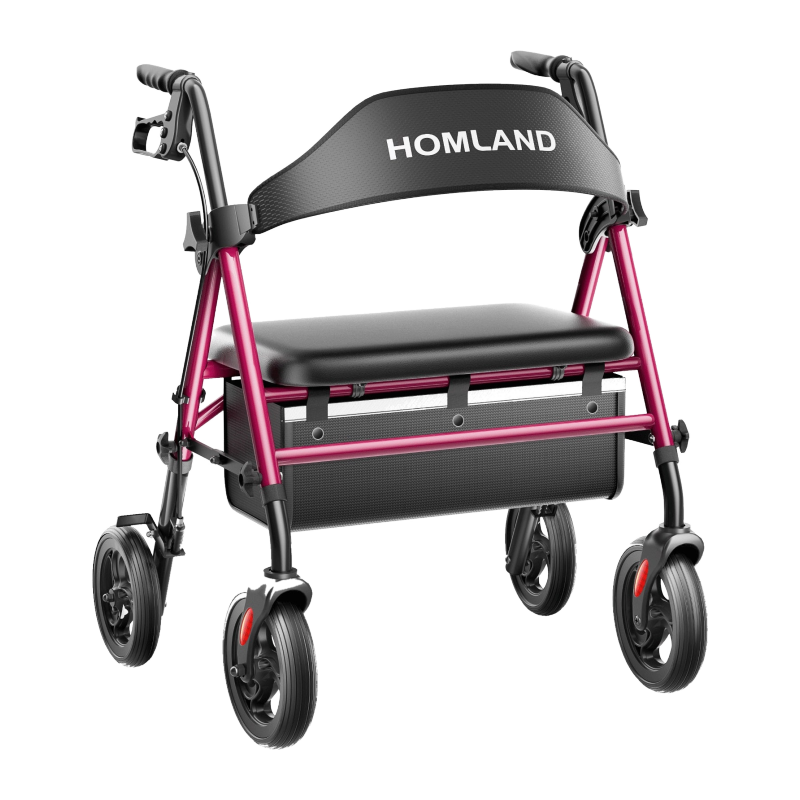
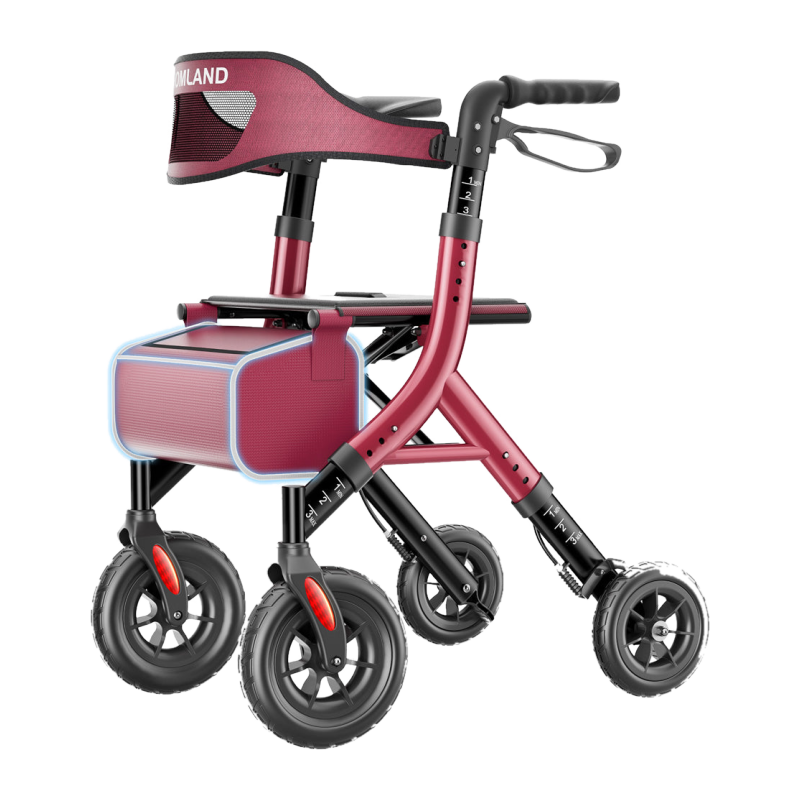
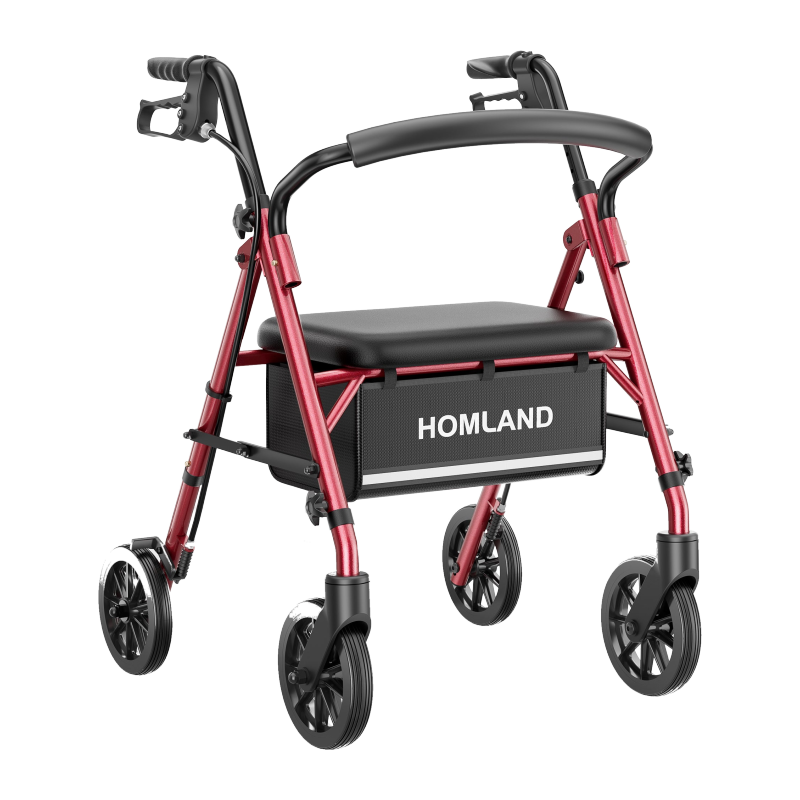


Finding the right rollator walker is already an important decision. When you or someone you love needs a bariatric model — one built to support a larger frame with the same confidence and dignity as any other mobility aid — the stakes feel even higher. The good news is that today's bariatric rollator walkers are thoughtfully engineered for real life at home, not just for hallways in a care facility. Whether you're recovering from surgery, managing a chronic condition, or simply want the freedom to move through your day without worry, this guide walks you through everything that matters: weight capacity, frame width, braking systems, comfort features, and how to match the right walker to your specific needs.
What Makes a Rollator 'Bariatric'?
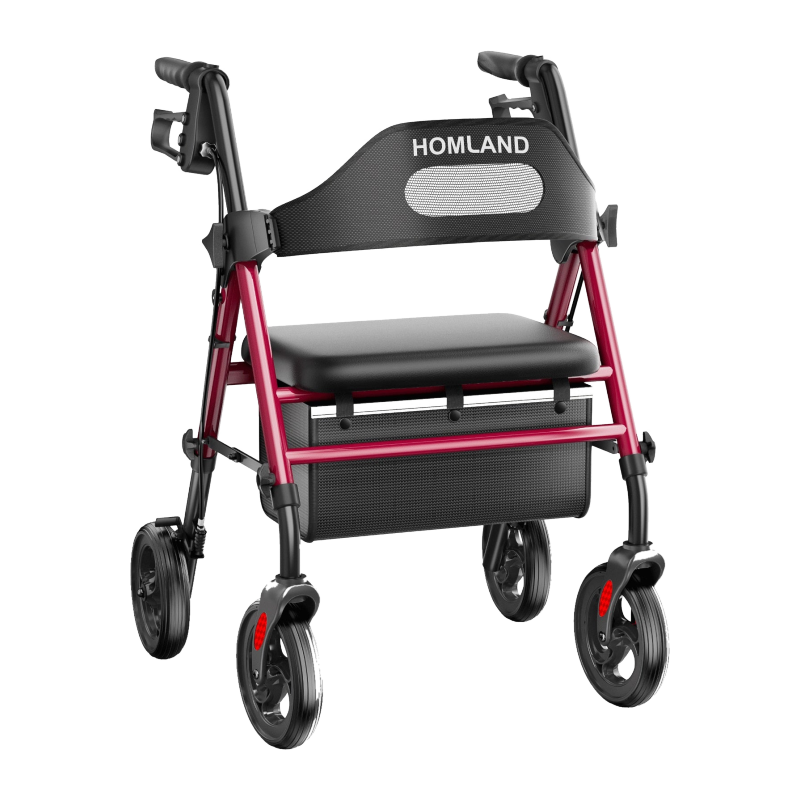
The word "bariatric" in the mobility world simply means the product is engineered to safely support higher weight capacities — typically starting at 350 lbs and often reaching 500 lbs or more on heavy-duty models. But a higher weight rating is only the beginning. A true bariatric rollator walker differs from a standard model in several meaningful ways: a wider, reinforced steel or heavy-gauge aluminum frame; broader wheels for greater ground contact and stability; a wider seat and handles spaced further apart; and braking systems rated for the additional load.
Think of it this way — a standard rollator is engineered around an average frame, much like a standard kitchen chair. A bariatric rollator is re-engineered from the ground up so that every joint, weld, and component handles real-world use at higher weights without flexing, wobbling, or wearing out prematurely. Physical therapists often emphasize that using a walker rated too low for your body weight is not just uncomfortable — it's genuinely unsafe. Getting the right fit is a matter of both safety and confidence.
Who Benefits from a Bariatric Rollator Walker?
Bariatric rollators are not exclusively for people who have undergone weight-related procedures. Anyone whose weight exceeds the capacity of a standard rollator (usually 250–300 lbs) can benefit, including people recovering from joint replacement surgery, individuals managing conditions like arthritis or peripheral neuropathy, and older adults who simply need a more robust walking aid. If you're a caregiver choosing a walker for a parent or family member, this is a key specification to verify before you buy — not something to estimate.
Adults in the bariatric weight range often find that standard walkers feel unstable or narrow, making them reluctant to use the aid consistently. That inconsistent use is where falls happen. A bariatric rollator that fits properly — wide enough seat, handles at the right height, brakes that grip firmly — removes that hesitation and encourages daily, confident use. Independence at home becomes a realistic, everyday reality rather than something that depends on having a helper nearby.
Key Features to Look For
Not all bariatric rollators are equal, and the difference between a good one and a great one often comes down to a handful of engineering details. Here are the features that matter most:
Weight Capacity
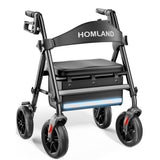
Always check the manufacturer's stated weight capacity — and give yourself a comfortable margin above your current weight. A rollator rated at exactly your weight may technically meet the spec but leaves no room for safety. Models rated at 400 lbs or 500 lbs provide a reassuring buffer. HOMLAND's heavy-duty rolling walkers support up to 500 lbs on select models, giving users genuine confidence rather than guesswork.
Frame Material and Build Quality
Heavy-duty steel frames are the most common choice for bariatric rollators because steel handles higher load stresses without flexing. Some premium models use reinforced aluminum, which keeps weight down while maintaining structural integrity. Look for welded joints rather than bolt-together connections at high-stress points — a well-welded frame will outlast a fastener-dependent one over years of daily use. A solid frame is the foundation of everything else.
Handle Height Adjustability
Handle height is one of the most overlooked specifications. Handles set too low cause you to hunch forward, which strains your back and actually reduces stability. Handles set too high make the walker feel tippy. Physical therapists typically recommend handle height that keeps your elbows at a slight, comfortable bend — roughly 15 to 20 degrees. Look for models with a wide range of tool-free height adjustments so the fit is genuinely yours, not a compromise.
Seat Width and Depth
A bariatric rollator's built-in seat should be wide enough to sit on comfortably without feeling perched at the edge. Measure from hip to hip and look for seats that offer at least two to four inches more than that measurement. A seat that's too narrow is not just uncomfortable — it discourages rest breaks, which are important for anyone building strength and endurance after a procedure or health event.
Wheel Size and Type
Larger wheels — typically 7 to 10 inches in diameter — roll more smoothly over door thresholds, area rugs, and uneven surfaces. They're especially valuable if you move between indoor and outdoor environments. Smaller wheels are more compact but can catch on common household obstacles. For bariatric users who put more downward pressure on the frame, a slightly larger wheel diameter also improves overall rolling stability.
Frame Width and Maneuverability at Home
Here's a detail that surprises many buyers: a wider frame doesn't automatically mean a harder-to-use rollator. But it does mean you need to check your home's doorway widths before purchasing. Standard interior doorways in U.S. homes are typically 28 to 32 inches wide. Bariatric rollators tend to have frames that are 25 to 30 inches wide, so measuring your narrowest hallway or bathroom doorway before ordering is genuinely important — not just a suggestion.
If you live in an older home with narrower doorways, look for a bariatric model with a folding frame that compresses to a slimmer width for passage, then opens to its full stable stance for walking. Many modern designs fold down to 11 or 12 inches, making them manageable in tighter spaces and easy to store when not in use. The goal is a rollator that feels at home in your home — not one that creates new obstacles.
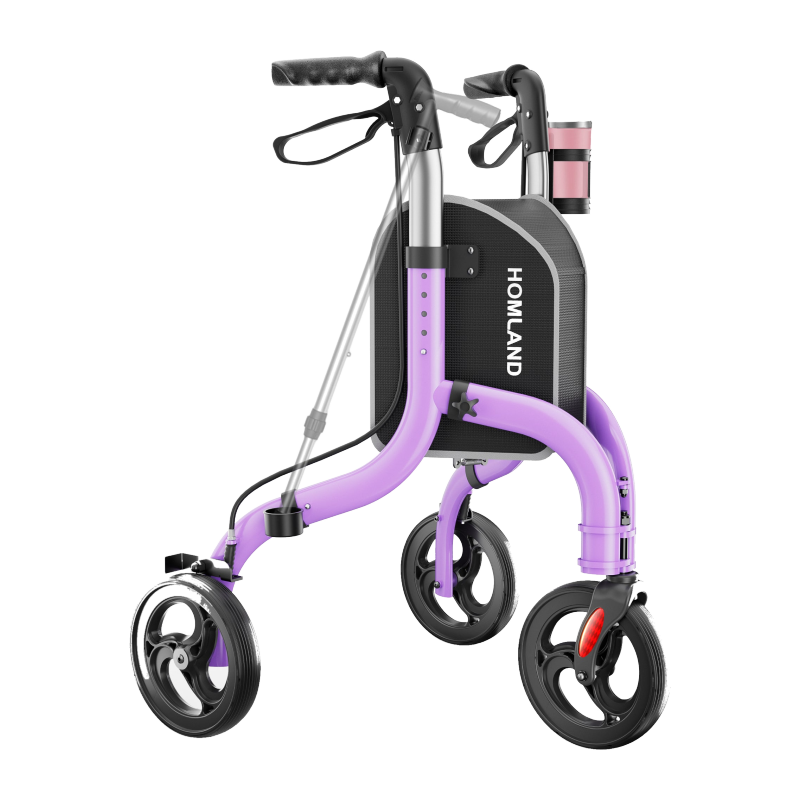
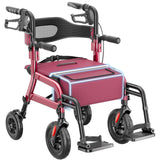
For a full range of rolling walkers designed with home use in mind, explore HOMLAND's Rolling Walkers Collection, which includes 3-wheel, 4-wheel, upright, and bariatric models engineered for real-world home environments.
Brakes, Stability, and Safety
Brakes on a bariatric rollator do more work than on a standard model — they need to hold more weight, especially when you're lowering yourself onto the seat or rising from it. Look for loop-style hand brakes (sometimes called loop locks) that can be pushed forward to slow movement or pushed down to lock in place. This locking function is critical for sitting and standing: you park the rollator, lock the brakes, and then move with both hands on the handles while the walker stays firmly in place.
Test the brake tension before committing to any model. Brakes that require significant hand strength to engage can be frustrating or even impossible for users with arthritis or limited grip. Quality bariatric rollators feature adjustable brake tension so you can set the resistance to match your hand strength — a detail that makes a meaningful difference day to day. If you're shopping for a parent or family member with reduced grip strength, this is worth verifying in product descriptions or reviews.
Comfort Add-Ons That Actually Matter
Beyond the structural essentials, a few comfort features can transform a bariatric rollator from merely functional to genuinely enjoyable to use every day:
- Padded seat: A foam or contoured seat makes rest breaks genuinely restful rather than something to endure. If you spend time sitting — reading mail, chatting with a neighbor, resting during a longer walk — seat padding matters.
- Backrest: A fold-down backrest provides lumbar support when seated and keeps the rollator's profile slim when you're walking. Not all bariatric models include one, so check the product listing explicitly.
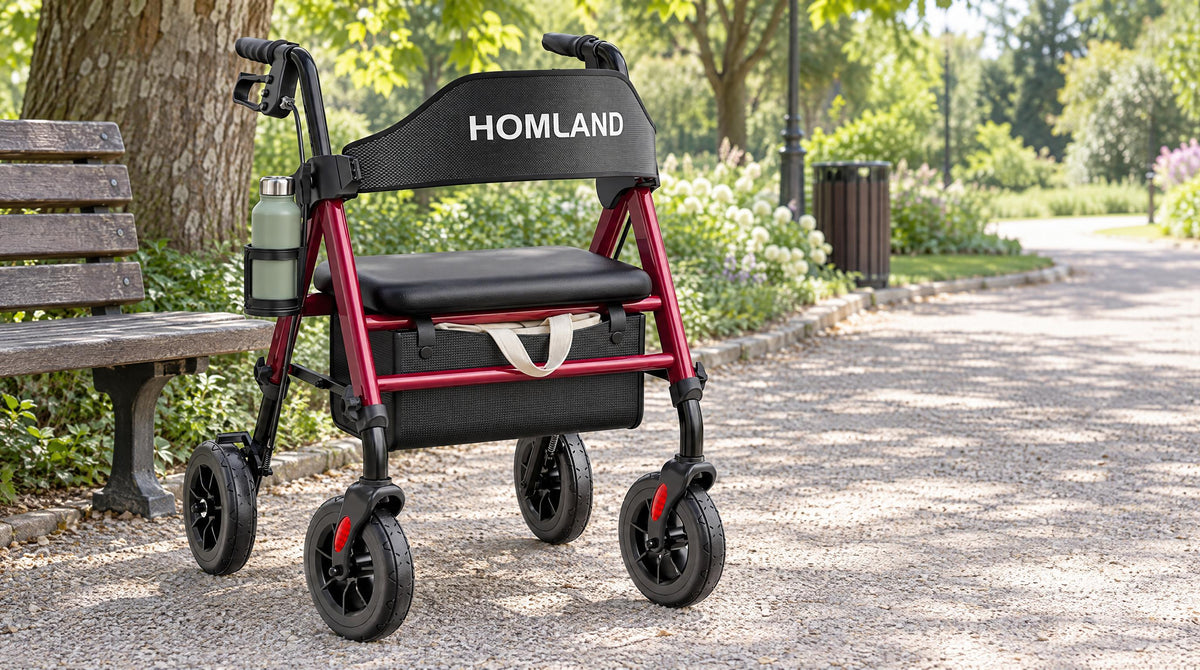
- Storage pouch or basket: Carrying a water bottle, phone, or small grocery items without a bag frees your hands and keeps them on the handles where they belong. An under-seat pouch is the most common design; some models offer a front wire basket for easier access.
- Ergonomic handle grips: Foam or contoured rubber grips reduce hand fatigue during extended use and are easier to hold for users with reduced dexterity.
- Reflective accents: Small but meaningful for anyone who moves through dimmer spaces — early mornings, evening hallways, or low-light outdoor walks.
None of these comfort features make the rollator softer in a structural sense — they make it more usable, which means it actually gets used. A rollator sitting in the corner because it's uncomfortable is no safer than no rollator at all.
FSA/HSA Eligibility, Warranty, and Delivery
Bariatric rollator walkers are eligible for purchase with FSA (Flexible Spending Account) and HSA (Health Savings Account) funds, making them more affordable than many buyers realize. If you have either account through your employer or insurance plan, this is a straightforward way to reduce out-of-pocket costs for a medically useful product.
HOMLAND's rolling walkers are FSA/HSA eligible and backed by a 1-year manufacturer warranty plus a 1-year extended warranty — two full years of coverage from a brand with 20+ years of manufacturing experience. Products ship from a US local warehouse, which means fast delivery without the long waits that can make post-surgery recovery more stressful. When you or a family member needs a walker, waiting three weeks for shipping isn't an option.
For caregivers making this purchase on behalf of a parent or partner: the warranty and local warehouse support also mean that if something needs to be addressed after the sale, you're dealing with a team that's easy to reach — not a distant supplier with a complicated return policy.
How to Choose the Right One for You
With all these factors in mind, here's a practical decision framework to help you narrow down your choice:
- Start with weight capacity. Choose a model rated at least 50 lbs above your current weight. Never operate any mobility aid at or near its stated maximum.
- Measure your doorways. Note the width of your narrowest doorway and your bathroom entrance. Subtract about two inches from that measurement and ensure your rollator's frame width fits comfortably within that number.
- Match handle height to your body. Stand upright and let your arms hang naturally — your handles should meet your wrists. Prioritize models with a wide height adjustment range and tool-free adjustment so setup is genuinely easy.
- Consider where you'll use it most. Primarily indoors on smooth floors? A more compact frame with smaller wheels is fine. Mix of indoor and outdoor use? Look for larger wheels (8 inches or more) and a frame that handles mild uneven terrain.
- Check the seat if you plan to sit. If rest breaks are important to you — and they should be during recovery — sit in (or carefully review the dimensions of) the seat before committing. Width and padding both matter.
- Verify brake adjustability. If grip strength is a concern, look for models with adjustable brake tension explicitly mentioned in the product description.
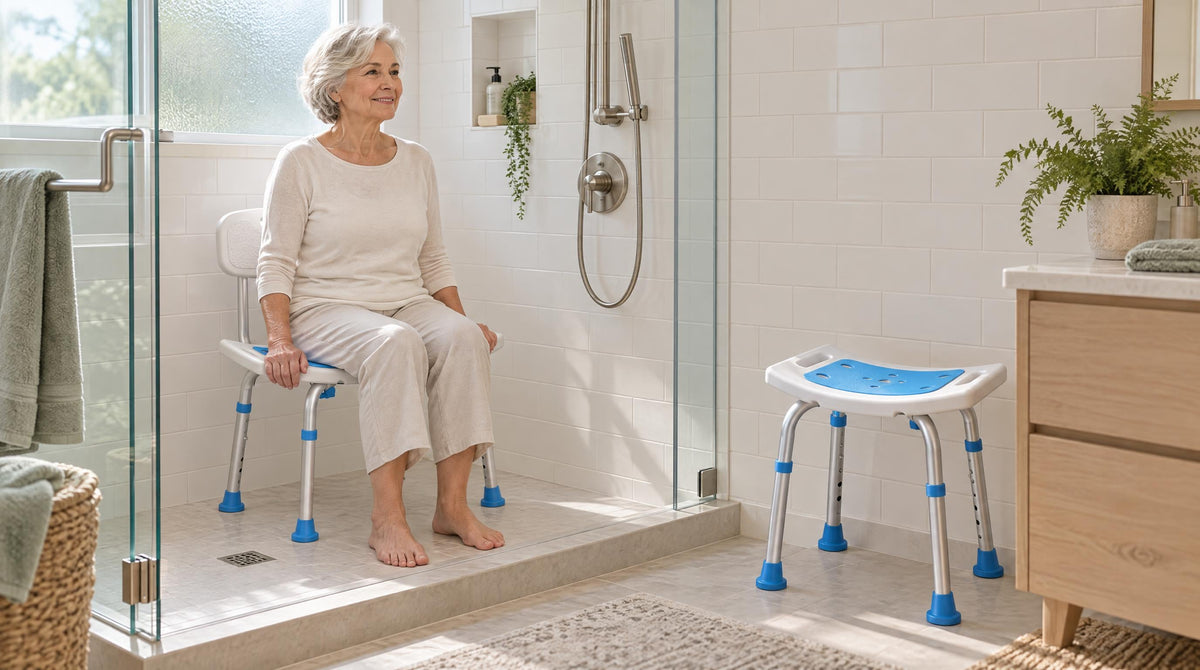
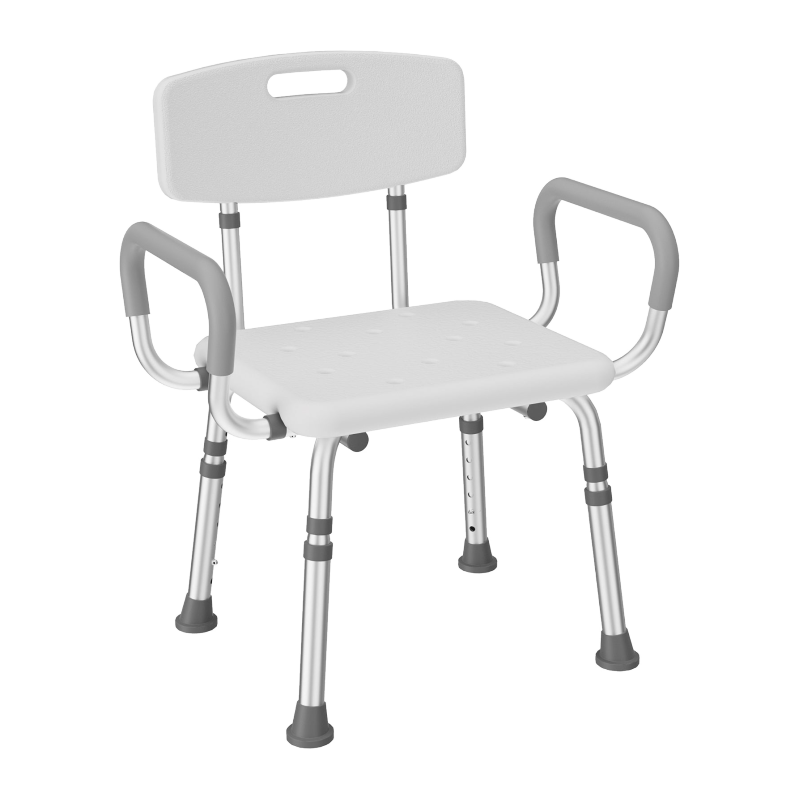
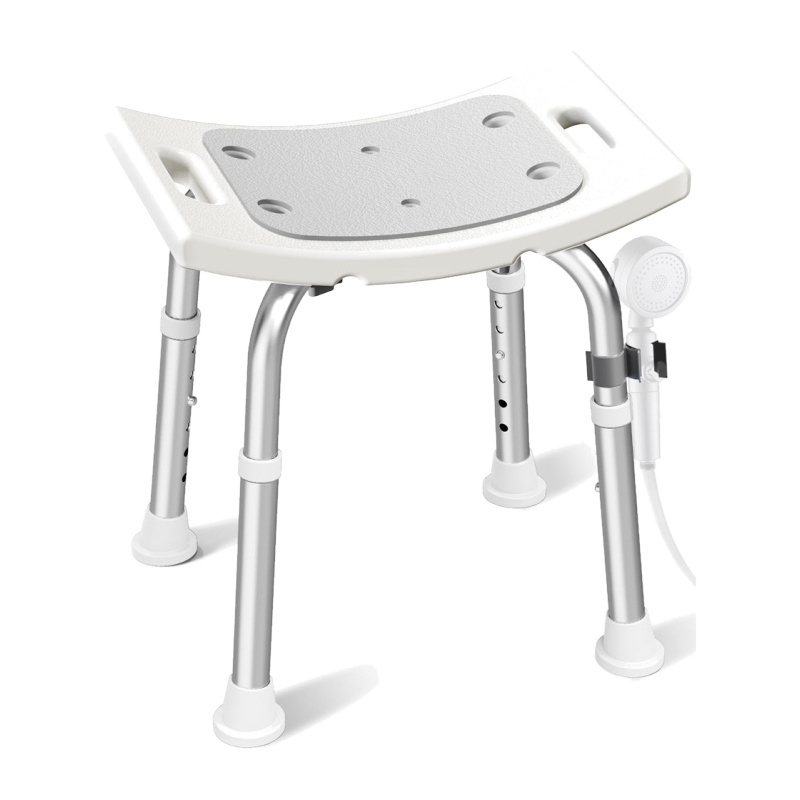
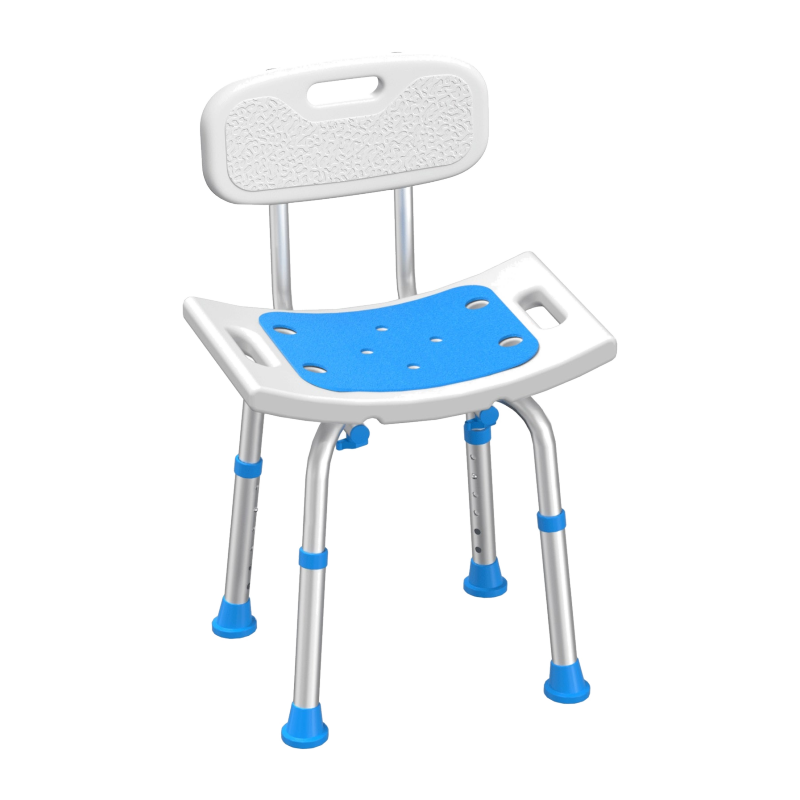
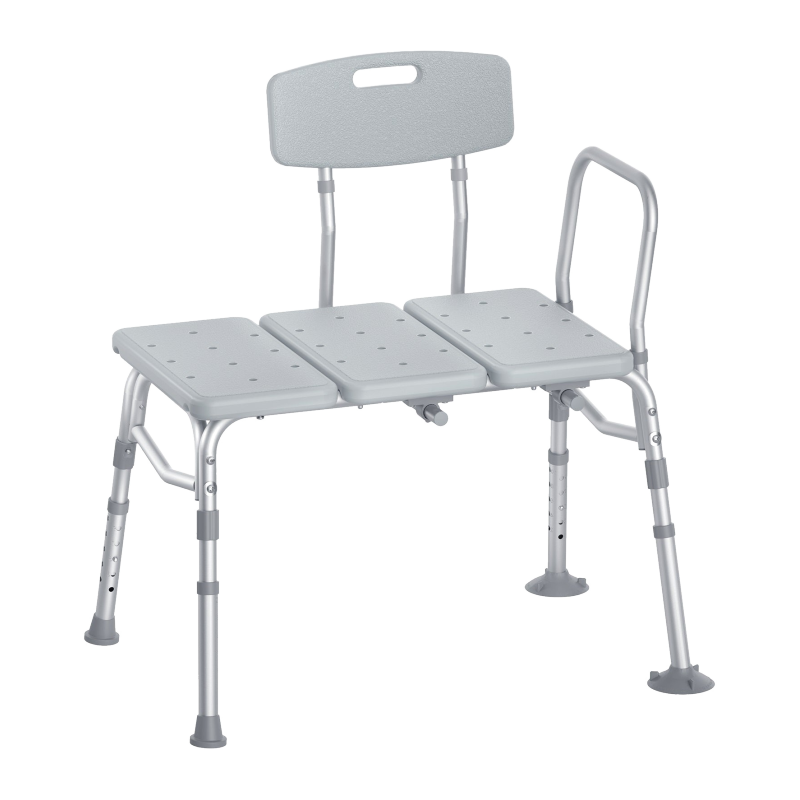
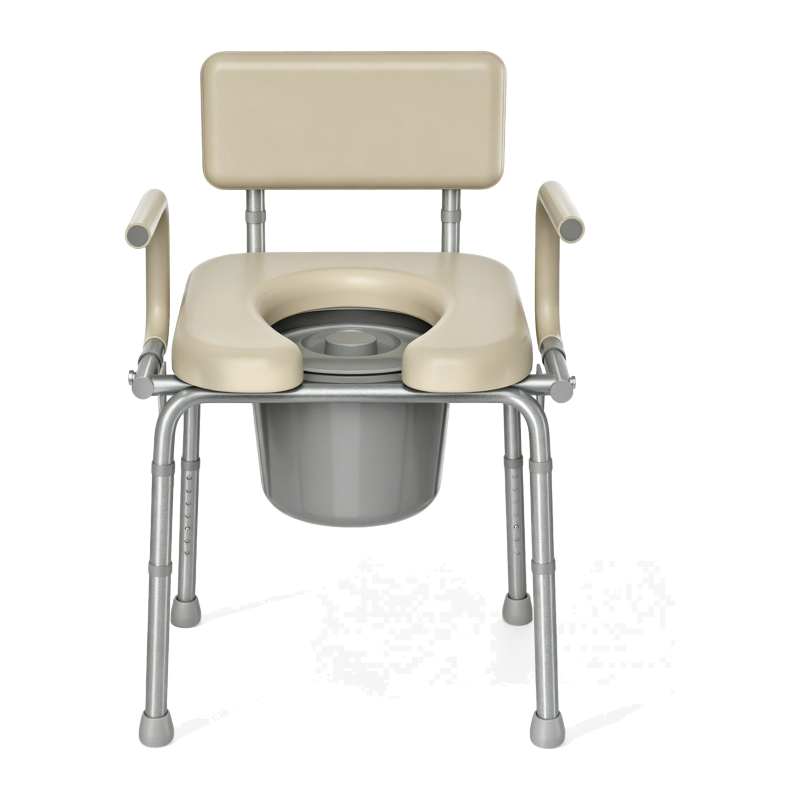
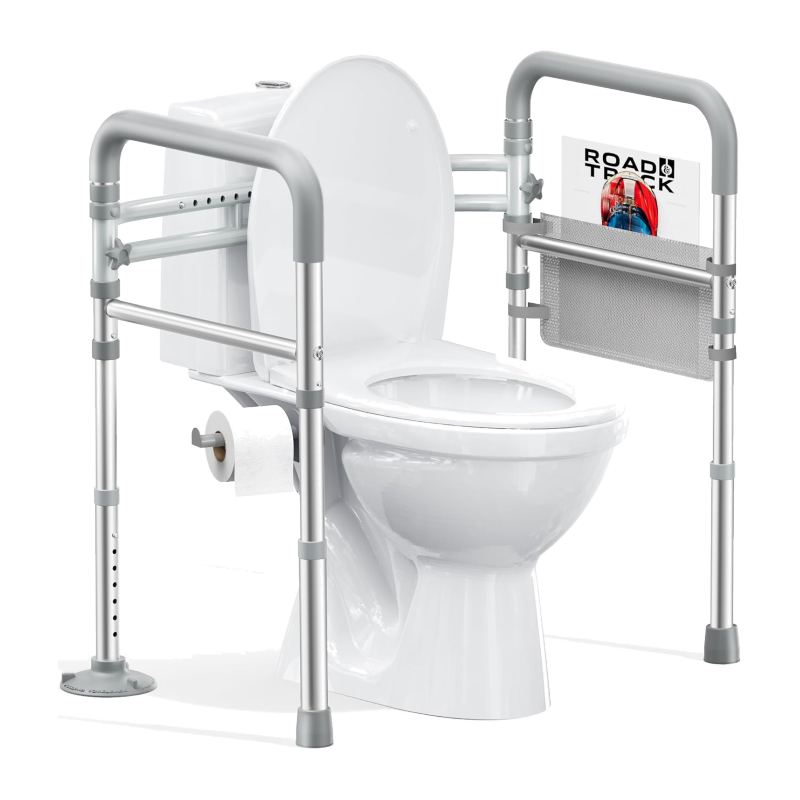
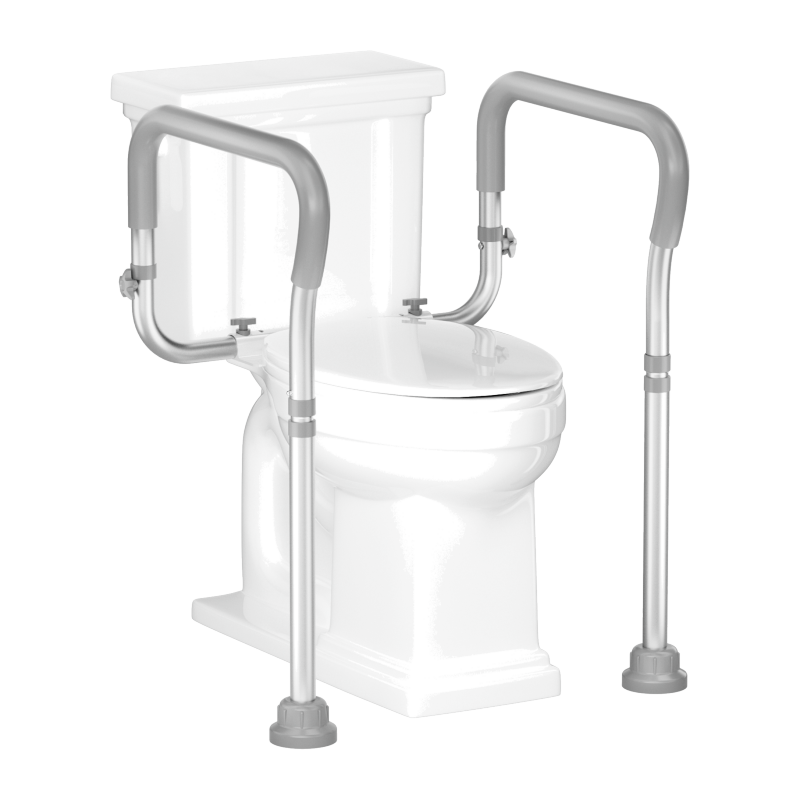
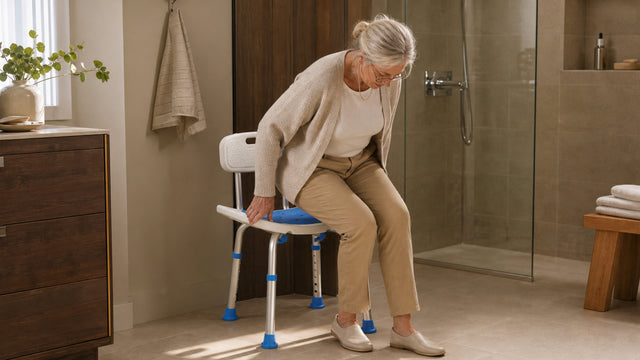
If you're also considering other mobility aids or bathroom safety products during recovery, it's worth exploring HOMLAND's full lineup — including shower chairs, rolling walkers, and standard walkers — all designed with the same home-first philosophy and endorsed by licensed Doctors of Physical Therapy.
Frequently Asked Questions
What is the weight limit on a bariatric rollator walker?
Most bariatric rollators support between 350 lbs and 500 lbs. Standard rollators typically max out at 250 to 300 lbs. Always choose a model with a rated capacity comfortably above your body weight — never at or near the stated limit — to ensure long-term structural integrity and safety.
Is a bariatric rollator covered by insurance or FSA/HSA?
Bariatric rollator walkers are FSA/HSA eligible as qualifying medical expenses. Coverage through Medicare or private insurance varies and typically requires a prescription from a physician. Check with your plan directly, and keep purchase receipts for FSA/HSA reimbursement.
How is a bariatric rollator different from a standard rollator?
A bariatric rollator features a reinforced frame, heavier-gauge materials, wider seat, broader handle spacing, and a braking system rated for higher loads. It is re-engineered throughout — not simply a larger version of a standard model.
Can I use a bariatric rollator outdoors?
Yes. Models with larger wheels — 8 inches or more — handle sidewalks, gentle inclines, and uneven surfaces well. For primarily outdoor use, look for all-terrain or large-wheel bariatric rollators. For indoor-only use, a more compact wheel size is usually sufficient.
Do I need a doctor's recommendation to buy a bariatric rollator?
No prescription is required for direct purchase. However, physical therapists often recommend specific features based on your individual gait and recovery needs, so consulting one before purchasing can help you get the best fit. HOMLAND's products are authorized by licensed Doctors of Physical Therapy, which reflects that same commitment to informed, appropriate use.
The Bottom Line
A bariatric rollator walker isn't just a mobility aid — it's a daily companion that supports your freedom to move through your home, your neighborhood, and your life on your own terms. The right one feels stable and natural from the first step, fits your body properly, and earns your trust quickly. The wrong one gets parked in a corner and forgotten. Getting the fit right — weight capacity, frame width, handle height, brake adjustability, and seat comfort — is what separates a rollator you use confidently every day from one that falls short of what you need.
Whether you're making this purchase for yourself or for someone you love, use the checklist in this guide as your starting point. And remember: FSA/HSA funds can make the cost more manageable, a strong warranty protects your investment, and fast shipping from a US warehouse means you won't be waiting when mobility matters most. Explore HOMLAND's full range of rolling walkers and all mobility products to find the right fit — because everyone deserves to feel at home in their own life.
Still have questions? We're here to help.
Our team understands that choosing the right mobility aid is personal. If you're unsure which bariatric rollator is the best fit for your situation, reach out — we're happy to help you find the right solution for your home and your needs.
Contact Us