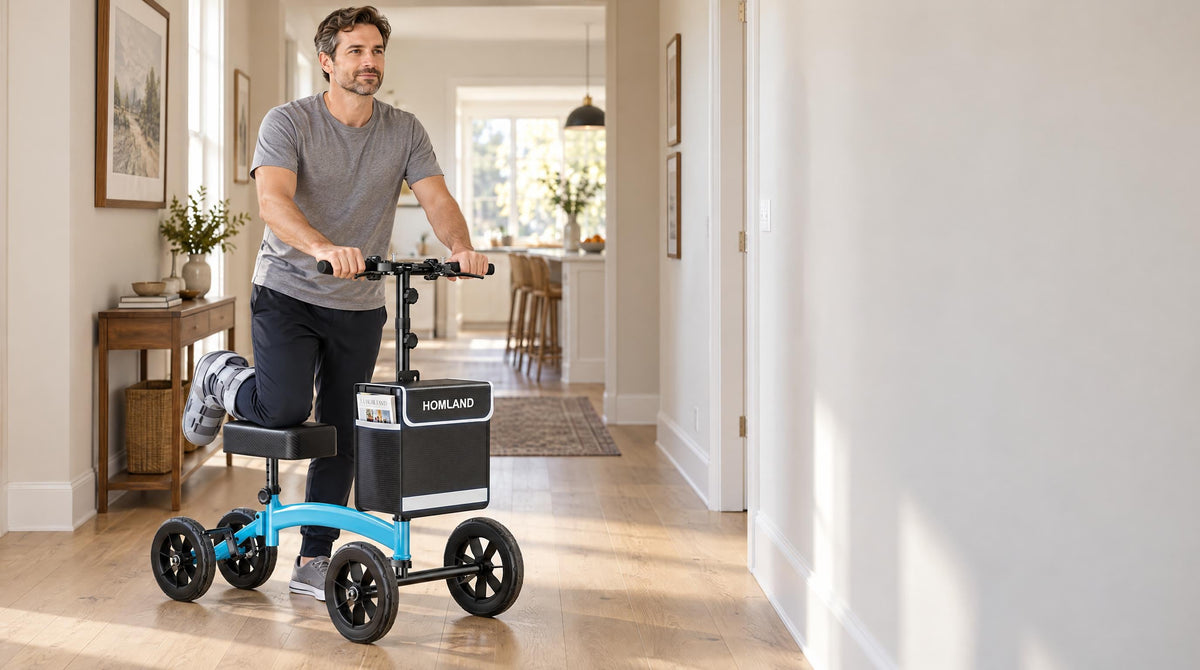



There's a moment most of us recognize — a loved one hesitating at the top of the stairs, or a friend who used to power-walk through the neighborhood now moving a little more cautiously. Regaining confidence on your feet doesn't have to mean giving up independence. A rollator is one of the most effective tools for doing exactly that: staying mobile, staying active, and staying at home on your own terms.
But with so many options on the market — different wheel counts, frame styles, weight capacities, and accessories — it can be hard to know where to start. This guide breaks it all down in plain language. Whether you're shopping for yourself after a surgery or recovery, or helping a parent find something that actually fits their lifestyle, you'll come away knowing exactly what a rollator is, how the major types compare, which features matter most, and how to make the right call for your situation.
HOMLAND's rolling walkers are authorized by licensed Doctors of Physical Therapy (DPT), FSA/HSA eligible, and backed by a 1-year manufacturer warranty plus 1-year extended warranty — with US local warehouse stock for fast delivery. Now, let's dig into everything you need to know.
What Is a Rollator?
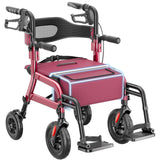
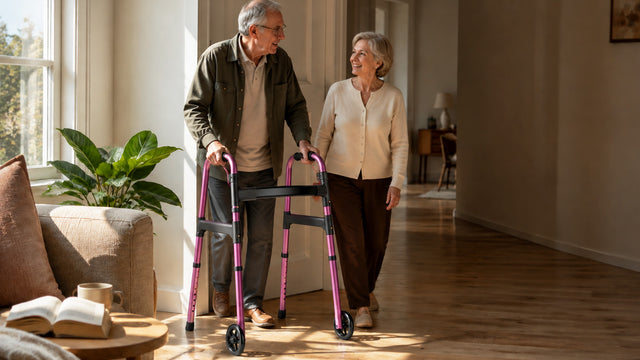
A rollator is a wheeled walking frame designed to support people who need help with balance, stability, or endurance while walking. Unlike a traditional walker that you lift with every step, a rollator glides forward on wheels — so you push it ahead of you and walk naturally beside it. Most rollators also come with a padded seat and a hand brake system, which means you can stop safely whenever you need a rest without looking for a chair.
Physical therapists often recommend rollators for people recovering from hip or knee surgery, those managing conditions like Parkinson's disease, COPD, or arthritis, and anyone whose balance or stamina has changed over time. The goal isn't to signal that something is wrong — it's to make sure you can keep doing the things you love, whether that's a walk around the block, a trip to the farmers' market, or just getting from the kitchen to the living room without worrying about a fall.
Rollator vs. Standard Walker: What's the Difference?
The simplest way to think about it: a standard walker is stationary until you pick it up, while a rollator moves with you. With a standard walker, you lift the frame, place it ahead, and then step forward — a deliberate, two-stage motion that provides maximum stability for people who need to put significant weight through the device. If you need very firm support or are early in a recovery where weight-bearing is limited, a standard walker is often the better starting point.
A rollator, on the other hand, promotes a more fluid, natural gait. Because it rolls, you don't have to interrupt your stride to reposition it, which reduces fatigue on longer walks and keeps your movement pattern closer to how you'd walk without any aid. The trade-off is that rollators require you to manage the hand brakes — you squeeze them to slow or stop — so there's a small learning curve. Most people pick it up within a few minutes of practice.
HOMLAND carries both standard walkers and rolling walkers, so if you're not sure which category fits your needs, you can compare both in one place — or reach out to the team for guidance.
Types of Rollators
Rollators aren't one-size-fits-all. The right type depends on where you'll use it most, how much support you need, and your physical build. Here are the four main categories you'll encounter:
3-Wheel Rollators
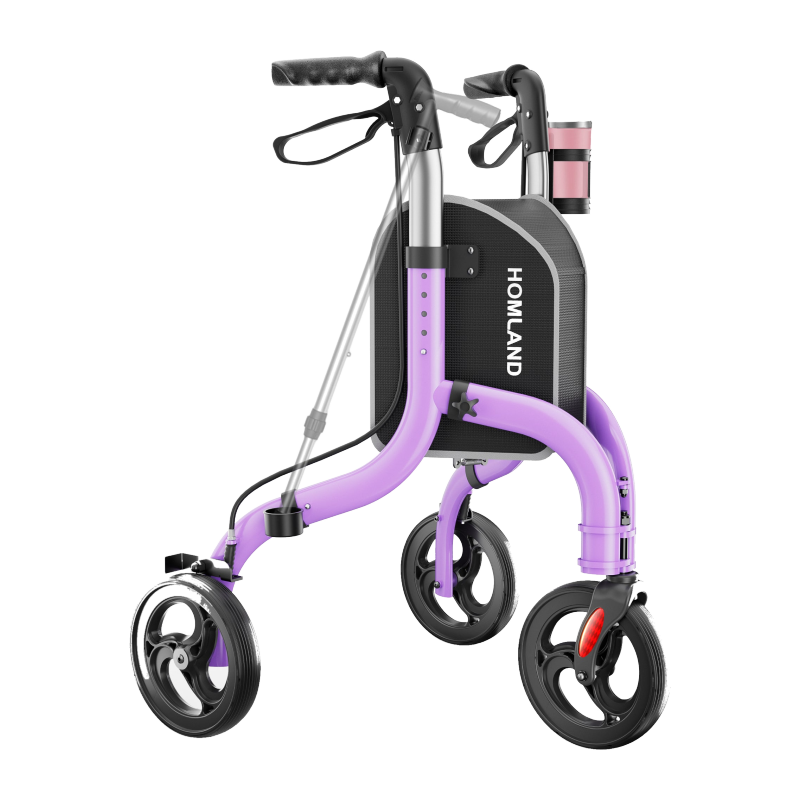
Three-wheel rollators have a single front wheel and two rear wheels arranged in a triangular configuration. They're lighter and more maneuverable than four-wheel models, which makes them a popular choice for indoor use, navigating tight hallways, or anyone who travels frequently and wants something compact. The trade-off is that they don't have a built-in seat, so if resting mid-walk is important to you, a four-wheel model is likely the better fit.
4-Wheel Rollators
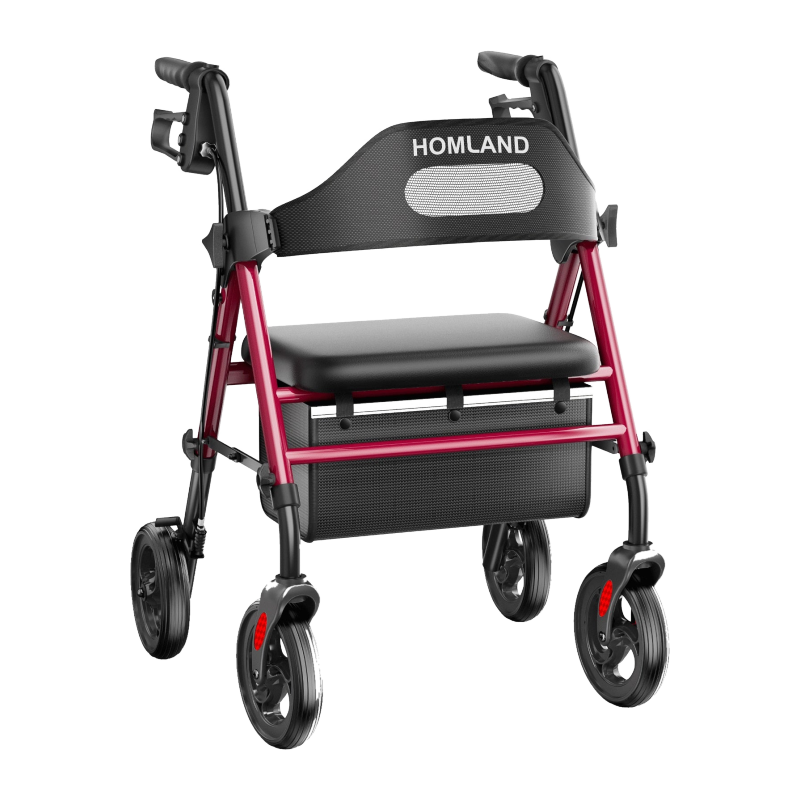
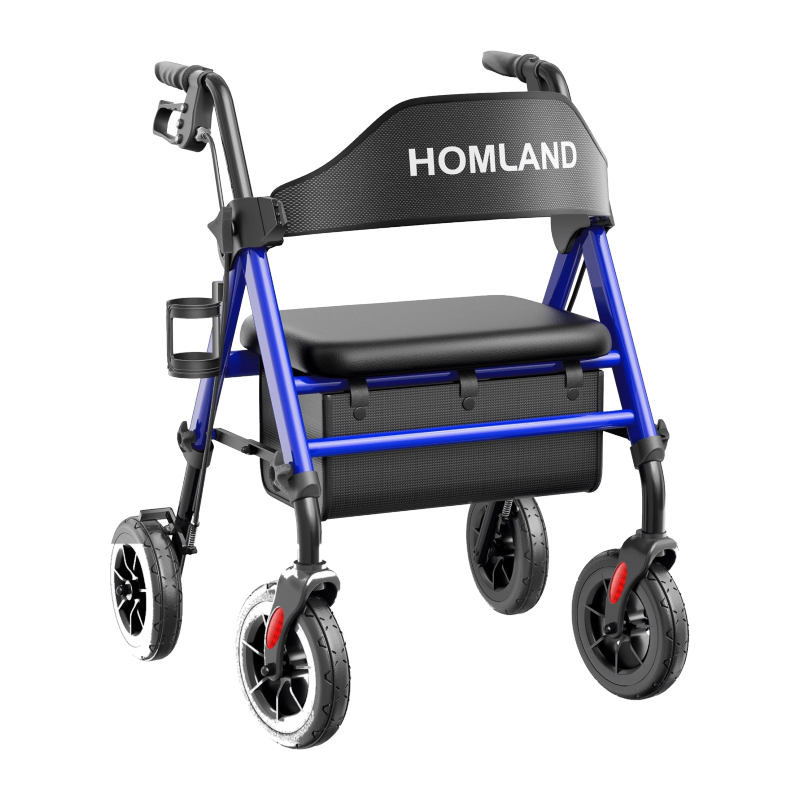
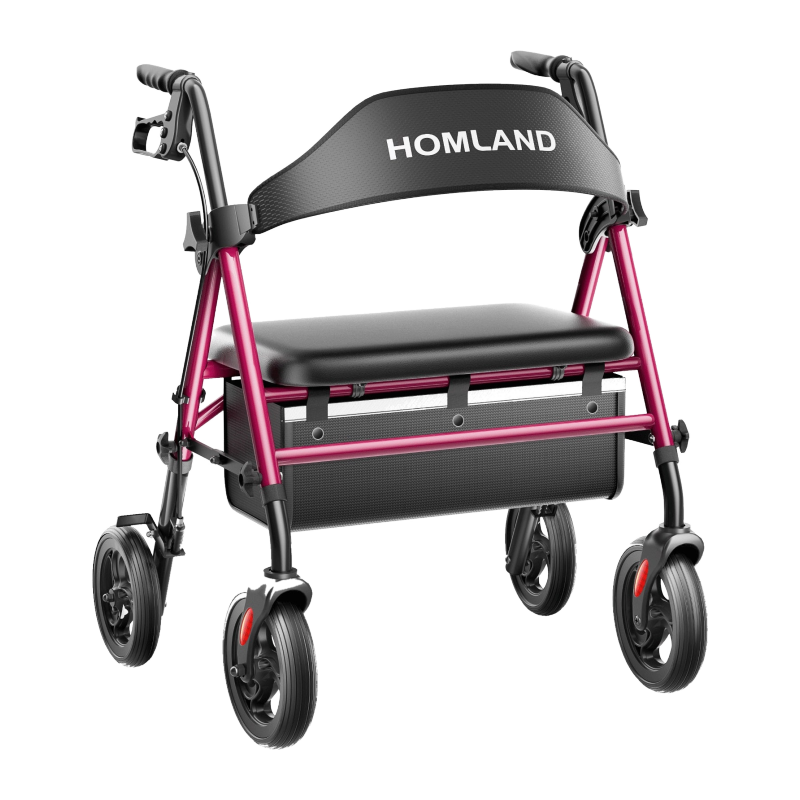
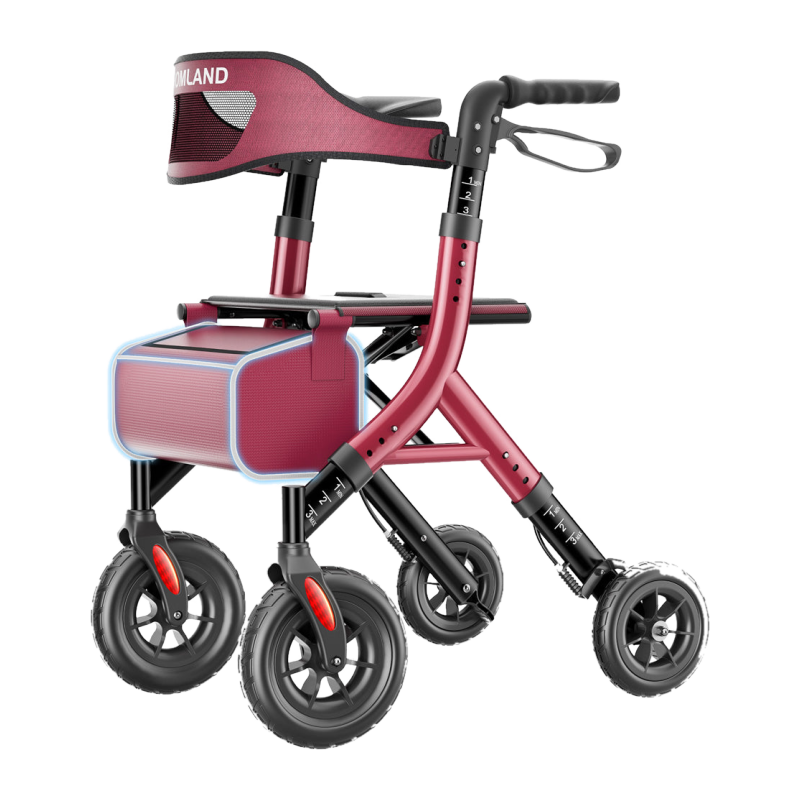
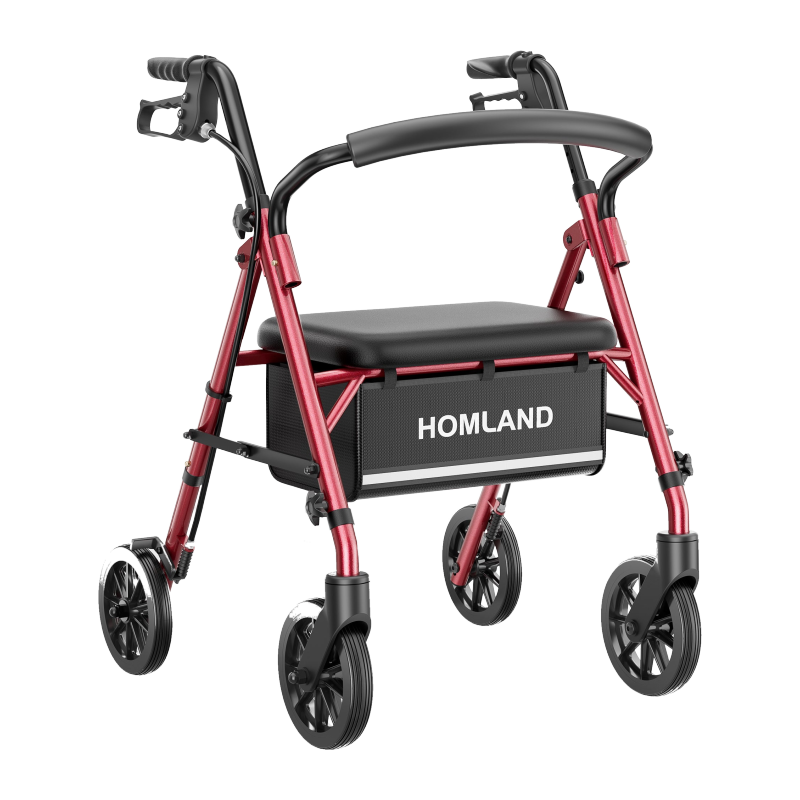
Four-wheel rollators are the most common type and the one most people picture when they hear the word "rollator." They feature four wheels, a padded seat, a backrest, and a storage pouch or basket beneath the seat. This configuration offers a good balance of stability and mobility, and the seat is genuinely useful — not just in theory. Think about being able to pause during a walk to enjoy a view, rest at a crowded store, or simply take a breath without having to find a bench. HOMLAND's four-wheel rollators are a strong example of this category done right, engineered for everyday home and outdoor use.
Upright Rollators
An upright rollator (sometimes called a forearm rollator) has taller, padded forearm supports that let you stand straighter and distribute weight through your forearms rather than your hands and wrists. Physical therapists often recommend this style for people with significant wrist or hand pain, those with a tendency to hunch forward, or users who need more upper-body support. Walking in a more upright posture also reduces back strain over time — a real benefit for anyone who spends a lot of time on their feet throughout the day.
Bariatric Rollators
Bariatric rollators are heavy-duty models engineered to support higher weight capacities — typically 400 to 500 lbs or more. They feature wider frames, reinforced tubing, and larger wheels designed for stability under greater loads. If standard rollators feel too narrow or flex underfoot, a bariatric model provides the firmness and confidence you need to move safely. HOMLAND offers select models built to support up to 500 lbs, so users can lean in with full confidence rather than second-guessing their equipment.
Key Features to Look For
Once you know which type of rollator fits your situation, it's time to look at the details. These are the features that separate a rollator you'll love from one that ends up in a closet after two weeks.
Adjustable Handle Height
Handle height is one of the most important fit factors, and it's often overlooked. Handles set too low force you to hunch; too high, and you're shrugging your shoulders with every step. Look for a rollator with easy push-button height adjustment so you can dial in the exact fit without tools. The general rule of thumb from physical therapists: when you grip the handles and let your arms hang naturally, there should be a slight bend at the elbow — roughly 15 to 20 degrees.
Hand Brakes
Loop-style hand brakes are the standard, and they work in two ways: squeeze to slow down while moving, and push down to lock in place when sitting or standing. Before buying, check that the brake tension is adjustable — people with reduced grip strength or arthritis need brakes that engage with minimal pressure. A brake that requires a firm, sustained squeeze quickly becomes frustrating or even unsafe.
Seat and Backrest Comfort
If you plan to sit down regularly — and you should feel free to — the seat matters more than people realize. A padded seat with a firm backrest is far more comfortable than a thin sling-style seat, especially for longer outings. Check the seat height against your own sitting height: your feet should rest flat on the floor when seated, with your knees at roughly a 90-degree angle.
Wheel Size and Terrain
Smaller wheels (5 to 6 inches) work well on smooth indoor floors. If you spend time outdoors — on sidewalks, gravel paths, or uneven surfaces — larger wheels (7 to 8 inches) handle bumps and cracks more comfortably and require less effort to push. Some rollators split the difference with medium-sized wheels that perform adequately both indoors and out, which is a practical choice for most users who move between both environments daily.
Weight and Foldability
A rollator that's too heavy to lift into a car defeats part of its purpose. Lightweight aluminum frames are the most common choice — durable enough for daily use, light enough to fold and stow without assistance. If you travel frequently or take trips to appointments, look for a model that folds flat in a single motion and fits in a standard vehicle trunk.
Storage
The basket or pouch under the seat is more useful than it sounds. Carrying a water bottle, your phone, groceries from a small errand, or a book to read during a rest — these small conveniences add up to a much more independent daily routine. Some models also offer additional side bags or cup holders for extra convenience.
How to Choose the Right Rollator for You
Choosing a rollator comes down to four practical questions. Work through these and the right model usually becomes clear:
- Where will you use it most? Primarily indoors calls for a lighter, more maneuverable model. Primarily outdoors or mixed terrain benefits from larger wheels and a sturdier frame.
- Do you need to sit and rest during walks? If yes, prioritize a four-wheel rollator with a padded seat. If resting isn't a concern and you want maximum agility, a three-wheel model may suit you better.
- What is your height and weight? Confirm the rollator's handle height range covers your height, and check the weight capacity. Never underestimate this — a rollator built to support your weight properly is a safety issue, not just a comfort one.
- Do you have wrist, hand, or shoulder issues? If gripping standard handles causes pain or fatigue, look at upright rollators with forearm support, which redistribute the load more comfortably.
For caregivers helping a parent or loved one choose: involve them in the decision wherever possible. A rollator they've had input on is one they'll actually use. Pay attention to color and style preferences too — a design someone is proud of is far more likely to become a daily companion than one that feels like a medical device.
Explore HOMLAND's full rolling walker collection to compare models side by side, or browse all HOMLAND products for the complete range of home mobility and safety solutions.
Rollator Safety Tips for Everyday Use
A rollator is only as safe as the habits built around it. Physical therapists consistently highlight a few key practices that make the biggest difference:
- Always engage the brakes before sitting or standing. This is the most important safety habit. Lock both brakes, position yourself in front of the seat, and lower yourself down with control rather than dropping onto the seat.
- Walk inside the rollator, not behind it. Your body should be between the rear wheels, close to the frame, not trailing several feet behind. Walking too far back reduces your control and increases fall risk.
- Don't overload the basket. Heavy bags shift the center of gravity forward and can make the rollator harder to control. Keep stored items light and balanced.
- Check wheels and brakes regularly. Inspect the wheels for debris and test the brakes before use, especially if the rollator has been stored for a while or used on rough terrain.
- On ramps or slopes, go slowly and use the brakes. Squeeze the brakes lightly to maintain a controlled pace rather than letting the rollator accelerate downhill ahead of you.
If you're recovering from surgery or managing a condition that affects balance significantly, ask your physical therapist to walk you through proper rollator technique at your next appointment. A short session with a professional can prevent months of ingrained bad habits.
Frequently Asked Questions
Is a rollator covered by insurance or FSA/HSA?
Many rollators qualify as FSA/HSA eligible expenses, which means you can use your pre-tax health savings funds to purchase one. HOMLAND's rolling walkers are FSA/HSA eligible — check with your plan administrator to confirm coverage details for your specific account. For Medicare or private insurance, a prescription from your doctor may be required for reimbursement.
What is the difference between a rollator and a rolling walker?
The terms are often used interchangeably, and in everyday conversation they mean the same thing. Technically, "rollator" is the original trademarked name (from its Swedish inventor) that became the generic term for wheeled walking frames with hand brakes. You may also see them called "wheeled walkers" or "rolling walkers" in product listings — same product, different labels.
Can I use a rollator on stairs?
No — rollators are not designed for stair use. On stairs, you should use a handrail and, if needed, a separate stair-assist device or the help of another person. Rollators are built for flat or gently sloping surfaces. If navigating stairs is a frequent challenge at home, consider whether a bed rail or other home safety upgrade might help reduce how often stair trips are necessary.
How do I know if a rollator is the right height for me?
Stand beside the rollator with your arms relaxed at your sides. The top of the handle should align roughly with your wrist crease. When you grip the handles, your elbows should have a slight, comfortable bend. If you're between sizes or unsure, adjustable-height models — which most modern rollators are — let you fine-tune the fit precisely.
Move Through Life on Your Own Terms
A rollator isn't a sign that things are getting harder — it's a tool that helps keep things easier. The right model, fitted correctly and used confidently, can mean the difference between staying active and staying home on the couch. Whether you're drawn to a lightweight three-wheel design, a sturdy four-wheel rollator with a full seat, an upright model for back support, or a heavy-duty bariatric frame, there's an option built for exactly your life.
HOMLAND's rolling walkers are designed with everyday independence in mind — authorized by licensed Doctors of Physical Therapy, backed by a 1-year manufacturer warranty plus 1-year extended warranty, FSA/HSA eligible, and shipped fast from US local warehouses. Because home should always feel safe, comfortable, and completely yours.
Have questions about which rollator is right for you or a loved one? HOMLAND's team is ready to help you find the best fit.
Contact Us — We're Here to HelpOr browse the full HOMLAND rolling walker collection to explore every model and find your perfect match.