

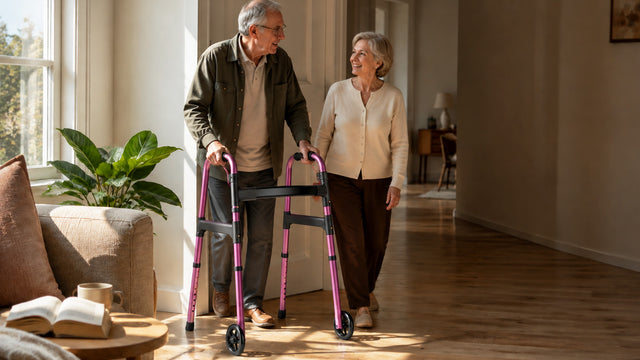

Choosing a walker sounds simple until you're standing in front of two very different options and wondering which one will actually fit your life. The three-wheel walker and the four-wheel walker may look like close cousins, but they're designed for different needs, different spaces, and different daily routines.
Maybe you're recovering from a knee procedure and need something light enough to take to a coffee shop. Maybe you're shopping for a parent who spends long days on their feet and needs a seat to rest on. Or maybe you just want to keep moving independently — through the kitchen, around the garden, out to the car — without anything slowing you down.
This guide breaks down everything you need to know about 3-wheel walkers: their genuine advantages, their real limitations, and the specific situations where they outperform a four-wheel rollator. By the end, you'll have a clear answer — not a list of specs, but an actual decision you feel confident about.
What Is a 3-Wheel Walker?
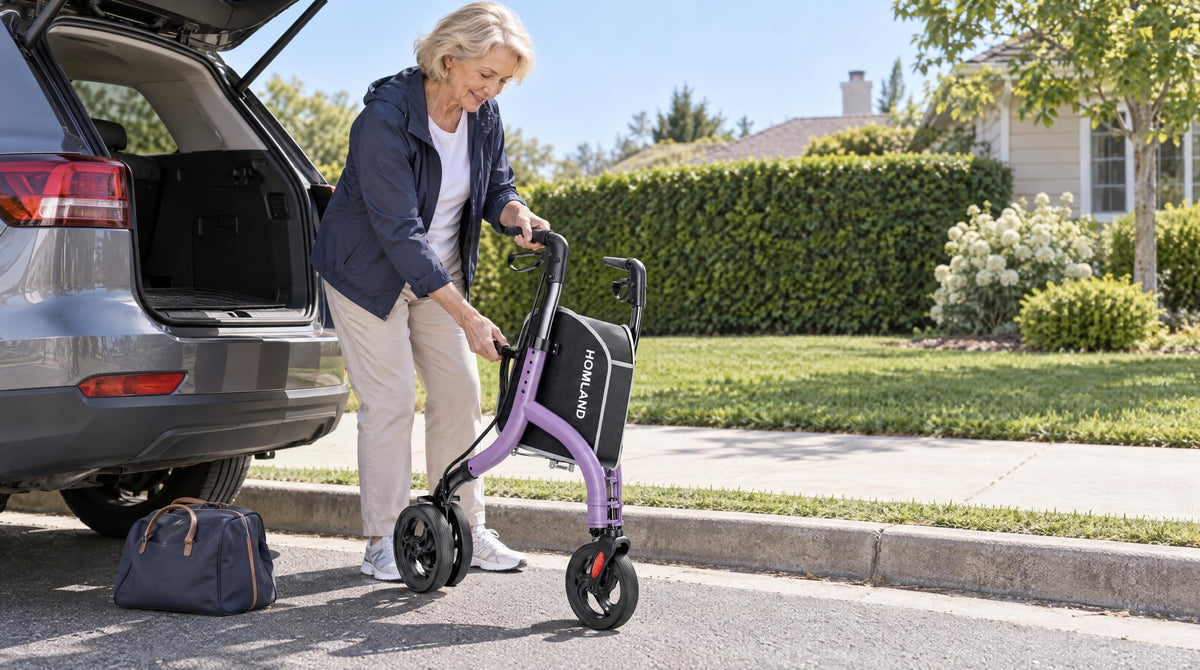
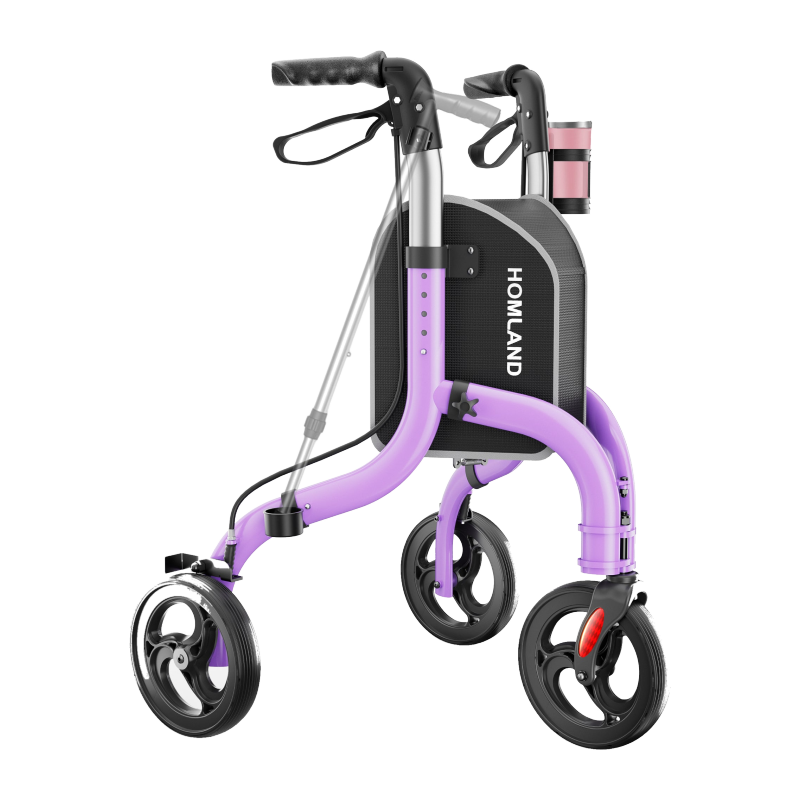
A 3-wheel walker (sometimes called a tri-wheel rollator or three-wheeled rollator) is a lightweight, rolling mobility aid with two rear wheels and one front wheel arranged in a triangular frame. Unlike a standard walker that you lift with each step, a rolling walker moves with you continuously — you push it forward and it glides. The three-wheel design removes the fourth wheel from the front corners, which dramatically narrows the frame and reduces overall weight.
Most 3-wheel walkers weigh between 11 and 15 pounds, fold compactly for transport or storage, and feature hand brakes for controlled stopping. They typically do not include a built-in seat, which is one of the key distinctions from their four-wheel counterparts. The result is a nimble, low-profile tool that prioritizes maneuverability over features.
The Real Advantages of a 3-Wheel Walker
If you've ever tried to navigate a narrow bathroom hallway with a bulky walker, you already understand the core appeal of the three-wheel design. The benefits go beyond just size, though.
Easier to Maneuver in Tight Spaces
The single front wheel acts almost like a pivot point, letting the walker turn in a much tighter radius than a four-wheel rollator. Getting through a standard interior doorway (typically 28–32 inches wide), maneuvering around a kitchen island, or navigating a small bathroom becomes noticeably easier. For anyone living in an older home with narrower hallways — which describes a large percentage of American homes — this matters every single day.
Lighter and Easier to Carry
Three-wheel walkers are consistently lighter than four-wheel models. That might not sound significant until you need to lift it into the trunk of a car, carry it up a single porch step, or pick it up to clear an obstacle. For someone with limited upper-body strength or a recent upper-extremity injury, shaving even two or three pounds off a mobility aid can be the difference between independence and asking for help.
More Compact When Folded
Because the frame is inherently narrower and lighter, a folded 3-wheel walker takes up less space in a car backseat, a closet, or beside a bed. For active users who travel frequently or move between multiple living spaces — a main home and a vacation condo, for example — that compact footprint is genuinely practical.
A Natural Fit for Indoor Use
Inside the home, a three-wheel walker often feels more intuitive. It follows the user's movements more responsively, glides smoothly on hardwood, tile, and low-pile carpet, and doesn't feel oversized in rooms designed for human-scale living. Physical therapists often describe it as the indoor specialist of the rollator family.
Where a 3-Wheel Walker Falls Short
Every mobility aid involves trade-offs, and the three-wheel walker is no different. Understanding its limitations helps you make a genuinely informed choice rather than discovering them after the fact.
- No built-in seat. Most 3-wheel walkers don't include a seat, so if you need to sit and rest mid-walk — whether due to fatigue, low stamina, or a chronic condition like COPD or heart failure — you'll need to find a bench or chair. This is a meaningful limitation for users who tire easily.
- Less stability on uneven ground. The triangular wheel arrangement is less forgiving on outdoor terrain. Gravel paths, grass, cracked sidewalks, and gentle slopes are trickier to navigate safely than they would be with a four-wheeled frame.
- Lower weight capacity on many models. Three-wheel walkers tend to carry lower maximum weight limits than heavy-duty four-wheel rollators. Users who need bariatric-level support should verify specifications carefully.
- No storage basket in most designs. The absence of a storage pouch or basket (common on four-wheel models) means carrying groceries, a water bottle, or personal items requires a bag worn separately.
- Can feel less stable for users with significant balance issues. The narrower footprint that makes it maneuverable also makes it slightly less planted. For someone with significant balance impairment or weakness on one side, a wider four-wheel base may feel more reassuring.
What a 4-Wheel Walker Brings to the Table
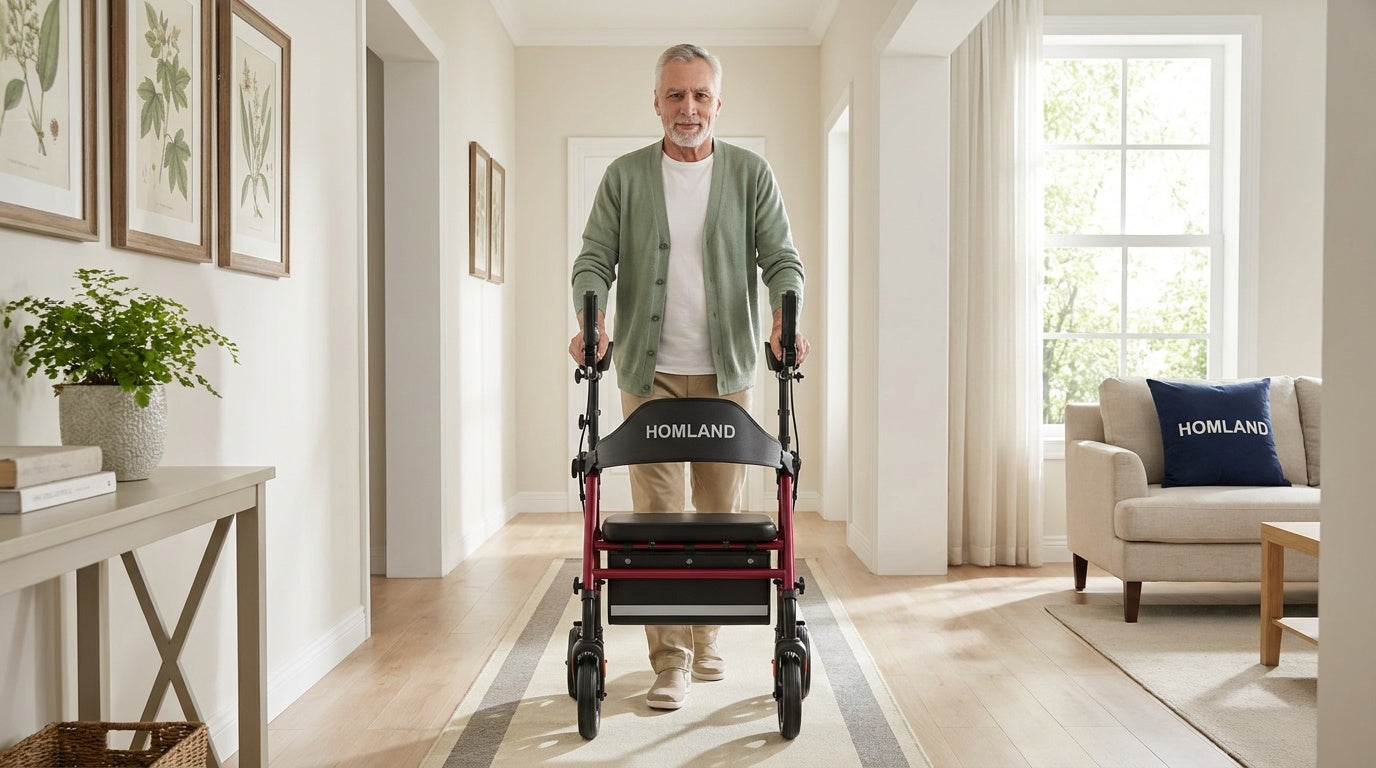
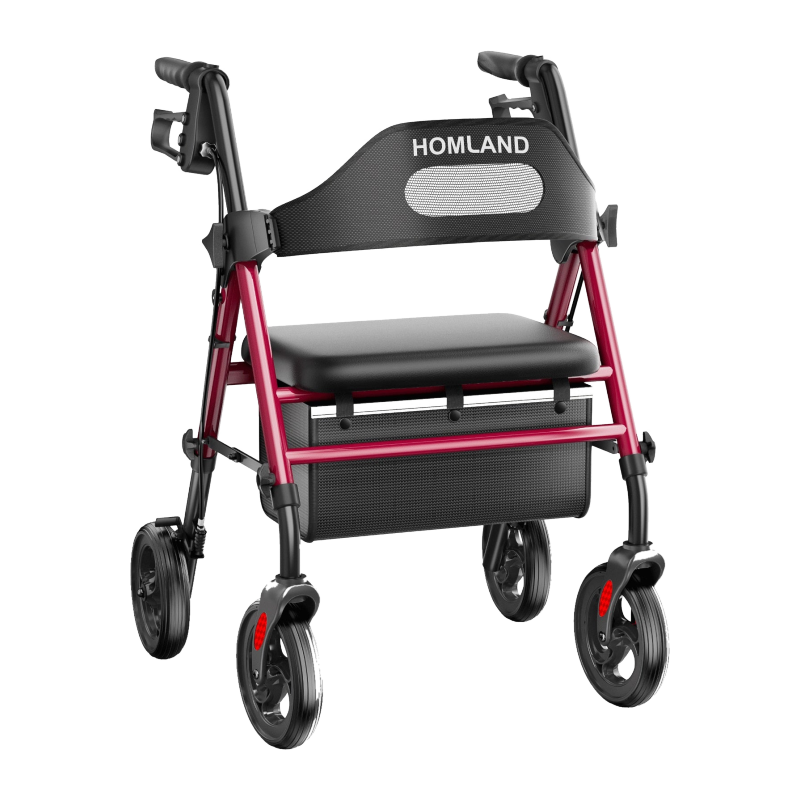
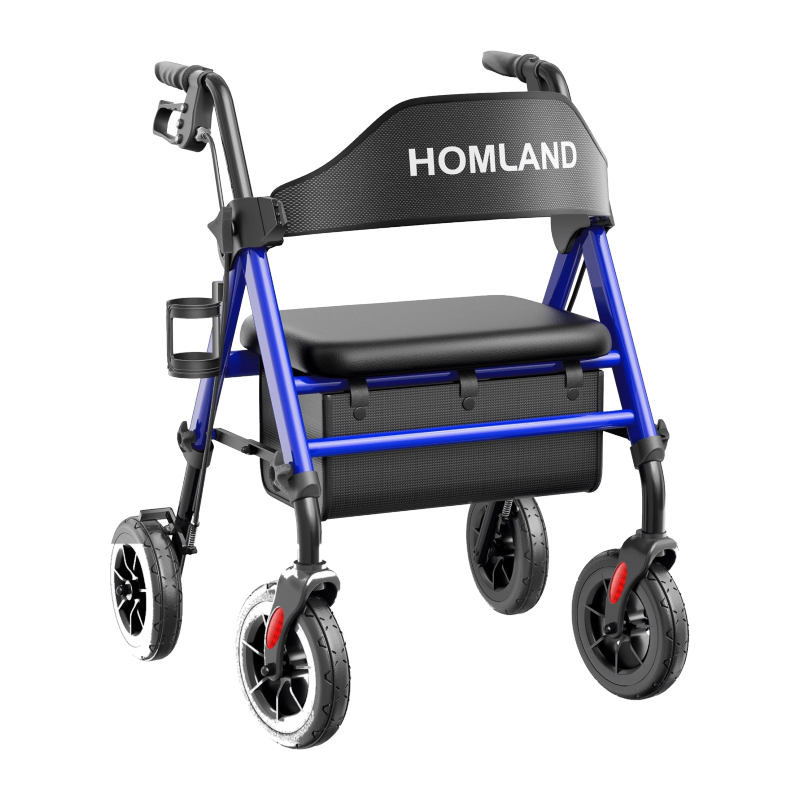
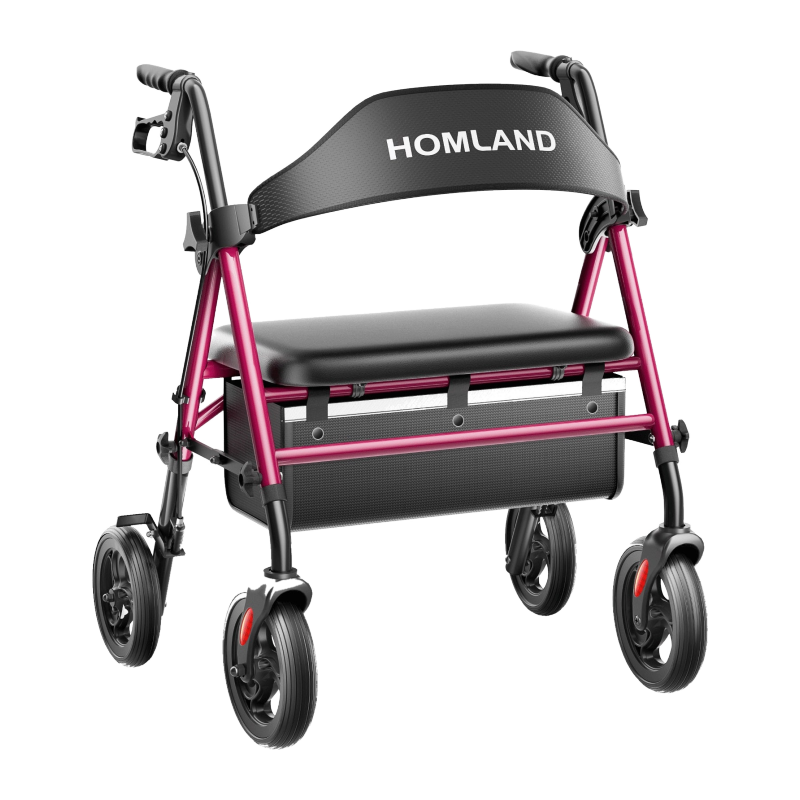
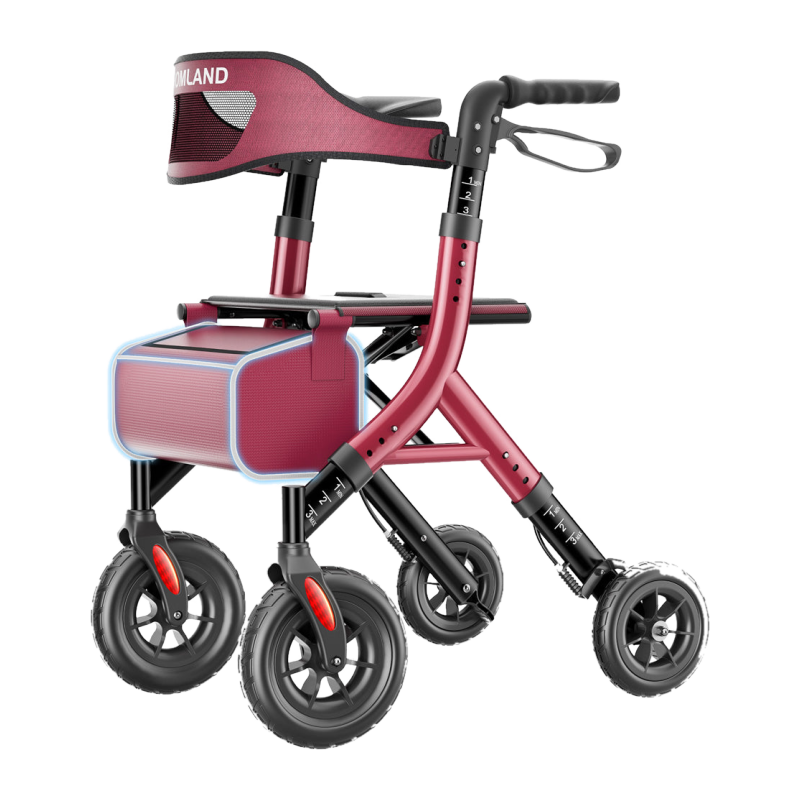
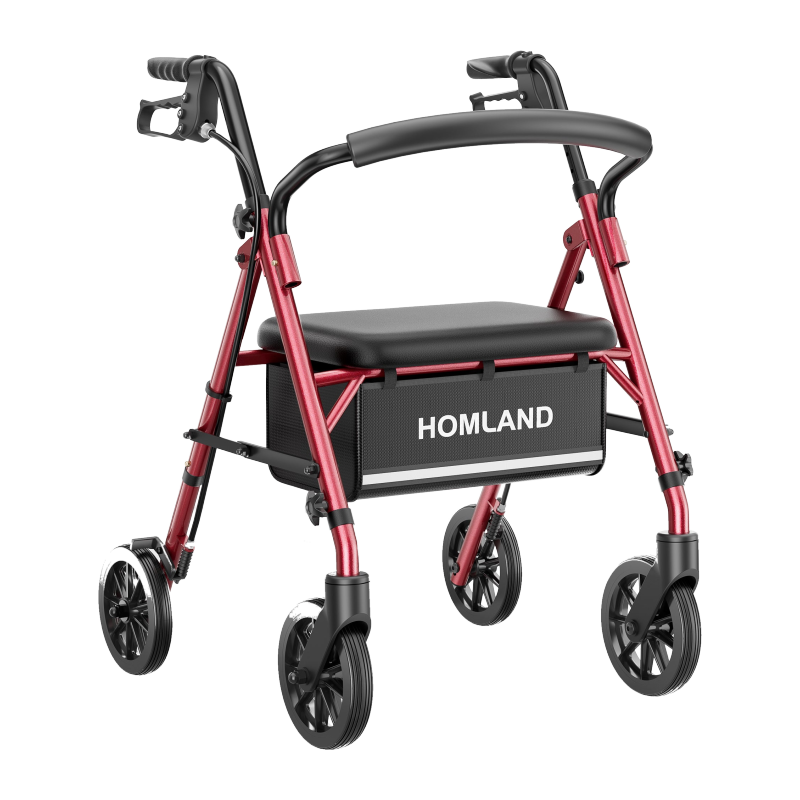
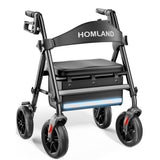
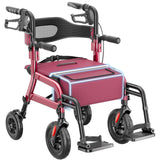
A 4-wheel rollator walker has four wheels positioned at each corner of the frame, creating a wider, more stable base. Most four-wheel models include a padded seat and a backrest, a storage basket or bag underneath, and hand brakes on both sides. The wider frame distributes weight more evenly and provides more lateral support, which translates to a steadier feel — especially outdoors or on varied surfaces.
For someone who walks longer distances, spends time outdoors, needs to sit and rest periodically, or carries items regularly, a four-wheel rollator often becomes an all-day companion rather than just a walking aid. Explore HOMLAND's full rolling walkers collection to see the range of options available, from standard models to upright and bariatric designs.
3-Wheel vs. 4-Wheel: Side-by-Side Comparison
Rather than a list of specs, think of this as a comparison of real-life experiences:
- Turning radius: 3-wheel walkers turn more sharply; 4-wheel walkers need more room to navigate corners.
- Weight: 3-wheel models are lighter and easier to lift; 4-wheel models are heavier but often sturdier.
- Seated rest: 4-wheel rollators include a built-in seat; 3-wheel models typically do not.
- Outdoor performance: 4-wheel walkers handle uneven terrain more reliably; 3-wheel models are best on smooth, flat surfaces.
- Storage: 4-wheel models usually include a basket or bag; 3-wheel models generally don't.
- Indoor fit: 3-wheel walkers glide through tight hallways and small rooms with ease; 4-wheel models require more floor space.
- Stability for balance issues: 4-wheel walkers offer a broader, more planted base; 3-wheel models favor users with moderate balance and good hand-brake control.
Neither is universally better. The right choice depends entirely on where and how you move each day.
When a 3-Wheel Walker Is the Right Call
A three-wheel walker tends to be the better fit in the following scenarios:
You live in a smaller home with narrow hallways. If your home was built before the 1980s, doorways and hallways are likely on the narrower side. A 3-wheel walker's slim profile glides through these spaces without banging into door frames or requiring sideways shuffles.
You're recovering from a lower-extremity procedure and need light support. Post-surgery patients who have reasonable balance but need a little help with stability during recovery — think knee arthroscopy, a broken ankle healing well — often find a 3-wheel walker light enough to use around the house without feeling encumbered.
You're an active user who primarily walks indoors or on smooth surfaces. If most of your daily movement happens inside the home or on smooth sidewalks, you'll rarely encounter the terrain limitations of a three-wheel design. The extra agility becomes a daily benefit rather than an occasional perk.
You travel frequently and need something compact. A lighter, narrower walker folds into a car trunk more easily and stows in hotel rooms without dominating the space. For active, independent seniors who are still on the go, that portability preserves a lifestyle rather than limiting it.
You don't need to sit and rest mid-walk. If your stamina is good and you're not managing a condition that causes sudden fatigue, the lack of a built-in seat isn't a meaningful loss. You can focus on what a 3-wheel walker does best: move with you quickly and smoothly.
When a 4-Wheel Walker Makes More Sense
There are equally clear situations where stepping up to a four-wheel rollator is the smarter, safer choice:
You need to sit and rest during walks. Conditions like chronic obstructive pulmonary disease, heart conditions, or general deconditioning from illness can cause sudden fatigue. Having a built-in padded seat means you can stop and rest anywhere — a grocery store aisle, a park path, a long hallway — without planning around available seating.
You spend significant time outdoors. If daily walks include outdoor terrain — neighborhood sidewalks with cracks, grass, gravel driveways, or gentle slopes — the four-wheel base provides more stability and rolls over obstacles more reliably.
You have notable balance challenges. If a physical therapist or physician has identified balance impairment as a primary concern, the wider, four-point base of a rollator offers more lateral security. It's a broader safety net underfoot.
You need to carry items regularly. Medication, a water bottle, a phone, a small purse — the under-seat basket on a four-wheel rollator handles all of these hands-free, which matters for anyone who needs both hands on the handles at all times.
Browse HOMLAND's complete rolling walkers collection to compare four-wheel models alongside three-wheel options, including upright and bariatric versions built to support up to 500 lbs.
What Physical Therapists Recommend
Physical therapists — the professionals who work hands-on with patients relearning to move safely after injury, surgery, or illness — often have nuanced advice on this choice. Rather than defaulting to "the bigger one is safer," licensed Doctors of Physical Therapy (DPT) typically assess three factors: the person's balance and strength, the environment they'll use it in most, and the activities they want to return to.
When balance is adequate and the primary concern is navigating a small home or recovering mobility after a procedure, physical therapists often lean toward a three-wheel walker for its responsiveness and lighter weight. When fatigue, outdoor use, or more significant balance impairment is in the picture, they tend to recommend the additional stability and features of a four-wheel rollator.
HOMLAND's rolling walkers are authorized by licensed DPTs, so the design decisions built into each model — handle height range, brake sensitivity, wheel size — reflect clinical insight, not just manufacturing convenience. All models are also FSA/HSA eligible, which means you may be able to purchase one using pre-tax health spending dollars.
HOMLAND Rolling Walkers: Built for Home, Not a Hospital
At HOMLAND, the belief is simple: the right mobility aid should feel like a natural extension of daily life at home, not a reminder of a medical situation. Every rolling walker in the HOMLAND lineup is engineered with tool-free assembly, adjustable handle heights to fit different body types, and a home-friendly design that looks and feels like it belongs in a real living space — not a rehabilitation ward.
Whether you're exploring a three-wheel model for agile indoor use or a four-wheel rollator for all-day confidence, HOMLAND has options backed by 20+ years of manufacturing expertise, a 1-year manufacturer warranty plus 1-year extended warranty, and fast delivery from US local warehouses. No long waits, no complicated assembly, no compromises on quality.
If you're also managing other home safety needs — like getting on and off the toilet safely or stepping in and out of the shower with confidence — explore HOMLAND's broader range of home care solutions, including shower chairs, toilet safety rails, and bed rails. Every product shares the same commitment: helping you move through your home on your own terms.
Choosing between a 3-wheel walker and a 4-wheel rollator isn't about which one is technically superior — it's about which one fits the way you actually live. If you move primarily indoors, navigate a compact home, and value a lighter and more maneuverable design, a three-wheel walker can be a genuinely freeing choice. If you need the option to sit and rest, handle varied outdoor terrain, or carry essentials hands-free, a four-wheel rollator earns its larger footprint.
The best walker is the one you'll actually use with confidence every day. Take stock of where you move, how far you walk, and what your environment looks like — and let those answers guide you to the right fit. You deserve a mobility solution that supports your independence without getting in the way of it.
Still Not Sure Which Walker Is Right for You?
Our team is here to help you find the right fit — whether that's a nimble 3-wheel walker, a full-featured 4-wheel rollator, or something else entirely. All HOMLAND rolling walkers are FSA/HSA eligible, DPT-authorized, and backed by a 2-year total warranty.
Contact Us and we'll help you make a confident, informed decision — no pressure, just honest guidance.