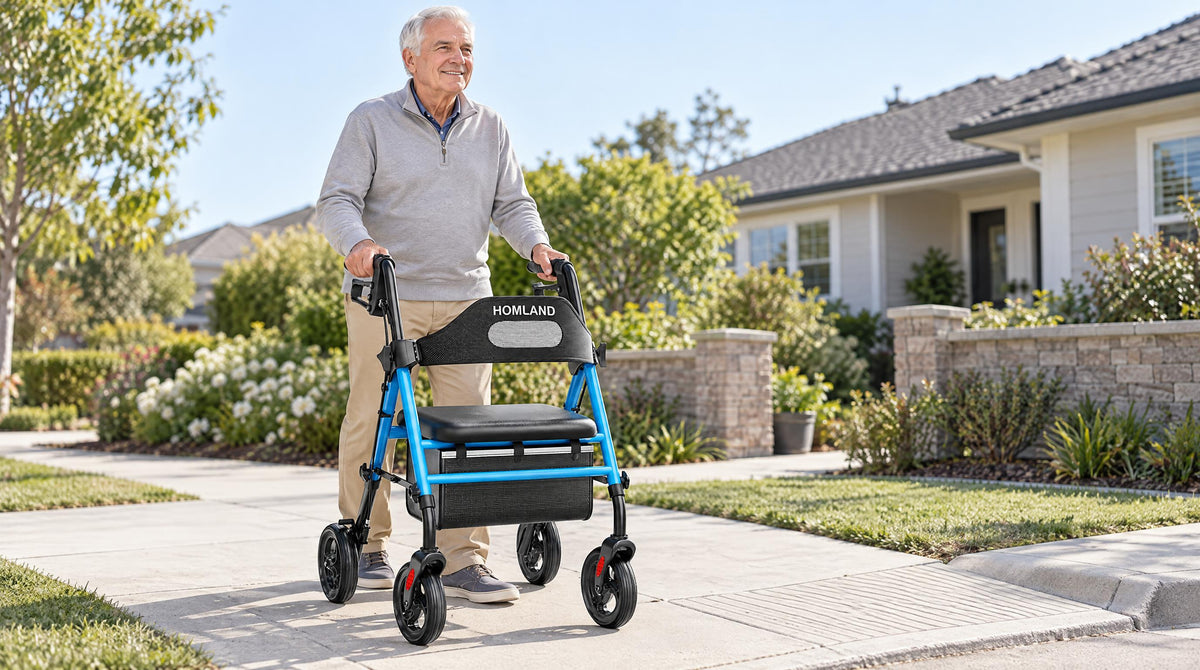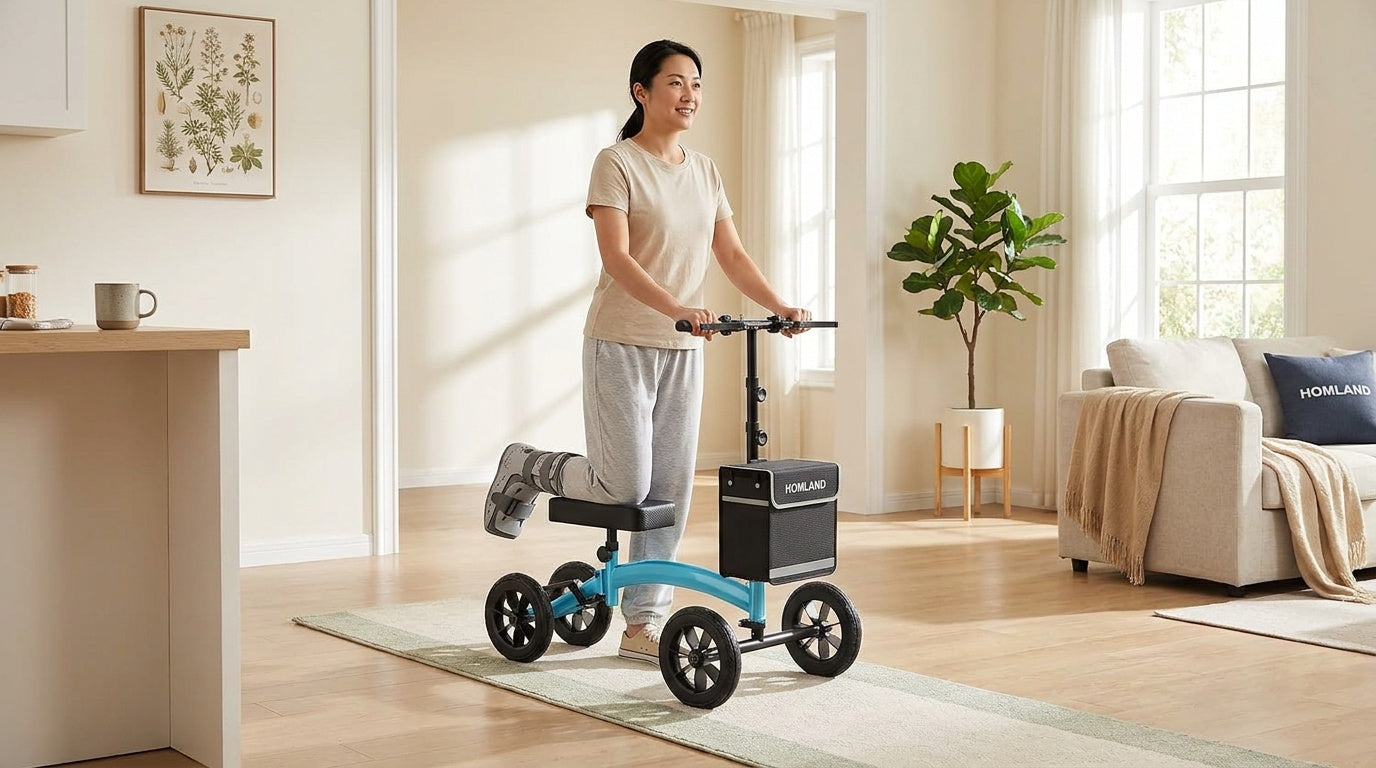
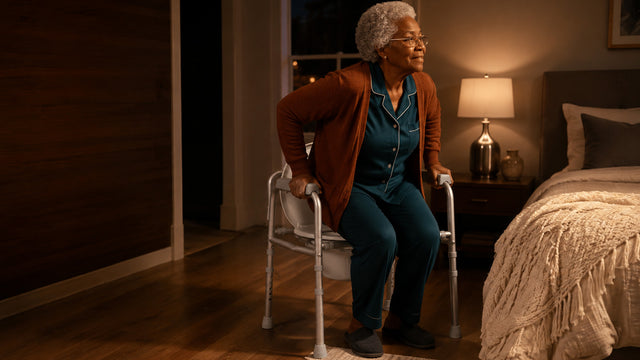
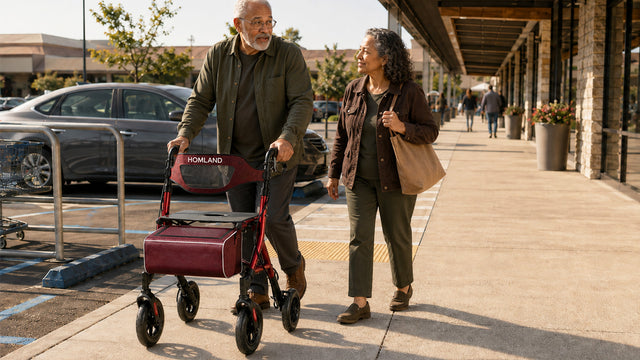
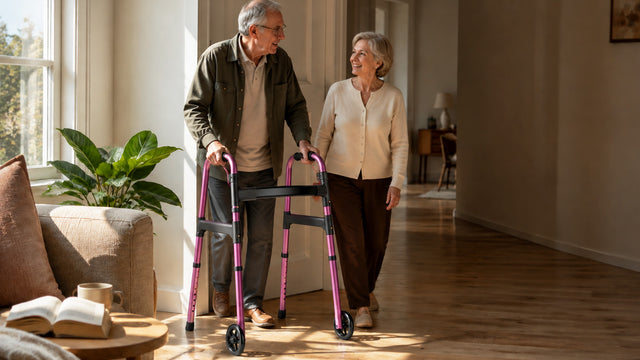

There's a particular kind of freedom in stepping outside on your own terms — taking a morning walk around the block, strolling through a farmers market, or simply getting from the driveway to a friend's front door without asking for help. For many seniors and individuals recovering from surgery or managing a chronic condition, that freedom doesn't have to disappear. It just needs the right support.
Standard rollator walkers work beautifully on smooth indoor floors, but the moment you hit a cracked sidewalk, a patch of grass, or a gravel path, those small wheels can catch, wobble, or stall — turning a confident outing into an anxious one. That's exactly where all-terrain rollator walkers come in. Engineered for outdoor and uneven surfaces, these walkers are built with larger wheels, stronger frames, and smarter braking systems so you can move through the real world, not just a hospital corridor.
In this guide, we break down the specific features that make an all-terrain rollator genuinely useful outdoors, who benefits most from them, and what to look for when choosing one — so you or your loved one can keep getting out there with confidence.
Why Outdoor Terrain Demands a Different Rollator
Picture this: it's a clear Saturday morning and you've decided to walk to the end of the street and back — something you used to do every day. You step off the front porch, cross the driveway, and your rollator's small front wheels drop into a sidewalk crack. The frame shudders. You catch yourself, but the confidence you had walking out the door has already taken a hit.
This scenario is far more common than most people expect, and it's not a matter of user error. Standard rollators are optimized for flat, predictable indoor surfaces like tile and hardwood. Outdoors, the terrain changes constantly — uneven pavement, tree roots lifting concrete, gravel parking lots, wet leaves, gentle slopes. Physical therapists often point out that many fall-related incidents with mobility aids happen during transitions between surface types, precisely because the user's rollator wasn't designed to handle that variability.
An all-terrain rollator addresses this head-on. It's not a different category of product so much as a thoughtfully upgraded one, with specific engineering choices that translate to real stability gains when surfaces get unpredictable.
Key Features to Look for in an All-Terrain Rollator
Not all rollators marketed as "all-terrain" are created equal. Here are the features that actually make a measurable difference when you're navigating the outdoors.
Larger, All-Terrain Wheels
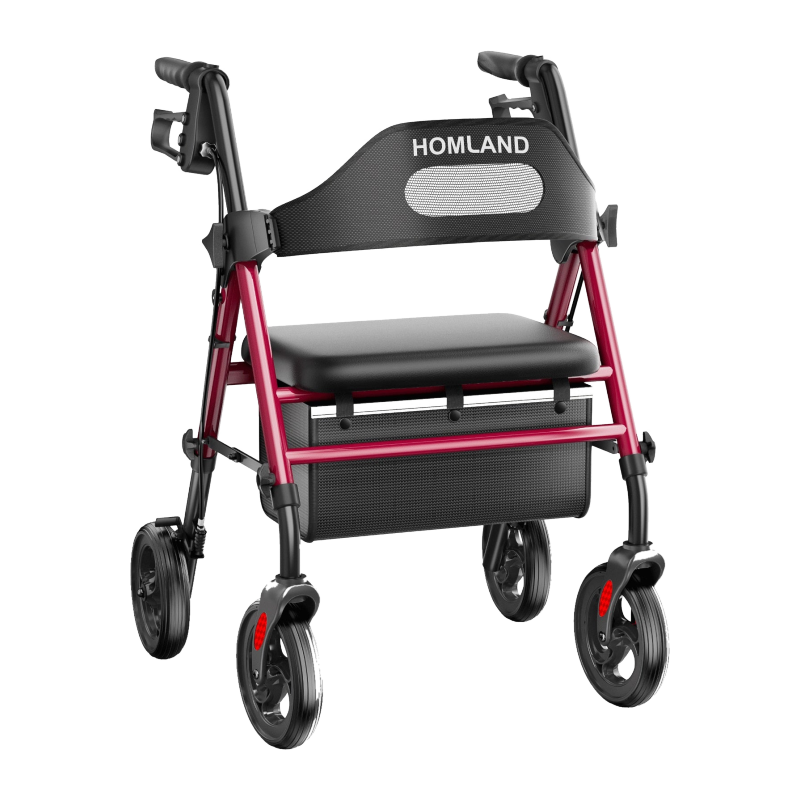
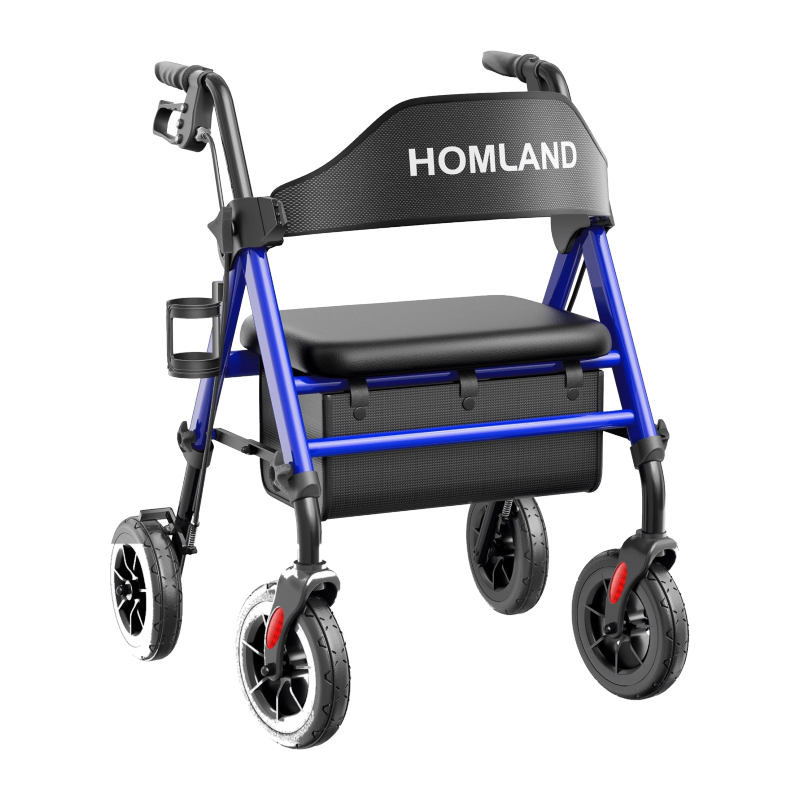
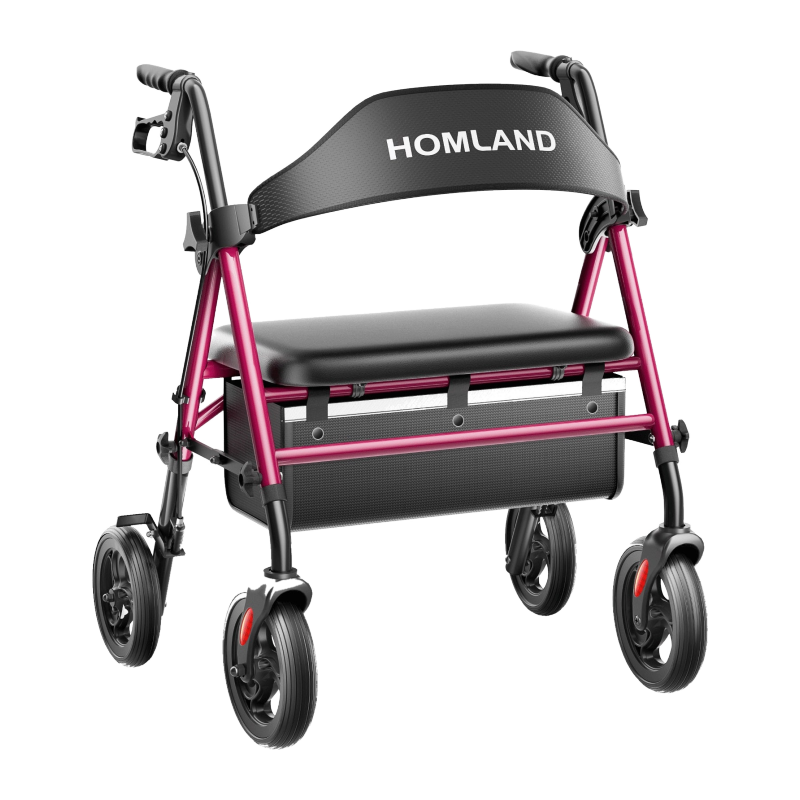
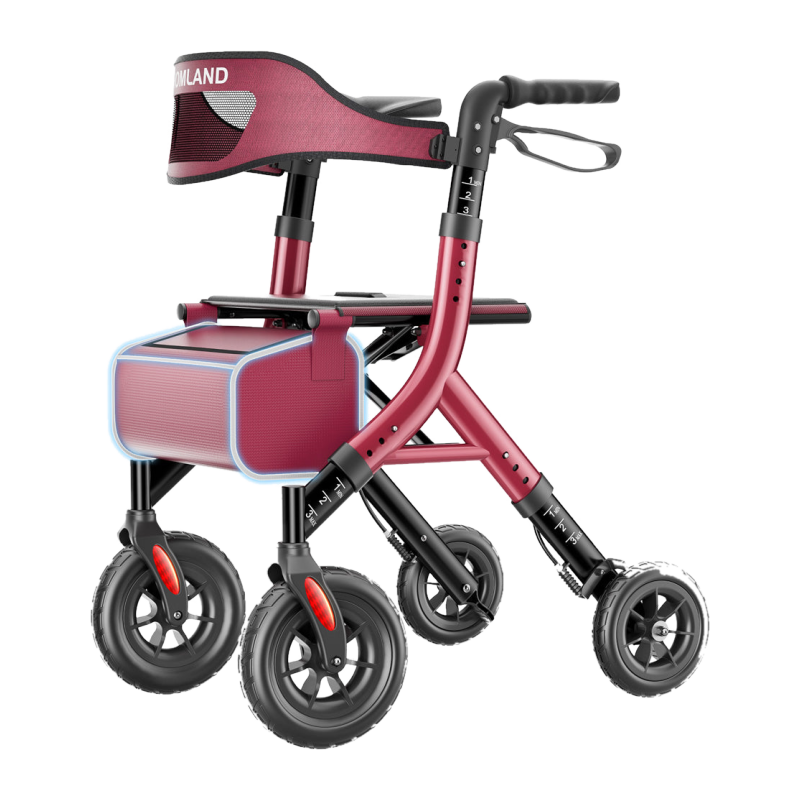
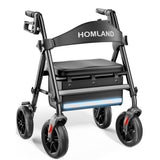
Wheel size is the single most impactful variable for outdoor use. A standard indoor rollator typically runs on 6-inch wheels — perfectly functional on smooth floors, but prone to catching on surface irregularities outside. All-terrain models feature wheels in the 8- to 12-inch range, often with a pneumatic (air-filled) or thick foam-filled tire that absorbs vibration and rolls over small obstacles instead of stopping against them. Think of the difference between a shopping cart wheel and a bicycle tire: one is built for polished floors, the other for varied terrain.
The tread pattern on outdoor wheels also matters. Deeper, wider treads grip grass, packed dirt, and wet pavement more reliably than the smooth rubber typically found on indoor models. When evaluating a rollator, look for wheels specifically described as pneumatic or knobbed-tread — these are honest signals of outdoor capability rather than marketing language.
Sturdy, Lightweight Frame Construction
There's a balance to strike with frame material: heavy enough to stay stable on uneven ground, light enough that lifting it into a car trunk doesn't require its own recovery period. Most quality all-terrain rollators use aircraft-grade aluminum, which delivers the strength needed for demanding terrain without adding unnecessary bulk. A well-engineered aluminum frame can support significant weight while remaining manageable to fold, carry, and transport.
The frame geometry also plays a role. Wider wheelbases — the lateral distance between the left and right wheels — create a lower center of gravity and reduce tipping risk on sloped surfaces. If you or your loved one will regularly navigate inclines like driveways or park paths, a wider-stance frame makes a meaningful difference in lateral stability.
Reliable Braking System
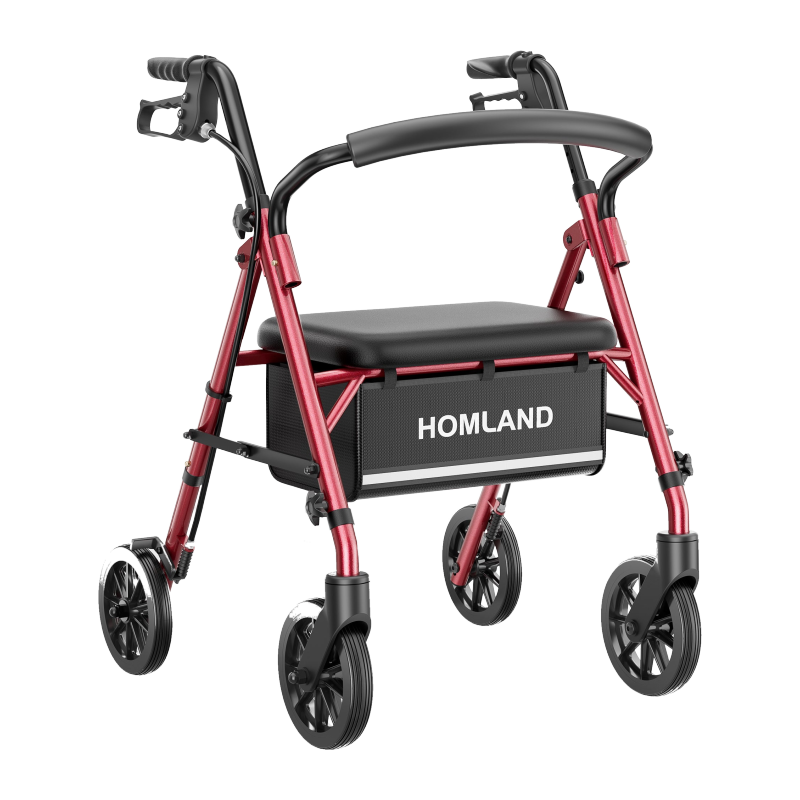
Outdoors, slopes are inevitable — even subtle ones. A reliable, intuitive braking system is non-negotiable for any rollator used outside. Look for loop-style hand brakes that lock into place, so users can engage the brake, sit down on the built-in seat to rest, and stand back up without the walker rolling away. The brake cables should be encased to protect against weather and debris, and the brake pads or drum brakes should make solid contact with the wheel regardless of surface type.
Physical therapists often recommend testing the braking response before committing to a model: the brake should engage smoothly under partial grip, not require a tight squeeze that fatigues arthritic hands. This is especially important for users whose grip strength is limited.
Built-In Seat and Storage
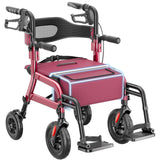
One of the most underappreciated features of any rollator is the built-in seat. Outdoors, resting spots aren't always available — a park bench might be occupied, a sidewalk café might be too far ahead. A padded seat that locks securely in place gives users the ability to stop and rest on their own terms, which in turn supports longer, more confident outings. Beneath that seat, a storage pouch or basket means you can carry a water bottle, phone, or small purchases without needing a separate bag that throws off balance.
For caregivers shopping for a loved one, the seat and storage combination is a quiet but powerful independence-builder. It means fewer interruptions to ask for help carrying things, and more control over the pacing of any outing.
Adjustable Handle Height
Handle height affects posture, and posture affects fatigue. Handles set too low cause the user to hunch forward, straining the lower back and shoulders — especially during longer outdoor walks. Handles set too high cause the arms to rise in an awkward position that reduces control. Look for tool-free height adjustment that covers a generous range, typically from around 32 to 38 inches, so the rollator can be dialed in precisely for the user's height. This is particularly important in households where two people of different heights might share a walker.
Weight Capacity That Inspires Confidence
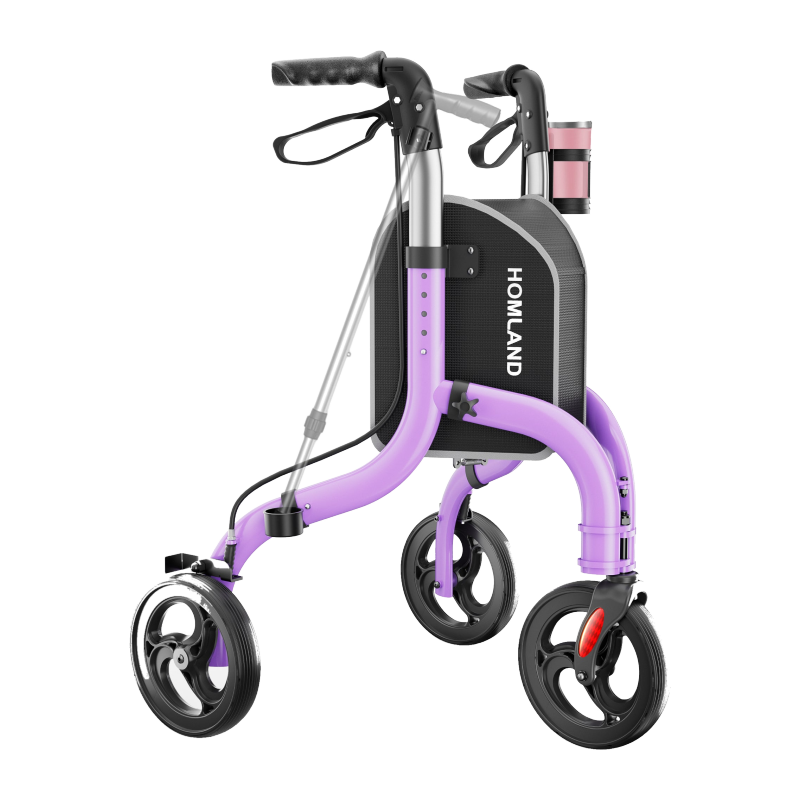
A rollator's weight capacity isn't just a safety number — it's a statement about how much the user can genuinely lean on the frame without worrying. Standard rollators often support up to 250 or 300 lbs, but heavy-duty and bariatric all-terrain models can support significantly more. HOMLAND's rolling walker lineup, for example, includes models built to support up to 500 lbs, engineered so that users at any size can lean in with full confidence rather than holding back out of uncertainty. For users who put real load-bearing pressure on their walker — which is especially common on inclines — this capacity matters more than it might initially seem.
If you're browsing options, explore the full HOMLAND Rolling Walkers Collection to see the range of 3-wheel, 4-wheel, upright, and bariatric models available — all FSA/HSA eligible and backed by a 1-year manufacturer warranty plus a 1-year extended warranty, with fast delivery from a US local warehouse.
Indoor Rollators vs. All-Terrain Rollators: What's the Difference?
The distinction is real but often misunderstood. An indoor rollator prioritizes compact footprint and easy maneuverability in tight spaces — narrow hallways, small bathrooms, kitchen aisles. Wheels are small and smooth, frames may be slimmer, and the overall design is optimized for a controlled environment. These are excellent products for what they're designed to do.
An all-terrain rollator makes different trade-offs. The larger wheels and wider stance mean it takes up more space, and some models are heavier. But they roll smoothly over the kinds of surfaces that would stop an indoor rollator cold. Many users find value in having access to both types — or choosing a rollator that balances indoor maneuverability with enough outdoor capability to handle a backyard, a parking lot, or a park path. If the person using the rollator spends time in both environments throughout a typical day, an all-terrain model that also performs reasonably indoors is usually the more practical choice.
Who Benefits Most from an All-Terrain Rollator?
While any rollator user might occasionally face outdoor terrain, certain situations make an all-terrain model particularly worth considering:
- Active seniors who walk outdoors regularly — daily walkers, gardeners, or anyone who maintains a neighborhood walking routine that they're not ready to give up.
- Post-surgery recovery patients — particularly those recovering from hip or knee replacement, who may be moving between indoor and outdoor environments as they rebuild mobility and confidence.
- People living in suburban or rural settings where sidewalks are absent, surfaces are mixed, or distances between locations require crossing varied terrain.
- Anyone who attends outdoor events — farmers markets, outdoor concerts, family barbecues, sports events — where surfaces are unpredictable and portable seating is scarce.
- Users in climates with wet or seasonal conditions where leaves, light rain, or frost create slippery or uneven outdoor surfaces.
For adult children or caregivers making this decision, it's worth asking: where does my loved one actually spend time? If the answer includes any outdoor environment at all, the investment in all-terrain capability is well worth it — not as a luxury, but as a practical safety feature that supports independence over the long term.
HOMLAND's range of 4-wheel rollator walkers is authorized by licensed Doctors of Physical Therapy (DPT), ensuring that every design decision is grounded in real-world mobility needs rather than guesswork.
Tips for Using a Rollator Safely Outdoors
Even the best all-terrain rollator works best when used with some basic outdoor awareness. Physical therapists commonly recommend the following practices for safe outdoor rollator use:
- Approach slopes at an angle when possible — walking directly up or down a steep grade puts more stress on the braking system and requires more effort. A slight diagonal reduces the incline challenge.
- Engage the brakes before sitting down — always, without exception. Even a gently sloped surface can cause the rollator to drift if brakes aren't locked.
- Look ahead, not down — scanning the path a few feet ahead gives you time to adjust your pace or route around obstacles, rather than reacting at the last second.
- Adjust handle height seasonally or with footwear — thicker winter boots raise your stance slightly; a minor handle adjustment keeps posture aligned.
- Check tire pressure regularly if using pneumatic wheels — a soft tire handles terrain noticeably worse than one properly inflated, and the change can be gradual enough to miss without a quick check.
- Practice transitions — doorway thresholds, curb cuts, and the edge where pavement meets grass are the most common trouble spots. Taking these slowly and deliberately, at least until they feel familiar, reduces risk significantly.
For users who have recently transitioned to a rollator after surgery or a health event, a brief session with a physical therapist specifically focused on outdoor navigation can be genuinely valuable — it's the kind of practical preparation that builds both skill and confidence.
Choosing a Rollator That Goes Where You Go
Mobility doesn't stop at the front door, and neither should your rollator. The right all-terrain model becomes something most users describe the same way: reliable. They stop thinking about the ground beneath them and start thinking about where they're going. That shift — from cautious to confident — is exactly what good mobility support is supposed to create.
HOMLAND's rolling walker lineup is designed with that goal in mind. With 20+ years of manufacturing experience behind every frame, tool-free assembly, and generous weight capacities, these are walkers built for real life — not just smooth floors. Whether you're evaluating options for yourself or helping a parent choose their next walker, the HOMLAND Rolling Walkers Collection offers 3-wheel, 4-wheel, upright, and bariatric configurations to match a wide range of needs and body types.
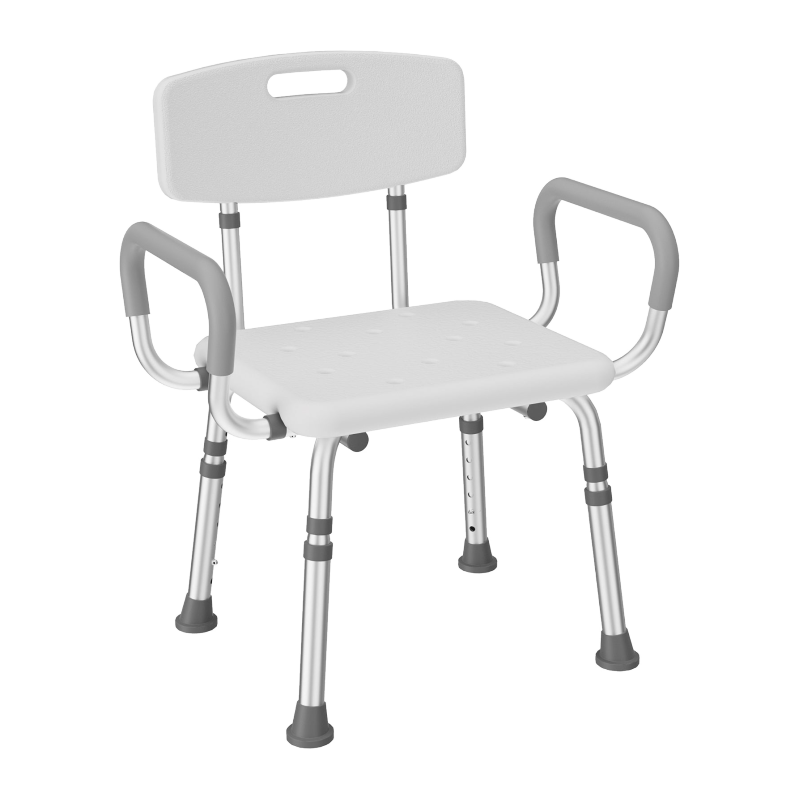
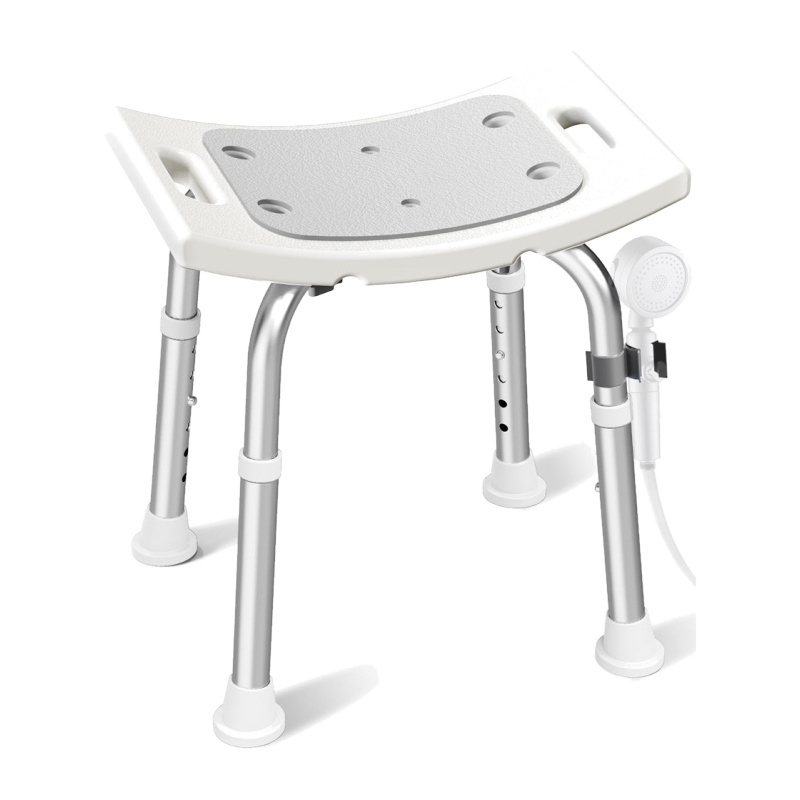
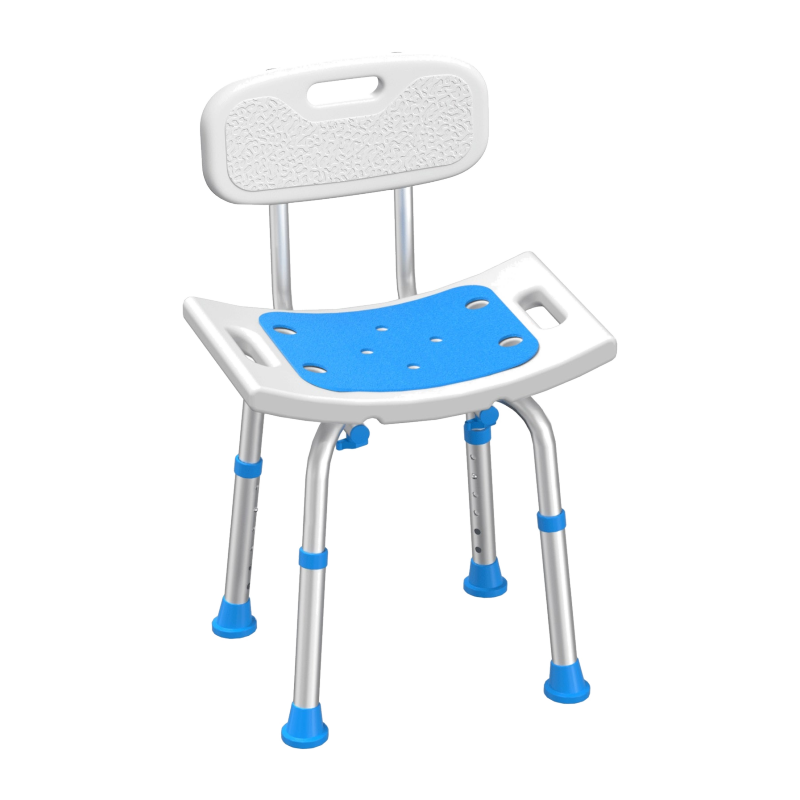
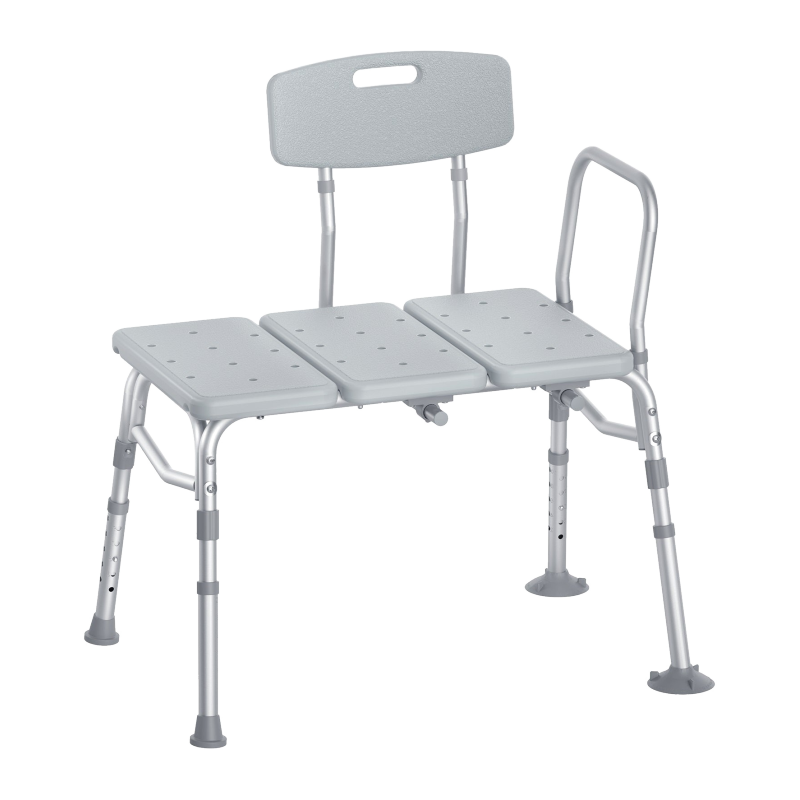
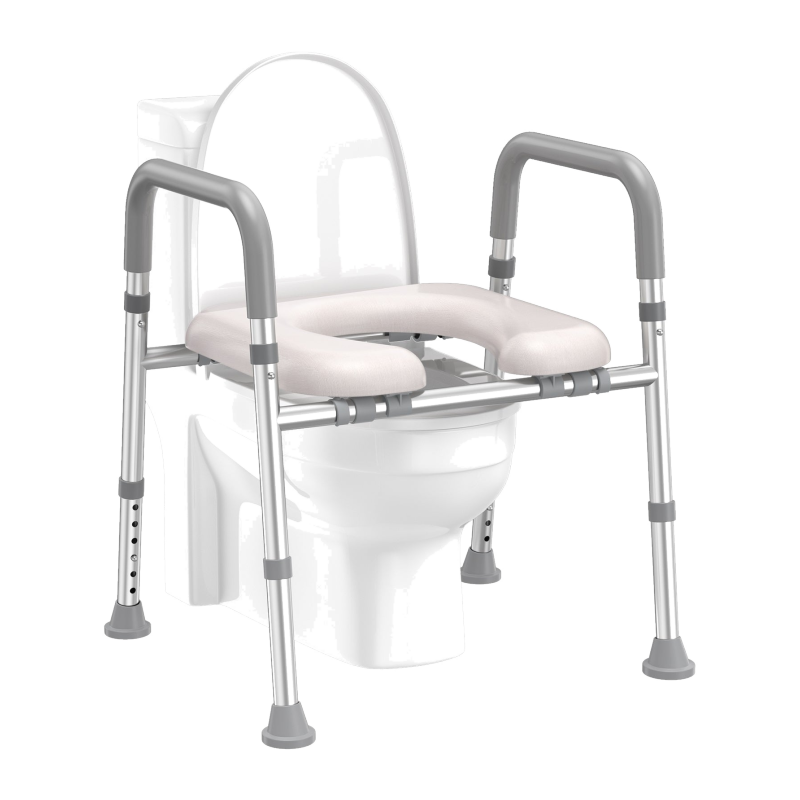
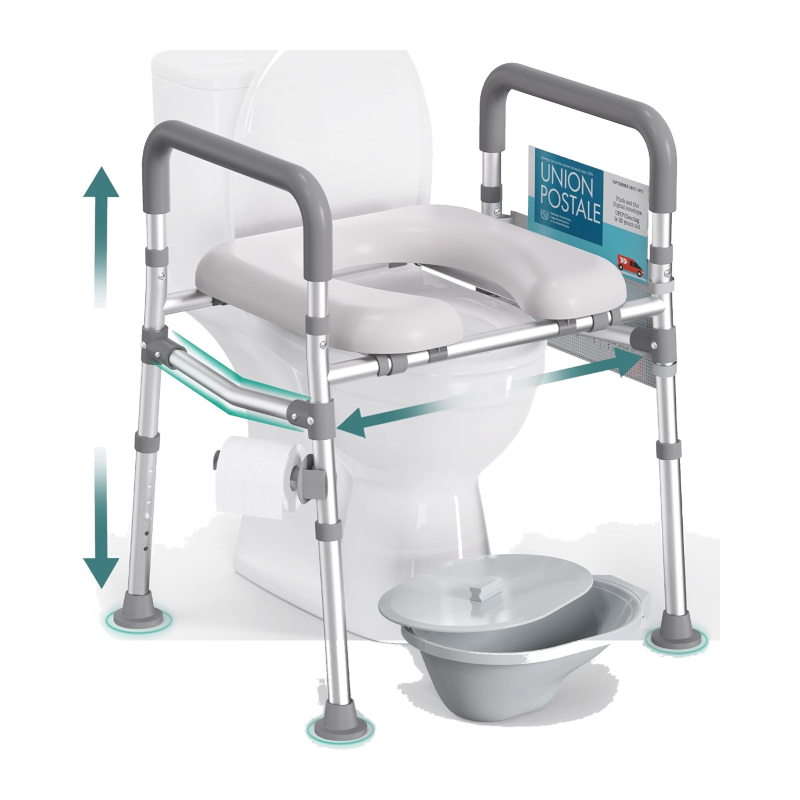
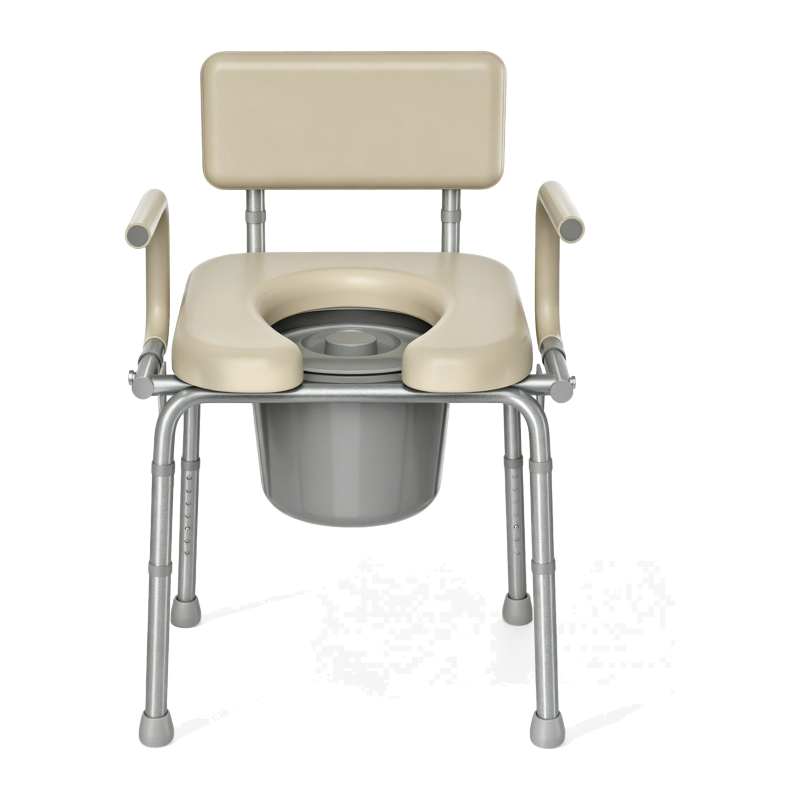
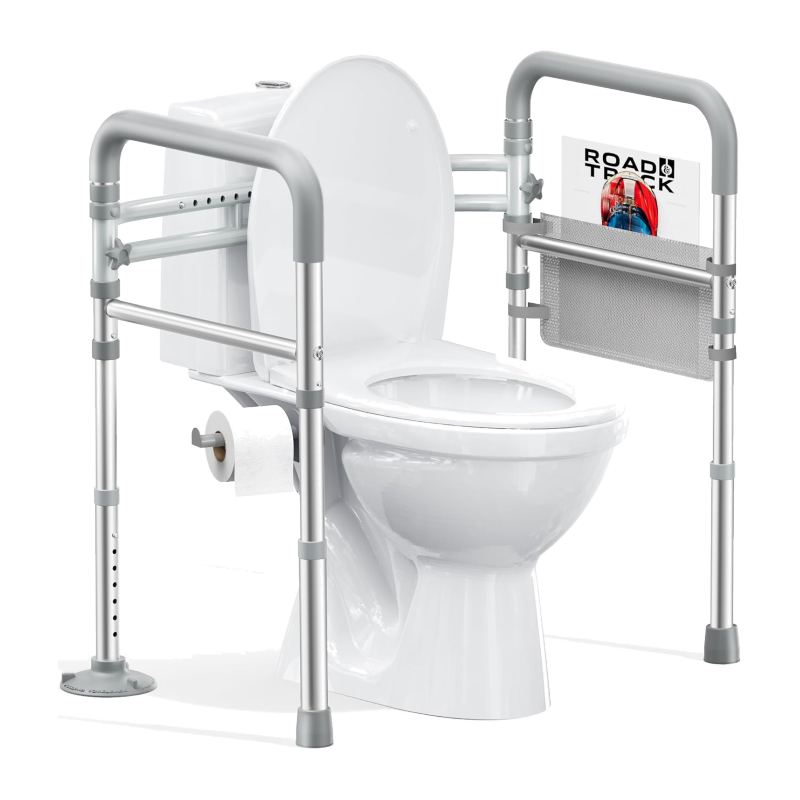
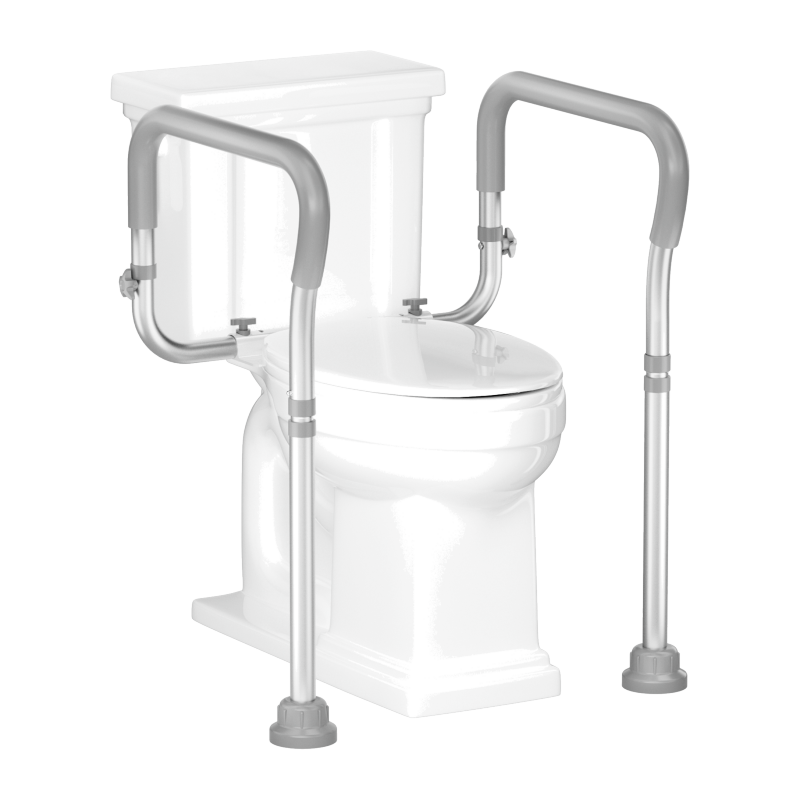
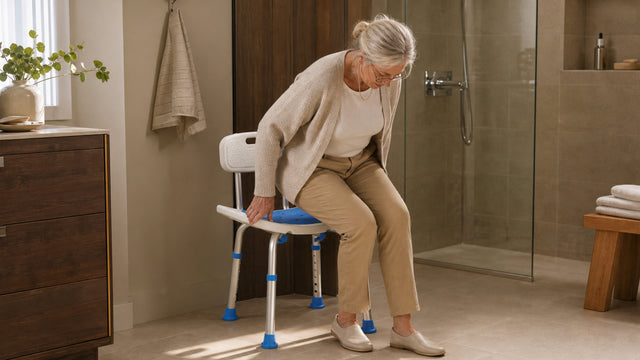
And for users who also want to strengthen their home safety setup beyond mobility outdoors, HOMLAND's broader lineup covers the full picture — from shower chairs and toilet safety rails to bed rails and standard walkers. Every product is FSA/HSA eligible, backed by a 1-year manufacturer warranty plus 1-year extended warranty, and ships from a US local warehouse for fast delivery.
The Bottom Line
An all-terrain rollator walker isn't a niche product for extreme outdoor adventures — it's a practical tool for anyone who wants to live a full life that includes the outdoors. Larger wheels, a stable frame, dependable brakes, and thoughtful ergonomics add up to something simple: the ability to go where you want to go, at your own pace, on your own terms. That's not a small thing. For many users, it's exactly the difference between staying home and staying engaged with the world around them.
If you're ready to explore options, HOMLAND's rollator walkers are a strong starting point — DPT-authorized, FSA/HSA eligible, and built with the kind of manufacturing depth that gives both users and caregivers real peace of mind. Browse the full HOMLAND product lineup or head directly to the Rolling Walkers Collection to find the right fit.
Have Questions? We're Here to Help.
Not sure which rollator is right for your situation? Our team is happy to walk you through the options — no pressure, no jargon. Just honest guidance to help you or your loved one move with confidence.
Contact Us