







There's a moment most adult children recognize: the first time you notice your parent moving a little more carefully down the hallway, or gripping the kitchen counter on the way up from a chair. It doesn't feel dramatic. But quietly, a new chapter has begun.
You're not alone in navigating it. According to the Bureau of Labor Statistics, 37.1 million Americans currently provide unpaid eldercare — and almost half of them are caring for a parent. The role arrives quickly, often without a roadmap, and it touches everything: your schedule, your finances, your emotional reserves, and your relationship with the person you're trying to help.
This guide is written for adult children who are somewhere on that journey — whether you're just beginning to think about what your parent might need, or you're already deep in the day-to-day. It walks through nine practical steps, from assessing your parent's needs and making their home genuinely safe, to finding the right mobility tools and building a care plan that works for everyone involved. The goal isn't a perfect caregiving setup. The goal is a safe, dignified life at home — for them, and a sustainable one for you.
Caring for Elderly Parents
A practical roadmap for adult children — from honest conversations and home safety to mobility tools, finances, and protecting your own well-being.
Honest Conversation
Start with listening. Ask open questions — let your parent lead.
Assess Needs
Evaluate physical health, daily living, cognition, and social connection.
Define Your Role
Be honest about your capacity. Delegate tasks early to avoid burnout.
Finances
Map costs. Explore Medicare, Medicaid, VA benefits, and FSA/HSA eligibility.
Home Safety
Walk through every room. Fix lighting, rugs, and handrails first.
Right Equipment
Choose bathroom safety gear, bed rails, and mobility aids sized to fit.
Support Network
Build a team — family, aides, community resources, and support groups.
Organize Documents
Secure legal, medical, and financial documents before an emergency occurs.
Care Plan + Self-Care
Write a clear care plan and schedule real rest for yourself — non-negotiable.
Falls Are the #1 Risk
Over 95% of hip fractures are caused by falls — most happening at home where seniors feel most comfortable and least guarded.
25% Caregiver Burnout Zone
1 in 4 family caregivers devotes 40+ hours per week — the equivalent of a full-time job on top of their existing life.
Plan Early, Save More
Average out-of-pocket caregiving costs reach ~$7,200/year. FSA/HSA accounts let you use pre-tax dollars on safety equipment.
🔧 Essential Safety & Mobility Equipment
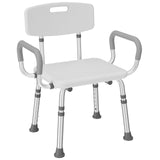
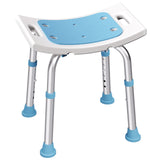
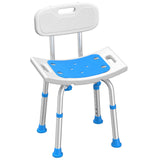
🚿 Shower Chair
Bathe seated on wet surfaces — critical post-surgery or with reduced balance.
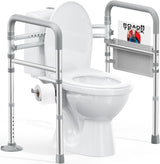
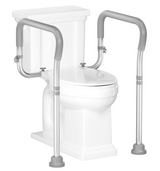
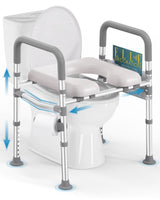
🚺 Toilet Safety Rail
Stable armrests for the sit-to-stand transition. FSA/HSA eligible.
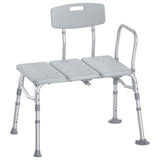
🤦 Transfer Bench
Slide into the tub from seated — eliminates the leg-lift risk.
🛌 Bed Rails
Reliable grip for nighttime transitions — no bed frame modifications needed.
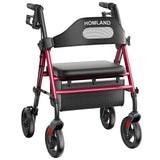
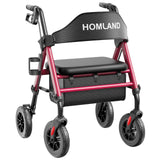
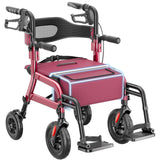
🚶 Rolling Walker
Balance support with a built-in seat. 3-wheel, 4-wheel, upright & bariatric options.
🚰 Knee Scooter
Ideal post foot or lower-leg surgery — move freely without weight-bearing.
Add motion-activated nightlights in hallways & bathrooms
Remove or secure all loose rugs and mats
Install handrails on both sides of all stairs
Clear all walking paths of clutter and cords
Place non-slip mats inside and outside the shower
Organize legal & medical docs in a fireproof location
Set up healthcare power of attorney & advance directive
Schedule personal respite time — treat it as non-negotiable
Step 1: Start With an Honest Conversation
Before any planning begins, sit down with your parent — not to deliver a checklist, but to listen. Many adult children skip this step out of worry that the conversation will be difficult, or that their parent will push back. That resistance is real, but it's usually rooted in something understandable: the fear of losing independence. A conversation that starts with "What's feeling harder lately?" tends to go better than one that starts with "We need to talk about what's going to happen."
Ask open questions about how they're feeling day-to-day, what tasks they find tiring or frustrating, and what matters most to them about staying in their own home. Let them lead. You'll likely learn more than any formal assessment would reveal. This conversation also sets the tone for everything that follows — your parent becomes a partner in their care, not a subject of it. That shift in framing makes a meaningful difference to how they feel about the help they receive.
Step 2: Assess Their Day-to-Day Needs
Once you've opened the dialogue, it's time to get a clearer picture of what support is actually needed. A useful way to think about this is across four areas: physical health, cognitive and emotional well-being, daily living activities, and social connection. You don't need a clinical form to do this — you need honest observation and a few good questions.
Physical health: Are there any chronic conditions or recent changes in health? Are medications being managed consistently? Is pain or discomfort affecting how they move or sleep?
Daily living: Can they bathe, dress, and use the toilet safely on their own? Can they prepare meals and manage basic housework? Are they getting up and down from chairs, the toilet, or bed without difficulty?
Cognitive and emotional health: Are they sleeping well? Have there been any changes in mood, memory, or concentration? Do they seem withdrawn or less engaged in things they used to enjoy?
Social needs: Are they staying connected with friends and family? Do they have regular opportunities to leave the house or spend time with others?
Beyond the conversation itself, spend some time observing. Watch how they move around the house — do they pause at the bathroom threshold, use the walls for steadiness, or avoid certain rooms? These small habits often reveal more than a direct question. If your parent has existing medical conditions, reach out to their doctor or review any recent records. And if other family members or close friends are involved, their observations add another layer of insight.
Step 3: Define Your Role — and Your Limits
One of the most common mistakes adult children make early on is trying to do everything themselves. It comes from love — and it leads to burnout. Research from the Radiological Society of North America found that the average family caregiver spends about 25 hours a week on caregiving activities, and 25% devote more than 40 hours per week. That's the equivalent of a full-time job, often stacked on top of one.
Defining your role isn't about limiting how much you care. It's about being honest with yourself — and with your parent — about what you can realistically provide. Ask yourself: How much time do I have, given my work and family commitments? Am I physically able to assist with transfers or mobility? Can I contribute financially, and how much? What would need to be handled by a professional or another family member?
Once you have that picture, write out the full list of care tasks needed and mark the ones you can manage. The rest go to others — a sibling, a home aide, a professional service. Setting these boundaries early isn't selfish. Communicating them clearly to your parent is actually a form of respect: it means you're telling them what they can count on, and ensuring that support stays consistent over the long term.
Step 4: Get the Finances on the Table
Caregiving carries a real financial weight. On average, family caregivers spend around $7,200 per year out of pocket on caregiving expenses — roughly 26% of their income — and that figure climbs significantly if professional home care is involved. Having an early, realistic conversation about your parent's financial situation helps you plan rather than react.
Start by mapping out the monthly costs you're likely to face: any professional care services, home modifications, medical supplies, transportation, and daily living support. Then look at what resources are available to offset those costs. Key programs to research include:
- Medicare: Covers health care for adults 65 and over, including some home health services when medically necessary.
- Medicaid: For lower-income seniors, many states offer long-term care services that can significantly reduce out-of-pocket costs.
- Veterans Affairs (VA): If your parent served in the military, the VA offers financial assistance and home modification grants.
- FSA/HSA accounts: Many home safety and mobility products — including walkers, raised toilet seats, shower chairs, and bed rails — are FSA/HSA eligible, which means pre-tax dollars can cover them directly.
- National Family Caregiver Support Program (NFCSP): Provides grants to states for caregiver services including counseling, training, and respite care.
- Aging and Disability Resource Centers (ADRCs): Local agencies that can help identify financial assistance programs available in your area.
If the financial picture feels overwhelming, a consultation with a financial planner who specializes in elder care is worthwhile. The earlier you plan, the more options you have.
Step 5: Make Their Home Safe to Live In
Falls are the single greatest physical threat to older adults living at home. According to the CDC, more than one in four adults over 65 falls every year, and each year roughly 3 million older adults are treated in emergency rooms for fall-related injuries. More than 95% of hip fractures are caused by falls. The hardest part? Most of those falls happen at home — in the places people feel most comfortable and least guarded.
A room-by-room walk-through of your parent's home is one of the most valuable things you can do. You're looking for anything that creates an unexpected obstacle, a slippery surface, or a moment of instability. Common hazards include:
- Loose rugs or mats that slide underfoot
- Poor lighting in hallways, stairwells, and bathrooms — especially at night
- Clutter on floors and walking paths
- No handrails on stairs, or handrails on only one side
- Bathroom surfaces with no non-slip mats or grip strips
- Furniture that's too low to get up from without effort
Address lighting first — it's inexpensive and makes an immediate difference. Motion-activated lights that plug into outlets are particularly useful for nighttime trips to the bathroom. Clear all walking paths. Secure or remove loose rugs. Then move to the higher-investment changes: handrails, bathroom safety equipment, and mobility aids. Physical therapists often recommend prioritizing the bathroom and bedroom, since these are where most household falls occur and where the consequences are most serious.
Step 6: Choose the Right Mobility and Safety Equipment
The right equipment doesn't make a home feel clinical — it makes it feel safe. The goal is to remove the small moments of uncertainty that accumulate throughout the day: the hesitation before stepping into the shower, the slow grip on the toilet tank while getting up, the careful shuffle down the hall at 2 a.m. When those moments are resolved by a well-placed grab bar or a supportive walker, daily life simply flows more naturally.
Physical therapists often recommend starting with the areas of highest risk and building outward from there. Here's a practical breakdown:
Bathroom Safety
The bathroom is the most hazardous room in the house for older adults — wet surfaces, tight spaces, and transitions between sitting and standing create multiple fall risk points in quick succession. A few well-chosen additions make a significant difference:
- Shower chair or bath bench: Allows your parent to bathe seated rather than standing on a wet surface. Particularly important after a hip replacement, knee surgery, or any period of reduced balance. HOMLAND's shower chair collection includes tool-free assembly options with adjustable height, so setup takes minutes rather than an afternoon.
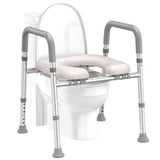
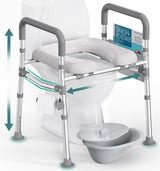
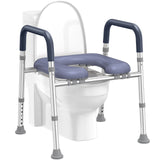
- Raised toilet seat or toilet safety rail: Getting on and off a standard toilet is harder than it looks when hip flexors are weakened or balance is compromised. A toilet safety rail provides stable armrests for lowering and rising; a raised toilet seat reduces the depth of the sit-stand movement. Both are FSA/HSA eligible.
- Transfer bench: For anyone who can't easily step over a tub edge, a transfer bench lets them slide in from a seated position rather than lifting their legs over. It's one of those products that removes a genuinely risky moment from daily life.
Bedroom Safety
- Bed rails: Getting in and out of bed is a fall risk point that most people overlook until an incident happens. HOMLAND's bed rail collection provides a stable handhold without requiring any structural changes to the bed frame. They're particularly valuable for anyone who gets up at night — giving them something reliable to grip while their eyes are still adjusting.
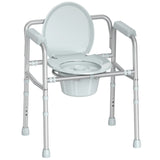
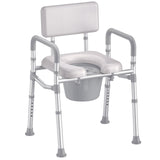
- Bedside commode: For parents who struggle with nighttime trips to the bathroom, a bedside commode eliminates the most hazardous walk in the house. It preserves their dignity while dramatically reducing nighttime fall risk.
Mobility Aids
If your parent has become unsteady on their feet, a mobility aid gives them back the confidence to move through the house — and outside it — without fear. The right choice depends on how much support they need:
- Rolling walkers (rollators): Best for parents who can walk but need balance support and occasional rest. HOMLAND's rolling walker collection includes 3-wheel, 4-wheel, upright, and bariatric options — all adjustable and assembled without tools. Many models have built-in seats for resting.
- Standard walkers: Provide more stability than a rollator for parents who need weight-bearing support. HOMLAND's standard walker collection is lightweight and height-adjustable.
- Knee scooters: For parents recovering from foot or lower-leg surgery, a knee scooter allows them to move freely around the home without bearing weight on the injured leg.
A note on fit: an improperly sized walker or cane actually increases fall risk rather than reducing it. Physical therapists can assess your parent's gait and recommend the right device at the right height. All HOMLAND products are authorized by licensed Doctors of Physical Therapy (DPT), FSA/HSA eligible, and backed by a 1-year manufacturer warranty plus a 1-year extended warranty — with fast delivery from a US local warehouse. You can browse the full lineup at homland.com/collections/all.
Step 7: Build Your Support Network
Caregiving is rarely — and shouldn't be — a solo endeavor. Research consistently shows that caregivers who try to go it alone are at the highest risk of burnout, health decline, and making poor decisions simply from exhaustion. Building a support network isn't a sign that you can't manage. It's how you manage sustainably.
Your network might include family members who can share specific responsibilities, your parent's friends or neighbors who can provide social connection and light check-ins, professional home care aides for tasks that require training or physical strength, and community resources like local Area Agencies on Aging. Caregiver support groups — available both in-person and online — are particularly valuable for the emotional side of the role. Being around others who understand the specific weight of caring for a parent, without needing to explain the dynamics, provides a kind of relief that's hard to find elsewhere.
If your parent has significant cognitive decline, round-the-clock safety becomes a priority that likely goes beyond what one family member can provide. In those cases, a professional home care service, a medication management system, and a personal emergency response device (a wearable button that connects to emergency services) are all worth putting in place. Think of your support network as a system, not a favor — the more robust it is, the more reliably your parent's needs get met.
Step 8: Organize Important Documents
In an emergency — a hospitalization, a sudden decline, or a financial decision that needs to be made quickly — the last place you want to be is searching through filing cabinets. Gathering and organizing key documents now means that when something urgent happens, you can focus on your parent rather than paperwork.
The documents worth locating and organizing fall into two categories:
Legal documents: Healthcare power of attorney, living will or advance directive, HIPAA authorization (which allows you to speak with their medical team), durable power of attorney for finances, will, and any marriage, birth, or death certificates that may be relevant.
Financial and medical documents: Social Security card, Medicare and Medicaid cards, insurance policies, bank and retirement account statements, tax returns, and a current medication list with dosages and prescribing physicians.
Store originals in a fireproof safe or secure file cabinet. Make sure at least one other trusted person knows where they are. A digital backup (scanned copies stored in a secure cloud folder) is worth creating — it means the information is accessible even if you're not at the house. If your parent doesn't yet have a healthcare proxy or power of attorney in place, those are the most urgent documents to address, because they determine who can make decisions on their behalf if they are unable to do so themselves.
Step 9: Create a Care Plan — and Protect Yourself in the Process
A care plan is simply a written record of who does what, when, and how. It doesn't need to be elaborate. It does need to be clear enough that anyone stepping in — a sibling, an aide, an emergency responder — can understand the situation without having to reconstruct it from scratch. A solid plan typically covers: your parent's daily care needs and schedule, who is responsible for each area, a list of their doctors and medications, emergency contacts, and any specific instructions for conditions they manage.
Alongside the care plan, it's worth building a communication plan (how updates flow between family members and healthcare providers), a legal plan (which documents are in place and where they're stored), and a respite plan — a specific, pre-arranged way for you to take breaks from caregiving without that meaning no one is looking after your parent. Respite isn't optional. Research shows that caregivers who don't protect their own health are at significantly higher risk of chronic illness, depression, and financial strain.
Self-care looks different for everyone. What matters is that it's scheduled, not squeezed in. Whether it's a daily walk, a weekly dinner with friends, or a standing appointment with a therapist, these aren't luxuries — they're what keep you functional in a role that has no natural endpoint. Your parent needs you to be well. That's reason enough.
Your Parent's Best Life Is Still at Home
Caring for an elderly parent is one of the most meaningful things an adult child can take on — and one of the most demanding. The first months often involve the steepest adjustments: learning a new rhythm, navigating emotional complexity, and making decisions that feel impossibly consequential. But with honest assessment, thoughtful planning, the right tools in place, and a support network around you, it becomes manageable. More than that, it becomes something you can sustain.
The "Home, not hospital" philosophy that guides HOMLAND's entire product line is built on exactly this belief: that people are better at home — safer, more comfortable, more themselves. The right safety equipment doesn't turn a home into a care facility. It turns a home into a place where independence is possible for longer, with less fear and more confidence. That's good for your parent. And it gives you the peace of mind to show up as a son or daughter, not just a caregiver.
Browse HOMLAND's full range of home safety and mobility products — all authorized by licensed Doctors of Physical Therapy, FSA/HSA eligible, and backed by a 2-year total warranty — at homland.com/collections/all.
Have Questions? We're Here to Help.
Whether you're figuring out which mobility aid fits your parent's needs or need guidance on bathroom safety upgrades, HOMLAND's team is ready to point you in the right direction. All products are FSA/HSA eligible, ship from a US local warehouse, and come with a 1-year manufacturer warranty plus a 1-year extended warranty — so you can buy with confidence.
Contact Us