
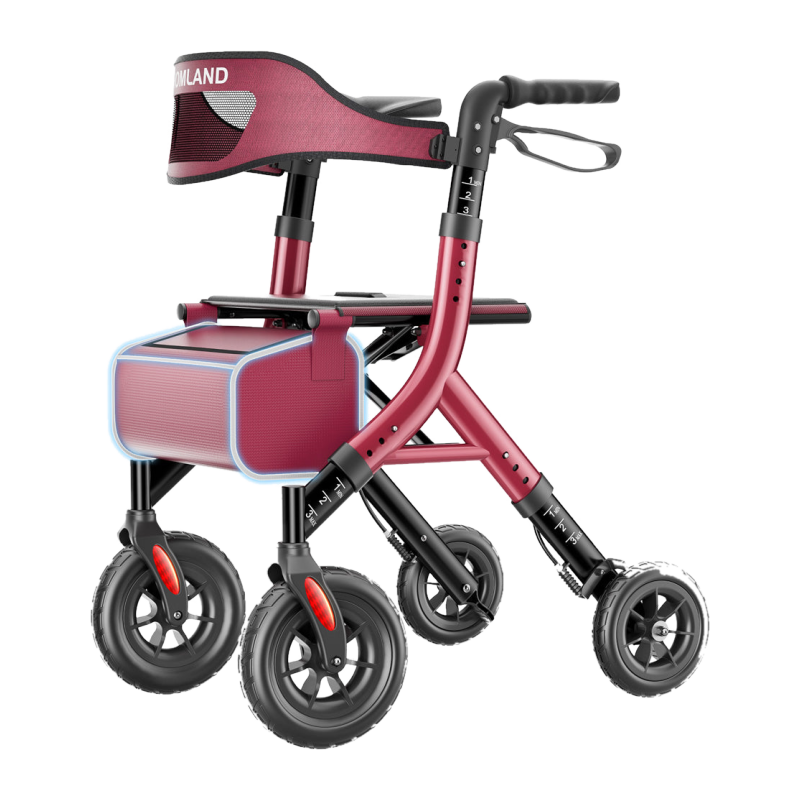
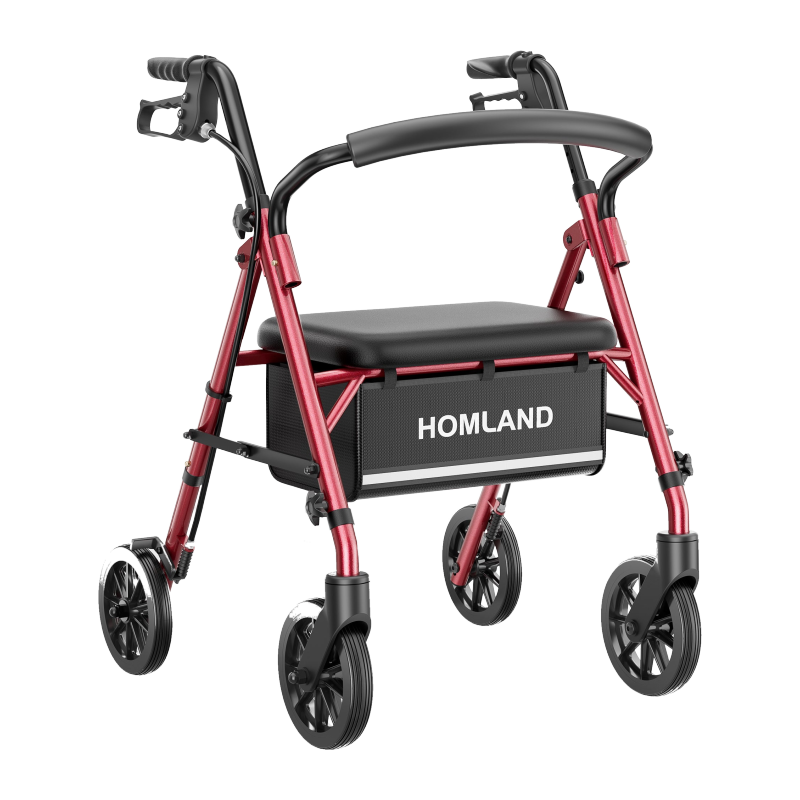



Finding a rollator walker that truly fits your body — and your life — shouldn't feel like a compromise. For individuals who need a higher weight capacity, the search can feel frustrating: most standard walkers are engineered for a narrower range, leaving larger-framed users, people recovering from surgery, or those managing chronic conditions with limited options that genuinely feel safe and sturdy underfoot.
The good news is that heavy-duty rollator walkers have come a long way. Today's bariatric and high-capacity rollators are built with reinforced frames, wider seats, and thoughtfully engineered braking systems — so using one feels like confident, supported movement rather than a reluctant concession. Whether you're navigating your kitchen after a knee replacement or walking a grandchild to the mailbox, the right rollator makes everyday independence feel natural again.
In this guide, we'll walk through what actually makes a rollator "heavy-duty," which features matter most, how to match a walker to your specific weight and mobility needs, and which HOMLAND options are worth a closer look. If you're a caregiver helping someone you love find the right fit, you'll find practical guidance here too.
Heavy-Duty Rollator Walkers
Everything you need to choose a higher-capacity rollator with confidence — features, weight tiers, and daily use tips.
At a Glance
Key numbers that define heavy-duty quality
Weight Capacity Tiers
Know where you fall to narrow the field quickly
Lightweight and portable. Not appropriate near or above the upper limit.
Robust frames, wider seats. Entry-level heavy-duty for daily support.
Heaviest-gauge materials, widest frames, most reinforced seat structures.
Physical Therapist Tip: Always choose a rollator rated at least 50 lbs above your current body weight. Dynamic loads during movement — pushing up from a seat, navigating a curb — routinely exceed static body weight.
7 Must-Have Features
Non-negotiables when evaluating any heavy-duty rollator
Heavy-gauge aluminum or steel with welded joints at stress points.
Meaningfully wider than standard 15–17" for comfort and safety.
Handle uneven pavement without tipping or catching.
Firm and responsive — especially important for arthritis or reduced grip.
Broader stance for lateral stability during weight shifts.
Full height range, ideally tool-free, for taller users.
Pouch or basket that attaches firmly without swinging loose.
Who Benefits Most
Heavy-duty rollators serve more people than you might expect
Hip, knee, or joint replacement patients rebuilding strength
Individuals who exceed standard rollator weight limits
Neurological conditions that affect stability and gait
Those who rely on the seat frequently throughout the day
5 Daily Use Tips
Habits that turn your rollator into a daily confidence-builder
- 1Set handle height correctly
Wrists should rest at handle height when arms are relaxed at your sides — too high causes shoulder strain, too low creates a posture-wrecking stoop.
- 2Always engage brakes before sitting or standing
Lock both brakes, position yourself in front of the seat, then lower in a controlled motion — never drop into the seat.
- 3Walk upright — don't lean forward
Weight should stay centered over your feet, not pitched onto the handles. Leaning forward usually means handle height is too low.
- 4Check brakes weekly
Cable brakes loosen over time. A quick squeeze of both levers each week takes seconds and keeps performance as designed.
- 5Use the pouch for light essentials only
Phone, keys, medication — not heavy bags. Overloading the pouch shifts your center of gravity and compromises stability.
Why HOMLAND
Built on trust, backed by expertise
Ready to Find Your Perfect Fit?
Browse HOMLAND's full lineup — including bariatric and high-capacity options up to 500 lbs — all DPT authorized, FSA/HSA eligible, and ship-ready from a US warehouse.
Shop Heavy-Duty Rollators →HOMLAND — Home, not hospital.
What Makes a Rollator "Heavy-Duty"?
A rollator earns the "heavy-duty" label when its entire structure — not just its frame — is engineered to support users beyond the standard 250–300 lb weight limit common on most consumer-grade models. This means reinforced tubing at stress points, wider wheel bases for lateral stability, heavier-duty loop or cable brakes, and seats rated to hold weight without flex or sag. It's the difference between a walker that technically holds you and one that genuinely feels solid every time you lean into it.
Physical therapists often point out that a rollator's rated capacity is only part of the story. Equally important is how weight is distributed across the frame during real use — when you're sitting down, pushing up from the seat, or leaning forward on an incline. A well-designed heavy-duty rollator anticipates those dynamic loads, not just static weight, which is why build quality and engineering depth matter as much as the number printed on the spec sheet.
Who Benefits Most from a Higher-Capacity Rollator?
The most obvious answer is individuals who exceed the weight limits of standard rollators — typically those above 300 lbs — but the reality is broader than that. A heavier-built frame often provides a more stable, less wobbly experience for anyone who relies heavily on their walker for balance support, regardless of body size. That includes people recovering from hip or knee surgery, those managing neurological conditions that affect balance, and older adults who use the rollator's seat frequently throughout the day.
Caregivers often search for bariatric or heavy-duty options on behalf of a parent or partner who is reluctant to acknowledge that their current walker feels unsteady. If someone you love has mentioned that their walker "shakes" or that the seat feels too narrow, a heavy-duty upgrade isn't about labeling a problem — it's about giving them equipment that matches where they actually are physically, so they can keep moving safely and with dignity.
Key Features to Look for in a Heavy-Duty Rollator Walker
Not all "bariatric" rollators are created equal. When evaluating options, the features below will tell you whether a walker is genuinely engineered for higher demands or simply marketed that way.
- Reinforced frame construction: Look for heavy-gauge aluminum or steel tubing with welded or reinforced joints at the corners and seat supports. These are the areas that bear the most stress during sit-to-stand transitions.
- Wider seat and backrest: A seat that's at least 20 inches wide (versus the 15–17 inches on standard models) makes a meaningful difference in comfort and safety for larger-framed users.
- Larger wheels: Eight-inch wheels are the norm for outdoor use; heavy-duty models may offer 10-inch or larger wheels that handle uneven pavement without tipping or catching.
- Dual loop brakes with strong cable tension: Braking should feel firm and responsive, not spongy. Test (or read reviews about) how much hand strength is required — this matters for users with arthritis or reduced grip.
- Wider wheel base: A broader stance increases lateral stability, which is especially important when users shift their weight sideways getting in or out of a seat.
- Adjustable handle height: This should go without saying, but heavy-duty models should still offer the full range of height adjustability — ideally tool-free — to accommodate taller users who often accompany larger frames.
- Storage pouch or basket: A practical carrying solution that attaches securely to the frame without swinging loose when weight shifts.
Think of these features as non-negotiables rather than nice-to-haves. A rollator missing even one of them — say, a reinforced frame with a narrow seat — won't deliver the full confidence that heavier-duty users need day to day.
Understanding Weight Capacity Tiers
Weight capacities in rollator walkers generally fall into a few practical tiers, and knowing where you land helps narrow the field quickly.
- Up to 250–300 lbs: Standard rollators designed for average-weight adults. Lightweight and portable but not appropriate for users near or above the upper limit.
- 300–400 lbs: The entry point for heavy-duty territory. Frames are noticeably more robust, and seats are typically wider. A good fit for many larger-framed users who need reliable daily support.
- 400–500 lbs: True bariatric-grade construction. These rollators use the heaviest-gauge materials, the widest frames, and the most reinforced seat structures. Ideal for users who need maximum load capacity without sacrificing mobility.
It's worth noting that physical therapists generally recommend choosing a walker rated at least 50 lbs above your current body weight. This buffer accounts for the dynamic loads generated during movement — pushing up from the seat, sudden weight shifts, or navigating a curb — which routinely exceed static body weight. The extra margin isn't just a safety technicality; it's what makes the walker feel solid rather than strained.
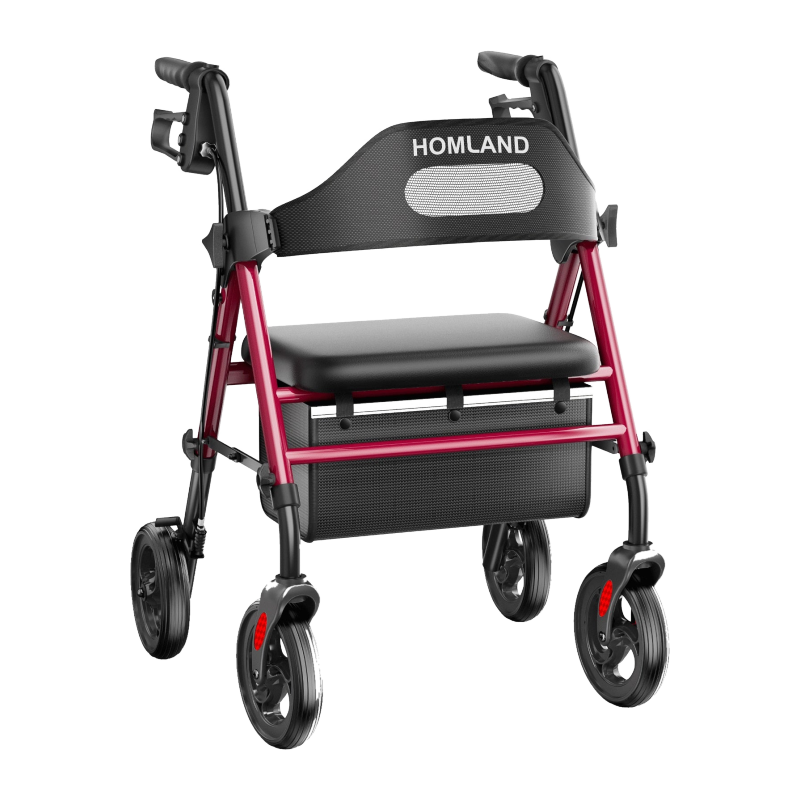
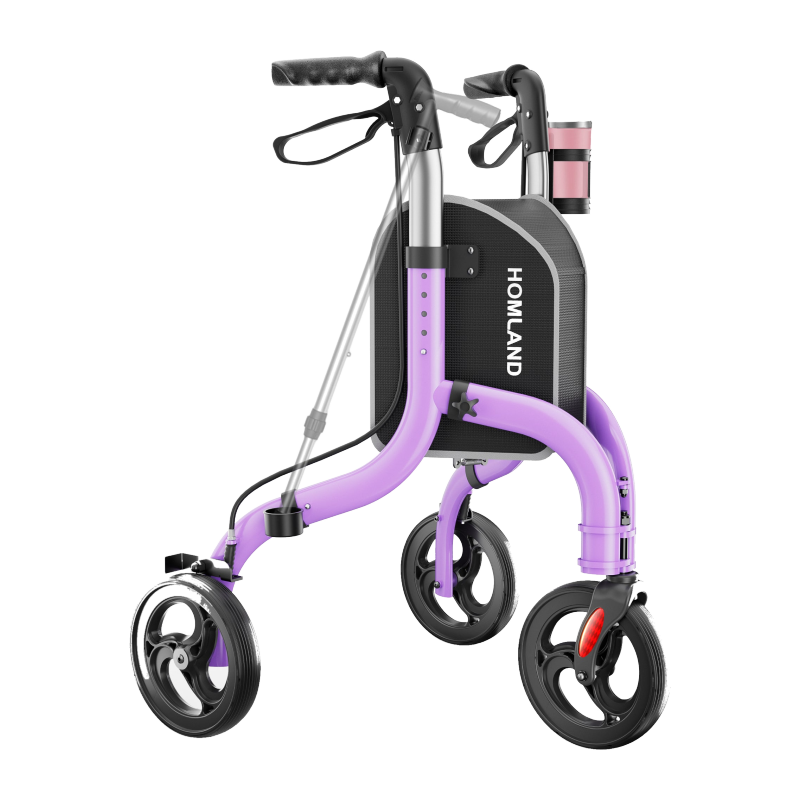
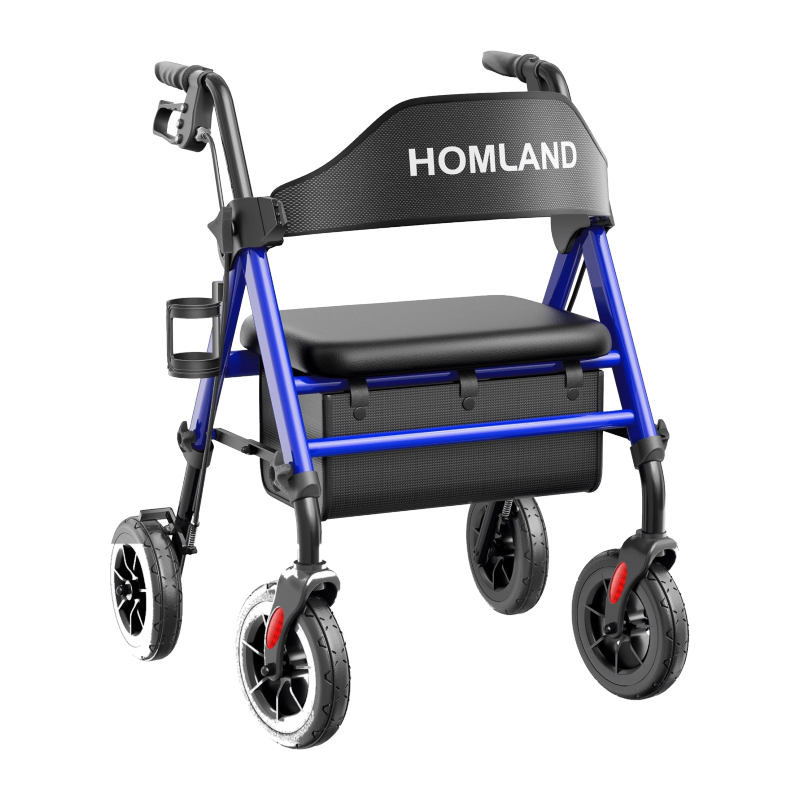
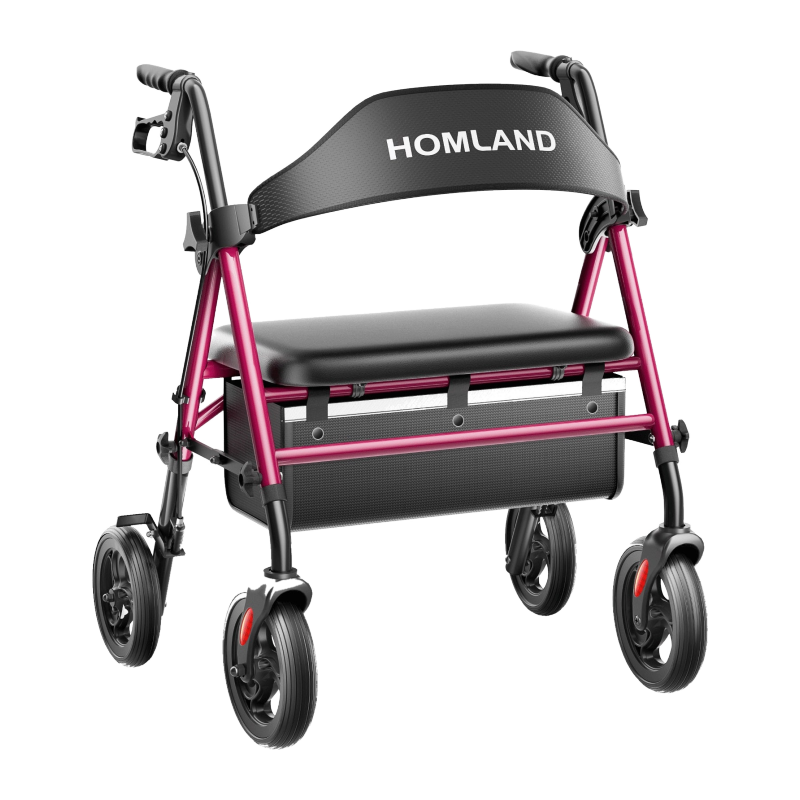
HOMLAND's Heavy-Duty Rolling Walker Options
HOMLAND's rolling walker lineup is built around real-world independence, with select models engineered to support up to 500 lbs. Every walker in the range is designed for tool-free assembly, because the last thing anyone wants when a new walker arrives is to hunt for a wrench before they can use it. Handles adjust to fit users of varying heights, wheels are sized for both indoor smoothness and outdoor grip, and brake systems are calibrated to be firm enough to hold reliably without requiring a vice-like grip.
The HOMLAND Rolling Walkers Collection includes 3-wheel, 4-wheel, upright, and bariatric configurations — so whether the priority is a tight turning radius for navigating hallways, an upright posture position recommended by physical therapists, or a wide bariatric seat for prolonged sitting, there's a purpose-built option rather than a one-size-fits-all compromise. Each model is authorized by licensed Doctors of Physical Therapy, which means the ergonomics aren't guesswork — they reflect how bodies actually move during recovery and daily life.
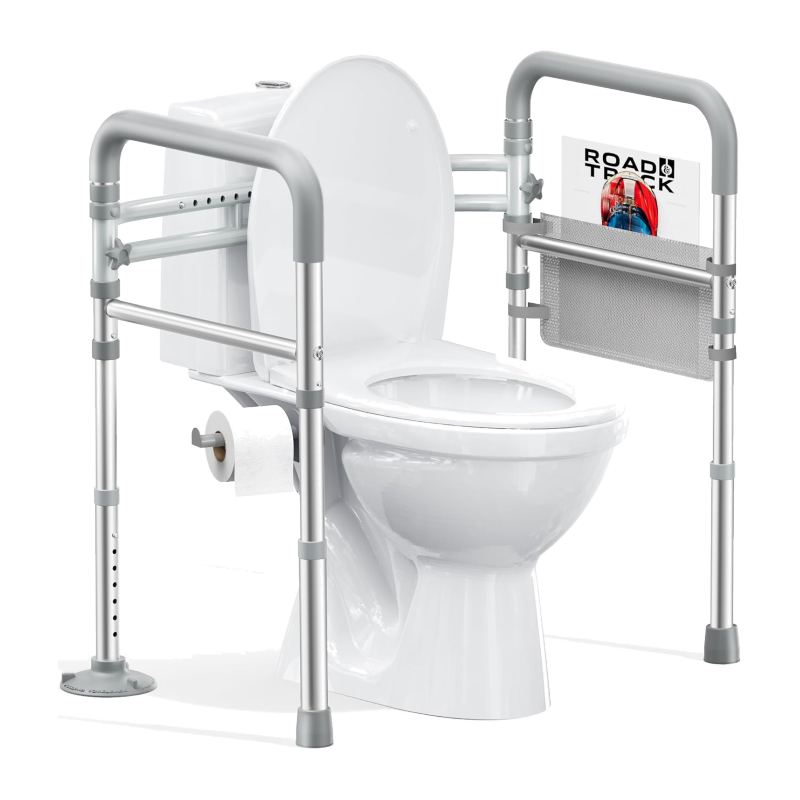
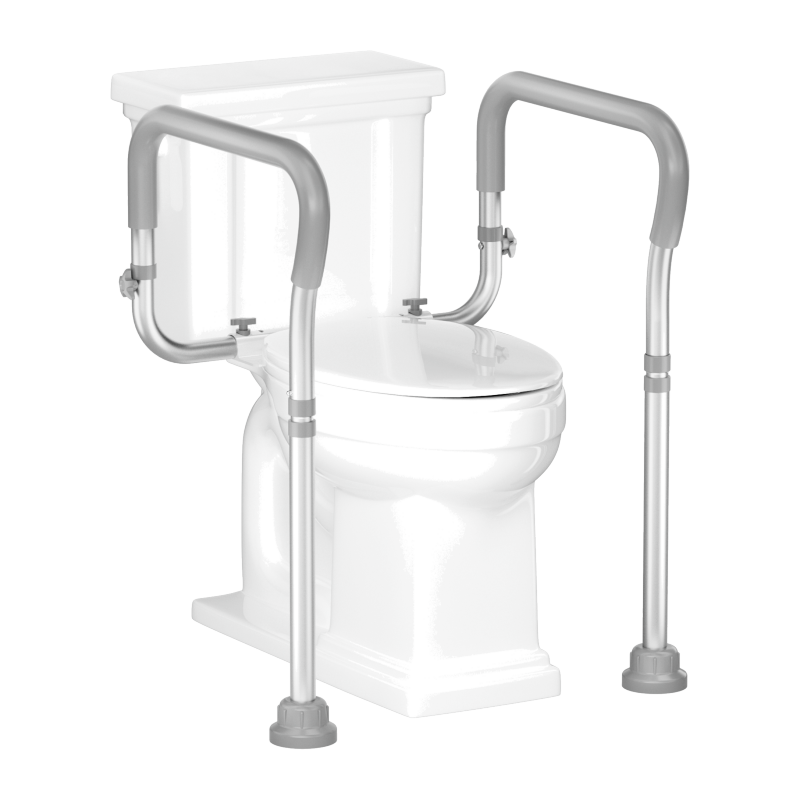
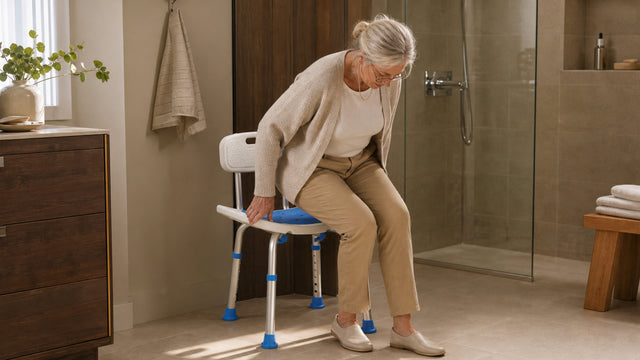
If you're also evaluating home safety equipment beyond the rollator itself, HOMLAND's broader lineup covers the full picture of safe independent living at home. The shower chair collection, toilet safety rails, and bed rails are all built with the same heavy-duty philosophy — consistent weight capacities, tool-free setup, and designs that belong in a home rather than a clinical setting.
How to Choose the Right Heavy-Duty Rollator for Your Situation
The best rollator for one person may not be the best for another, even if both users have similar weights. Here's a practical way to think through the decision.
Start with your primary use case. If most of your movement is indoors — kitchen to living room, hallway to bathroom — a 4-wheel rollator with a moderate wheel size and a compact frame is usually the better fit. If you're regularly walking outdoors on pavement, grass, or uneven surfaces, prioritize larger wheels and a wider base for stability over smooth flooring.
Consider how often you'll use the seat. If you expect to sit down frequently — during a grocery run, while resting in a hallway, or whenever fatigue sets in — seat width, seat firmness, and seat height all become critical comfort factors, not secondary ones. A seat that's too narrow or too low makes sitting feel like a risk rather than a rest.
Think about handle height in relation to your full height. Taller individuals often accompany larger frames, and a walker with a handle height range that stops too low will force a forward hunch — exactly the posture most physical therapists want to correct, not create. Look for models with an extended height range, and confirm the numbers before purchasing.
For caregivers making this purchase: if the person you're buying for is hesitant, focus the conversation on comfort rather than capacity. Asking "does your current walker feel steady enough?" often surfaces the real concern more effectively than discussing weight limits, and it keeps the conversation grounded in their experience rather than a number on a scale.
Tips for Getting the Most Out of Your Rollator Every Day
Owning the right rollator is the first step; using it well is what turns it into a genuine daily confidence-builder. A few practical habits make a real difference.
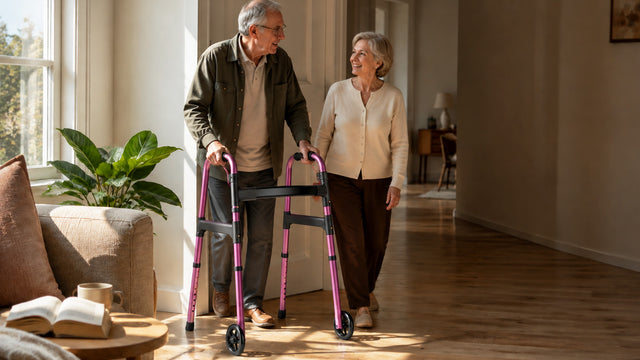
- Set handle height correctly before first use. When standing upright with arms relaxed at your sides, your wrists should rest at handle height. Handles set too high cause shoulder strain; handles set too low create a stoop that throws off balance.
- Always engage the brakes before sitting or standing. This is the single most important safety habit with any rollator. Lock both brakes, position yourself in front of the seat, and lower yourself in a controlled motion rather than dropping into the seat.
- Don't lean forward when pushing. A well-fitted rollator should allow you to walk upright with your weight centered over your feet, not pitched forward onto the handles. If you're leaning forward significantly, the handles may be too low.
- Check the brakes periodically. Cable brakes can loosen over time with regular use. A quick weekly check — squeezing both levers to confirm they hold firmly — takes seconds and keeps the walker performing as designed.
- Use the storage pouch for essentials, not heavy items. A rollator's pouch is designed for phones, keys, medication, and light personal items. Overloading it with heavy bags shifts the center of gravity and can compromise stability.
Buying with Confidence: Warranty, FSA/HSA Eligibility, and Fast Delivery
Purchasing a heavy-duty rollator is a meaningful investment in daily independence, and it's reasonable to want reassurance that the purchase is protected. HOMLAND rollators are FSA/HSA eligible, which means qualifying buyers can use pre-tax health savings dollars — a practical way to reduce out-of-pocket cost on equipment that genuinely supports health and recovery.
Every HOMLAND walker comes backed by a 1-year manufacturer warranty plus an additional 1-year extended warranty — a two-year coverage window that reflects genuine confidence in the product's durability. And because HOMLAND ships from a US local warehouse, delivery is fast rather than a weeks-long wait. For someone who needs a more stable, higher-capacity walker now — not eventually — that matters.
You can explore the full rolling walker lineup, including bariatric and high-capacity options, at the HOMLAND Rolling Walkers Collection. If you have specific questions about which model fits your needs or weight requirements, the team is easy to reach and ready to help.
The right heavy-duty rollator walker doesn't just support your weight — it supports your confidence. It means moving through your home, your neighborhood, and your daily routines without second-guessing whether your equipment can keep up. For larger-framed users, people rebuilding strength after surgery, or anyone who simply needs a sturdier, more reliable foundation underfoot, a thoughtfully engineered bariatric rollator is one of the most practical investments in independent living you can make.
Whether you're choosing for yourself or helping someone you love find a better fit, the key is matching the walker to the whole person — not just the weight, but the daily routine, the home environment, and the moments where feeling steady makes all the difference. HOMLAND's heavy-duty rolling walker options are built around exactly that idea: home, not hospital, and independence earned back one confident step at a time.
Ready to find the right heavy-duty rollator for your needs?
Browse HOMLAND's full lineup of rolling walkers — including bariatric and high-capacity models — or reach out to our team with any questions. We're here to help you find the right fit, fast.