
If you're taller than average and have been struggling to find a rollator walker that doesn't leave you hunched over after just a few minutes of use, you're not alone. Standard rollators are often designed with a one-size-fits-most approach — and for people 6 feet tall or above, that can mean chronic back strain, poor posture, and a device that actually works against your body instead of supporting it.
The good news is that the right rollator, sized correctly for your height and frame, can make an enormous difference. Not just in comfort, but in confidence — the kind that lets you walk through your home, down the street, or across a parking lot without bracing for discomfort. This guide walks you through exactly how to measure for the right fit, which features matter most for taller users, and what to look for when you're ready to choose.
Why Walker Height Matters More Than You Think
A rollator walker that's too short forces you to lean forward constantly, putting stress on your lower back, shoulders, and wrists. Over time, that compensating posture can cause more discomfort than the original mobility challenge itself. Physical therapists often emphasize that a properly adjusted walker should allow your elbows to rest at a natural, slight bend — roughly 15 to 20 degrees — so your weight distributes evenly and your spine stays upright. For taller users, achieving that natural elbow angle means needing handles that most standard rollators simply cannot reach.
Beyond comfort, posture directly affects balance and safety. When you're hunched over a too-short walker, your center of gravity shifts forward, making it harder to stay steady — especially on uneven surfaces or when navigating tight corners at home. Getting the height right isn't a luxury detail. It's foundational to what a rollator is supposed to do for you in the first place.
What Counts as 'Tall' When Choosing a Rollator?
Most standard rollators have handle heights that max out somewhere between 36 and 38 inches. For users up to around 5'10", that range usually works fine. But once you're 5'11" or taller — and especially if you're 6'2" or above — you'll quickly find yourself at the upper limit or completely outside the adjustment range of a standard model.
Tall rollators (sometimes called "large" or "tall-frame" rollators) are specifically designed with extended height ranges, typically reaching 39 to 42 inches or higher at the handles. Bariatric rollators, which are built for heavier users, often share this extended height range as well, since taller builds frequently come with larger frames overall. If your height puts you in the 6'0" and above category, shopping specifically within the tall or bariatric rollator category is the right starting point — not an afterthought.
How to Find Your Correct Handle Height
Getting your handle height right doesn't require any special equipment — just a measuring tape and about two minutes. Here's the method physical therapists recommend:
- Stand up straight in your everyday shoes. The shoes you'll actually wear while using the walker matter, since heel height affects your wrist position.
- Let your arms hang naturally at your sides. Don't tense your shoulders or bend your elbows — just relax.
- Have someone measure from the floor to your wrist crease. The wrist crease is the horizontal line at the base of your palm where your hand meets your wrist.
- That measurement is your target handle height. Look for a rollator whose handle adjusts to at least that height, ideally with a little room above so you can fine-tune the fit.
As a general reference point, a person who is 6'0" tall typically has a wrist height of around 37 to 39 inches, while someone who is 6'4" may measure closer to 41 to 43 inches. Always use your own measurement rather than relying on height-to-handle conversion charts alone, since arm length varies from person to person even at the same height.
Top Features to Look for in a Rollator for Tall Users
Once you've confirmed the height range works for your frame, there are several other features that genuinely matter for taller users — features that affect how the rollator feels to use every single day, not just in the store or on delivery day.
Extended and Easy Handle Adjustment
Look for tool-free height adjustment — the kind where you simply push a button or pull a pin to raise or lower the handles without needing a wrench. This matters because you may want to adjust slightly depending on whether you're walking indoors on flat floors or outdoors on a slope. Tool-free designs also let a caregiver or family member make a quick change without any fuss.
A Wider, Deeper Seat
Taller frames tend to come with broader shoulders and wider hips. A rollator seat that's too narrow or too shallow won't give you a comfortable, secure place to rest when you need it. Look for seat widths of at least 12 to 13 inches and seats with meaningful depth — not just a thin strip of metal — so sitting feels natural and steady rather than precarious.
Longer Legs and a Wider Wheelbase
A walker with longer legs sits higher from the ground, which complements the taller handle height and keeps the overall geometry proportionate. A wider wheelbase improves lateral stability, which is especially important for taller users whose center of gravity is naturally higher. This is one of the features most often overlooked when shopping online, but it makes a real difference in how the rollator feels when you're moving through a narrow hallway or stepping off a curb.
High Weight Capacity
Taller individuals often need a walker built to support more weight — not because of any assumption about body size, but simply because a taller, larger frame puts more mechanical stress on the walker's joints and frame. Look for models rated to at least 300 lbs, and consider heavy-duty or bariatric options (rated to 400 or 500 lbs on select models) if you want genuine peace of mind that the frame will hold up over years of daily use.
Comfortable, Ergonomic Handgrips
Large hands often come with tall frames, and foam or rubber handgrips that are too narrow can cause hand fatigue or even wrist strain over longer walks. Contoured, cushioned grips that accommodate a larger hand make a meaningful difference in comfort — especially for users who rely on their rollator throughout the day.
Which Type of Rollator Works Best for Taller Frames?
Not all rollator styles are equally suited to taller users, and understanding the differences can help you narrow your choice quickly.
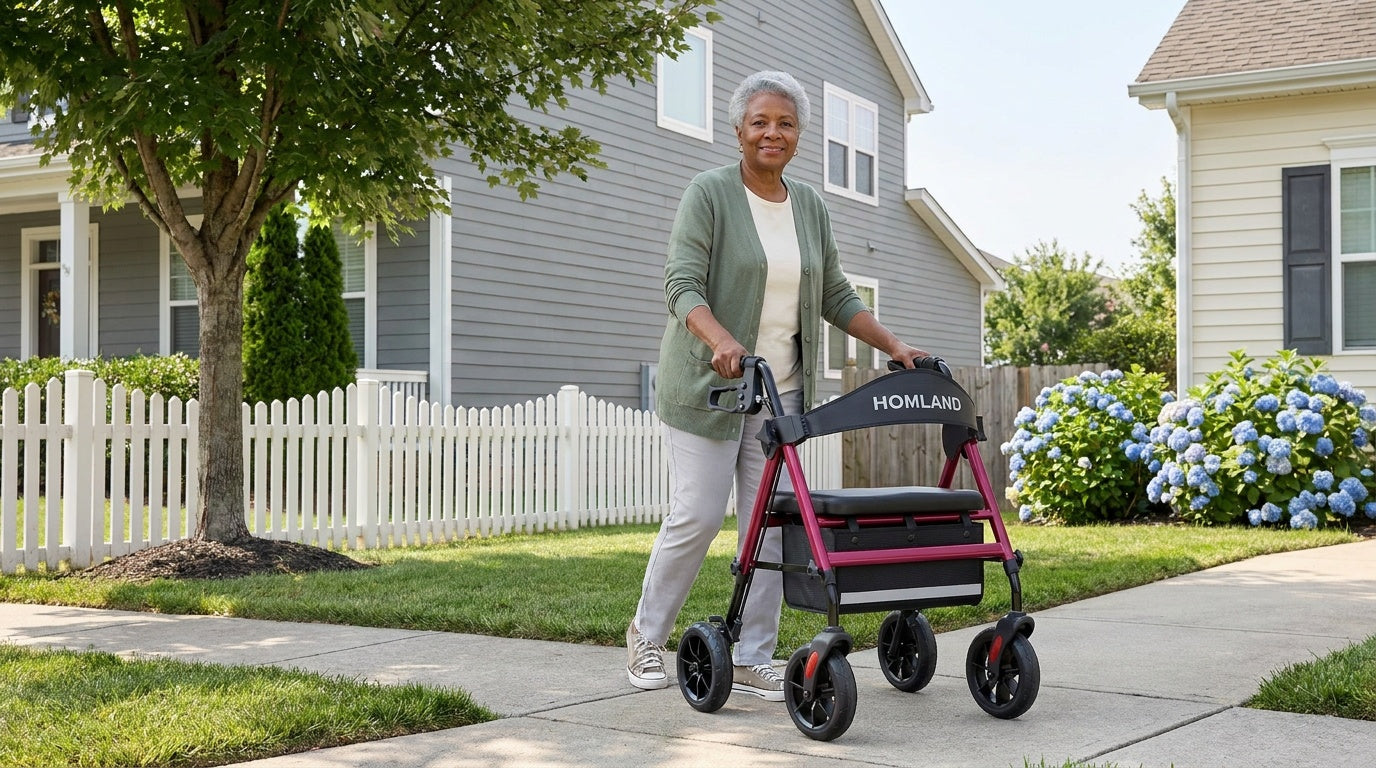
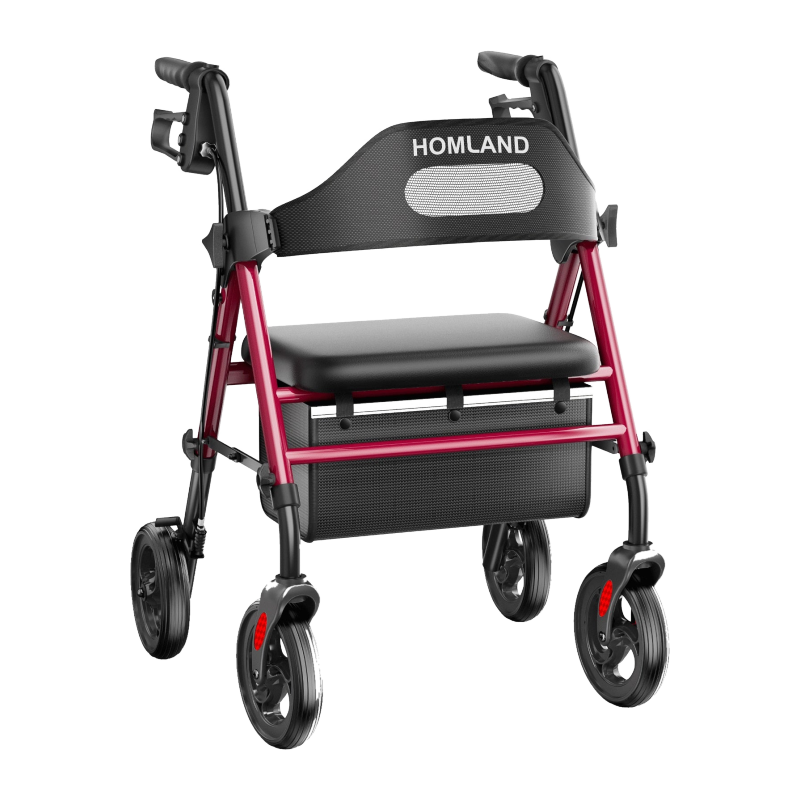
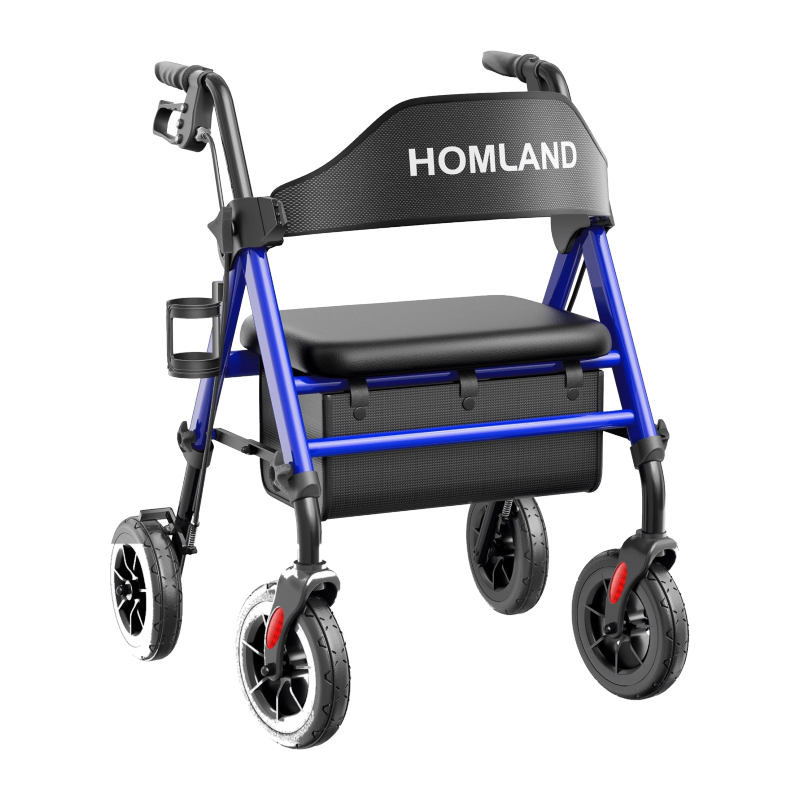
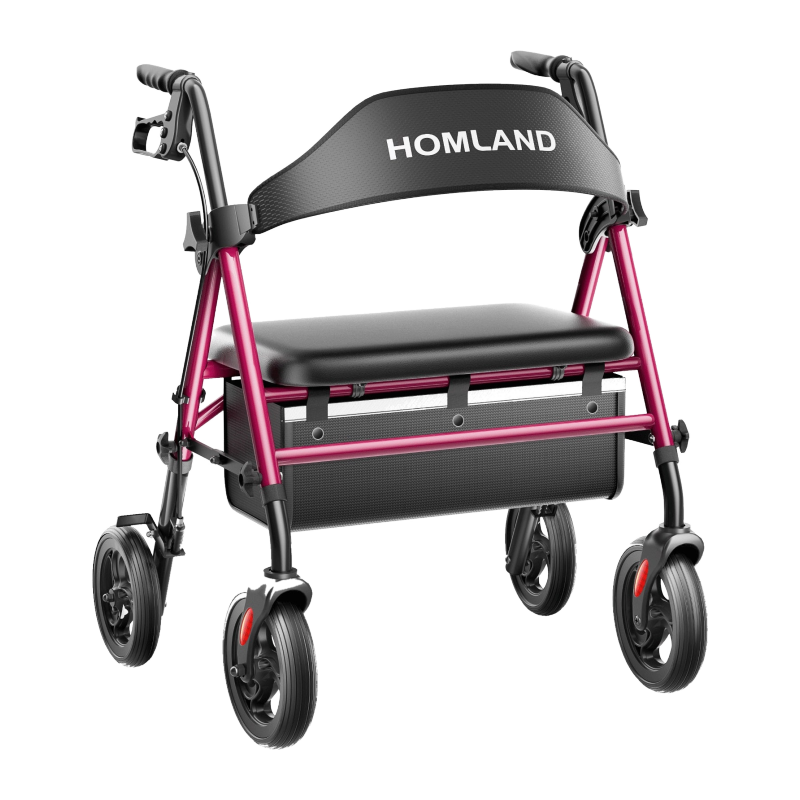
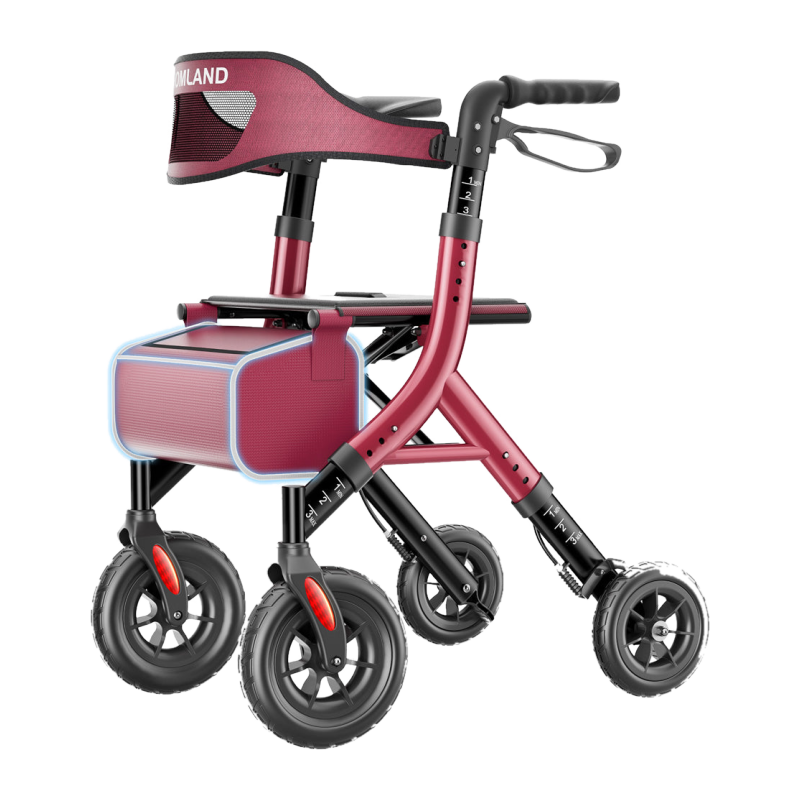
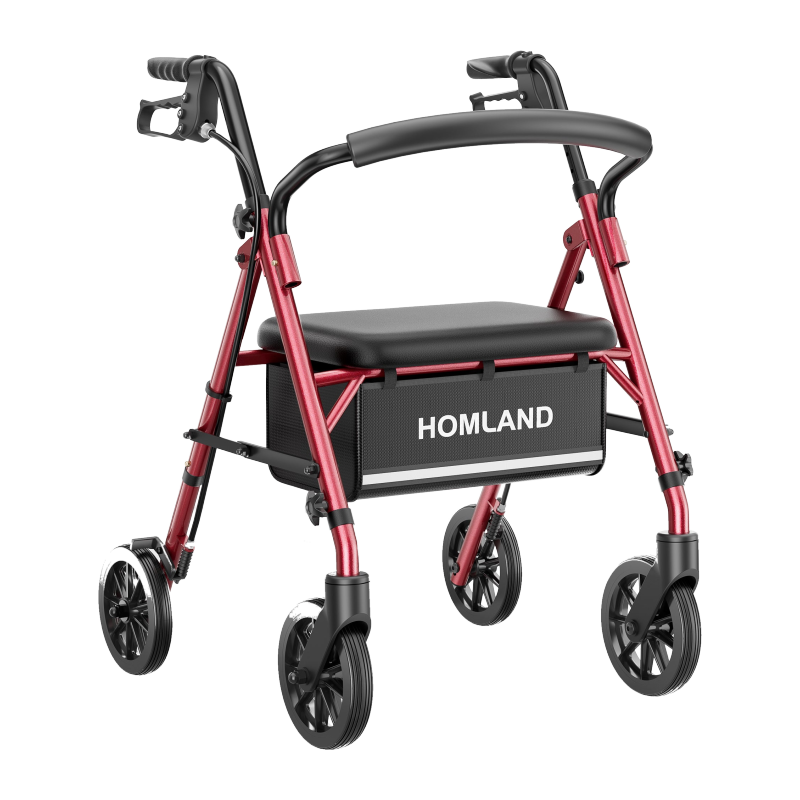
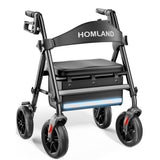
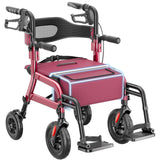
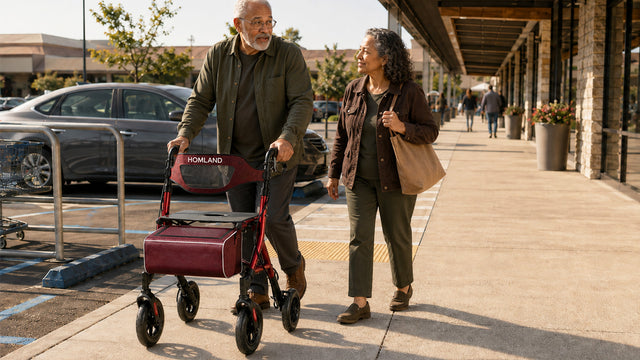
4-Wheel Rollators are the most popular choice for everyday home and outdoor use. They offer a seat for resting, a storage pouch for carrying small items, and four-point stability that works well on most surfaces. For tall users, a 4-wheel rollator with an extended height range is usually the best all-around starting point. HOMLAND's Rolling Walkers Collection includes options across height ranges and weight capacities, including bariatric models built for larger frames.
Upright Rollators are designed for users who want to walk in a more upright posture, with forearm support rests rather than traditional handles. For tall users who struggle with hunching, an upright rollator can be a game-changer — it places the support at forearm level rather than wrist level, which naturally encourages an upright spine. If back posture is a concern, this style is worth exploring.
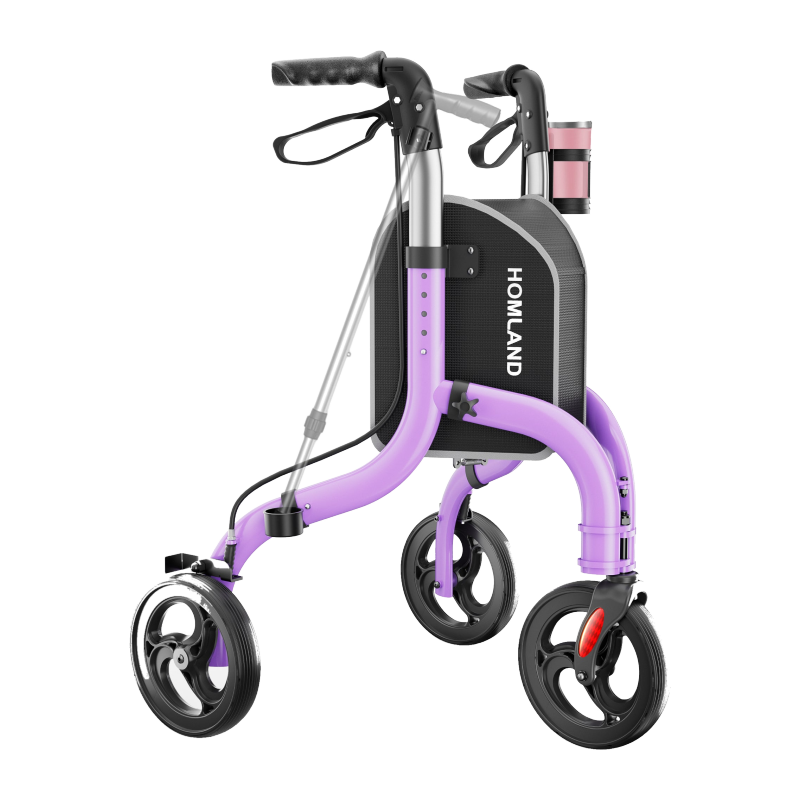
3-Wheel Rollators are lighter and more maneuverable in tight spaces, but they don't have a seat and offer less lateral stability. For taller users who are relatively active and need a compact option for indoor navigation, they can work well — but they're generally not the first recommendation when stability and comfort are the priority.
Standard (Non-Rolling) Walkers are still a valid option for users who need maximum stability and aren't covering long distances. If you're recovering from surgery or need close, controlled support, HOMLAND's Standard Walker Collection includes adjustable-height models worth considering alongside rollator options.
Common Sizing Mistakes (and How to Avoid Them)
Even with the right intentions, it's easy to end up with the wrong fit. Here are the mistakes that come up most often — and how to sidestep them.
- Buying based on height alone. Height is a useful starting point, but arm length and wrist height are what actually determine the right handle position. Always measure your wrist height in shoes before buying.
- Ignoring the maximum height limit. Product listings often emphasize the minimum handle height (great for shorter users) without making the maximum equally visible. Scroll to the full specifications and confirm the maximum handle height before purchasing.
- Choosing style over fit. A sleek, lightweight rollator that maxes out at 37 inches won't serve a 6'3" user — no matter how attractive or well-reviewed it is for other users. Fit comes first.
- Forgetting about the seat height. Seat height and handle height don't always scale together. If you'll be using the seat regularly, check that the seat height is also appropriate for your leg length so you're not perched awkwardly or struggling to stand back up.
Why HOMLAND Rollators Are Built With Tall Users in Mind
HOMLAND's rollator lineup is backed by 20+ years of manufacturing experience for high-end mobility products, and the design philosophy starts from real-world use — not just spec sheets. Every rollator in the range features tool-free assembly and tool-free height adjustment, so you can dial in the right fit the moment the box arrives, without needing a second person or a toolkit. Models built for larger frames include heavy-duty weight capacities (up to 500 lbs on select options) and wider seating designed to feel comfortable for taller, broader builds.
Every HOMLAND rollator is authorized by licensed Doctors of Physical Therapy (DPT), which means the sizing ranges, handle ergonomics, and stability features have been reviewed through a clinical lens — giving both users and their families confidence that the product is genuinely suited for daily mobility support. All products are FSA/HSA eligible, backed by a 1-year manufacturer warranty plus a 1-year extended warranty, and ship from a US local warehouse so you're not waiting weeks to get moving.
Whether you're choosing for yourself or helping a taller parent or partner find the right fit, browsing the full Rolling Walkers Collection is a good place to start — and you can always explore the complete HOMLAND lineup if you're outfitting more of your home for safer, more confident daily living.
The Right Fit Makes All the Difference
A rollator walker that fits your height doesn't just feel better — it works better. It keeps your posture right, your balance steady, and your confidence intact whether you're moving through the kitchen, heading to an appointment, or simply getting up for a glass of water at night. For taller users, the difference between a standard model and one sized for your frame is often the difference between a device that helps and one that quietly creates new discomfort.
Start with your wrist height measurement, confirm the maximum handle height in the specifications, and look for features like a wider seat, sturdy wheelbase, and sufficient weight capacity for your build. The right rollator is out there — and once you find it, you'll wonder why you ever settled for anything less.
Ready to Find Your Perfect Fit?
Browse HOMLAND's full range of rolling walkers — including tall-frame and bariatric options — designed for real independence at home. FSA/HSA eligible, DPT-authorized, and backed by a 2-year warranty total.
Shop Rolling WalkersContact Us