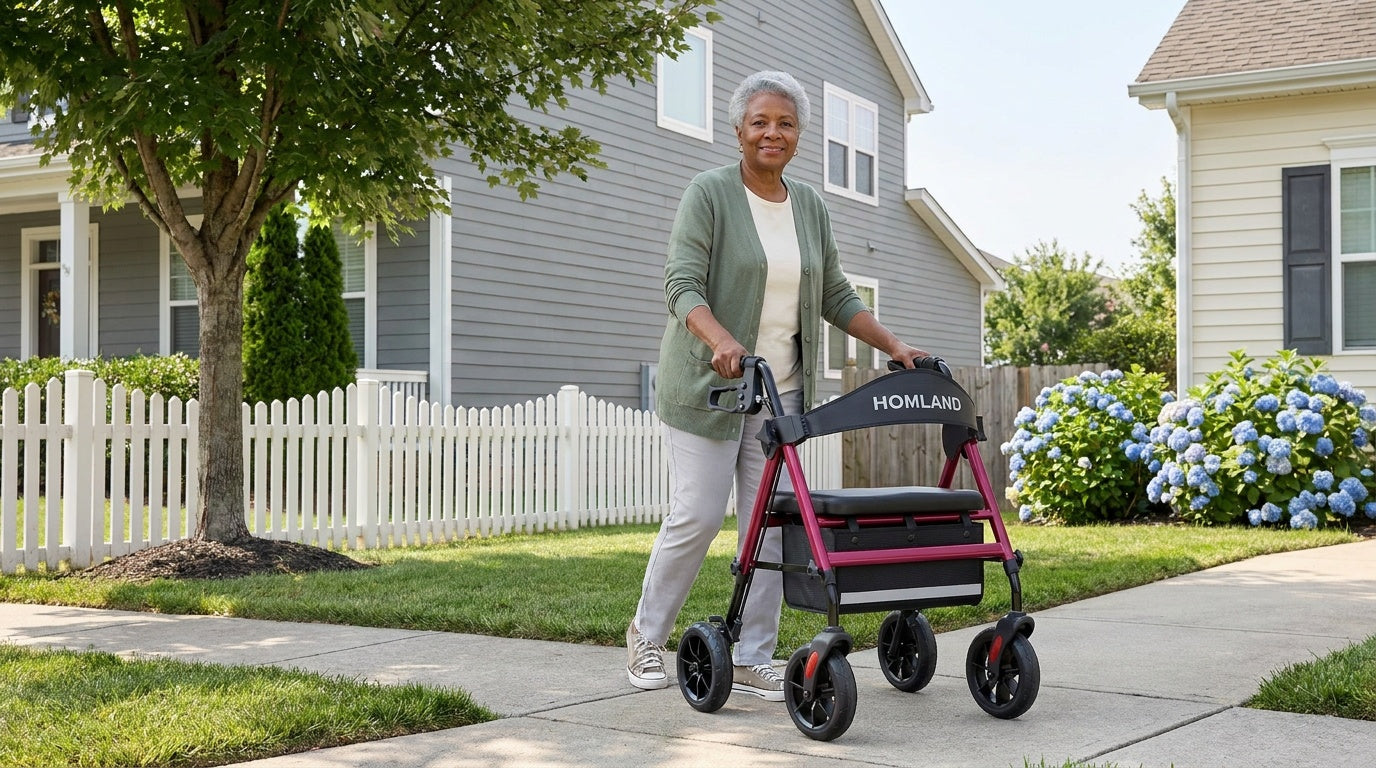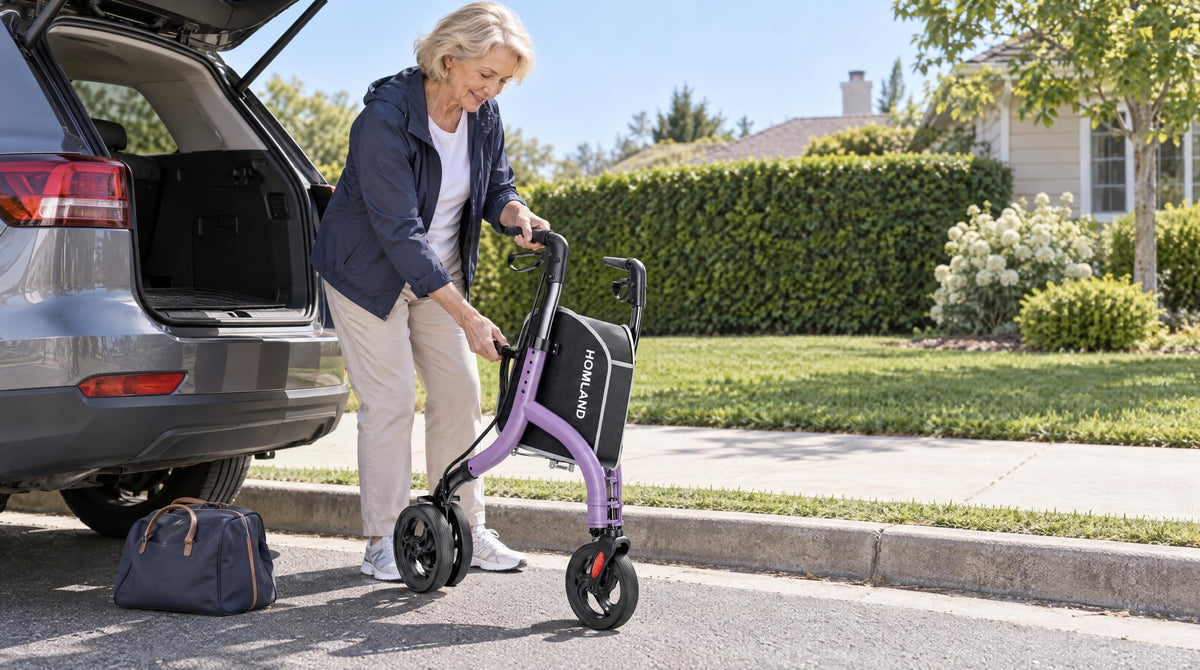


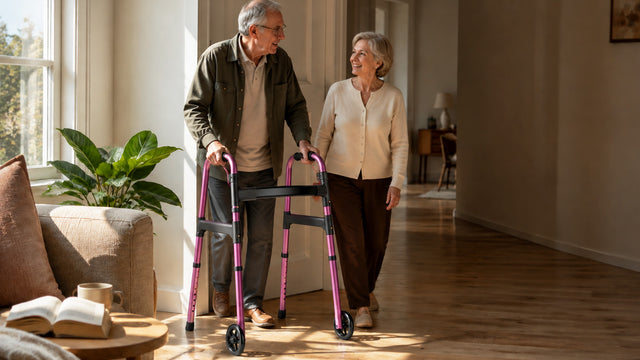

Picture this: you've just finished a morning walk around the block, and the rollator that helped you get there folds up in seconds and slides neatly into the trunk of the car. No wrestling with heavy frames, no asking for help — just independence on your own terms. That's exactly what a well-chosen lightweight rollator can do for your daily life.
Rollators have come a long way from the bulky, institutional-looking frames of the past. Today's portable walkers are engineered to be genuinely light, surprisingly stylish, and thoughtfully designed for real home environments — from kitchen floors to back-patio steps. But not every rollator earns the "lightweight" label equally, and the features that matter most aren't always the ones that get the loudest attention on a product page.
This guide walks you through everything worth knowing before you choose a portable rollator walker — whether you're recovering from surgery, managing a chronic condition, or simply looking for extra steadiness day to day. Physical therapists often emphasize that the right mobility aid isn't just about support; it's about matching the device to the person and the environment. That's exactly the lens we'll use here.
Why Weight Matters More Than You Think
When people shop for a rollator, they often focus on stability first and weight second. That instinct is understandable, but it misses a practical truth: a heavy rollator that's hard to lift into a car or carry up a porch step gets used less — and used less consistently means it protects you less. Physical therapists consistently observe that people abandon mobility aids that feel like a burden, even when those aids genuinely improve balance and safety.
A truly lightweight rollator typically falls in the 13–18 lb range, with some ultra-light aluminum models dipping below 13 lbs. That might not sound dramatic, but the difference between a 15 lb and a 22 lb frame is immediately felt when you're lifting it into a vehicle, navigating stairs, or just picking it up to set it aside in a narrow hallway. For anyone managing upper-body fatigue, limited grip strength, or post-surgical recovery, every pound counts.
Lightness also supports independence in a very direct way: you don't have to ask someone else to handle the walker for you. That autonomy — small as it sounds — is often what separates a mobility aid that feels empowering from one that feels like a concession.
Frame Material: Aluminum vs. Steel
Almost every lightweight rollator you'll encounter uses one of two frame materials: aluminum or steel. Understanding the trade-offs helps you make a genuinely informed choice rather than just trusting marketing language.
Aluminum is the clear winner for portability. It's significantly lighter than steel while still offering solid structural integrity, and it resists rust — a practical advantage for anyone who uses their rollator outdoors in wet conditions or near moisture-heavy environments like bathrooms. Most rollators marketed as "lightweight" use aircraft-grade or medical-grade aluminum alloy frames.
Steel frames are heavier but can support higher weight capacities, which is why they appear more often in bariatric rollator designs. If you need a walker that supports a higher body weight, a reinforced steel or heavy-duty aluminum frame may be the better fit — even if it adds a few pounds to the overall walker weight.
For most everyday users, an aluminum rollator strikes the right balance between light enough to manage easily and strong enough to lean on with confidence. Look for frames with welded joints rather than bolted connections, as these tend to handle daily stress more reliably over time.
Wheel Size and Where You'll Actually Use It
Wheel diameter is one of those specs that looks like a small detail but shapes the entire rolling experience. Rollator wheels generally range from 5 inches to 8 inches in diameter, and the right size depends almost entirely on your environment.
5–6 inch wheels are best suited for smooth indoor surfaces — hardwood floors, tile, low-pile carpet. They keep the overall rollator profile compact and maneuverable in tight spaces like narrow hallways, small bathrooms, and between kitchen counters. If you spend most of your time indoors, these work beautifully.
7–8 inch wheels handle outdoor terrain more comfortably. Cracks in sidewalks, slight inclines, transitions between surfaces — larger wheels roll over these obstacles rather than catching on them. If you enjoy walks around the neighborhood, trips to a farmers market, or time on a patio, larger wheels will serve you well.
Some rollators now offer all-terrain or pneumatic (air-filled) tires for even more outdoor versatility, though these tend to add weight. For most users who split their time between indoors and a fairly smooth outdoor environment, a 6-inch solid rubber wheel hits a comfortable middle ground.
Brakes That Feel Natural to Use
A rollator without reliable brakes isn't a safety device — it's a risk. But brakes are only useful if they're intuitive enough to become second nature. Physical therapists often note that users who struggle with hand strength or dexterity will sometimes avoid using brakes properly, which defeats their purpose entirely.
The most common rollator brake system uses loop-style or push-down hand brakes connected to rear wheels via cables, similar in concept to bicycle brakes. Look for brakes that engage smoothly without requiring a tight squeeze — especially important for anyone with arthritis or reduced grip strength. Some models offer loop locks that allow you to lock the wheels in place when sitting, which adds an extra layer of safety when using the built-in seat.
When evaluating brakes, also consider the brake handle angle. Ergonomically angled levers reduce wrist strain during extended use. Test or review brake responsiveness carefully — a well-designed rollator should stop predictably without jerking or requiring excessive force.
Built-In Seat and Backrest: More Than a Nice-to-Have
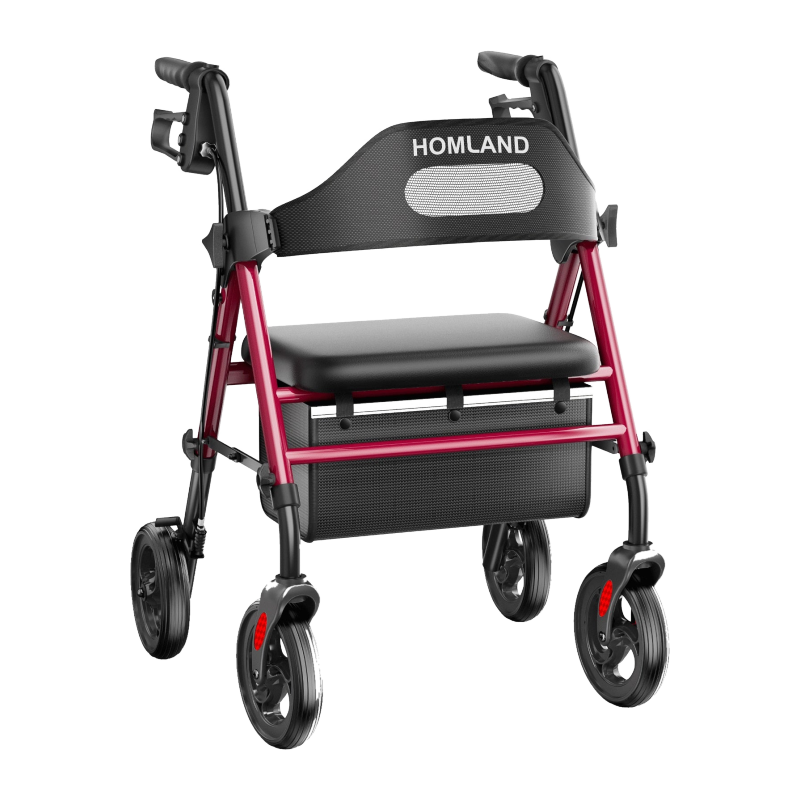
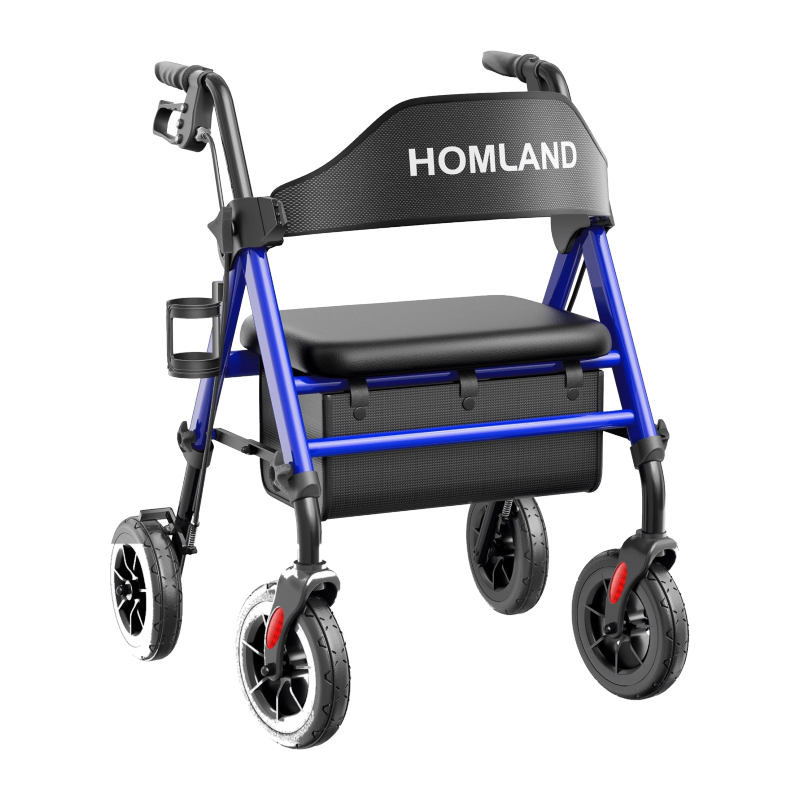
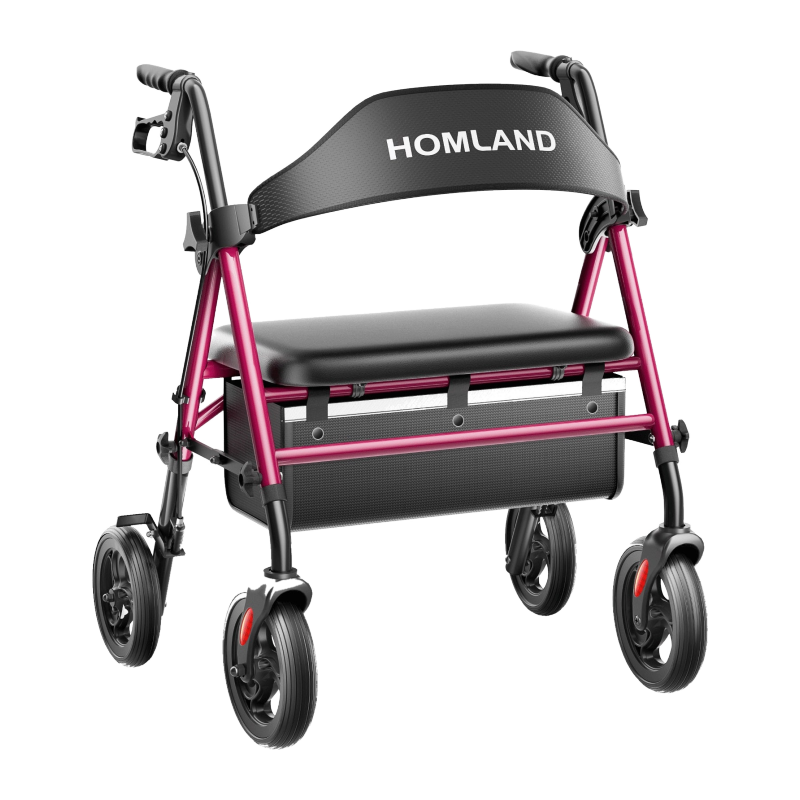
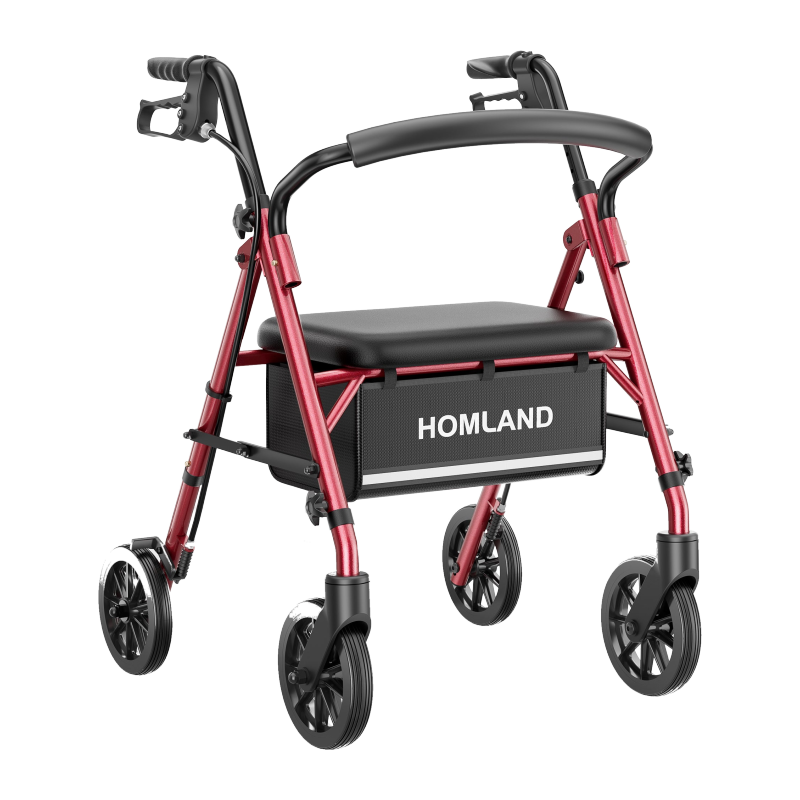
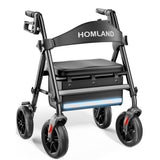
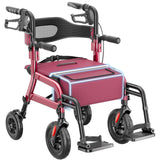
One of the features that sets rollators apart from standard walkers is the built-in padded seat. For many users, this transforms the rollator from a walking aid into a complete mobility companion — because being able to rest wherever you are, without looking for a bench, changes how far and how confidently you're willing to go.
When evaluating the seat, pay attention to seat width (most range from 10 to 14 inches), seat height (ideally adjustable to allow your feet to rest flat on the floor when seated), and padding quality. A thin, hard seat becomes uncomfortable quickly; a well-padded seat encourages you to actually use the rollator's rest feature when you need it.
Many rollators also include a backrest — a fabric or padded strap across the back of the seat frame. This is more important than it looks. Without a backrest, sitting on the rollator seat and leaning back even slightly can tip the walker. A backrest provides the structural support that makes resting positions genuinely safe and comfortable.
Under the seat, most rollators include a storage pouch or basket. For day-to-day independence, this is invaluable — it means you can carry a water bottle, a phone, a wallet, or groceries without needing a separate bag or a second pair of hands.
Handle Height and Grip Comfort
Handle height is one of the most clinically important factors in rollator fit — and one of the most commonly overlooked when shopping online. A rollator set at the wrong height forces you to hunch forward or reach upward, both of which create strain on the back, shoulders, and wrists over time.
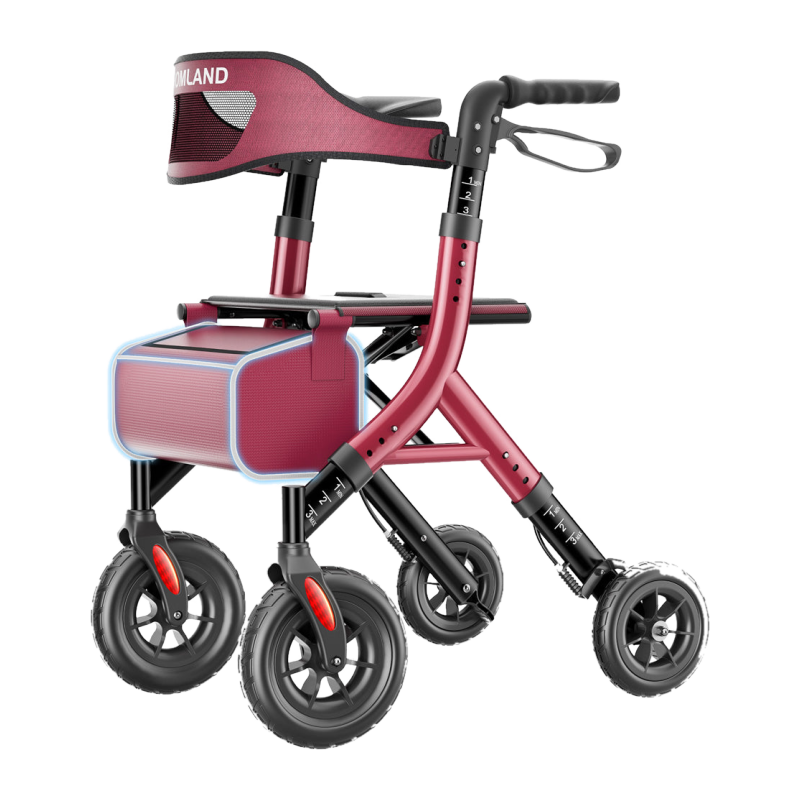
The general guideline from physical therapists: stand upright with your arms relaxed at your sides, then set the handle height to align with your wrist crease. This allows a slight, natural bend at the elbow (roughly 15–20 degrees) when your hands are on the grips — enough to absorb shock without locking your joints. Most quality rollators offer a handle height range of 32–38 inches, adjustable in 1-inch increments.
Grip design also matters. Look for ergonomic foam or contoured rubber grips that cushion the palm and reduce pressure on the ulnar nerve (the nerve that runs along the outside of your hand). For anyone with arthritis, this detail alone can determine whether a rollator feels comfortable after 20 minutes or becomes a source of discomfort.
Folding Design and Storage
A portable rollator needs to fold — that's essentially part of the definition. But folding mechanisms vary considerably in how user-friendly they actually are. The best designs allow one-handed or tool-free folding in a matter of seconds, with a cross-brace or lever mechanism that's simple enough to use even when you're tired or short on time.
When folded, a lightweight rollator should be compact enough to fit in a standard car trunk, stand upright against a wall, or slide under a bed. Some models also fold upward rather than inward, which keeps the footprint narrow — useful when storing it in a small apartment or crowded entryway.
Pay attention to whether the folded rollator stays folded. Loose or wobbly fold-locks become frustrating quickly, especially when you're trying to get the walker in and out of a vehicle. A secure, positive-locking fold mechanism is a small engineering detail with a big quality-of-life impact.
If you're shopping for a loved one, HOMLAND's rolling walkers collection — including 3-wheel, 4-wheel, upright, and bariatric options — is built with tool-free assembly and thoughtful folding designs that don't require strength or technical know-how to operate.
Weight Capacity: Build Confidence Into Every Step
Every rollator has a maximum weight capacity, and using a rollator beyond its rated limit is a genuine safety concern — not just a liability disclaimer. Most standard lightweight rollators support between 250 and 300 lbs, which covers the majority of users comfortably. Bariatric models extend that capacity to 400–500 lbs, with reinforced frames designed to handle the additional stress without flex or instability.
Choose a rollator with a capacity that gives you a comfortable margin above your actual weight. A rollator operating at or near its limit may still function, but it's more likely to show wear at the joints and wheels over time — and less likely to provide the firm, steady feel that makes a walker genuinely reassuring to lean on.
3-Wheel vs. 4-Wheel Rollators
Both three-wheel and four-wheel rollators have dedicated use cases, and choosing between them comes down to your environment and primary needs.
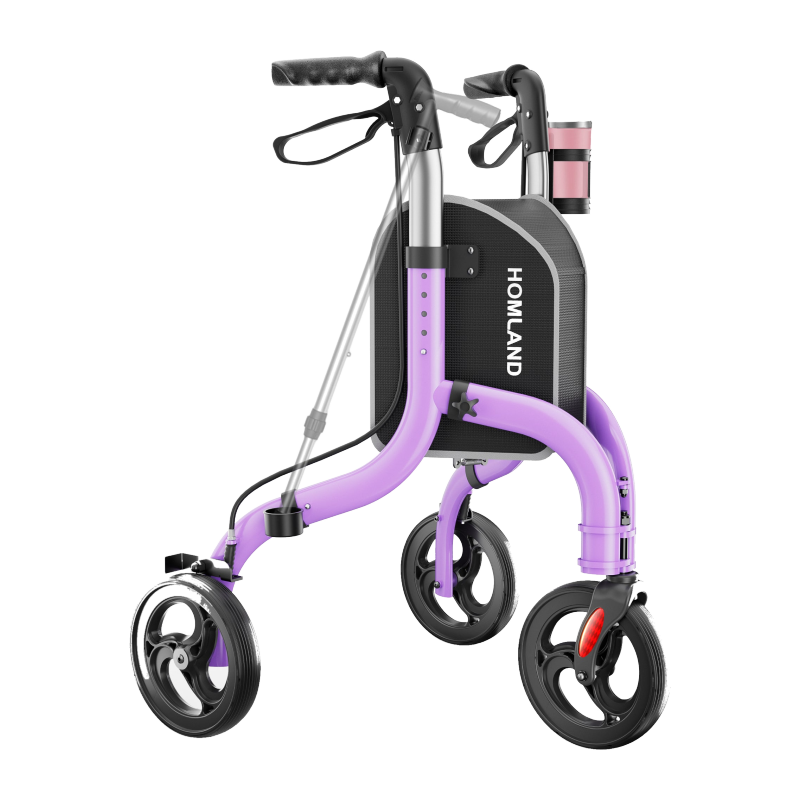
3-wheel rollators (sometimes called tri-walkers) have a single front wheel and two rear wheels. This configuration makes them significantly more maneuverable in tight spaces — easy to turn in a small bathroom, navigate between furniture, or use in a narrow corridor. They're typically lighter than their 4-wheel counterparts, and the narrower front profile fits through standard doorways with ease. The trade-off is that most 3-wheel rollators do not include a built-in seat, so they're better suited to users who need light support and maneuverability rather than a rest option.
4-wheel rollators offer more stability because the weight is distributed across all four contact points. They almost always include a built-in seat, backrest, and storage basket, making them the more versatile choice for everyday use. They're slightly wider and require a bit more turning radius, but for most home and community environments, the added stability and features are well worth it.
If you're unsure which configuration suits you, physical therapists generally recommend starting with a 4-wheel rollator for its stability and rest capability — especially for users managing balance concerns or fatigue. You can explore HOMLAND's full range of rolling walkers, including both 3-wheel and 4-wheel designs, to compare options side by side.
FSA/HSA Eligibility, Warranty, and What to Ask Before You Buy
Once you've identified the features that matter most, a few purchase details can make the buying decision much easier — and much more affordable.
HOMLAND rollators are FSA/HSA eligible, which means you can use pre-tax dollars from a Flexible Spending Account or Health Savings Account to cover the cost. For families managing healthcare budgets carefully, this can meaningfully reduce the out-of-pocket expense. It's worth confirming eligibility with your benefits provider before purchasing.
Every HOMLAND rollator comes backed by a 1-year manufacturer warranty plus a 1-year extended warranty — two full years of coverage that reflects genuine confidence in the product's durability. Products ship from a US local warehouse, so fast delivery is the rule rather than the exception. And because every product is authorized by licensed Doctors of Physical Therapy, you're not just trusting a spec sheet — you're trusting a design that's been reviewed with real clinical insight.
A few questions worth asking before any rollator purchase:
- What is the folded dimensions, and will it fit in my car or storage space?
- Is the handle height adjustable to fit my height without tools?
- Does the seat height allow my feet to rest flat on the floor?
- What is the weight capacity, and does it give me a comfortable margin?
- Are replacement parts (wheels, grips, brake cables) available if needed?
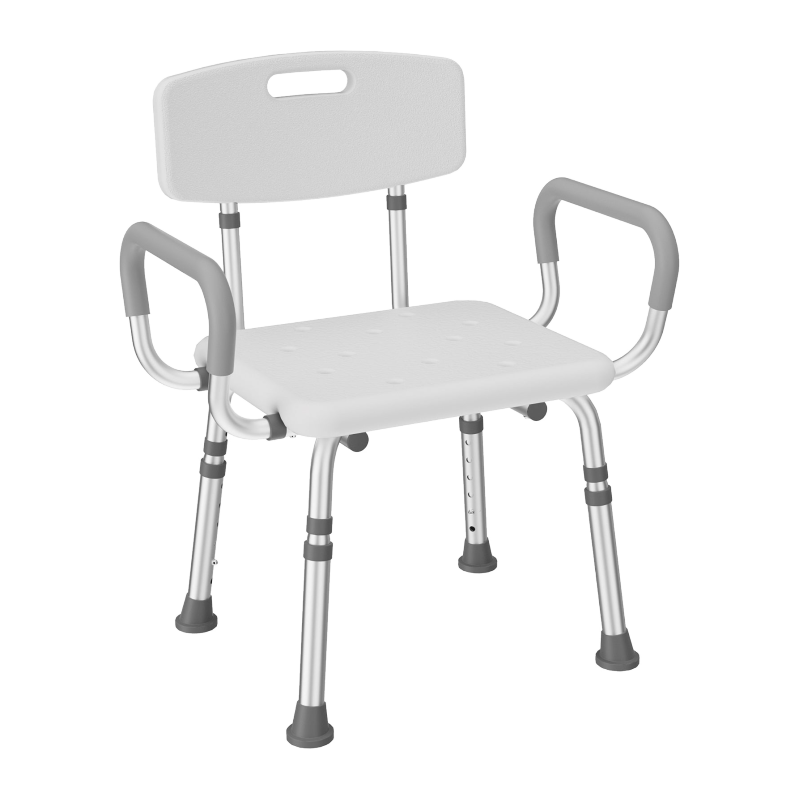
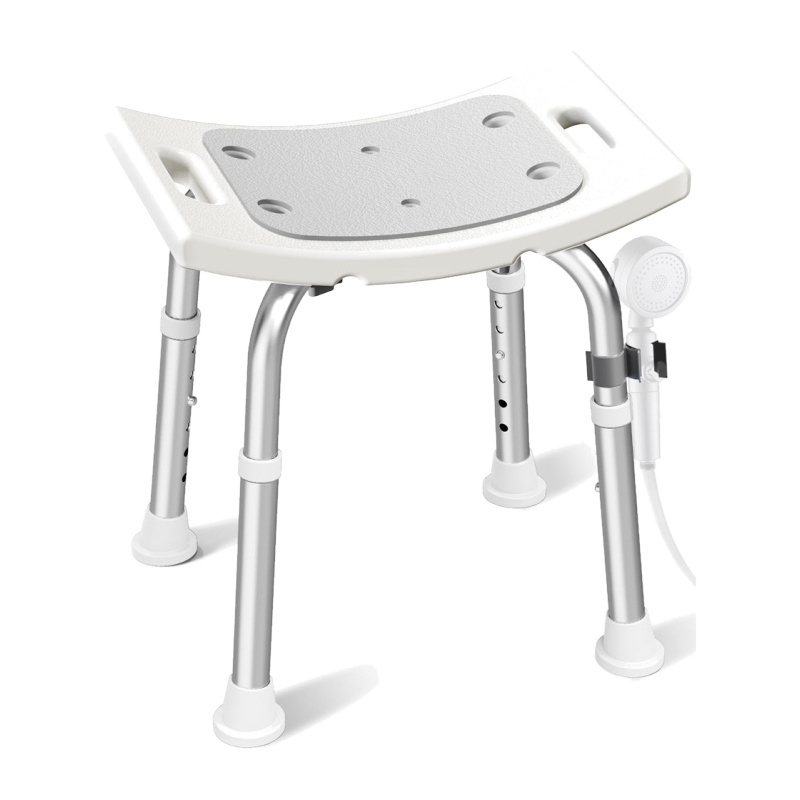
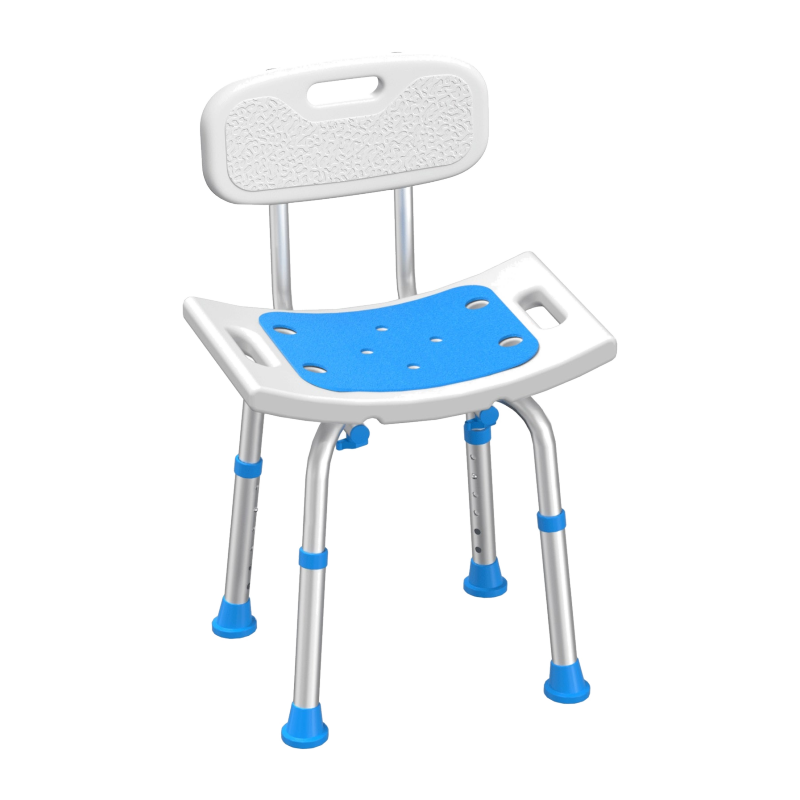
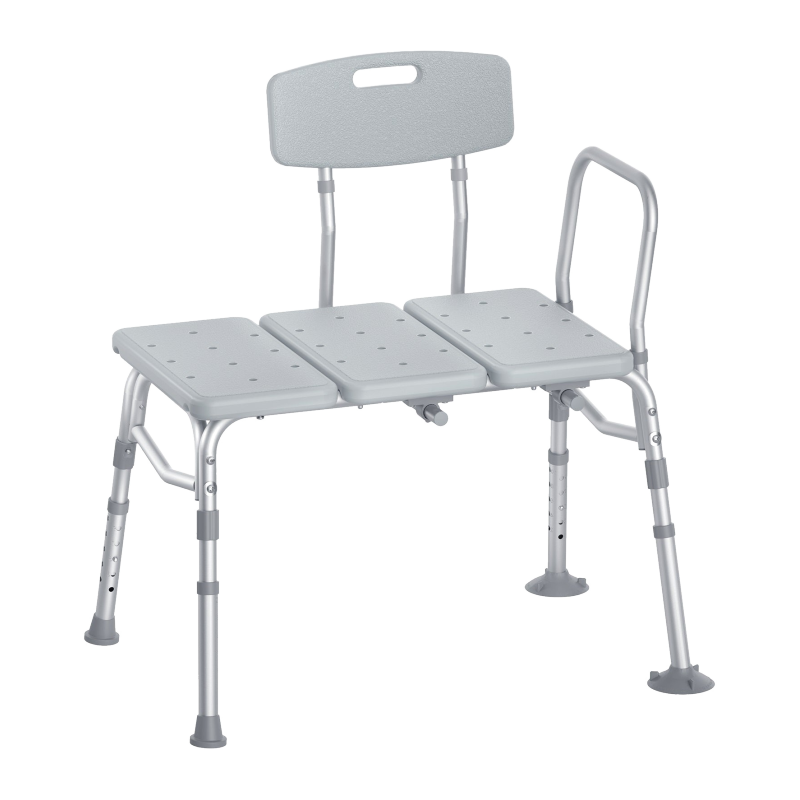
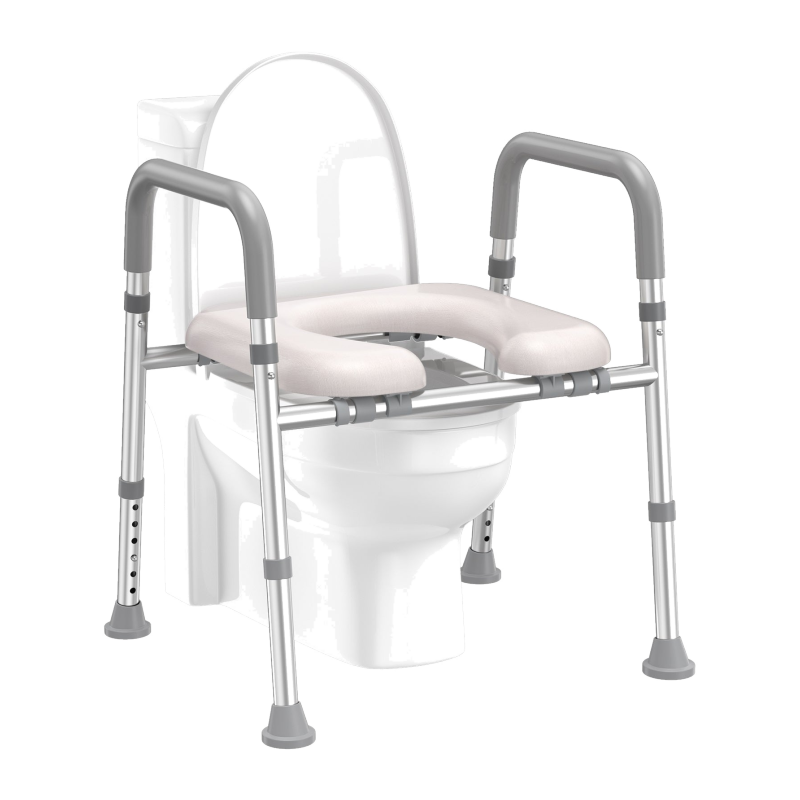
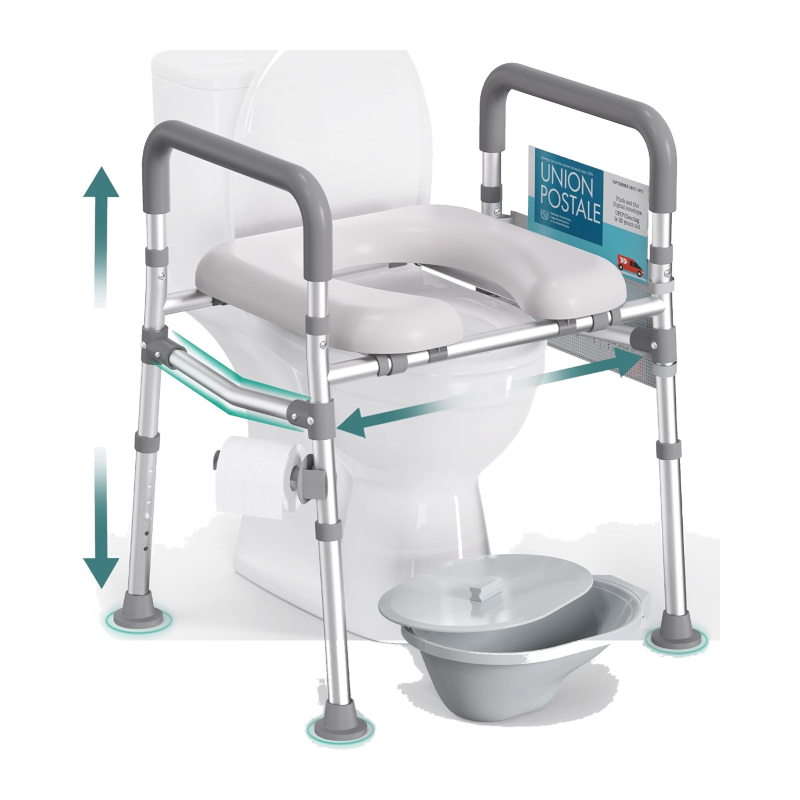
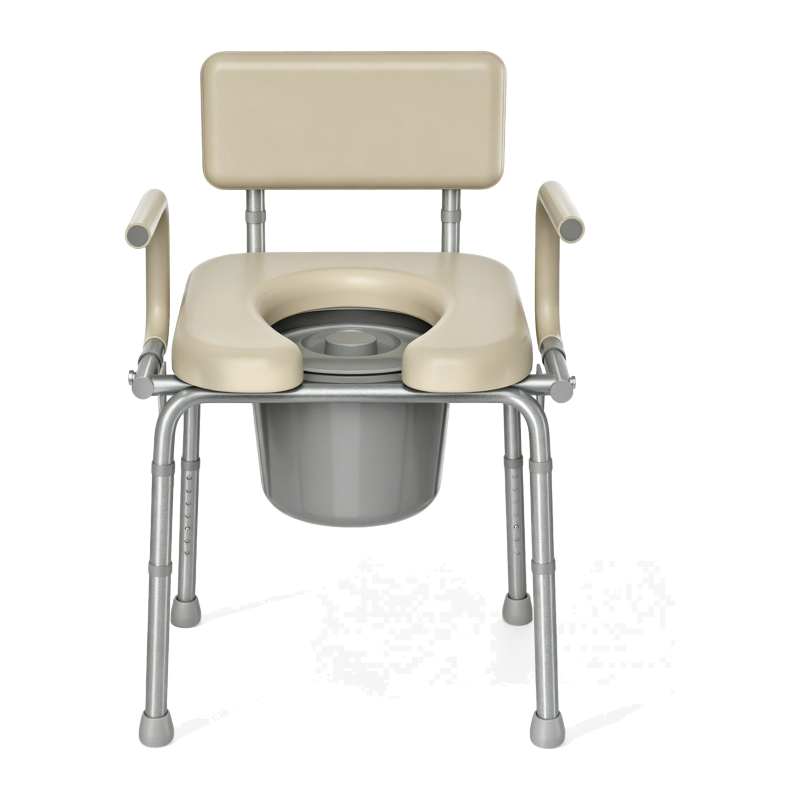
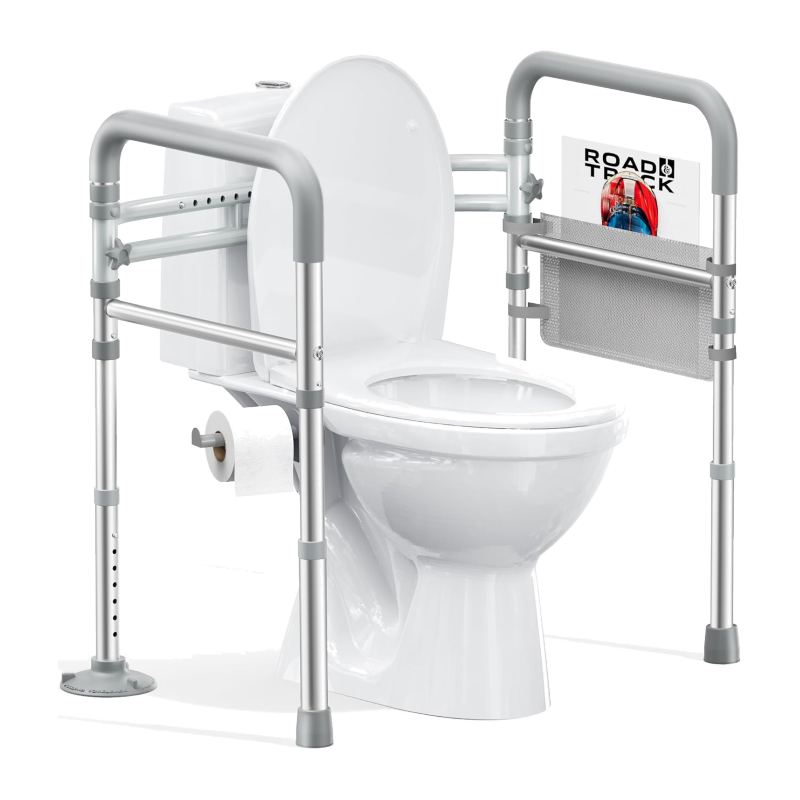
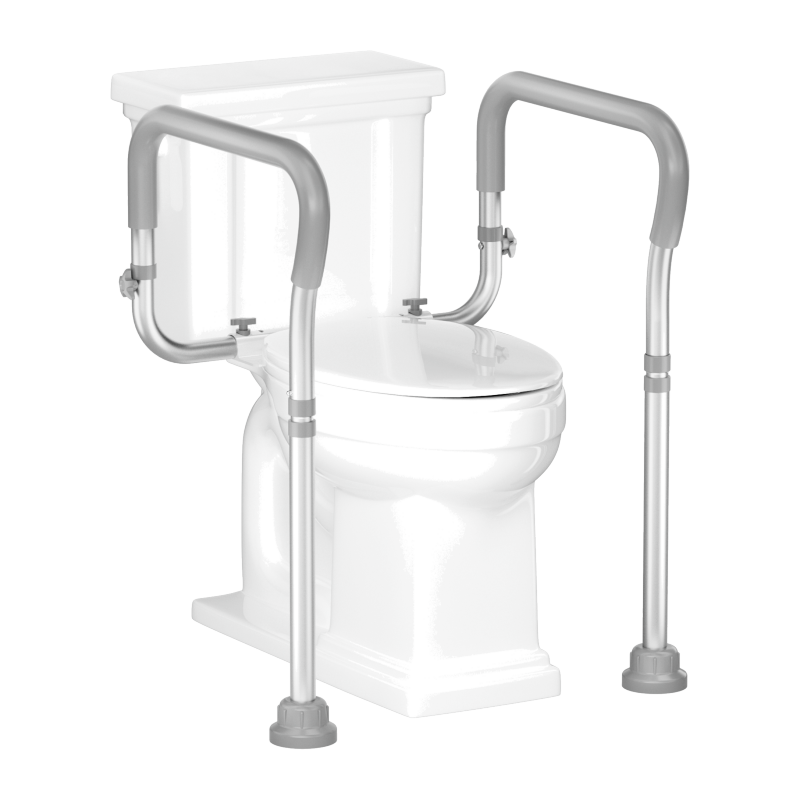
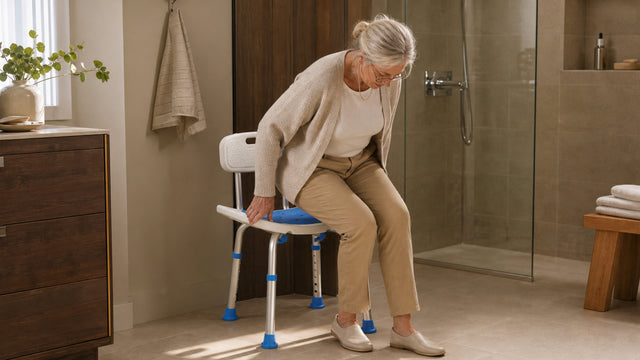
If you're also managing bathroom safety at home, it's worth knowing that HOMLAND's lineup extends well beyond rollators. From shower chairs and toilet safety rails to bed rails and standard walkers, every product in the collection is designed with the same "home, not hospital" philosophy — built to blend into daily life, not to announce itself as medical equipment.
Putting It All Together
A lightweight rollator is one of those tools that, when chosen well, quietly expands what's possible in daily life — more confident mornings, easier outings, less reliance on others for simple tasks. The right one isn't necessarily the lightest on the market or the one with the most features. It's the one that fits you: your height, your environment, your routine, and your goals for staying independent at home.
Start with the basics — weight, frame material, wheel size, and handle height — and layer in the features that match how you'll actually use it day to day. If you're buying for a parent or partner, loop them into the decision where possible. A rollator that the person using it has had a say in choosing is one they'll actually reach for each morning.
HOMLAND's rolling walkers collection covers the full spectrum — from nimble 3-wheel designs for tight indoor spaces to bariatric models engineered for heavier-duty support — all designed with input from licensed physical therapists, backed by a two-year warranty, and eligible for FSA/HSA spending. Browse the full HOMLAND product lineup to find the right fit for your needs and your home.
Ready to find the right rollator for your lifestyle?
Our team is here to help you choose the right fit — whether it's a lightweight everyday rollator, a bariatric model, or a complete home mobility setup. All HOMLAND rollators are FSA/HSA eligible, shipped fast from our US warehouse, and backed by a two-year warranty.
Contact Us — We're Happy to Help