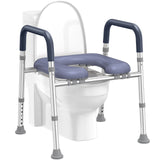
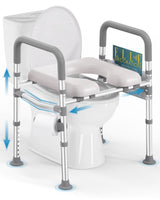
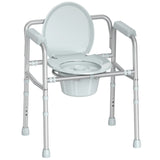
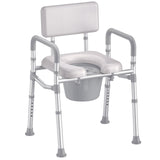


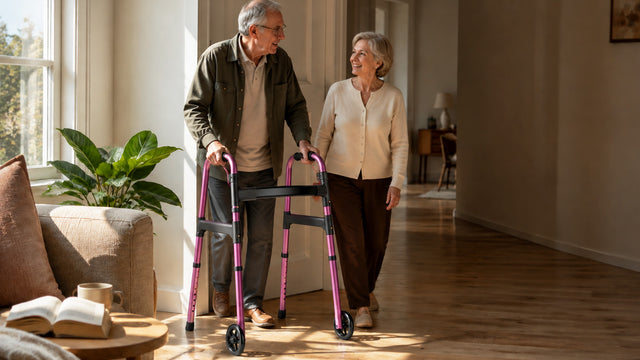

Getting up from the toilet sounds simple — until it isn't. After a hip replacement, a knee surgery, or simply as the body changes with age, something as routine as sitting down and standing back up can become one of the most physically demanding moments of the day. The forces required to rise from a low seated position put significant strain on the hips, knees, and lower back, and a momentary loss of balance in a small bathroom can have serious consequences.
That's exactly why raised toilet seats with handles have become one of the most recommended bathroom safety tools by physical therapists — and one of the most searched home-care products for seniors and anyone recovering from surgery. They add just enough height to make standing easier, and the handles give users something firm to push from, restoring confidence in a moment that deserves to feel safe and private.
In this guide, you'll learn why these products matter, who benefits from them most, what types exist, and — most importantly — how to choose the right one for your home, your body, and your routine. Whether you're shopping for yourself or helping a parent or loved one, this guide gives you everything you need to make a well-informed decision.
Why Raised Toilet Seats with Handles Actually Matter
Standard toilets sit roughly 15 inches from the floor — a height that was never designed with mobility challenges in mind. For someone with limited hip flexion after surgery, weakened leg muscles, or joint pain from arthritis, that low position creates a deep bend at the hips and knees that's difficult to return from without a significant push. Physical therapists often recommend reducing that angle as a key part of post-surgical recovery and fall prevention at home.
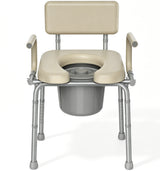
A raised toilet seat addresses this by adding 2 to 6 inches of height, depending on the model — which meaningfully reduces the effort needed to sit down and, more importantly, to stand back up. When you add handles to that equation, users gain a stable grip to push from, distributing the effort across their arms and upper body rather than relying solely on leg strength. It's a small change with a large impact on daily confidence and independence.
The bathroom is, statistically, one of the most common locations for falls among older adults, according to the CDC. Raised toilet seats with handles don't just make a task easier — they help transform the bathroom from a place of risk into a place of routine comfort. That's the heart of the "Home, not hospital" philosophy: bringing the right tools home so life continues on your terms.
Who Benefits Most from a Raised Toilet Seat with Handles
The short answer is: more people than you might think. These products are commonly associated with older adults, but the need spans a wide range of situations and life stages.
- Seniors living independently: As balance and lower-body strength naturally shift with age, the simple act of using the toilet becomes riskier. A raised seat with handles offers a daily layer of security that supports long-term independence at home.
- Post-surgery recovery: After hip or knee replacement surgery, many surgical protocols restrict how far the joint can bend — often less than 90 degrees. A raised toilet seat is frequently part of the discharge checklist from physical therapy for exactly this reason.
- Anyone with limited mobility: Arthritis, multiple sclerosis, Parkinson's disease, stroke recovery, and other conditions that affect strength, coordination, or balance all make standard toilet height a daily challenge.
- Bariatric users: Heavy-duty models rated for higher weight capacities provide a stable, confidence-inspiring experience for larger individuals who may not trust standard equipment.
- Temporary injuries: A sprained ankle, a broken leg, or a recovering back injury can make any adult need temporary bathroom support — and a raised toilet seat is far easier to set up than a full bathroom renovation.
For family caregivers shopping on behalf of a parent or loved one, this product is often the single highest-impact purchase per dollar in the entire home-safety toolkit. It addresses one of the most frequent and private daily activities — and it does so without requiring a contractor, a remodel, or a move to a care facility.
Types of Raised Toilet Seats Explained
Not all raised toilet seats are built the same way, and the differences matter when you're choosing for a specific body, home, or recovery situation. Understanding the main categories will save you time and help you avoid a return.
1. Raised Toilet Seats Without Arms
These are the simplest form — they add height to the toilet without any side support. They work well for users who have good upper body balance and primarily need relief from the deep squat position. They're also a good fit for bathrooms where space is tight and a separate toilet safety rail is already installed on the wall or toilet base.
2. Raised Toilet Seats with Handles (Arms)
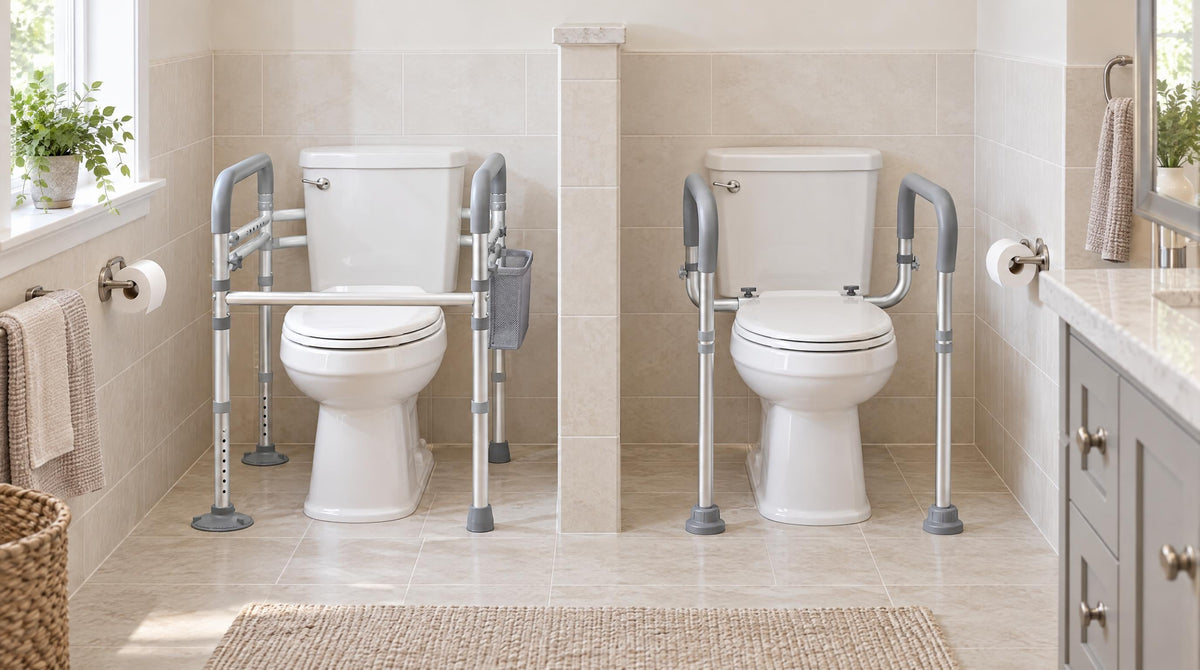
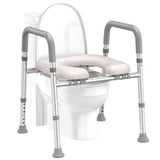
These are the most popular and most recommended option. The built-in handles — positioned on either side of the seat — give users a solid grip for both lowering down and pushing up. Look for handles that are at a height and angle that feel natural for the user's arm length and shoulder width. Some models offer adjustable handle height, which adds versatility for different body types.
3. Locking vs. Non-Locking Designs
Some raised toilet seats simply rest on the existing toilet bowl; others feature a locking mechanism that secures the seat to the toilet and prevents any shifting or rocking during use. For users who lean heavily on the handles or have significant balance challenges, a locking model is strongly worth considering. It removes the subtle anxiety of movement underfoot, which is exactly the kind of detail that makes the difference between confidence and hesitation.
4. Freestanding Toilet Safety Frames
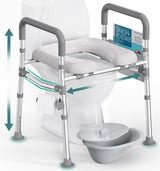
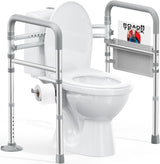
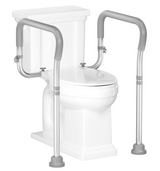
A variation on the raised seat concept, these freestanding frames surround the toilet and provide floor-mounted handle support without attaching directly to the toilet bowl. They're especially useful in households where multiple family members share a bathroom and removing the raised seat each time isn't practical.
Key Features to Look For
Once you've identified the type that fits your situation, use the following checklist to evaluate specific models. Physical therapists often guide their clients through exactly these considerations, because the right fit matters as much as the right type.
- Seat height: Look for models that add the right amount of height for the user. A general starting point is that the user's feet should rest flat on the floor when seated, with hips at or just above knee level. Many quality models add 3.5 to 5 inches.
- Weight capacity: Always verify the stated weight rating. Many standard models support 250–300 lbs comfortably, while heavy-duty options go up to 400 or 500 lbs. Users should be able to lean into the handles with full confidence.
- Handle height and angle: Handles that are too low force users to lean forward awkwardly; handles that are too high make it hard to push down effectively. Adjustable handle height is a significant advantage for households with more than one user.
- Tool-free assembly: The bathroom is not the place for a hardware project. A quality raised toilet seat should install in minutes without tools — this is a non-negotiable for most users and caregivers.
- Toilet compatibility: Most raised toilet seats are designed for standard round or elongated toilet bowls. Confirm that the product specifies compatibility with your toilet shape before purchasing.
- Non-slip surfaces: Look for textured or padded contact points on both the seat and the handles to prevent any slipping, even when hands or surfaces are wet.
- Easy cleaning: Hygiene matters. Smooth, non-porous surfaces and designs that don't trap debris in unreachable seams are important for everyday cleanliness and dignity.
How to Choose the Right Raised Toilet Seat for Your Home
Choosing well comes down to matching the product to the person, the toilet, and the daily routine — not just picking the most popular model online. Start by asking a few practical questions before browsing.
First, think about the user's primary challenge. Is it getting down, getting up, or both? If the primary issue is standing up and there's no other support in the bathroom, a model with wide, sturdy handles at the right height should be the top priority. If balance when sitting is the concern, a locking base becomes more important.
Second, consider how the bathroom is shared. If a family member who doesn't need the raised seat will be using the same toilet regularly, look for a design that installs and removes quickly, or consider a freestanding safety frame that doesn't modify the toilet itself.
Third, think about the user's size and strength. A petite 130-lb user navigating recovery from knee surgery has different needs than a 280-lb user managing chronic arthritis. Make sure the weight capacity gives a comfortable safety margin — not just a rating that barely meets the minimum.
Finally, if you're shopping as a caregiver, involve the person who will use it. Dignity and personal agency matter. A raised toilet seat that the user feels good about — one that feels sturdy, easy to use, and doesn't feel like a clinical imposition — will actually be used. One that feels foreign or embarrassing may be avoided, which defeats the entire purpose.
HOMLAND's raised toilet seat lineup is designed with all of these considerations in mind. Every model is authorized by licensed Doctors of Physical Therapy and built with tool-free assembly for a frustration-free setup at home. Explore the full range through the HOMLAND product collection to find the right fit.
Installation and Safety Tips
One of the most reassuring things about quality raised toilet seats is how straightforward installation is. There's no need to call a plumber or a handyman — most models are designed to set up in under five minutes. That said, a few best practices will ensure the seat performs safely from day one.
- Clean the toilet bowl rim thoroughly before installing the seat. This ensures a stable fit and prevents any rocking caused by buildup under the seat base.
- For locking models, test the lock before first use. Sit down and gently shift your weight from side to side. There should be no movement. If there is, tighten the locking mechanism per the manufacturer's instructions.
- Check handle tightness periodically. Over weeks of regular use, it's worth giving the handles a quick check to make sure no screws or connections have loosened.
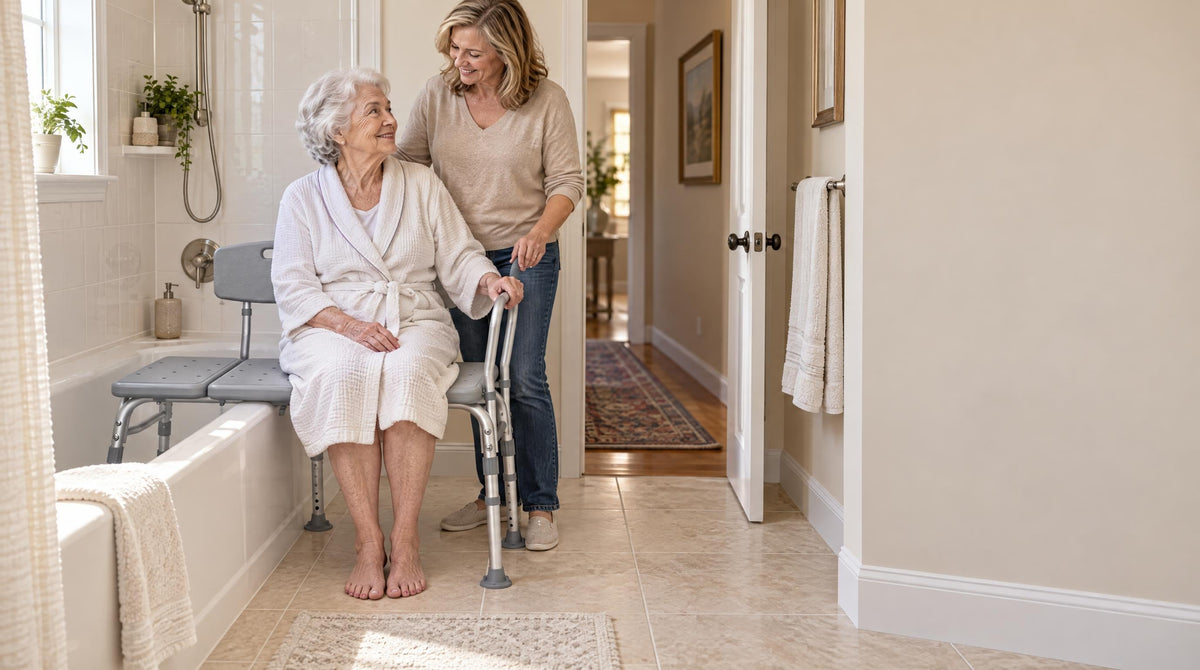
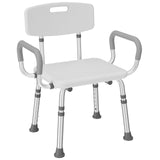
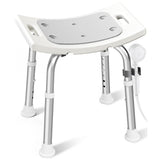
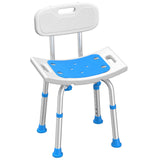
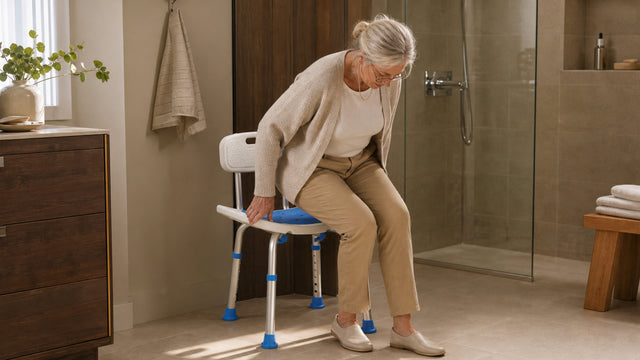
- Pair with complementary safety tools if needed. A raised toilet seat works even better alongside a toilet safety rail or a nearby grab bar for users who want maximum support. Consider also whether a shower chair or bed rails would round out the safety setup throughout the home.
- Teach the user how to use the handles correctly. Pushing down on the handles (rather than pulling up) is the most effective and joint-friendly technique for rising from a seated position. A few practice repetitions with a family member or caregiver nearby can build both skill and confidence.
FSA/HSA Eligibility and Purchase Reassurance
For families managing a home-care budget, it's worth knowing that raised toilet seats are generally eligible for purchase using FSA (Flexible Spending Account) or HSA (Health Savings Account) funds, which can meaningfully offset the cost. HOMLAND products are FSA/HSA eligible, making it easier to get the right equipment without stretching the household budget.
Every HOMLAND raised toilet seat also comes with a 1-year manufacturer warranty plus a 1-year extended warranty — a full two years of coverage that reflects the confidence behind every product. And with a US local warehouse supporting fast delivery, you're not waiting weeks for a product you need now. For questions about any product in the lineup, the HOMLAND team is easy to reach through the contact page.
It's also worth knowing that HOMLAND's raised toilet seats hold the #1 position on Amazon US in the category — not because of aggressive marketing, but because of consistent, real-world performance that earns user trust over time. That kind of track record matters when you're choosing something you'll rely on every single day.
Finding the Right Fit for Independent Living
A raised toilet seat with handles is one of the simplest, most affordable, and most impactful changes you can make to a home for someone who values their independence. It doesn't require a renovation. It doesn't signal a loss of ability. It's simply the right tool for a daily task — one that makes the bathroom safer, easier to navigate, and less of a worry for both users and the people who care about them.
The best choice is always the one that fits the person using it: their height, their strength, their bathroom, and their routine. Take the time to match those details to a model with the right height, the right handle position, a weight capacity that gives genuine confidence, and a design that installs without fuss and cleans without effort.
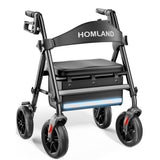
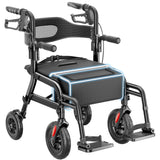
If you're building out a full home safety setup, raised toilet seats pair naturally with shower chairs, bed rails, and rolling walkers — each one supporting a different moment in the day, together creating a home where independence isn't just possible but feels natural. That's what "Home, not hospital" really means.
Ready to find the right raised toilet seat for your home?
Browse HOMLAND's full lineup of bathroom safety products — all DPT-authorized, FSA/HSA eligible, and backed by a 2-year warranty. Our team is here to help you choose with confidence.