


Getting up from the toilet is one of the most physically demanding — and most overlooked — moments in daily life. For seniors, anyone recovering from surgery, or people living with limited mobility, that simple act can feel uncertain or even unsafe. A toilet safety rail changes that equation entirely. The right rail gives you something solid to push against, a stable handhold that turns a vulnerable moment into a routine one.
This guide covers everything you need to know: the different types of toilet safety rails on the market, how to match one to your specific bathroom and body, a clear installation walkthrough, and everyday tips that physical therapists often recommend. Whether you're choosing a rail for yourself or helping a parent or loved one make their home safer, you'll find the answers here — no guesswork, no jargon, just clear and practical guidance.
Toilet Safety Rails
Complete Selection & Installation Guide
Everything seniors, caregivers & post-surgery patients need to choose, install, and use the right rail — safely and confidently.
Why It Matters
4 Types of Toilet Safety Rails
Bolt-On Rails
Anchored to toilet bolts. Most stable fixed-grip option. Best for daily long-term use. No wall drilling needed.
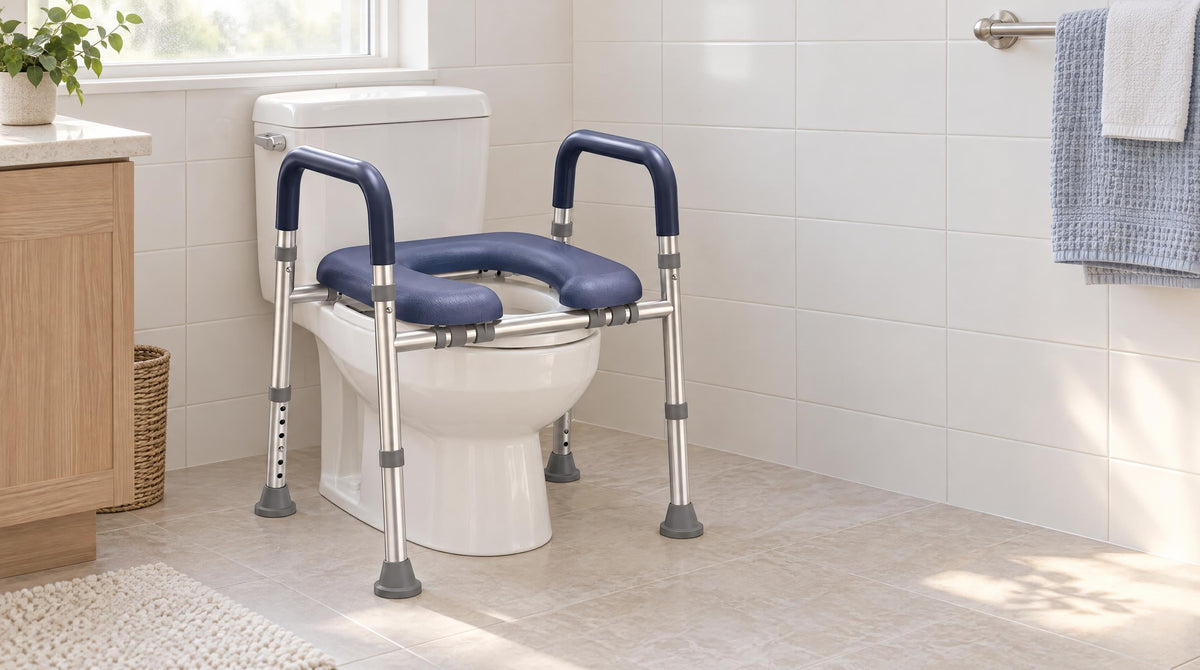
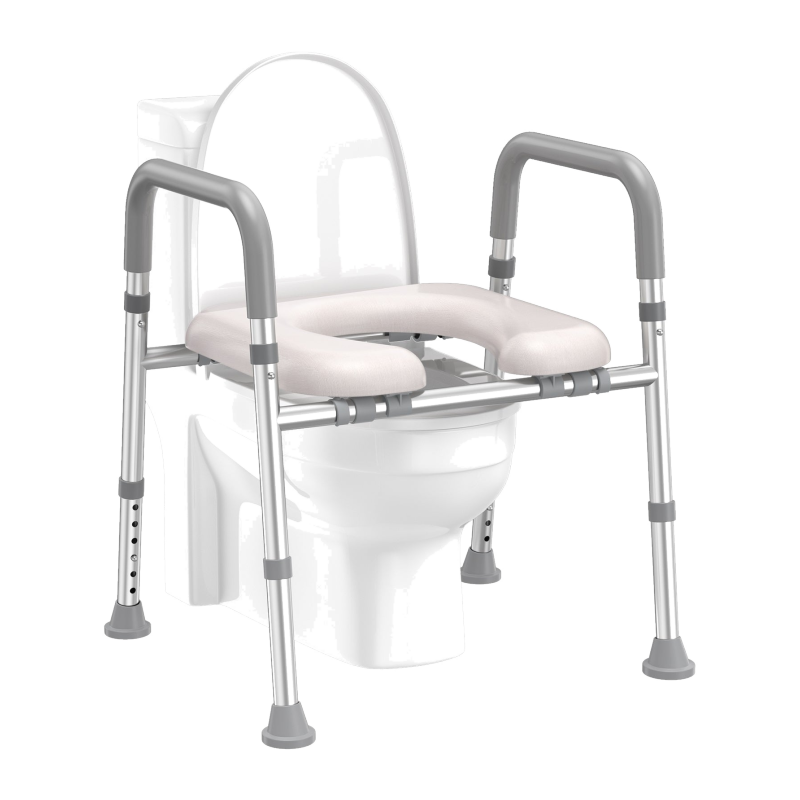
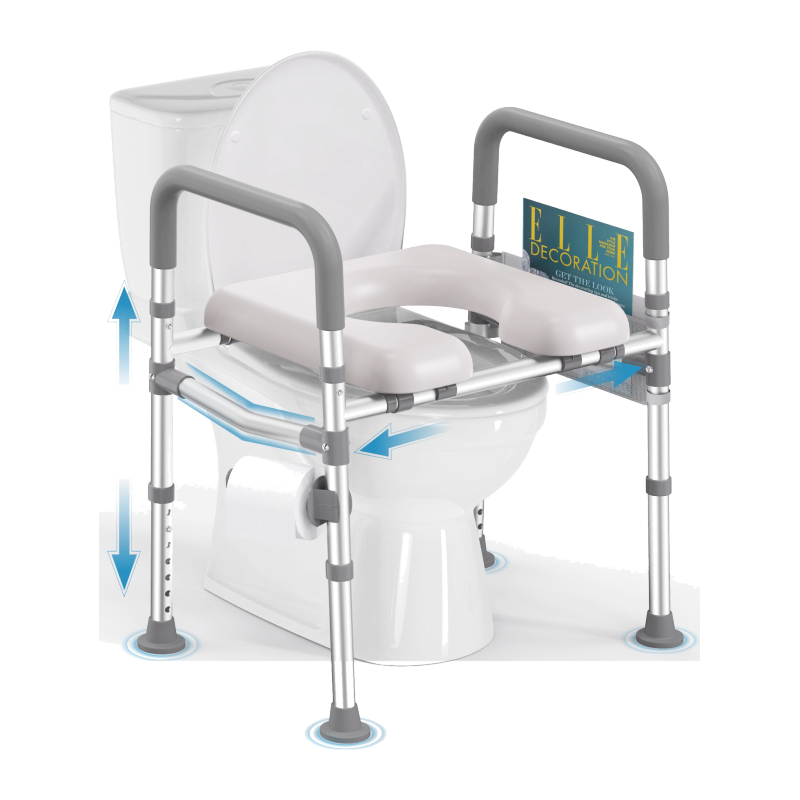
Freestanding Frames
Floor-supported, no bolting. Ideal for post-surgery recovery or multi-bathroom use. Quick reposition.
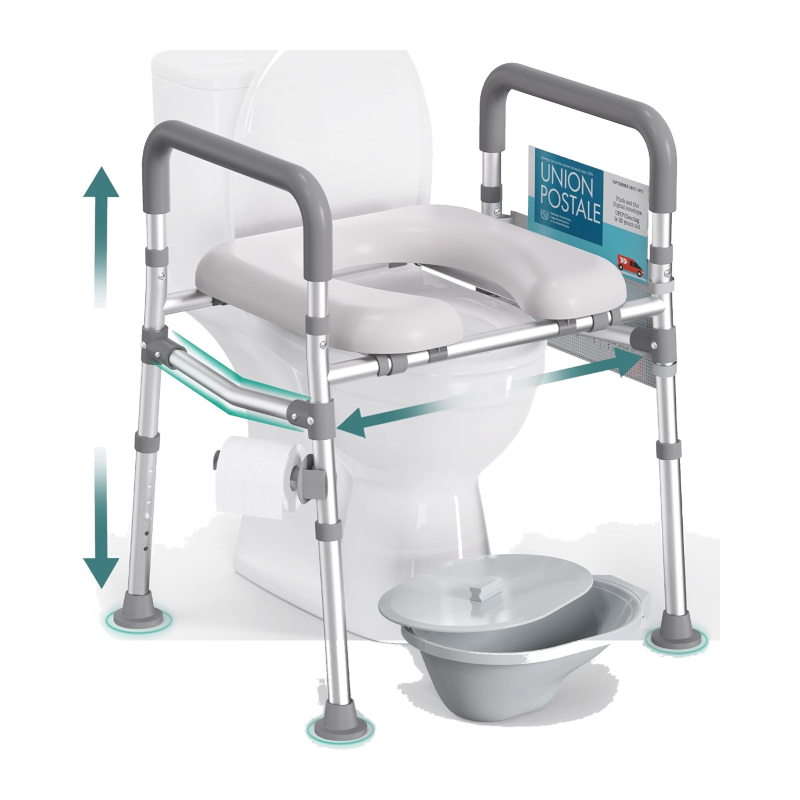
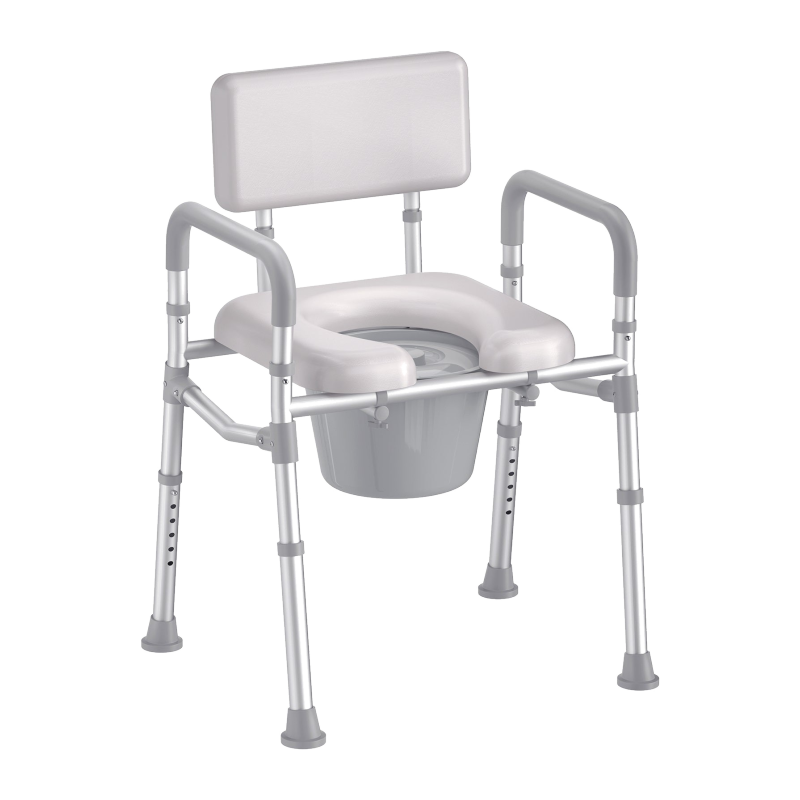
Raised Seat Combos
Raised seat + side handles in one unit. Perfect for hip replacements or significant knee pain.
Wall-Mounted Bars
Permanent stud-drilled installation. Best combined with other rail types for a full support system.
Bolt-On Installation — 7 Steps
Gather Your Tools
Adjustable wrench + included hardware. Lay everything out before you start.
Remove the Existing Seat
Pop the rear plastic caps, unscrew the bolts, and lift the seat off. Set aside.
Position the Mounting Plate
Slide the bracket over the bowl, aligning holes with the toilet bolt holes.
Thread & Tighten the Bolts
Firm but not overtightened — porcelain can crack under excess torque.
Attach the Rail Frame
Slide or click the rail arms onto the mounting plate per product instructions.
Adjust to Your Height
Rail arms at hip height when seated. Elbows slightly bent — not fully extended or sharply bent.
Stability Check
Apply firm downward and lateral pressure to each arm. Nothing should shift, creak, or wobble.
5 DPT-Recommended Tips for Safe Daily Use
Push, Don't Pull
Press down on rails as you rise. More effective biomechanically and safer on attachment points.
Scoot Forward First
Move to the front of the seat before standing. Feet under center of gravity = less effort.
Use Both Arms
Even if one side feels stronger. Equal effort keeps movement balanced and prevents sideways shifts.
Wear Non-Slip Footwear
Grip soles on slippers or socks add a critical layer of stability on tile or vinyl floors.
Don't Rush
Rails support controlled, steady movement. A moment of patience prevents a rushed stumble.
Selection Checklist — What to Confirm Before Buying
Why Toilet Safety Rails Matter
The bathroom is consistently one of the highest-risk rooms in the home for falls, and the toilet area presents a particular challenge. Sitting down and standing up both require a controlled lowering and raising of the body — movements that put real demand on the knees, hips, and core. For someone managing arthritis, recovering from a hip or knee replacement, or simply noticing that their legs aren't as strong as they used to be, this demand can tip from manageable to risky very quickly.
According to the CDC, falls are the leading cause of injury among adults aged 65 and older, and a significant portion of those falls happen in the bathroom. A toilet safety rail doesn't just reduce that risk — it restores confidence. When you know there's a firm handhold waiting for you, you stop bracing yourself and start moving naturally again. Physical therapists often describe this as one of the fastest, most cost-effective changes a person can make to improve both safety and independence at home.
For family members and caregivers, a toilet safety rail also provides meaningful peace of mind. It's a visible, practical sign that the home has been thoughtfully adapted — not to feel clinical or institutional, but to support everyday life with dignity. That's exactly the spirit behind every product in the HOMLAND Toilet Safety Rail Collection.
Types of Toilet Safety Rails
Before you can choose the right rail, it helps to understand what's actually available. Toilet safety rails fall into a few broad categories, each designed for a different bathroom setup and level of support need.
Bolt-On Safety Rails
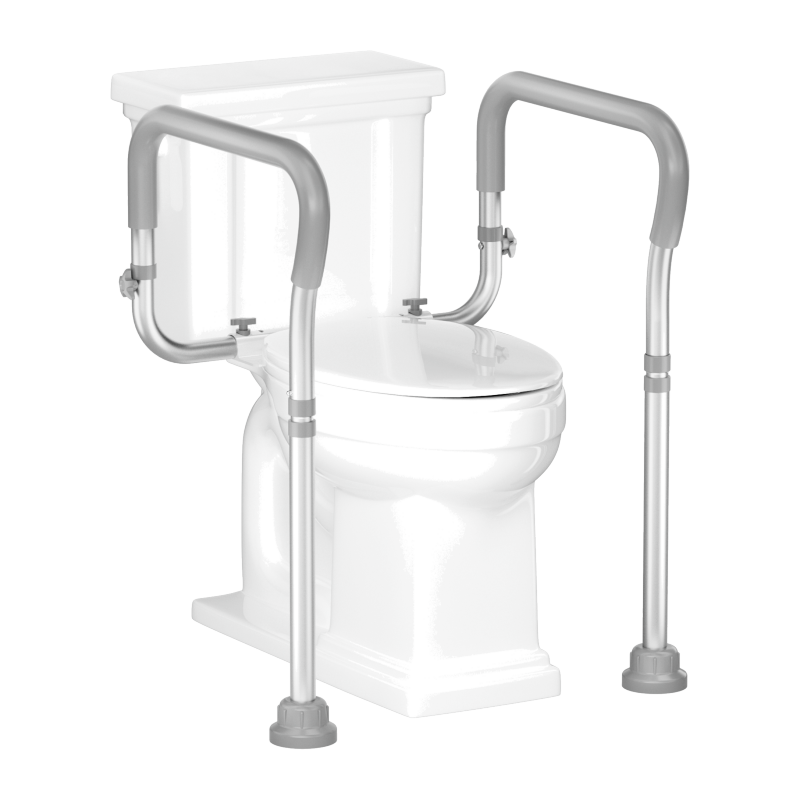
These rails attach directly to the toilet bowl using the same bolts that hold the toilet seat in place. Because they're anchored to the toilet itself, they provide a very stable, fixed grip and tend to suit people who need firm, reliable support every single day. They're a great long-term solution for a primary bathroom and don't require any wall drilling. The trade-off is that installation takes a few extra minutes and they aren't easily moved from bathroom to bathroom.
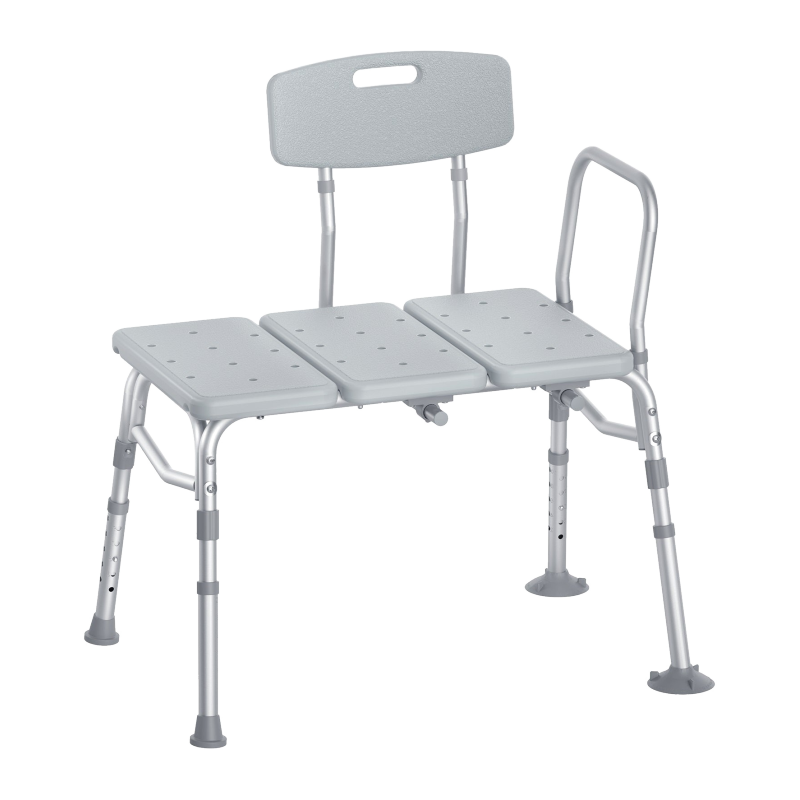
Freestanding Toilet Safety Frames
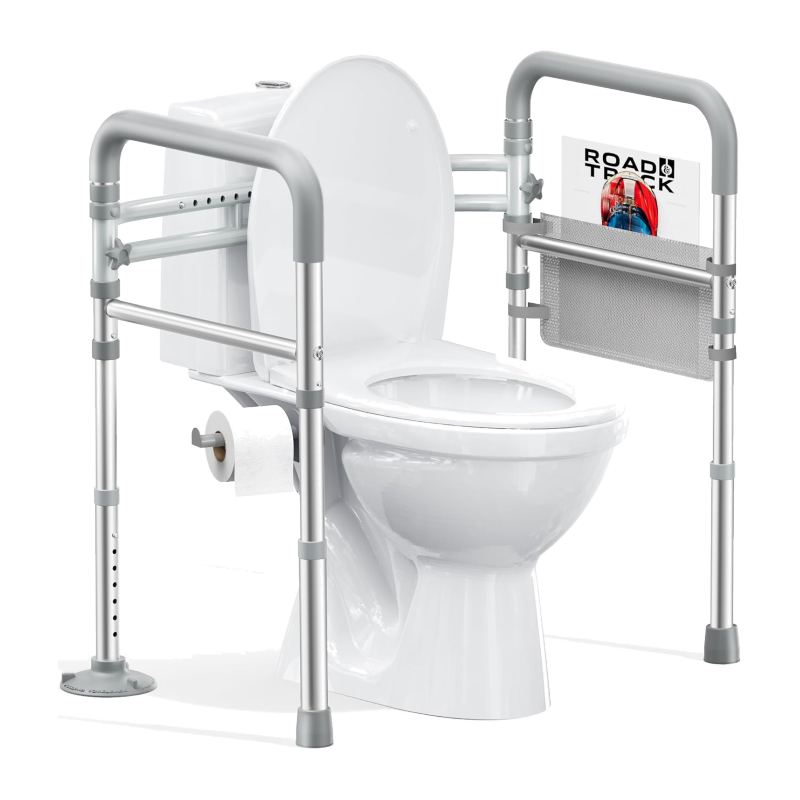
A freestanding frame wraps around the toilet and stands on its own legs, which rest on the bathroom floor. Because nothing is bolted to the toilet or the wall, setup is fast and the frame can be repositioned or moved to a guest bathroom without any tools. Physical therapists often recommend freestanding frames for people in post-surgery recovery who need temporary support, or for households with multiple bathrooms where a single rail needs to travel. Look for models with non-slip rubber feet and a wide base for maximum stability.
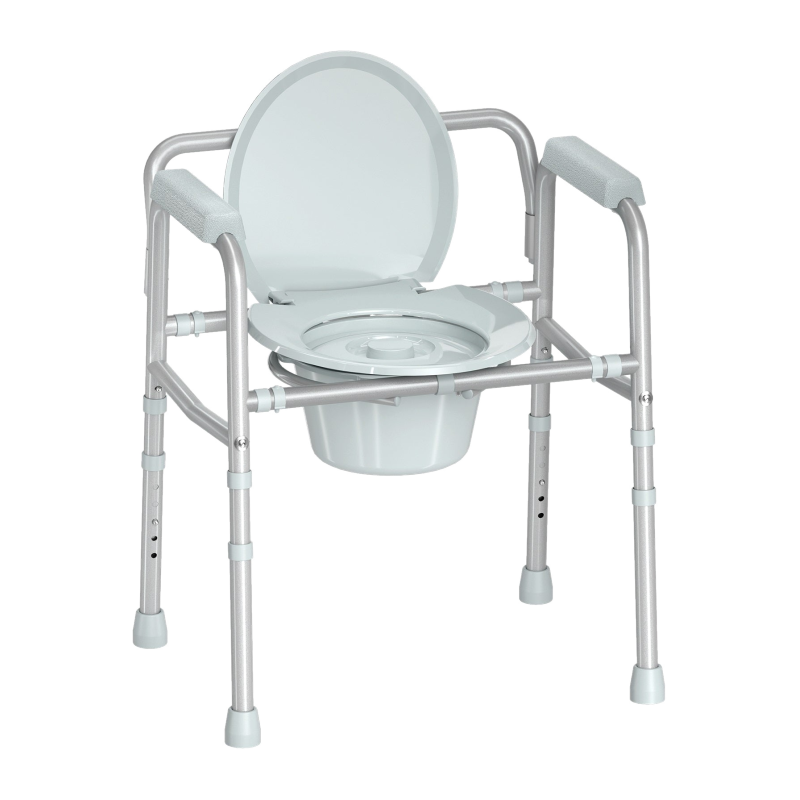
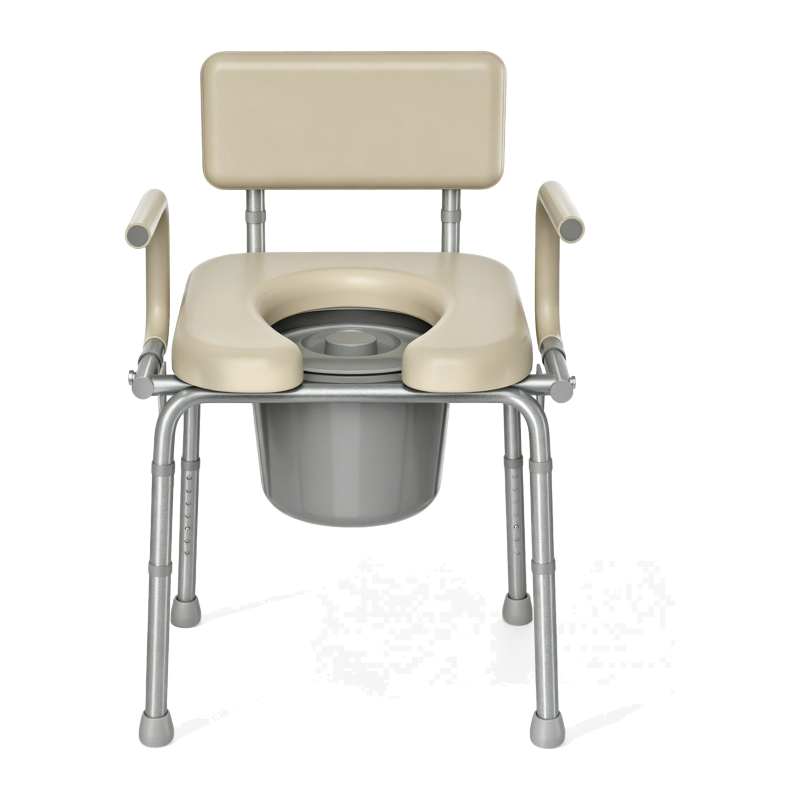
Raised Toilet Seat Rails (Combo Units)
Some products combine a raised toilet seat with built-in side handles, giving users both extra height and lateral support in one unit. This is particularly useful for people with hip replacements or significant knee pain, where sitting lower requires extra effort to stand back up. If a standard toilet seat feels too low, a raised seat with integrated rails can solve two problems at once.
Wall-Mounted Grab Bars
While not rails in the traditional sense, wall-mounted grab bars are sometimes installed alongside a toilet safety rail to create a complete support system. They require drilling into studs and are best suited to permanent installations. For renters or anyone not ready for a permanent modification, the bolt-on or freestanding options above are usually more practical starting points.
How to Choose the Right Rail for Your Needs
Choosing a toilet safety rail isn't just about picking a price point. The right fit depends on your toilet, your body, and your daily routine. Walking through a few key questions makes the decision straightforward.
Consider Your Toilet Type
Standard round-front and elongated oval toilets are the two most common shapes, and not every rail fits both. Before purchasing, measure the distance between your toilet bolt holes (the bolts beneath the seat) and check the product's compatibility specifications. Most modern rails accommodate both shapes, but it's worth confirming — especially if your toilet is an older or non-standard model.
Think About Weight Capacity
A safety rail is only as reliable as its weight rating. Look for models that comfortably exceed your body weight — not just meet it. HOMLAND's select rails are built to support up to 300 lbs or more, so users can lean in and push up with full confidence rather than tentatively testing the rail each time they use it.
Adjustable Height Makes a Real Difference
The ideal rail height puts your hands at roughly the same level as your hips when seated, so you can push straight up rather than pulling at an awkward angle. Adjustable-height rails let you dial in the exact position — especially important if the rail will be used by more than one person in the household, or if you're still recovering and your strength is changing week by week.
Ease of Assembly
Tool-free or minimal-tool assembly matters more than it might seem. A rail that takes thirty minutes and a full toolbox to install introduces a barrier that can delay a safety upgrade that's needed right now. HOMLAND designs its products for straightforward, tool-free setup — because getting the rail in place on day one is the whole point.
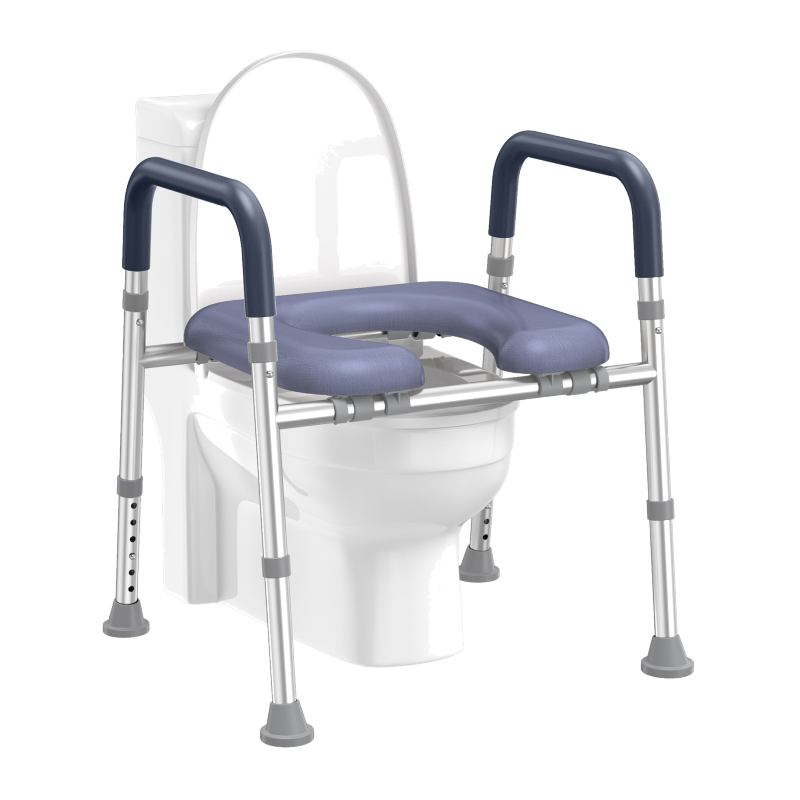
Padded vs. Bare Armrests
Padded armrests add comfort for extended use and are particularly appreciated by people with sensitive skin or circulation concerns. If comfort during daily use is a priority, look for rails with foam or cushioned arm pads rather than bare metal or hard plastic.
Installing a Toilet Safety Rail: Step-by-Step
Most bolt-on toilet safety rails follow a similar installation process. Always read the specific instructions included with your product, but the general steps below give a reliable overview of what to expect.
- Gather what you need. For a bolt-on rail, you'll typically need an adjustable wrench and the hardware that comes in the box. Lay everything out before you begin so you're not searching mid-install.
- Remove the existing toilet seat. Locate the plastic caps at the back of the seat, pop them open, and unscrew the bolts beneath. Lift the seat off and set it aside.
- Position the rail mounting plate. Slide the mounting bracket or plate into position over the toilet bowl, aligning the holes with the bolt holes in the porcelain.
- Thread the new bolts. Insert the bolts provided with the rail through the mounting plate and through the toilet bolt holes. Tighten the nuts from underneath — firm but not overtightened, as porcelain can crack under excess torque.
- Attach the rail frame. Slide or click the rail arms onto the mounting plate according to the product instructions. Most HOMLAND rails use a simple locking mechanism that clicks into place without tools.
- Adjust the height. Set both arms to the same height by loosening the adjustment knobs, sliding the arms to your preferred position, and retightening. Sit on the toilet and reach for the rails — your elbows should be slightly bent, not fully extended or sharply bent.
- Do a stability check. Before relying on the rail, apply firm downward and lateral pressure to each arm. Nothing should shift, creak, or wobble. If it does, check that all bolts and locking mechanisms are fully engaged.
For freestanding frames, the process is even simpler: position the frame around the toilet, adjust the leg heights until the frame is level and stable, and verify it doesn't slide on your floor surface. Non-slip rubber feet are essential here — confirm your model includes them.
Tips for Safe Daily Use
Having the right rail is step one. Using it correctly is step two, and physical therapists consistently point out that technique matters as much as equipment. A few habits make a real difference.
- Push, don't pull. When standing up, place both hands on the rail arms and push down as you rise. Pulling upward on the rails puts stress on the attachment points and is less effective biomechanically than a straight push-down.
- Scoot forward before standing. Sit near the front edge of the seat before attempting to stand. This positions your feet under your center of gravity and reduces how far you have to lean forward.
- Use both arms equally. Even if one side feels stronger, using both rail arms distributes the effort and keeps your movement balanced — reducing the risk of a sideways shift as you rise.
- Wear non-slip footwear. Bare feet or socks on a tile or vinyl floor can slip at exactly the wrong moment. Slippers or socks with grip soles add an extra layer of stability that works with your rail, not against it.
- Don't rush. Toilet safety rails are designed to support a controlled, steady movement. Take your time sitting down and standing up — a moment of patience here is far less costly than a rushed stumble.
Maintenance and Care
A toilet safety rail is a daily-use item in a humid environment, so regular maintenance keeps it performing exactly as it should. The good news is that care is quick and straightforward.
Wipe down the rail arms and frame weekly with a mild soap solution and a damp cloth. Avoid harsh abrasives or bleach-based sprays directly on metal components, as these can degrade finishes over time. For padded armrests, a gentle antibacterial spray and a quick wipe-down is usually sufficient. Dry all components thoroughly after cleaning to prevent moisture from accumulating in joints or under rubber feet.
Once a month, do a quick stability check: apply pressure to each arm individually and rock the frame gently. Any new movement or creaking is a prompt to re-tighten the mounting hardware. Bolt-on rails in particular can loosen slightly over months of daily use, and a quick half-turn of a wrench takes about thirty seconds. Don't wait for visible wobble — a brief monthly check keeps the rail reliable year-round.
If rubber tips or non-slip feet show signs of cracking or flattening, replace them. These small components do significant work and are usually inexpensive to source from the manufacturer. HOMLAND's customer support team can help you identify the right replacement parts for any product in the lineup.
Buying with Confidence: What to Look For
When you're selecting a toilet safety rail — whether for yourself or for someone you care about — a few purchase factors matter beyond the product itself. HOMLAND's toilet safety rails are FSA/HSA eligible, which means you may be able to use pre-tax healthcare spending account funds to cover the cost. That's a meaningful saving that many shoppers don't realize is available until they ask.
Every HOMLAND product comes backed by a 1-year manufacturer warranty plus a 1-year extended warranty — two full years of coverage that reflects the confidence the brand has in its own engineering. Products ship from a US local warehouse, so delivery is fast and you're not waiting weeks for a safety item that's needed now. Each design is also authorized by licensed Doctors of Physical Therapy, meaning the ergonomics and adjustability choices are grounded in real clinical insight, not just aesthetic preference.
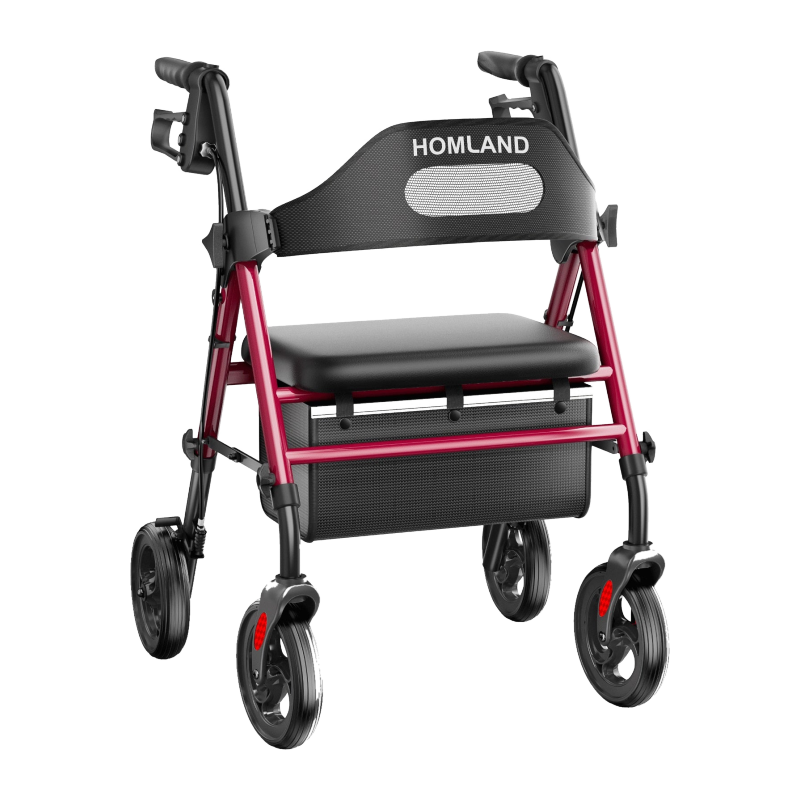
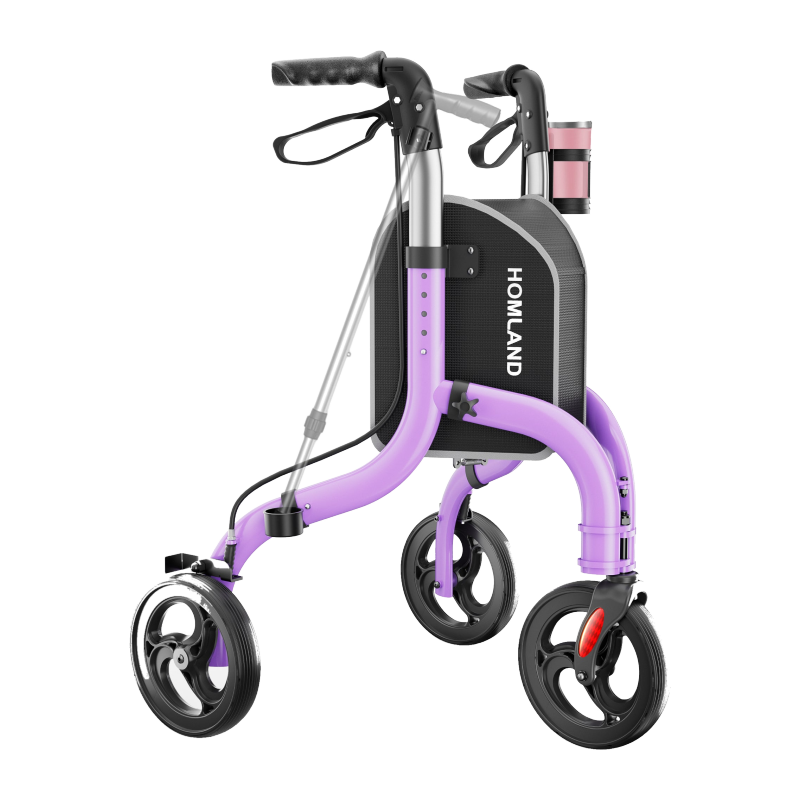
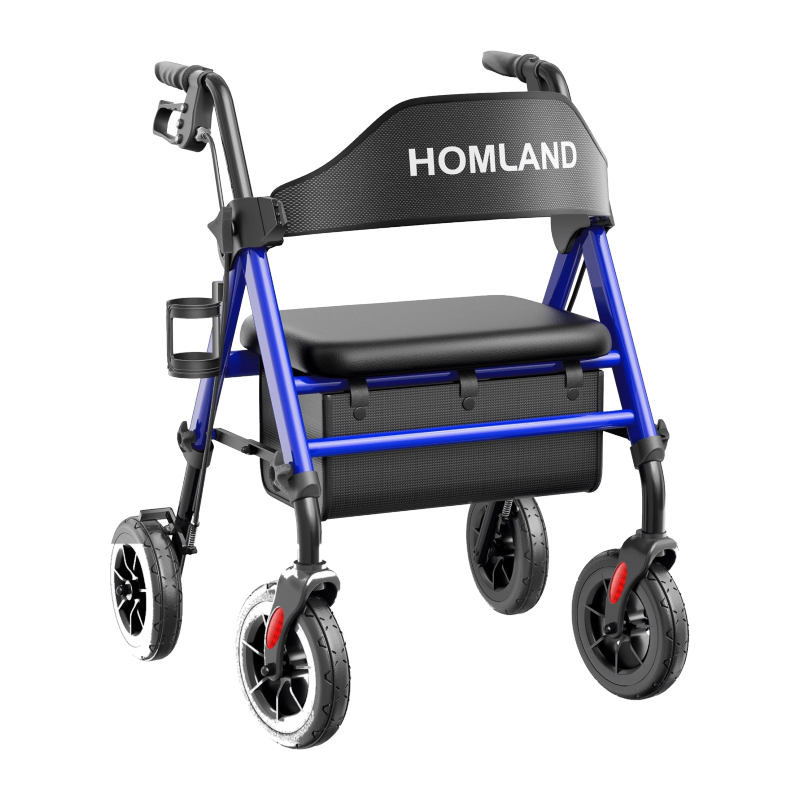
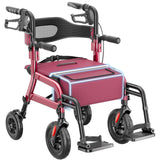
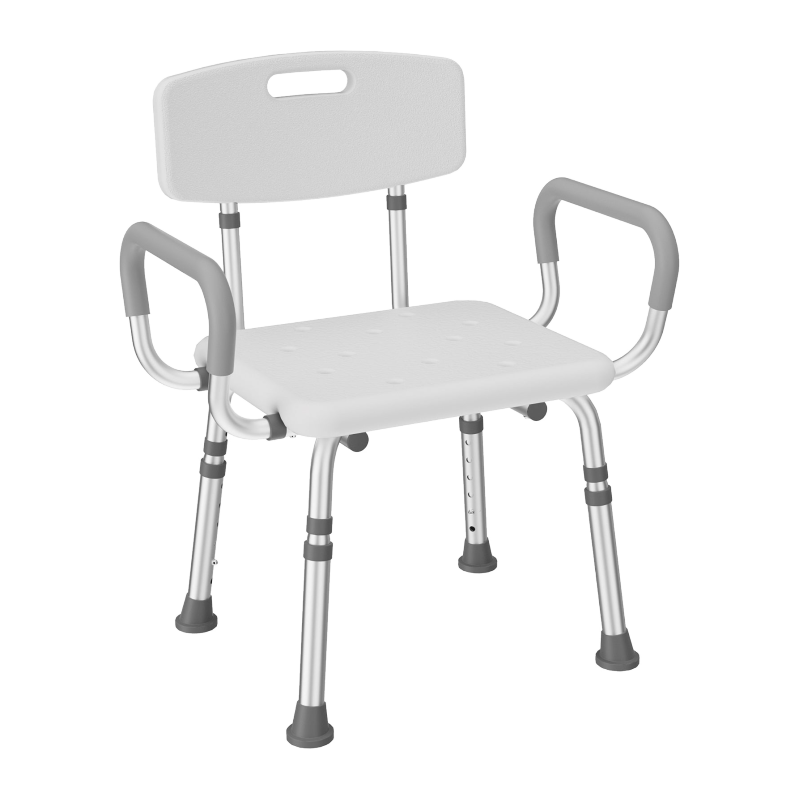
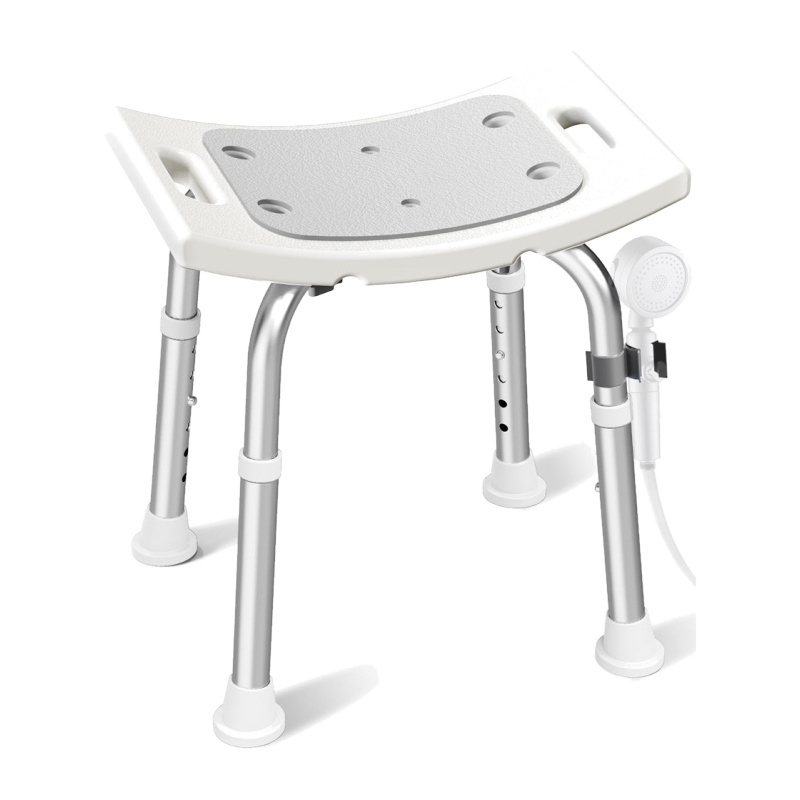
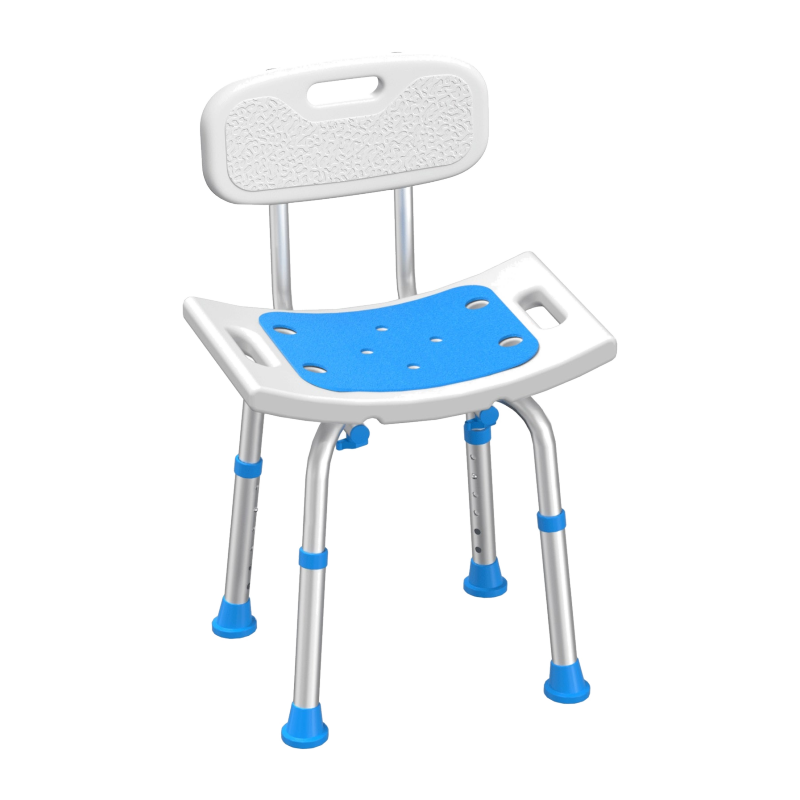
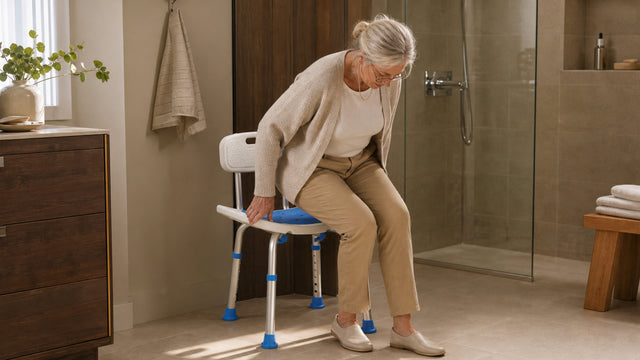
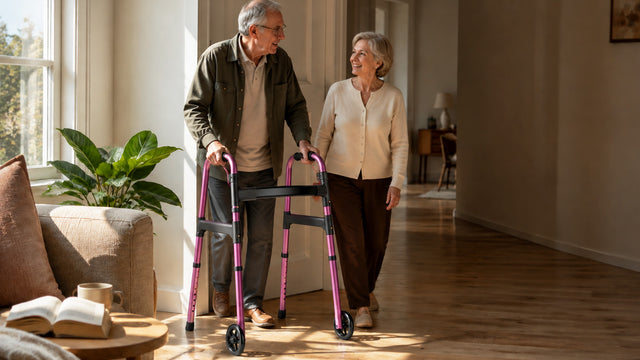
If you're also exploring related home safety upgrades, HOMLAND's full lineup includes shower chairs, bed rails, rolling walkers, standard walkers, and knee scooters — all designed with the same tool-free assembly, adjustable fit, and home-friendly aesthetic. The goal across every product is the same: support that feels like home, not like a hospital.
Final Thoughts
A toilet safety rail is a small addition to a bathroom that can make an outsized difference in daily life. It turns a moment that used to require extra effort — or came with a quiet edge of worry — into something routine and confident. For the person using it, that means independence maintained on their own terms. For the family member or caregiver who helped choose it, it means genuine peace of mind knowing a real risk has been thoughtfully addressed.
The key is matching the right type of rail to your specific toilet, your body, and your daily needs. Take the time to check weight capacity, verify toilet compatibility, confirm adjustability, and follow the installation steps carefully. And once it's in place, keep it maintained — a quick monthly check is all it takes to keep it performing exactly as it should, year after year.
Home should feel safe, comfortable, and entirely your own. The right toilet safety rail helps make sure it does.
Ready to Find Your Perfect Toilet Safety Rail?
Browse HOMLAND's full selection of toilet safety rails — DPT-authorized, FSA/HSA eligible, and backed by a 2-year warranty. Fast shipping from our US warehouse means the support you need arrives when you need it.
Shop Toilet Safety RailsContact Us