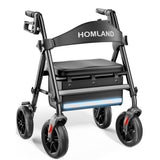
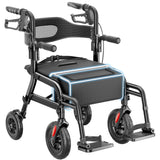
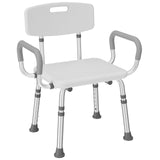
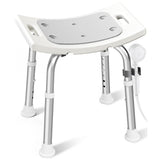




Picture this: it's the morning after a hip replacement, or maybe it's a Tuesday and your knees just aren't cooperating the way they used to. The bathroom — specifically the bathtub — suddenly feels like the most hazardous room in the house. That tub wall isn't just an inconvenience anymore; it's a real obstacle between you and a routine you've done thousands of times. This is the moment a transfer bench quietly becomes one of the most important pieces of equipment in your home.
For adult children researching options for a parent, or for anyone navigating recovery or age-related mobility changes, transfer benches can be genuinely life-changing — not in a dramatic way, but in the everyday way that matters most. They make bathing safer, less exhausting, and more independent. In this guide, we'll walk through exactly what a transfer bench is, how to know if you need one, what features to look for, and how to use one properly. Whether you're shopping for yourself or someone you love, you'll finish this article knowing exactly what to do next.
What Is a Transfer Bench?
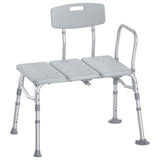
A transfer bench is a bath seat designed to bridge the gap between the bathroom floor and the inside of a bathtub. Unlike a standard shower chair that sits entirely inside the tub, a transfer bench straddles the tub wall — two legs rest on the bathroom floor outside the tub, and two legs sit on the tub floor inside. This design allows the user to sit down on the outside portion of the bench, then safely slide across into the tub without ever needing to step over the tub wall.
That sliding motion is the key innovation. For anyone who has difficulty lifting their legs high enough to clear a tub wall — whether due to surgery, arthritis, balance issues, or general leg weakness — the step-over moment is where falls most often happen. A transfer bench eliminates that risk entirely by turning a vertical challenge into a simple horizontal slide. Physical therapists often recommend transfer benches as one of the most effective bathroom safety tools precisely because they work with the body's natural range of motion rather than demanding something it can no longer do comfortably.
Most transfer benches also include a built-in armrest or handle on the outer side of the bench, giving users something sturdy to grip as they lower themselves down and maneuver into position. Many models feature a backrest as well, which provides additional support during the entire bathing process — not just during entry and exit.
Who Benefits Most from a Transfer Bench?
Transfer benches serve a wide range of people, and the right candidate isn't always obvious at first glance. The clearest use case is someone recovering from a lower-body surgery — a hip or knee replacement, a fracture, or a procedure that temporarily limits weight-bearing on one side. In those situations, even a brief period of standing and balancing while stepping over a tub wall carries real risk. A transfer bench lets recovery happen at home, in dignity, without a caregiver needing to physically assist with every bath.
Beyond post-surgical recovery, transfer benches are a strong fit for:
- Older adults who experience balance issues or dizziness, particularly in wet environments
- People with chronic leg weakness, Parkinson's disease, MS, or other conditions affecting lower-body control
- Anyone who tires quickly and needs to sit and rest during bathing — not just during entry and exit
- Wheelchair users who need to transfer from their chair to a bath seat without standing fully
- Caregivers assisting a loved one who can no longer safely step into the tub unassisted
If you're a caregiver reading this, a transfer bench can also meaningfully reduce the physical strain on you. Instead of bracing your own body to support someone stepping over a tub ledge, the bench provides a stable, consistent surface that handles the transition — giving both of you more confidence and less risk.
Transfer Bench vs. Shower Chair: Which Do You Need?
This is one of the most common questions people ask when shopping for bathroom safety products, and the answer comes down to one main factor: can the user step over the tub wall safely?
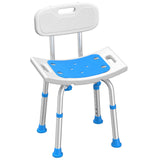
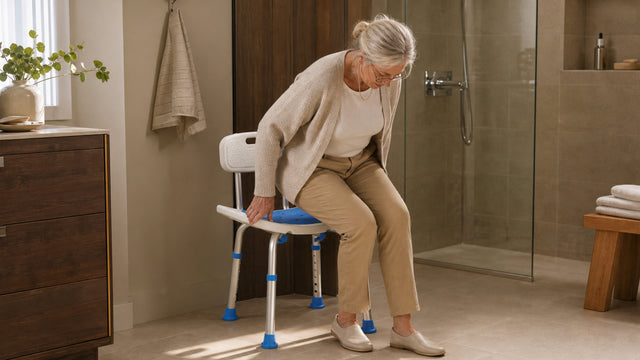
If the answer is yes — even carefully and slowly — then a shower chair placed entirely inside the tub or shower stall may be the right fit. Shower chairs are more compact, easier to move around, and work especially well in walk-in showers where there's no wall to step over at all. They're ideal when the primary need is a place to sit and rest during bathing, rather than help with entry and exit.
If the answer is no — or if stepping over the wall feels risky, causes pain, or requires significant assistance — a transfer bench is the better choice. It's the more comprehensive solution, handling both the entry challenge and the seated bathing need in one piece of equipment. The trade-off is that transfer benches take up more space, since part of the bench extends outside the tub. It's worth measuring your bathroom before purchasing to make sure there's enough floor space for the bench and for the user to comfortably approach it.
One thing worth noting: transfer benches and shower chairs aren't mutually exclusive in a household. Some families keep a transfer bench in the main bathtub and a shower chair in a walk-in shower — each tool doing the job it was designed for.
What to Look for When Choosing a Transfer Bench
Not all transfer benches are created equal, and the difference between a bench that builds confidence and one that creates new worries often comes down to a handful of key features. Here's what physical therapists and experienced caregivers consistently prioritize.
Height Adjustability
Because the two legs inside the tub sit on a surface that's typically higher than the bathroom floor, a transfer bench needs to be individually adjustable on each side to sit level. Fixed-height benches can't accommodate this difference and may wobble or tilt — a serious safety concern. Look for a bench with tool-free, push-button height adjustment on each leg individually, so you can dial in the exact position for your tub's dimensions without needing a toolbox.
Weight Capacity
Standard transfer benches typically support between 250 and 300 lbs, which is appropriate for most users. If you need something built for greater support, heavy-duty models are available with capacities up to 400 or even 500 lbs. Always confirm the weight rating before purchasing — this isn't a spec to estimate. A bench engineered to hold well beyond the user's weight offers genuine peace of mind, not just a technical checkbox.
Seat Size and Comfort
The seat needs to be wide enough for safe sliding — generally, the seat should be at least 6 inches wider than the user's hip width when seated. Depth matters too: a seat that's too shallow won't support the thighs properly, while one that's too deep can make it hard to stand back up. As for padding, unpadded benches are easier to slide across, which is actually important during the transfer motion. Padded benches offer more comfort for longer bathing sessions but can create a bit more friction during the slide. Choose based on what matters more for the specific user's routine.
Materials and Anti-Slip Features
A transfer bench lives in one of the wettest environments in the home, so materials matter significantly. Look for aluminum-frame benches with a plastic seat — aluminum resists rust reliably, and a quality plastic seat won't degrade with regular water exposure. The feet should have non-slip rubber tips or suction cups that grip both the bathroom floor and the tub floor. Drainage holes in the seat help water run off rather than pool, which reduces the chance of slipping and makes the bench easier to keep clean.
Backrest and Armrest
A backrest isn't strictly required, but it provides meaningful safety — especially for users who might lean back instinctively while bathing. The armrest (usually positioned on the side outside the tub) gives the user something to push off of when standing back up, which is often the most physically demanding part of the entire process. Both features are worth prioritizing unless there's a specific reason to leave them out.
FSA/HSA Eligibility and Warranty
Transfer benches are FSA/HSA eligible, which means you may be able to purchase one using pre-tax funds from your flexible or health savings account — a practical way to reduce the out-of-pocket cost. When evaluating brands, also look for a manufacturer warranty and ideally an extended warranty. HOMLAND products, for example, come with a 1-year manufacturer warranty plus an additional 1-year extended warranty, and ship from a US local warehouse so you're not waiting weeks for delivery. These details matter especially when you need the bench quickly — like during a post-surgery recovery window.
How to Set Up and Use a Transfer Bench Safely
Most quality transfer benches are designed for tool-free assembly, meaning you can have the bench ready in minutes without digging through a junk drawer for a screwdriver. Once assembled, setup in the bathroom follows a straightforward process.
Setting up the bench:
- Position the bench – Place it so two legs are inside the tub and two are outside, with the seat facing the showerhead. The user should face the water flow when seated.
- Adjust the leg heights – Lower the inside legs so that the bench sits level despite the height difference between the tub floor and the bathroom floor. Press each button lock firmly to secure the adjustment.
- Check stability – Press down on the seat with your hands before the user sits. The bench should not rock, tip, or slide. If suction-cup feet are included, press each one firmly to engage the seal.
- Confirm seat height – The user should be able to sit and stand without straining their knees or hips. The ideal height is roughly level with the back of the knees when standing.
Using the bench step by step:
- Approach from the outside – Stand facing away from the tub, close enough that the bench seat touches the back of your legs.
- Lower yourself onto the seat – Use the armrest for support and lower yourself in a controlled motion. Avoid dropping down suddenly.
- Slide toward the tub – Inch along the seat, lifting the leg closest to the tub wall over the wall and placing it on the tub floor, then bring the second leg over.
- Bathe comfortably – A handheld showerhead makes this significantly easier and more thorough. It also preserves independence during bathing.
- Exit by reversing the process – Slide back toward the outside of the tub, moving one leg at a time over the wall, then use the armrest to help push yourself to standing.
Take your time at every step. The bench is designed to support you fully — there's no need to rush.
Keeping Your Transfer Bench Clean and Safe
A transfer bench that's well-maintained is a safe transfer bench. Because it sits in a warm, humid environment and gets wet at every use, regular cleaning is the most important maintenance habit to build. After each use, wipe the seat and armrests with a towel to remove soap residue and standing water. Once a week, clean the entire bench — seat, legs, and any drainage holes — with warm water and a mild detergent, then rinse thoroughly and dry completely before the next use.
Beyond cleaning, take a moment every few weeks to check that the leg locks are still engaged, the rubber feet haven't worn down, and there are no cracks in the seat or frame. A bench that's showing signs of wear should be replaced rather than relied upon. The cost of a new bench is a small price compared to the cost — physical and emotional — of a preventable fall.
Common Questions About Transfer Benches
Does Medicare cover transfer benches?
Generally, no. Standard Medicare does not cover transfer benches or most bath safety products. However, if you have an FSA or HSA through your employer or insurance plan, transfer benches are typically eligible for reimbursement. Check with your plan administrator to confirm your specific benefits.
How much does a transfer bench cost?
Most transfer benches fall in the $50 to $150 range, depending on features like weight capacity, padding, and whether a backrest is included. Heavy-duty or bariatric models tend to cost a bit more. Given that these are FSA/HSA eligible, the effective out-of-pocket cost can be lower than the sticker price suggests.
Can a transfer bench be used in a walk-in shower?
Transfer benches are specifically designed for bathtubs with a raised wall to straddle. For a walk-in shower without a threshold, a shower chair is usually the better fit. If you have both a tub and a walk-in shower at home, it may make sense to have one of each.
Is it difficult to assemble a transfer bench?
Most modern transfer benches, including HOMLAND's lineup, are designed for tool-free assembly with simple push-button adjustments. The majority of users can assemble and set up a transfer bench in under 15 minutes. If you're purchasing for a parent or loved one remotely, it's worth confirming the assembly process is something they can manage independently — or plan to set it up on your next visit.
Are transfer benches safe for one person to use without a caregiver?
Yes — that's one of the primary reasons physical therapists recommend them. A well-fitted, properly installed transfer bench is designed for independent use. Many users find that having a transfer bench actually reduces their need for caregiver assistance during bathing, which is a meaningful boost to everyday confidence and dignity. If there are specific mobility concerns, it's always worth asking a physical therapist to walk through the technique during a home visit.
The Bottom Line
A transfer bench is one of those tools that might seem small in scope but has an outsized impact on daily life. It turns one of the most anxiety-inducing moments of the day — getting in and out of a bathtub — into something manageable, safe, and genuinely independent. For seniors navigating mobility changes, or for anyone recovering from surgery, that matters enormously. And for the family members and caregivers who worry, it offers real, grounded peace of mind.
The right transfer bench fits your bathroom, supports your weight with plenty of margin, adjusts easily to the right height, and holds up over time without rusting or degrading. It doesn't need to feel like a medical device — and it shouldn't. It should feel like smart, thoughtful equipment for living well at home, on your own terms. That's exactly what HOMLAND designs for. Explore the full HOMLAND product lineup, including shower chairs, toilet safety rails, bed rails, and rolling walkers — all engineered for independence, all FSA/HSA eligible, and all backed by a 2-year total warranty.
Not Sure Which Product Is Right for You?
Our team is here to help you find the right fit — whether it's a transfer bench, a shower chair, or something else entirely. Reach out and we'll point you in the right direction, no pressure, no jargon.
Contact Us — We're Happy to Help