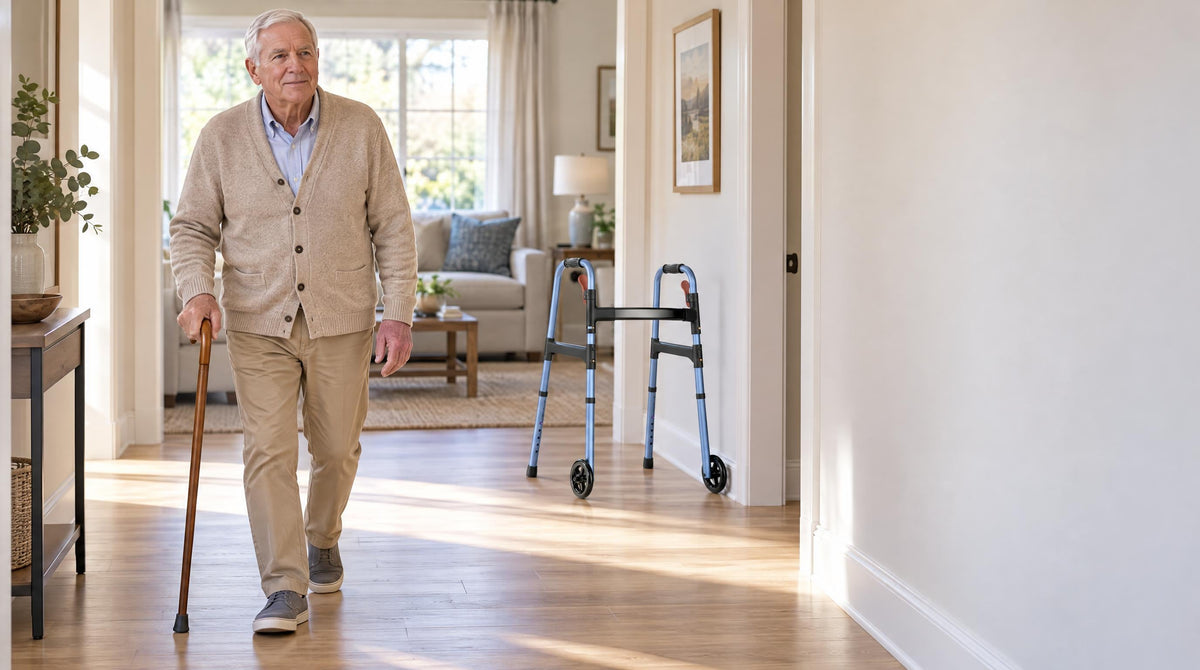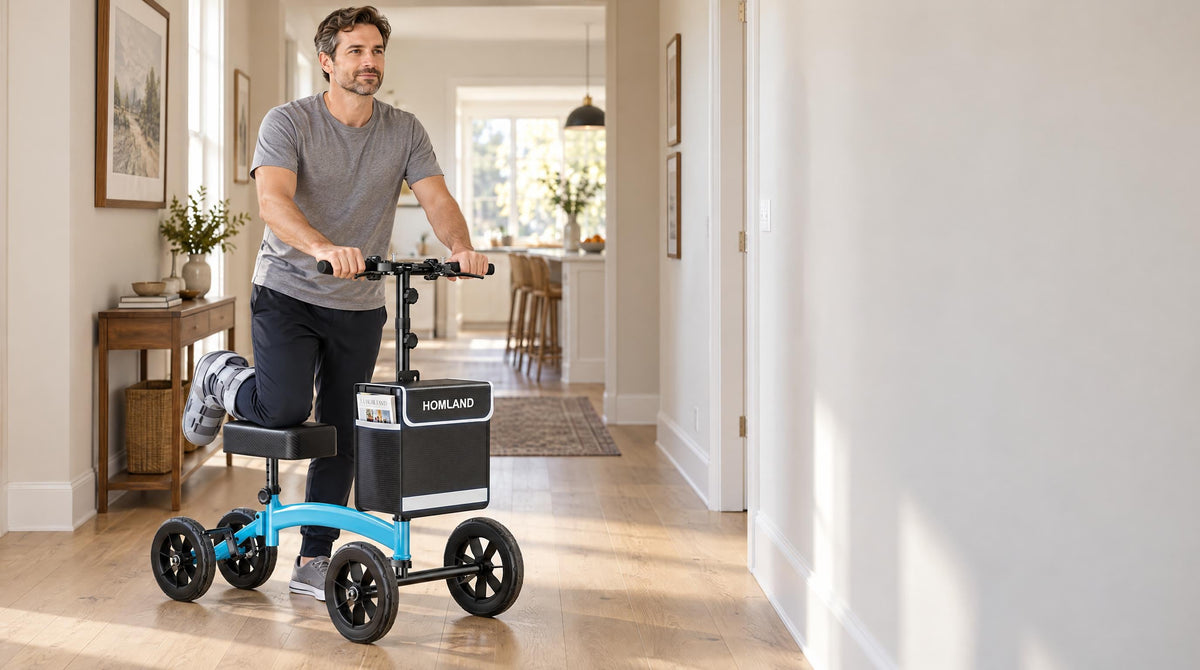


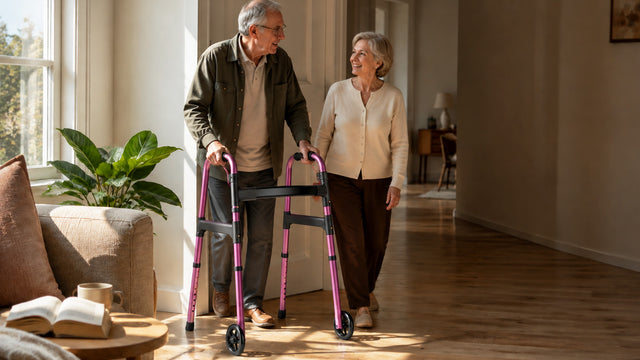

Picture this: you want to walk to the kitchen, step outside for fresh air, or simply move from room to room without asking for help. That sense of freedom — doing things on your own terms, in your own home — is exactly what a good rollator walker is designed to protect. Whether you're recovering from surgery, managing a balance condition, or simply looking for extra confidence on your feet, a rollator can be a genuine game-changer for daily life.
But not all rollators are created equal, and walking into the market without a plan can feel overwhelming. Four wheels or three? Bariatric or standard? Indoor or outdoor? This guide answers every question you're likely to have before you buy — drawing on what physical therapists recommend and what real users actually find helpful. By the end, you'll know exactly what to look for, what to ignore, and how to find the right fit for your life at home.
Rollator Walker Guide
Everything you need to know before buying — types, sizing, features & what physical therapists recommend
Rollators = Natural Movement
Wheels move with you — no lifting required. Ideal for steady gait with balance or endurance challenges.
4 Distinct Types
4-wheel, 3-wheel, upright, and bariatric — each designed for a specific lifestyle and environment.
Fit Is Everything
Handle height should align with wrist crease, arms at sides. 15–20° elbow bend is the target.
DPT-Authorized Design
Look for products authorized by licensed Doctors of Physical Therapy — not just engineers.
FSA/HSA Eligible
Quality rollators may qualify for pre-tax spending — confirm with your benefits administrator.
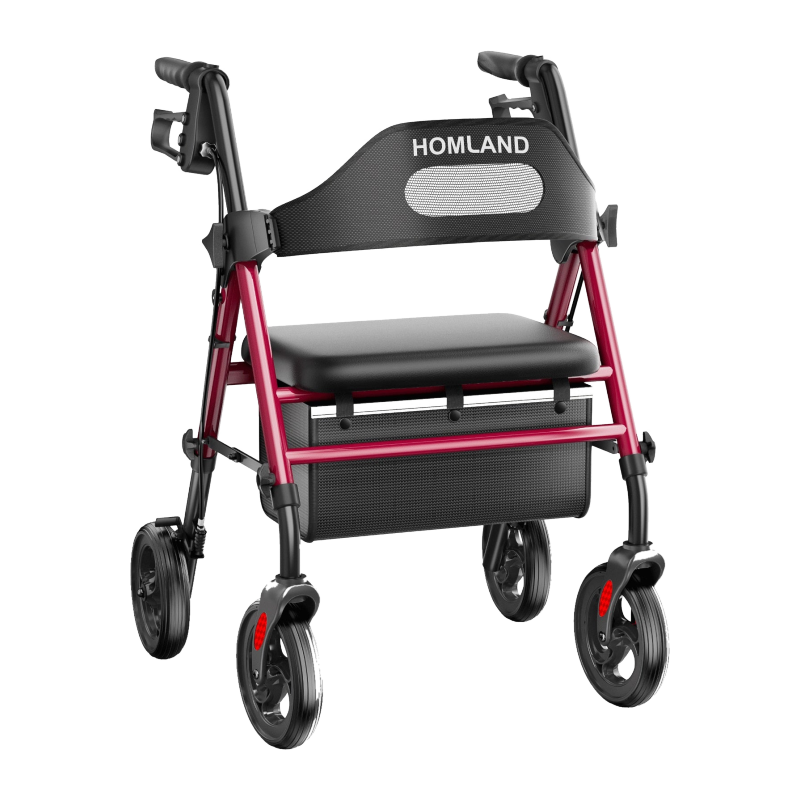
4-Wheel
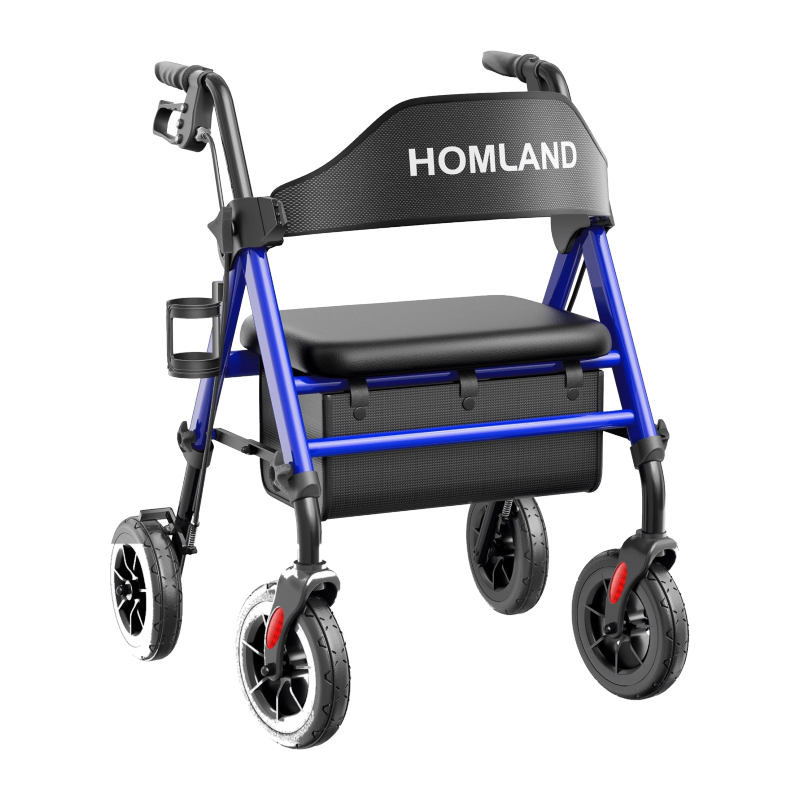
Most popular. Stable & versatile — indoors and outdoors. Includes seat & storage.
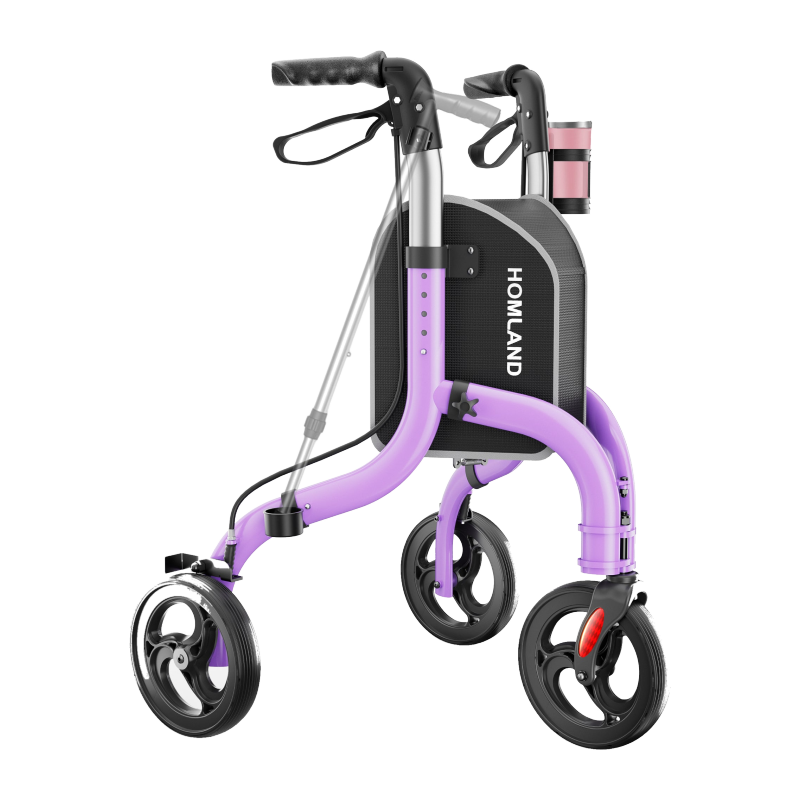
3-Wheel
Lighter & more nimble. Ideal for tight spaces. No seat — best for active users.
Upright
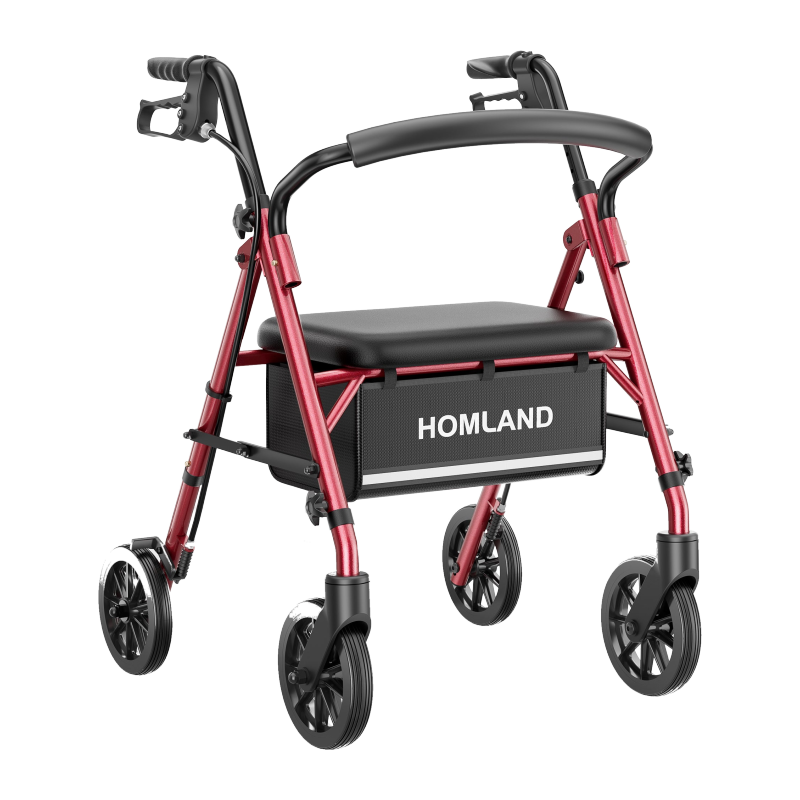
Forearm rests higher for straight posture. Reduces wrist & shoulder strain.
Bariatric
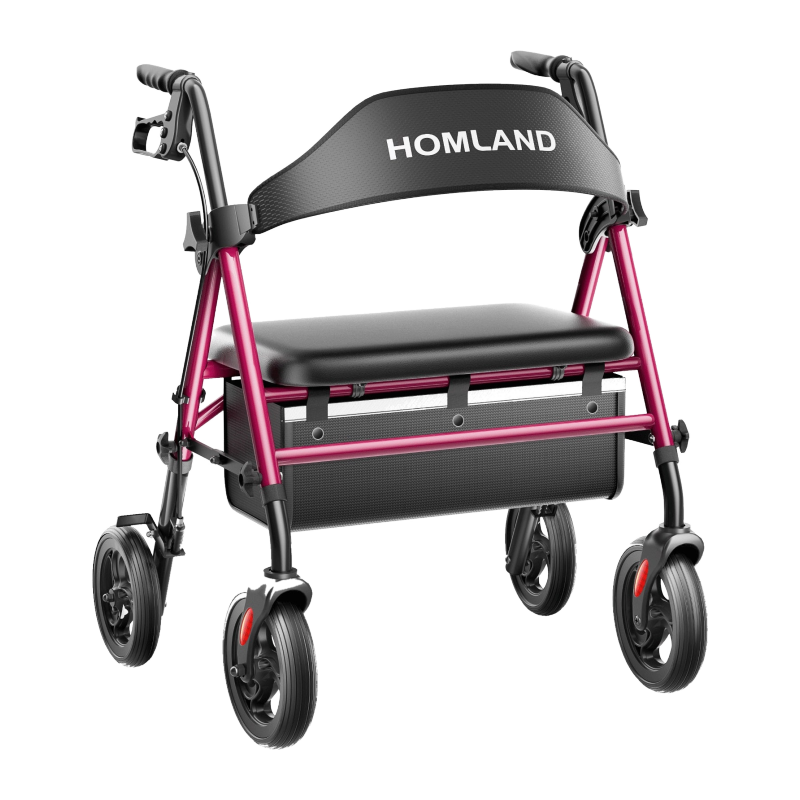
Wider reinforced frame. Up to 500 lbs capacity. Full function, no compromises.
Braking System
Loop brakes easy to squeeze — even with arthritic hands. Must lock in "down" position for seated rest.
Handle Height Adjustability
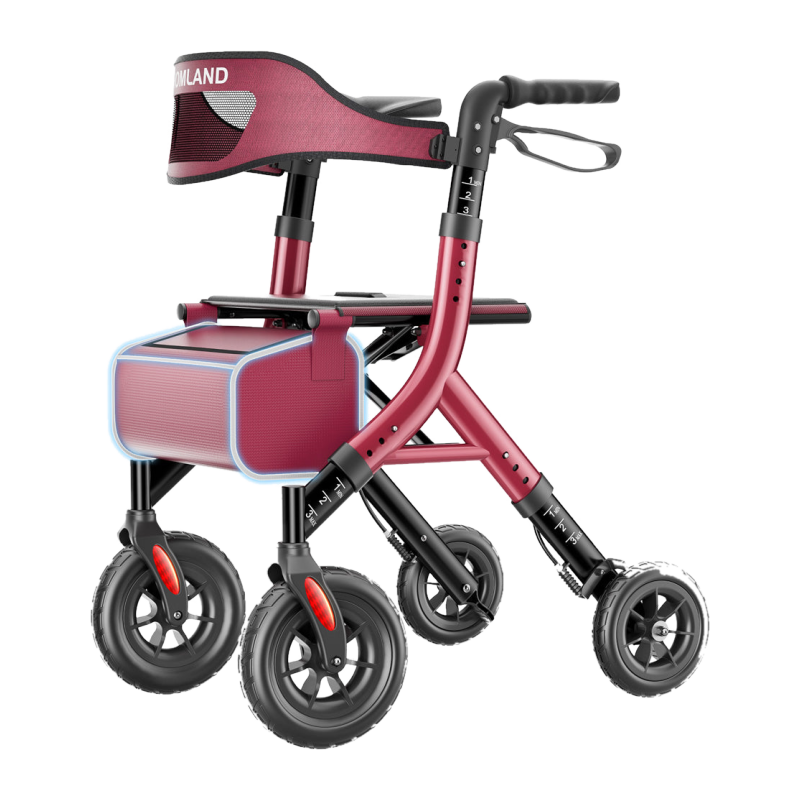
Tool-free adjustment in 1-inch increments. Misaligned handles strain wrists, shoulders, and back.
Weight Capacity
Always choose a rollator rated at least 20–30 lbs above your body weight for a safe buffer.
Wheel Size
8-inch+ wheels handle cracks, pebbles & inclines. Smaller wheels work for smooth indoor floors only.
Storage & Seat Comfort
Zip-close bag for essentials. Padded seat + backrest strap make resting breaks genuinely useful.
Frame Weight & Foldability
Lightweight aluminum + one-handed quick-fold makes transport effortless — essential for active users.
3 Steps to Perfect Fit
- 1 Stand upright in your normal shoes with arms relaxed at sides.
- 2 Set handle height to line up with the crease of your wrist.
- 3 Grip should give 15–20° elbow bend. Most fit 32–39" handle range.
⚠️ Lock Before Sitting
Push brake levers down until they click before lowering yourself onto the seat.
🚶 Walk Inside the Frame
Stay close — center of gravity should sit over your feet, not over extended arms.
🛠️ Monthly Brake Check
Cable brakes stretch with use. Squeeze each brake monthly — confirm the wheel locks fully.
👟 Wear Supportive Footwear
Rubber-soled shoes make a measurable stability difference. Skip slick-soled slippers indoors.
🚶 Avoid Stairs
Most rollators aren't built for stairs. Use a handrail and set the rollator aside on staircases.
⚖️ Don't Overload Storage
Heavy bags shift your center of gravity. Keep storage contents light and balanced.
HOMLAND Rolling Walkers
DPT-authorized • FSA/HSA eligible • Tool-free assembly • Ships from US warehouse
What Is a Rollator Walker?
A rollator walker is a wheeled mobility aid with a frame, handlebars, and built-in brakes — designed so you can walk forward naturally without having to lift the device with each step the way you would with a traditional walker. Most rollators also include a padded seat and a storage pouch or basket, so you can rest when you need to and keep everyday essentials close by.
The rolling design is what sets a rollator apart. Because the wheels move with you, the walking motion feels much more fluid and natural. Physical therapists often recommend rollators for people who have a reasonably steady gait but need support for balance, endurance, or confidence — particularly after joint replacement surgery, during recovery from a fall, or when managing conditions like Parkinson's, COPD, or arthritis. The ability to sit down and rest without searching for a chair is one of those practical benefits that users consistently describe as life-changing.
Rollator vs. Standard Walker: Which One Do You Need?
The choice between a rollator and a standard walker comes down to how much weight-bearing support you need versus how much you value smooth, continuous movement. A standard (non-wheeled) walker offers maximum stability because it doesn't roll — you lift it, place it, and step into it. That makes it the right tool right after certain surgeries or when upper-body strength is limited, since you can lean into it heavily.
A rollator, on the other hand, is better suited to someone who can walk with a fairly consistent stride but needs help staying balanced, reducing fatigue, or moving longer distances. Because you're not stopping to lift the frame with every step, your pace feels more natural and less exhausting. If your goal is to walk around the neighborhood, navigate a grocery store, or move confidently through your home without stopping every few feet, a rollator is almost always the more comfortable, liberating choice.
When in doubt, a physical therapist can assess your gait and recommend the right level of support. HOMLAND's rolling walkers are authorized by licensed Doctors of Physical Therapy (DPT), which means the designs reflect real clinical insight — not just engineering specs.
Types of Rollator Walkers
Once you've decided a rollator is right for you, the next step is understanding which style fits your situation. There are four main types, each with a distinct use case.
4-Wheel Rollator
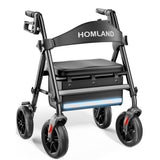
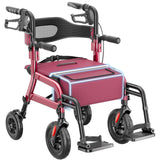
The most popular style by a wide margin. Four-wheel rollators are stable, smooth, and versatile — equally useful indoors on hardwood or tile and outdoors on paved paths. They include loop brakes on the handlebars (squeeze to slow down, push down to lock for seated rest), a padded seat, and usually a storage bag beneath the seat. If you're buying your first rollator and aren't sure where to start, a 4-wheel rollator is almost always the right answer.
3-Wheel Rollator
Three-wheel rollators are lighter and more maneuverable, making them a good fit for navigating tighter spaces like apartment hallways or small bathrooms. Because there's only one wheel at the front, the turning radius is tighter. The tradeoff: no seat and slightly less lateral stability than a four-wheel model. They're a popular choice for active users who want minimal weight and maximum agility.
Upright Rollator
An upright rollator places the forearm rests at a higher position, encouraging a straighter posture as you walk. Physical therapists often recommend this style for users who tend to hunch forward or who experience shoulder or wrist discomfort with a standard rollator grip. If you find yourself leaning heavily on the handlebars, an upright model may be worth considering.
Bariatric Rollator
Built for users who need a wider, reinforced frame and a higher weight capacity — often 400 to 500 lbs. Bariatric rollators use heavier-gauge materials and wider seat padding without sacrificing function. HOMLAND's bariatric rolling walkers support up to 500 lbs on select models, built to give every user the same confident, secure experience regardless of body size.
Key Features to Look for When Buying
Shopping for a rollator can feel like comparing a long list of specs. Here's how to cut through the noise and focus on what actually matters in daily use.
- Braking system: Look for loop brakes (cable-operated) that are easy to squeeze with arthritic or weaker hands. The brake should also lock in the "down" position so the walker stays put when you sit.
- Handle height adjustability: Tool-free height adjustment is essential. Handles that can't be set to your exact height put strain on your wrists, shoulders, and back. Most quality rollators adjust in 1-inch increments.
- Weight capacity: Always verify the stated weight limit exceeds your body weight by a comfortable margin — at least 20 to 30 lbs — for a reliable safety buffer.
- Seat and backrest comfort: If you plan to use the seat regularly (waiting at appointments, taking breaks on walks), padded width and a backrest strap make a real difference.
- Frame weight and foldability: A lighter frame (typically aluminum) is easier to lift into a car trunk. A quick-fold mechanism means you're not wrestling with it every time you travel.
- Wheel size: Larger wheels (8 inches or more) handle uneven surfaces, cracks, and gentle inclines better. Smaller wheels are fine for smooth indoor surfaces.
- Storage: A zip-close bag or basket under the seat is surprisingly important for independence — it means you can carry your phone, wallet, water bottle, or medication without needing a second set of hands.
HOMLAND rollators are engineered with all of these considerations built in: tool-free assembly, adjustable heights, and load capacities designed for real daily use. They're also FSA/HSA eligible, which means you may be able to use pre-tax funds toward your purchase — something worth confirming with your benefits administrator before checkout.
How to Size a Rollator Correctly
Proper fit is the single most important factor in how safe and comfortable a rollator feels. A poorly sized rollator encourages bad posture, increases fatigue, and can actually reduce stability. Here's how to get it right.
Stand upright in your normal footwear with your arms relaxed at your sides. The top of the rollator handle should align with the crease of your wrist. When you grip the handle at that height, your elbows should have a slight bend — roughly 15 to 20 degrees. Handles set too low cause you to hunch forward; too high and you'll shrug your shoulders with every step, which tires you out quickly and strains the neck and upper back.
Most rollators accommodate a handle height range of approximately 32 to 39 inches, which covers the majority of adult heights. If you're particularly tall or have unusually long arms, look for models with an extended height range. If you're shopping for someone else, take a wrist measurement before ordering — it takes 30 seconds and prevents a frustrating return.
Indoor vs. Outdoor Use: What Changes?
Many people use their rollator both indoors and outdoors, but it's worth knowing what each environment demands so you choose a model that handles both well. Indoors, the priorities are tight turning radius, low weight, and non-marking wheels that won't scuff hardwood floors. A thinner frame profile also helps in narrow hallways and doorways — especially in older homes where standard door widths can be a tight fit.
Outdoors, durability and wheel size take priority. Sidewalk cracks, uneven pavement, small pebbles, and gentle inclines put much more stress on a frame than a smooth kitchen floor. Larger-diameter wheels roll over obstacles more smoothly, and a sturdier frame absorbs vibration better. The brake cables should also be weather-resistant if you plan to use the rollator in light rain or damp conditions.
If you do a mix of both, a mid-weight 4-wheel rollator with 7.5- to 8-inch wheels and a slim folded profile is usually the best compromise. The HOMLAND rolling walkers collection includes options designed for exactly this kind of everyday versatility.
Safety Tips for Everyday Use
Owning the right rollator is only half of the equation. Using it safely — especially in the first few weeks — makes the difference between a tool that builds confidence and one that ends up in the closet. Physical therapists offer consistent guidance here, and most of it is straightforward once you know it.
- Always lock the brakes before sitting. Push the brake levers down until they click. Never lower yourself onto the seat with the rollator free-rolling.
- Walk inside the frame, not behind it. Your body should be positioned close to the rollator so the center of gravity stays over your feet — not leaning forward over extended arms.
- Use it on stairs carefully. Most rollators are not designed for stair use. On staircases, use a handrail and temporarily set the rollator aside, or consider a stairlift if stairs are a frequent challenge.
- Check the brakes and bolts monthly. Cable brakes can stretch slightly with use. A quick tug test — squeeze each brake, confirm the wheel locks — takes less than a minute and is well worth making a habit.
- Wear supportive footwear. The best rollator in the world can't compensate for slick-soled slippers on a hardwood floor. Shoes with rubber soles make a measurable difference in overall stability.
- Don't overload the storage bag. Weight hanging below the seat can shift the center of gravity in ways that affect steering. Keep the bag contents light and balanced.
Quick Buying Checklist
Before you finalize any rollator purchase, run through these questions. They take two minutes and can save you from a return you didn't need to make.
- Does the weight capacity comfortably exceed my body weight?
- Does the handle height range cover my wrist height in normal shoes?
- Will the folded width fit in my car trunk or storage space?
- Are the wheels appropriate for the surfaces I use most?
- Is assembly tool-free, or will I need help putting it together?
- Is the product FSA/HSA eligible so I can use pre-tax funds?
- What warranty comes with the product — and for how long?
- Is there a US-based warehouse for fast delivery if I need it quickly?
HOMLAND rollators check each of these boxes: tool-free assembly, adjustable handles, FSA/HSA eligible, ships from a US local warehouse, and covered by a 1-year manufacturer warranty plus a 1-year extended warranty. For families buying on behalf of a parent or loved one, that level of purchase reassurance matters — it means you're not taking a risk, you're making a considered, well-supported choice.
Final Thoughts
A rollator walker isn't a sign that independence is slipping away — it's often the thing that preserves it. When you have the right support underfoot, you can go further, stand longer, and move with the kind of ease that makes daily life feel like your own again. That's the whole point.
Whether you're buying for yourself after a procedure or helping a family member regain their footing, the best rollator is the one that fits well, feels solid, and gets used every single day. Take the time to size it correctly, match it to your environment, and choose a brand that stands behind what it makes. The freedom it unlocks is absolutely worth it.
Explore the full range of HOMLAND rolling walkers — including 3-wheel, 4-wheel, upright, and bariatric models — or browse all HOMLAND mobility products to find everything you need for safe, independent living at home.
Not sure which rollator is right for you?
Our team is happy to help you find the best fit for your needs, home, and lifestyle. Reach out — no pressure, just honest guidance.
Contact Us