

Picture a Sunday morning: the smell of coffee brewing, eggs on the stove, the quiet satisfaction of making your own breakfast in your own kitchen. For many older adults, that daily routine is not just about food — it is about independence. But the kitchen, as comfortable and familiar as it feels, can quietly become one of the most hazardous rooms in the home.
According to the CDC, falls are the leading cause of injury-related death among adults 65 and older, and the fall death rate rose by 21% between 2018 and 2024. The kitchen concentrates several of the biggest risk factors in one small space: hard, often slippery floors, hot surfaces, heavy cookware, and the need to reach, bend, and carry — sometimes all at once. Add in changes to balance, grip strength, or vision that naturally come with age, and a room once taken for granted becomes a place that deserves a second look.
The good news? Most kitchen accidents are preventable. You do not need a full renovation or a hospital-grade makeover. The right small changes — a non-slip mat here, a mobility aid there, a brighter bulb under the cabinet — add up to a dramatically safer space. This guide walks through every major risk area in the kitchen, with practical solutions for both seniors who want to keep cooking on their own terms and the family members who want to help them do exactly that.
Why the Kitchen Deserves Extra Attention
The kitchen is the most-used room in the house — and, for seniors, often the most dangerous. Trips, slips, burns, and cuts are the most common injuries, and the combination of hard flooring, hot appliances, and the constant need to move between surfaces creates a uniquely high-risk environment. The National Fire Protection Association reports that three in ten home fires start in the kitchen, more than any other room in the house. Meanwhile, aging naturally brings changes — reduced reaction time, decreased grip strength, shifts in balance and vision — that turn once-routine tasks into genuine hazards.
None of this means stepping back from the kitchen. It means stepping in with better preparation. Physical therapists often emphasize that the goal of home safety modifications is not to restrict what people do, but to protect the environment so they can keep doing it safely. With that in mind, let's go room by room — or rather, hazard by hazard.
Start at Ground Level: Floors and Footwear
Most kitchen falls begin underfoot. Smooth tile, hardwood, or laminate surfaces become treacherous the moment a drop of water or cooking oil lands on them, and a spill that a younger adult barely notices can send an older person to the floor in an instant. The Consumer Product Safety Commission has found that floors and flooring materials contribute directly to more than 2 million fall injuries each year — and kitchen floors are among the most likely culprits.
The fix starts with non-slip mats placed strategically in front of the sink, stove, and refrigerator — the three spots where spills are most likely to happen. Choose mats with beveled edges and rubberized backing so they stay put and do not create a new tripping hazard at their edges. Rugs with curled edges or thin mats that slide underfoot should be removed entirely. If you prefer open flooring, textured vinyl, rubber, or cork surfaces offer good traction and are worth considering for any future flooring update.
Footwear matters just as much as the floor beneath it. Wearing socks without shoes — or backless slippers — on a kitchen floor is one of the most common and overlooked risks for older adults. Non-slip, closed-toe shoes with rubber soles provide the traction and ankle support that bare feet and soft slippers simply cannot. The kitchen is not the place to go barefoot, no matter how comfortable it feels.
Let There Be Light: Improving Visibility
Poor lighting is one of the most under-addressed kitchen hazards. As vision naturally changes with age, insufficient lighting makes it harder to spot spills on the floor, read small labels on appliances, or notice the edge of a step or cabinet door. A dimly lit kitchen is not just inconvenient — it is a fall waiting to happen.
Start with the basics: check that all overhead bulbs are working and consider upgrading to bright, energy-efficient LEDs that provide even, glare-free illumination. Task lighting — strips or puck lights installed under upper cabinets — makes a significant difference at countertop level, where most prep work happens. Motion-activated night lights are a low-cost addition that pay dividends during nighttime trips to the kitchen, eliminating the dangerous habit of navigating in the dark. Bright, well-distributed light is one of the simplest modifications that delivers the biggest return on safety.
Smart Storage: Everything Within Easy Reach
Reaching for a high shelf and stretching past a stable base is one of the leading causes of balance-related falls in the kitchen. The same applies to bending low into deep base cabinets where heavy pots are often stored. A few thoughtful reorganization moves can eliminate both hazards at once. Physical therapists commonly recommend relocating frequently used items — everyday dishes, the most-used pots, cooking staples — to between waist and shoulder height, where they can be reached without strain or balance compromise.
Heavy cookware and appliances belong at waist level, not stacked on upper shelves or tucked into deep lower cabinets. Pull-out shelves, lazy Susans, and pulldown cabinet organizers can transform hard-to-reach storage into accessible, safe spaces. When something is stored too high or too low to reach comfortably, the safest approach is to ask for help rather than improvise with a chair or step stool. If a step stool is genuinely needed, use one with a secure handrail and non-slip surface — never a chair or table edge.
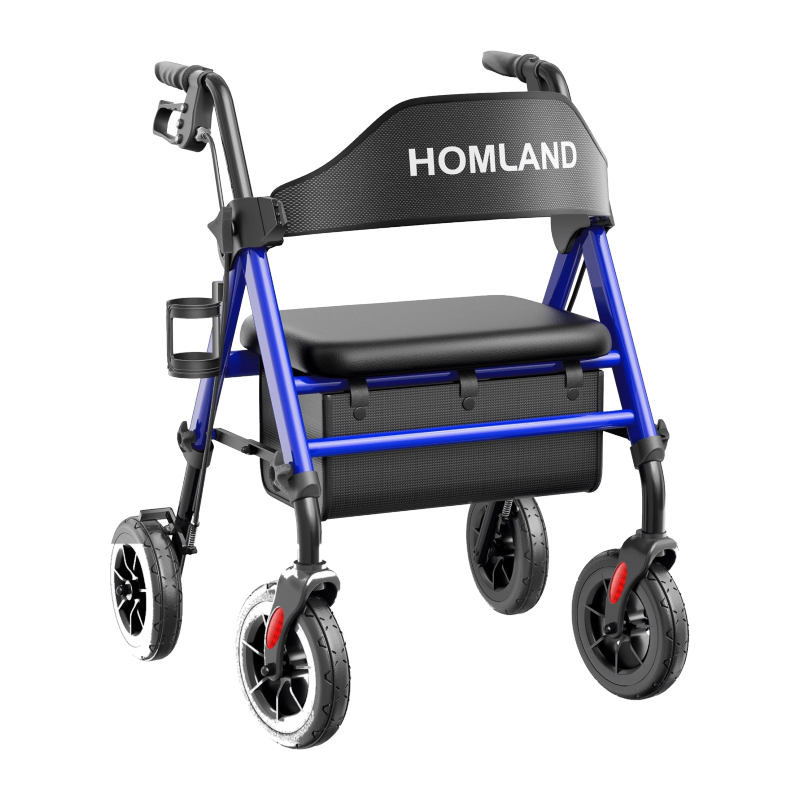
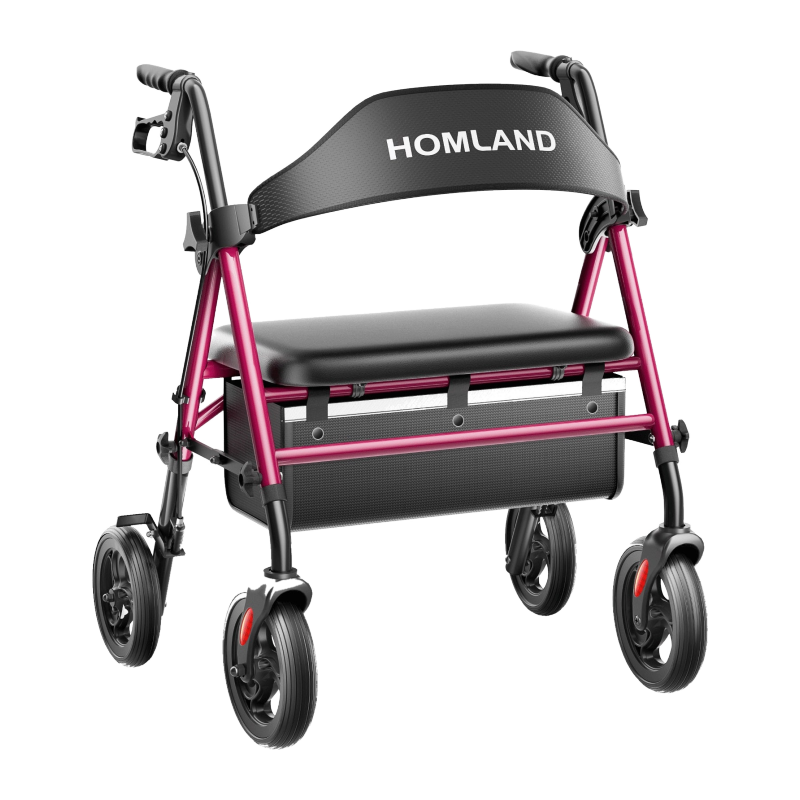
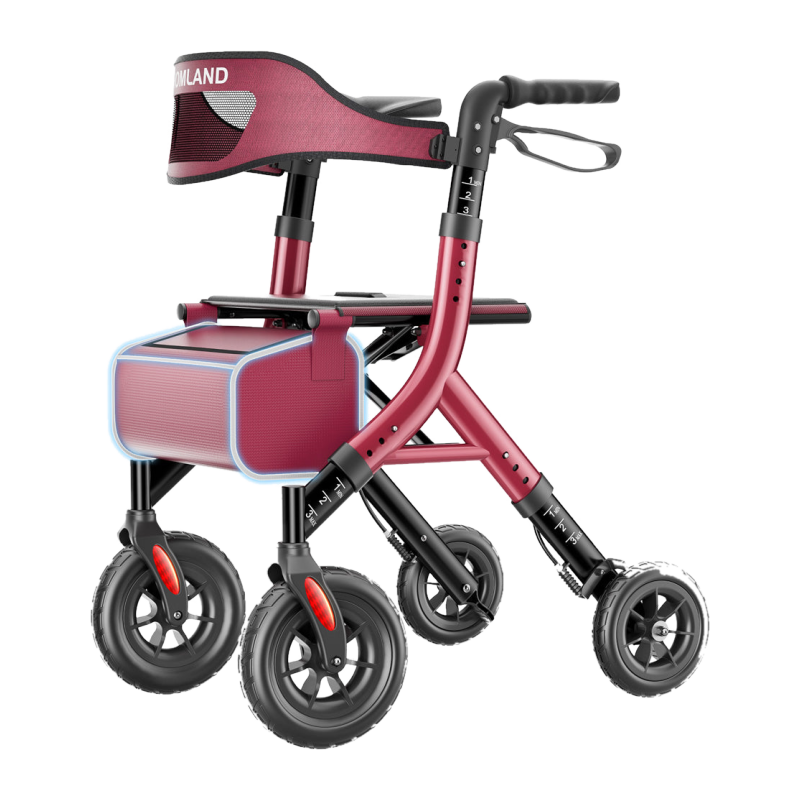
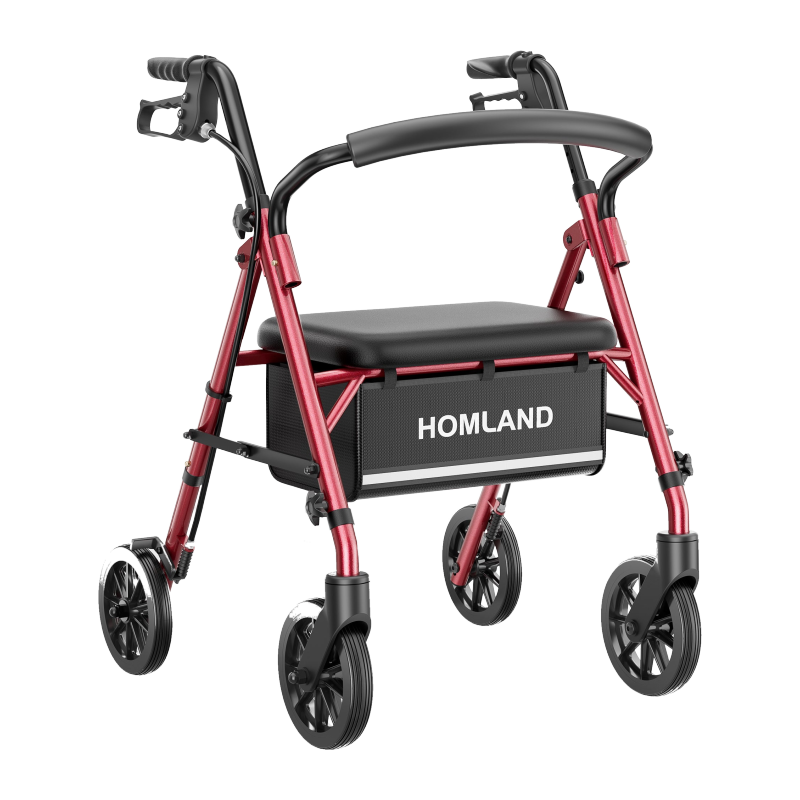
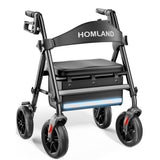
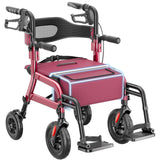
A rolling cart deserves a special mention here. A lightweight kitchen cart can serve as a portable work surface, a way to carry dishes and pots from counter to table without the risk of walking while carrying, and even an impromptu support for steadying oneself between surfaces. For anyone using a rolling walker, the basket or seat built into most models can do double duty — transporting items around the kitchen safely without the need to carry anything by hand.
Moving Through the Kitchen with Confidence
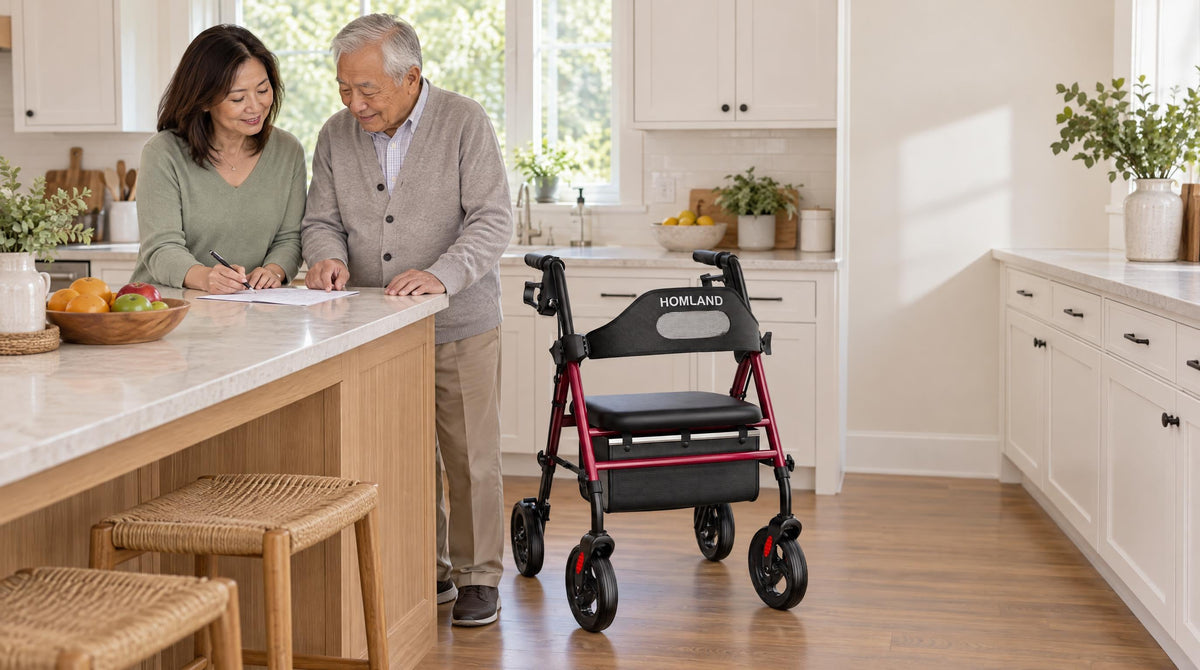
One of the most transformative changes a senior can make is simply bringing a mobility aid into the kitchen. Many people reserve their walker for outdoor walks or medical appointments, but physical therapists frequently recommend using it consistently throughout the home — including in the kitchen — where the combination of carrying, reaching, and moving between surfaces increases fall risk considerably.
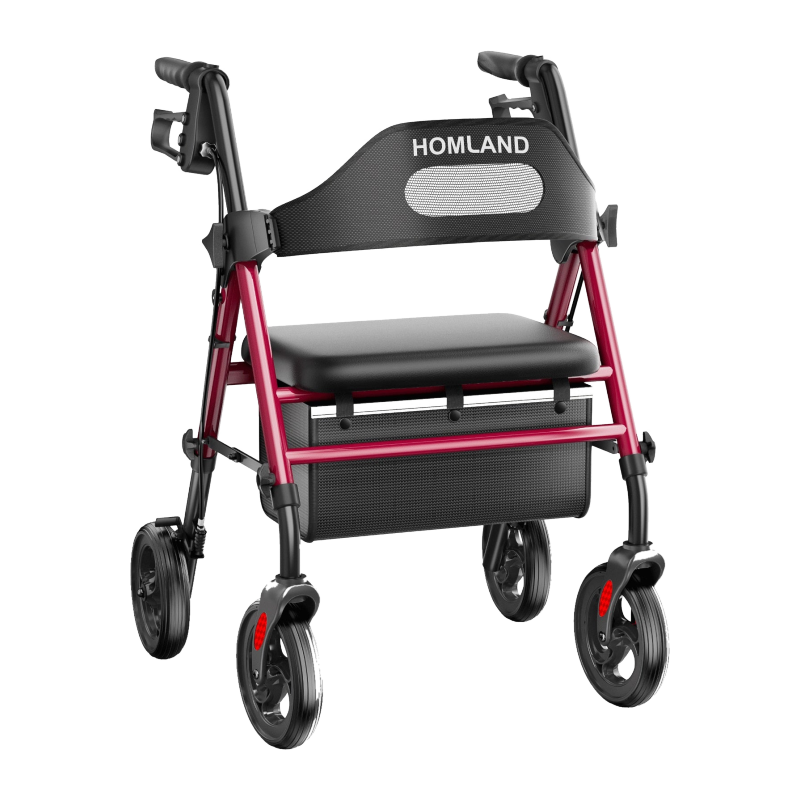
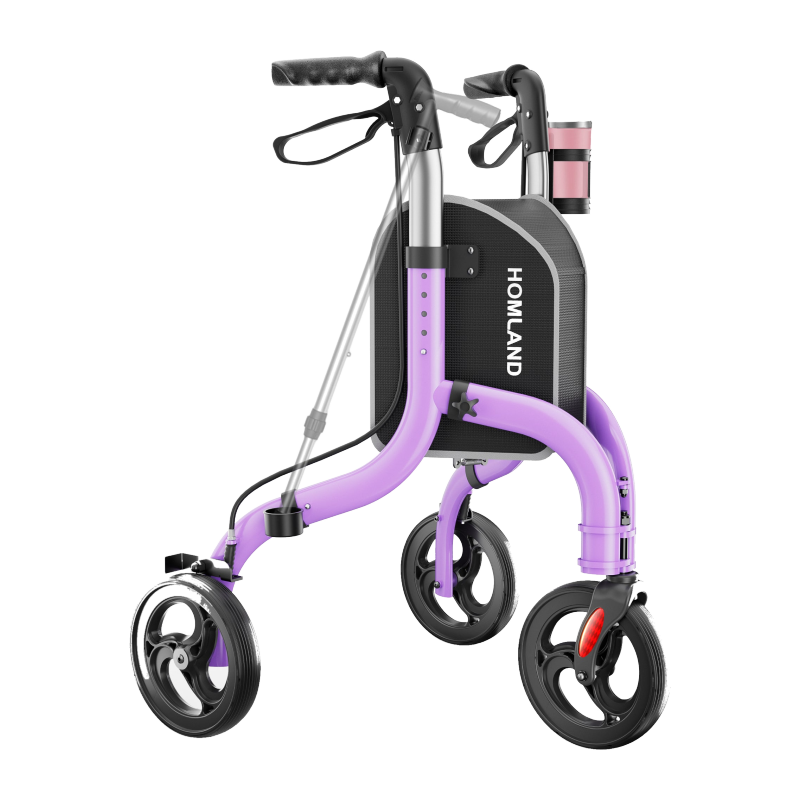
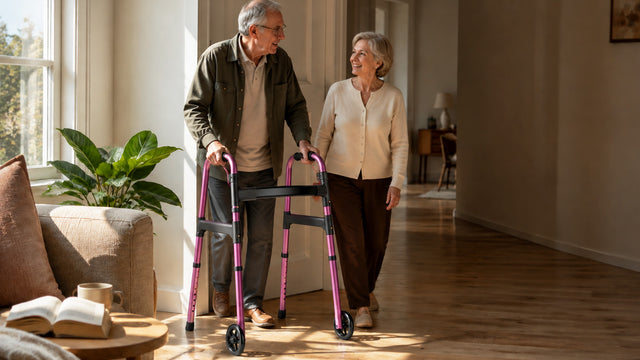
A four-wheel rollator walker is particularly well-suited for kitchen use. It provides continuous support while moving, offers a built-in seat for short rests during longer cooking sessions, and its basket removes the need to carry items by hand — one of the most common ways balance is compromised. For those who prefer a simpler, lightweight option, a standard walker adds immediate stability when moving between the stove, counter, and refrigerator. HOMLAND's walkers are designed with tool-free height adjustment, non-slip rubber feet, and sturdy frames that support up to 500 lbs on select models — built so users can lean in with full confidence on any surface.
For caregivers evaluating a mobility aid: HOMLAND products are FSA/HSA eligible, backed by a 1-year manufacturer warranty plus a 1-year extended warranty, and ship from a US local warehouse for fast delivery. The lineup is authorized by licensed Doctors of Physical Therapy, so you can feel confident the design is grounded in real-world mobility needs, not just aesthetics. Explore the full range at HOMLAND's product collection.
Equally important is making sure the kitchen layout accommodates a mobility aid. Wide, clear pathways between the counter, table, refrigerator, and stove allow a walker or rollator to move freely without bumping into corners or clutter. Decluttering the floor — removing unnecessary rugs, stray appliance cords, and pet items from pathways — is one of the highest-impact changes a caregiver can make in an afternoon.
Fire and Burn Safety: Small Steps, Big Protection
Burns are the second leading cause of home injury among seniors, and the kitchen is where the majority of those burns happen. The FEMA reports that adults over 65 have a significantly greater risk of dying in a kitchen fire than younger adults — a sobering statistic that underscores the importance of active fire prevention, not just reactive preparation.
The most important rule is simple: never leave the kitchen while something is actively frying, grilling, or broiling. Unattended cooking is the primary cause of kitchen fires. If stepping away is unavoidable, use a timer as a physical reminder that something is on the stove. Automatic shut-off devices for stoves and appliances are an excellent addition for anyone who occasionally loses track of time or has early memory concerns.
A few everyday habits dramatically reduce burn and fire risk:
- Turn pot and pan handles toward the back of the stove so they cannot be knocked over when passing by.
- Keep dish towels, oven mitts, and loose clothing well away from burners and oven doors — fabric near a flame or hot coil is a common ignition source.
- Test smoke detectors monthly and replace batteries annually. Consider models with strobe lights for anyone with hearing loss.
- Keep a fire extinguisher accessible near the kitchen entrance — not stored next to the stove, where a fire would block access to it.
- Clean the stovetop and ventilation hood regularly, as grease buildup is a leading cause of kitchen fires.
When it comes to appliances, induction cooktops are worth considering as a longer-term upgrade. Their surfaces do not produce open flames and cool quickly after use, significantly reducing the chance of accidental burns for anyone who might briefly touch a burner out of habit.
Food Safety: The Risk You Can't See
Kitchen safety is not only about falls and burns — it includes the invisible hazards of foodborne illness, which becomes a more serious concern as the immune system naturally changes with age. Older adults are more vulnerable to the effects of foodborne illness and may take longer to recover if it occurs. The good news is that the most effective prevention is also the simplest: regular fridge cleanouts, consistent attention to expiration dates, proper food storage temperatures, and thorough reheating of leftovers.
A few habits worth building into the weekly routine: check refrigerator temperature (ideally between 35°F and 38°F), clear out expired or questionable items before a grocery trip, and never leave cooked food sitting at room temperature for more than two hours. These are not complicated steps, but they are easy to let slide — and for older adults living alone, having a family member do a periodic pantry and fridge check can provide a useful safety net alongside practical peace of mind.
Adaptive Tools That Make Cooking Easier
The right tools can transform the kitchen from a space full of small frustrations into one that works with you rather than against you. For anyone dealing with reduced grip strength, arthritis, or tremors, standard kitchen equipment can feel designed for someone else's hands. Adaptive tools bridge that gap without requiring a complete kitchen overhaul.
Consider the following additions:
- Ergonomic utensils: Larger, textured handles make gripping spoons, peelers, and spatulas easier and reduce hand fatigue during longer cooking sessions.
- Lightweight cookware: Heavy pots and pans are at greater risk of being dropped, causing spills, burns, or fires. Lighter options with two handles offer more control.
- Non-slip cutting boards: Boards with suction feet or rubber grips stay in place while cutting, reducing the risk of slipping utensils.
- Lever-style or touchless faucets: Round knobs require gripping and twisting — difficult for anyone with arthritis or reduced hand strength. Lever faucets and touchless models are far easier to operate with minimal effort.
- Jar and can openers: Electric or ergonomic openers take the strain and the risk out of wrestling with lids.
- D-shaped cabinet handles: Replacing small round cabinet knobs with wide D-shaped pulls requires far less grip strength and is one of the easiest hardware upgrades in the kitchen.
None of these tools signal a loss of ability — they signal good judgment. They are the same type of intelligent design choices that go into high-quality mobility equipment: built to reduce friction so the person using them can focus on what they actually enjoy, whether that is cooking a family recipe or simply making lunch without worry.
A Quick Safety Checklist for Families and Caregivers
If you are an adult child or caregiver helping a loved one assess their kitchen, the following checklist offers a practical starting point for a walkthrough. Many of these changes take less than an afternoon to implement, and the combined effect on daily safety is substantial.
- Non-slip mats placed in front of the sink, stove, and refrigerator — secured with rubber backing
- All overhead lighting working; under-cabinet task lighting added where possible
- Night lights installed for after-dark kitchen use
- Frequently used items stored between waist and shoulder height
- Heavy pots and appliances moved to waist-level storage
- Clear, wide pathways throughout the kitchen with no cords, rugs, or clutter on the floor
- Mobility aid (walker or rollator) accessible and in regular use within the home
- Smoke detector tested and batteries current
- Fire extinguisher accessible near the kitchen entrance
- Stovetop and ventilation hood clean of grease buildup
- Cabinet hardware replaced with easy-grip D-shaped handles or pulls
- Refrigerator temperature checked; expired items cleared regularly
- Automatic shut-off device on the stove, especially if memory concerns are present
If your loved one uses a walker or is recovering from surgery or a fall, also consider whether their current mobility aid is appropriately sized and suited to indoor use. A walker that is the wrong height or too heavy to maneuver comfortably in a small kitchen will be left in the hallway — and that is when accidents happen. HOMLAND's standard walkers and rolling walkers are engineered specifically for home environments, with tool-free height adjustment, lightweight frames, and non-slip rubber feet that work on every kitchen surface.
Safety Starts at Home — And It Starts Today
The kitchen should be a place of comfort, creativity, and independence — not anxiety. The changes that make the biggest difference are rarely dramatic or expensive. A brighter bulb, a secured mat, a walker within reach, handles that are easy to grip: these are the kinds of practical, human-centered improvements that physical therapists recommend and that genuinely change daily life for the better.
For seniors, keeping the kitchen safe means keeping the freedom to cook your own meals, on your own schedule, in your own home. For families and caregivers, it means peace of mind knowing that the people you love are moving through their day with confidence, not fear. That is the heart of what independent living looks like — and it is worth every small adjustment it takes to protect it.
HOMLAND's home safety products — from rolling walkers to standard walkers and bed rails — are designed with one purpose: to help you stay home, stay safe, and stay yourself.
Have Questions? We're Here to Help.
Whether you're setting up a safer home for yourself or supporting a loved one, our team is ready to point you in the right direction. HOMLAND products are FSA/HSA eligible, backed by a 1-year manufacturer warranty + 1-year extended warranty, and ship fast from our US local warehouse.
Contact Us Today