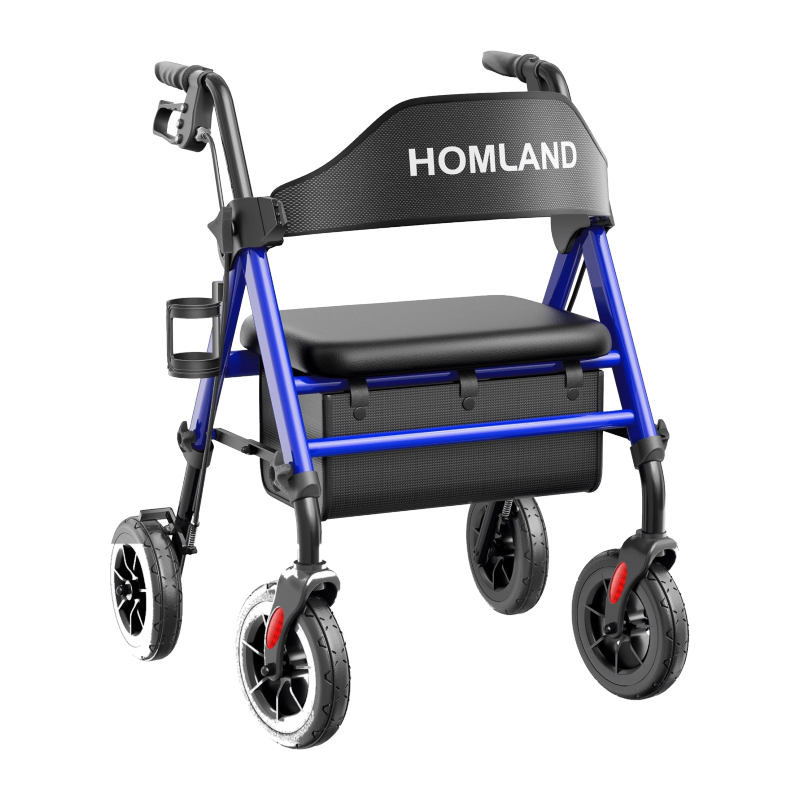
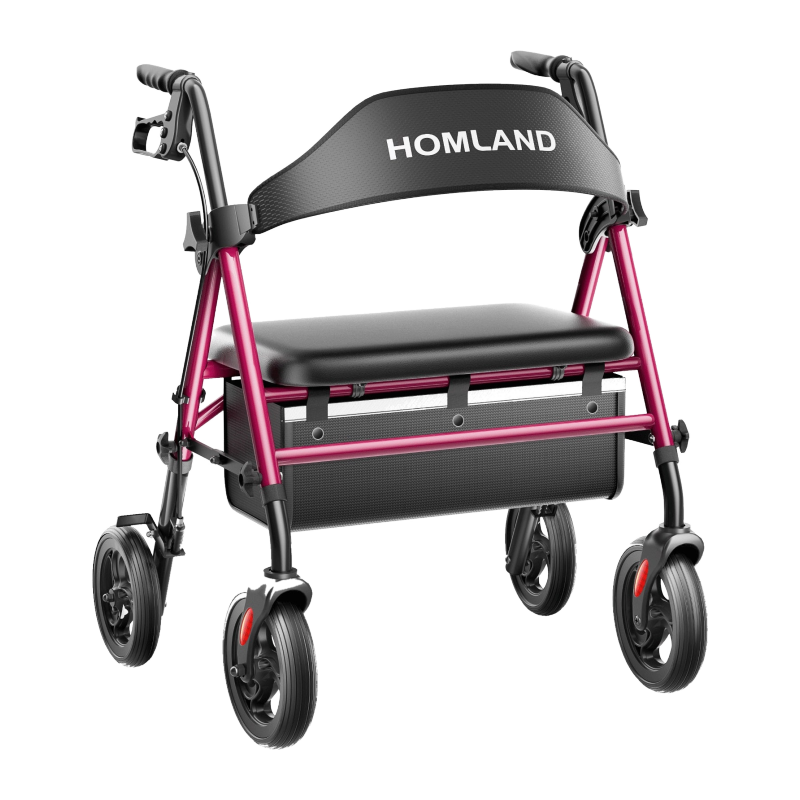
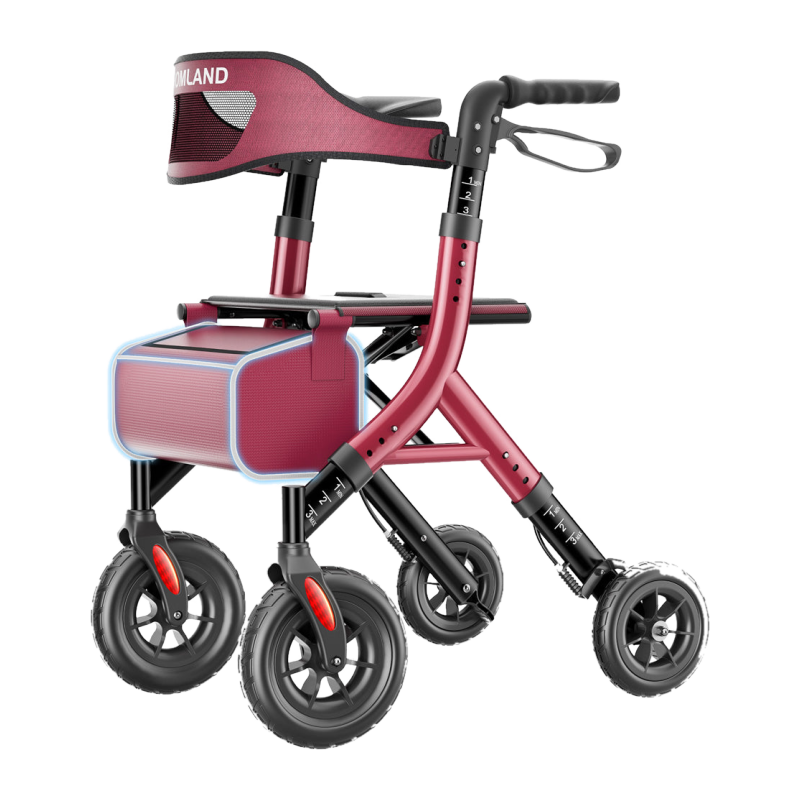
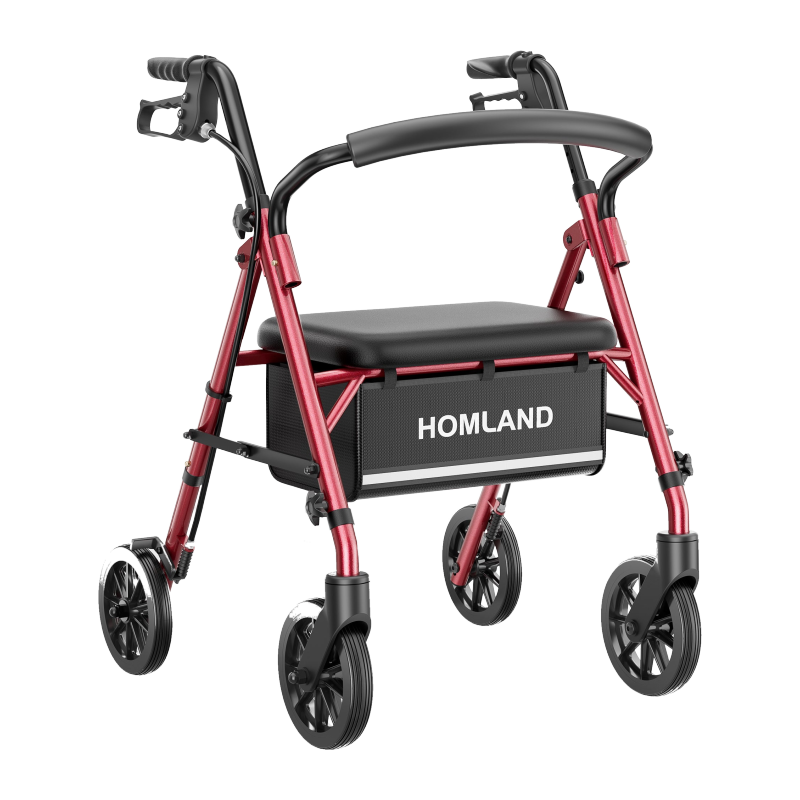
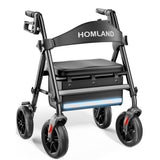
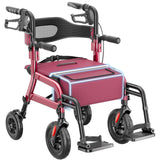
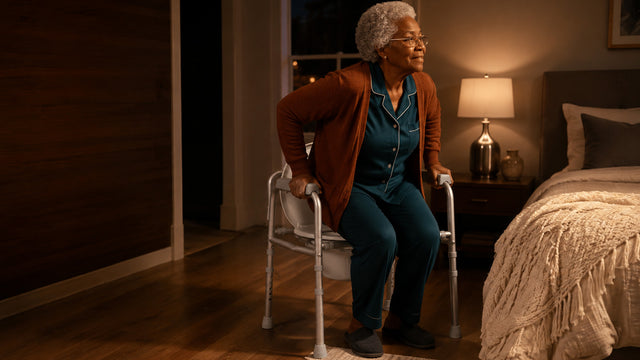

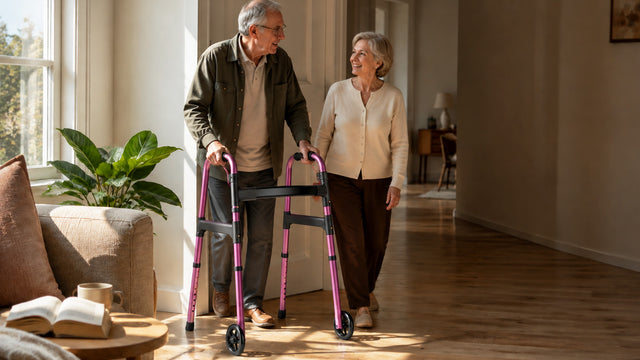

There's a moment that many people and their families recognize: walking across the living room feels less certain than it used to, or a long errand leaves you searching for somewhere to sit down and catch your breath. A rollator walker with a seat is designed for exactly those moments — giving you the support to keep moving and a place to rest whenever you need one, all without asking anyone for help.
But not all rollators are the same, and choosing the wrong one can mean a frame that wobbles when you lean on it, a seat that's too low to stand back up from easily, or wheels that catch on every threshold in your home. This guide walks through the features that actually matter, the questions worth asking before you buy, and how to match a rollator to your specific daily life — so you can move through your day on your own terms.
What Is a Rollator Walker with a Seat?
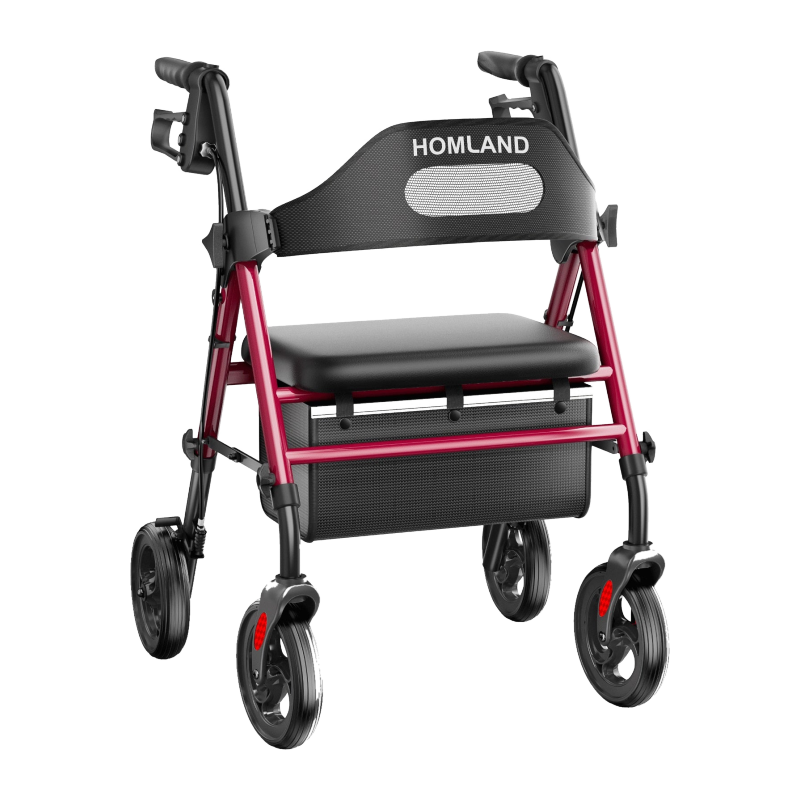
A rollator walker is a wheeled mobility aid with a built-in seat and, on most models, a fold-down backrest and a small storage pouch beneath the seat. Unlike a standard walker that you lift with each step, a rollator rolls smoothly in front of you as you walk, and the hand brakes let you slow down or lock the frame whenever you want to stop and sit. The result is a tool that supports two things at once: steady movement and on-demand rest.
Physical therapists often recommend rollators for people who have enough balance and strength to walk but need an extra point of contact for security — and who tire more quickly than they used to, whether from age, surgery recovery, or a chronic condition. The seat turns a ten-minute walk to the mailbox or a trip through a grocery store from something to dread into something entirely manageable.
Who Benefits Most from a Rollator Walker
Rollators with seats are a practical fit for a wide range of situations. Seniors who live independently and want to stay active — taking walks in the neighborhood, moving through the house with confidence, running light errands — find that a rollator supports their lifestyle without making them feel like they've given something up. People recovering from hip or knee surgery often use a rollator during the weeks when their stamina isn't quite back to normal. And individuals managing conditions like COPD, Parkinson's, or arthritis benefit from the combination of steady support and the ability to sit the moment fatigue sets in.
For adult children and family caregivers, a rollator offers something equally valuable: peace of mind. Knowing that a parent or loved one has a secure, stable way to move around the house — and won't be stranded standing if they need a break — changes how everyone feels about time spent apart.
Key Features to Look For
The difference between a rollator that gets used every day and one that ends up in a corner usually comes down to a handful of features. Here's what to pay close attention to.
Frame Strength and Weight Capacity
The frame is what everything else depends on. Most standard rollators are built from lightweight aluminum, which keeps the overall weight manageable while providing a sturdy structure. What matters just as much as the material is the weight capacity — the maximum load the frame is tested and rated to support safely. Standard models typically support up to 300 lbs, while heavy-duty and bariatric rollators are engineered to support 400 to 500 lbs. Choose a frame rated comfortably above your own weight, not right at the limit, so you have full confidence whether you're leaning into it mid-step or sitting down to rest.
Seat Comfort and Backrest Support
The seat is the feature that makes a rollator fundamentally different from other walkers, so it deserves real attention. A seat that's too narrow or too low creates its own problem: getting back up becomes a struggle, which defeats the purpose. Look for a seat that is wide enough to sit comfortably, padded enough to use for more than thirty seconds, and positioned at a height that lets you sit and stand without a significant lean forward. A fold-down or padded backrest adds meaningful comfort for longer rest breaks and makes the seat feel less like an emergency option and more like a welcome pause.
Wheel Size and Brake System
Wheel size shapes how the rollator handles in real environments. Smaller wheels (around 6 inches) roll easily on smooth indoor flooring like hardwood, tile, and carpet. Larger wheels (8 inches and above) handle outdoor terrain better — sidewalks, grass, and slight inclines — without getting caught. Many people find that a rollator with medium-sized wheels (around 7 to 8 inches) handles well in both settings.
The brake system matters just as much as the wheels themselves. Loop brakes — the kind you squeeze to slow down and push down to lock — are the most common design and the most intuitive to use. Before committing to a model, check that the brake cables are easy to engage with arthritic hands or reduced grip strength, since a brake that requires a firm squeeze can be genuinely difficult for some users to operate reliably.
Adjustable Handle Height
Handle height is one of the most commonly overlooked factors — and one of the most consequential for posture. Handles set too low cause users to hunch forward, which creates back strain and actually reduces stability. Handles set too high force the elbows up and make it harder to control direction. Physical therapists generally recommend a handle height that allows a slight bend in the elbow (roughly 15 to 20 degrees) when standing naturally. Most quality rollators offer a range of handle height adjustments, and the best ones make that adjustment tool-free — no wrenches required, just a quick-release button or lever.
Folding Design and Portability
A rollator that folds easily is one you'll actually bring with you. Whether it's fitting into the back seat of a car for a doctor's appointment, tucking into a corner when not in use, or traveling on a flight, a compact fold makes the difference between a rollator that goes where you go and one that stays home. Look for a frame that folds with a single motion — ideally without requiring you to crouch down or use significant hand strength — and check the folded dimensions against the trunk of your car if that's a regular use case. Overall walker weight also matters here: most users find anything over 20 lbs becomes cumbersome to lift into a vehicle repeatedly.
Built-In Storage
The zippered pouch or basket beneath the seat sounds like a minor add-on until you realize how often it gets used. A small bag under the seat keeps hands free while walking — carrying a water bottle, phone, keys, or a light grocery item without needing to grip anything extra. For someone managing fatigue or balance challenges, keeping both hands on the handles (rather than holding a bag) adds a real layer of safety. Check that the storage sits low and close to the frame so it doesn't shift the center of gravity when loaded.
Types of Rollators: 3-Wheel vs. 4-Wheel
The two most common rollator configurations each have a distinct use case. Understanding the difference helps you match the design to your daily environment.
4-wheel rollators are the most widely used design. Four wheels provide a stable, rectangular base that supports leaning and sitting, making them the right choice for most people who want both walking support and a reliable seat. The wider base handles indoor and outdoor surfaces well and gives a reassuring planted feeling underfoot.
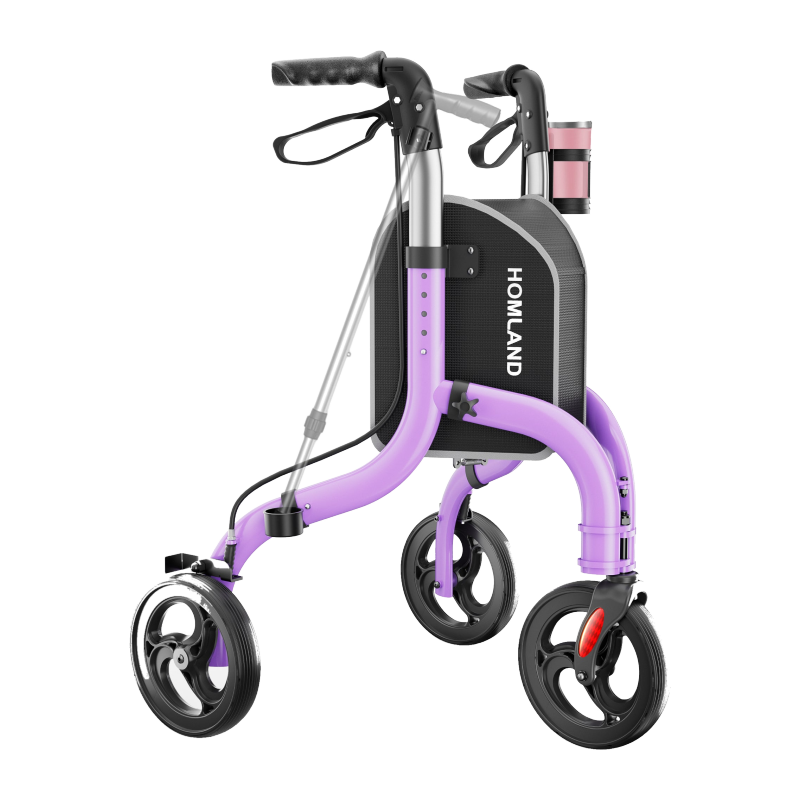
3-wheel rollators sacrifice the seat for a narrower footprint and tighter turning radius. They're lighter and more maneuverable in tight spaces — narrow hallways, small bathrooms, crowded stores — but they don't offer a seat, and they provide slightly less lateral stability. A 3-wheel rollator makes sense for someone who primarily needs rolling support and doesn't anticipate needing to sit mid-walk.
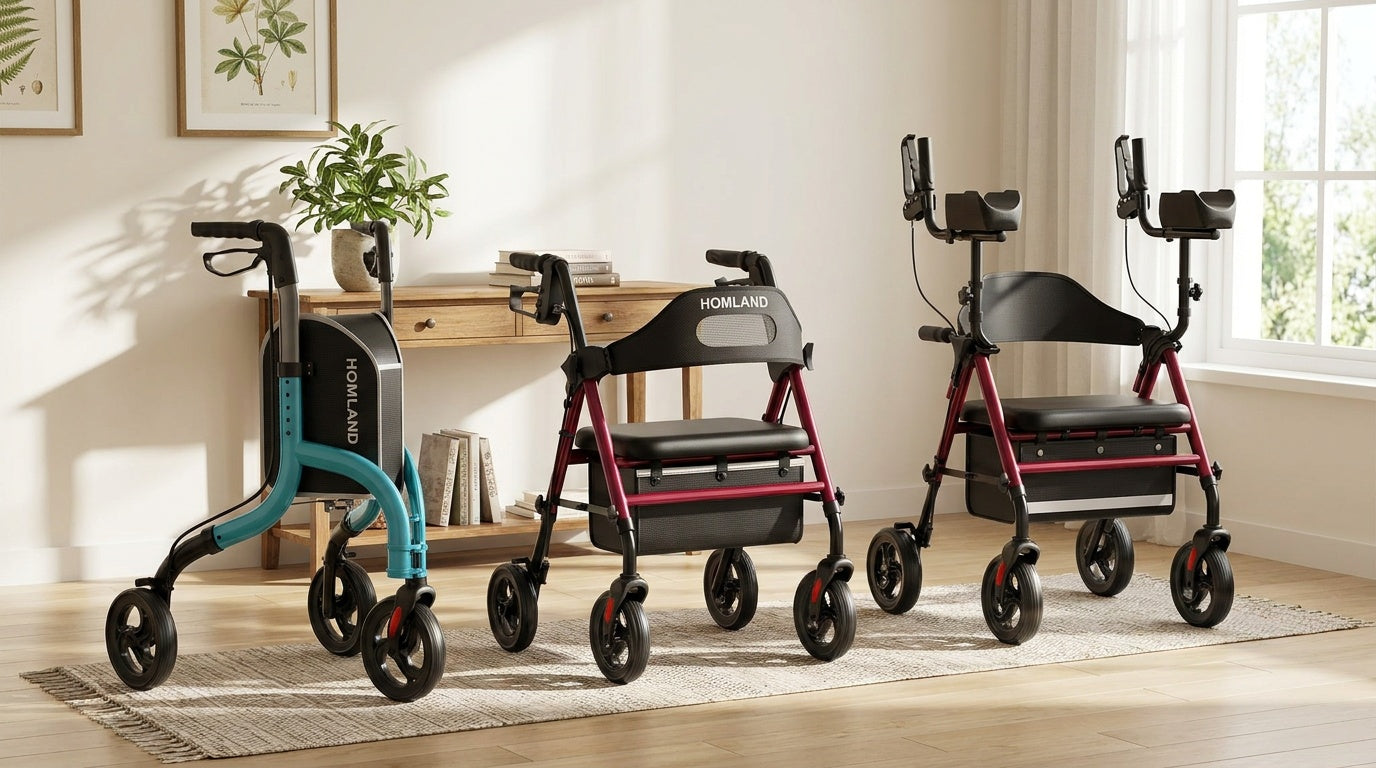
For most users searching specifically for a rollator with a seat, a 4-wheel model is the right answer. HOMLAND's Rolling Walkers collection includes 4-wheel rollators, upright rollators, and bariatric options — each designed with the same commitment to tool-free assembly and home-friendly sizing.
How to Choose the Right Rollator for You
The right rollator isn't just the one with the best specs on paper — it's the one that fits your actual life. Here are the most useful questions to work through before deciding:
- Where will you use it most? Primarily indoors at home, outdoors in the neighborhood, or both? Indoor-focused users can prioritize maneuverability and a compact footprint; outdoor users should prioritize larger wheels and a robust frame.
- What is your height? Confirm that the handle height range of any model you consider covers your ideal ergonomic position. Tall users in particular should check the upper limit of the adjustment range.
- What is your weight? Select a model rated at least 50 lbs above your body weight for comfortable safety margin.
- How often will you transport it? If you're putting it in a car regularly, total weight and folded dimensions matter significantly.
- Do you have reduced grip strength? Test or verify that the brake mechanism is easy to engage. Some models offer ergonomic brake handles specifically designed for arthritic hands.
- Is the seat at the right height for you? Sit-to-stand movement should feel easy and controlled — the seat should be close to the height of a standard chair (roughly 18 to 20 inches from the floor for most adults).
If you're unsure, a physical therapist can assess your gait, balance, and strength to recommend specific rollator features suited to your situation. HOMLAND products are authorized by licensed Doctors of Physical Therapy (DPT), which means the design decisions behind each model are informed by clinical insight — not just general product development.
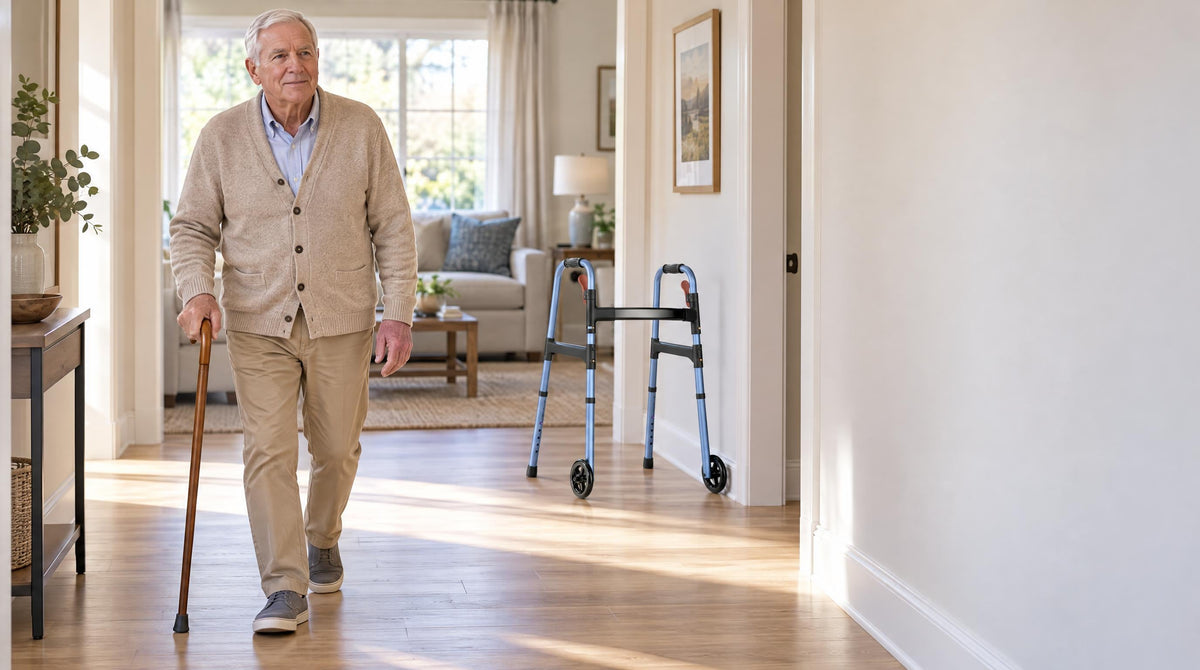
For users who need support but don't require a seat, standard walkers are also worth considering — lighter and more compact for very tight spaces. And if recovering from a lower-leg injury, a knee scooter may offer a more comfortable alternative to crutches.
Buying with Confidence: What to Check Before You Order
Once you've narrowed down the right type and features, a few practical details separate a great purchase from a frustrating one. First, check whether the rollator is FSA/HSA eligible — many rollators qualify as medical expenses under flexible spending and health savings accounts, which can reduce your out-of-pocket cost meaningfully. HOMLAND rollators are FSA/HSA eligible, making them accessible to a broader range of budgets.
Second, look at the warranty. A rollator that breaks down or develops a wobble within the first year shouldn't cost you anything to fix or replace. HOMLAND backs every rollator with a 1-year manufacturer warranty plus a 1-year extended warranty — two full years of coverage that reflects confidence in the product's build quality. Products ship from a US local warehouse, so delivery is fast and returns, if ever needed, are straightforward.
Finally, confirm that assembly is genuinely simple. A rollator that requires tools and an hour of frustration on arrival isn't a reassuring first impression. HOMLAND's rollators are designed for tool-free assembly — meaning you can have it ready to use within minutes of opening the box, without needing to ask anyone for help. That first experience of independence starts the moment the package arrives.
Browse the full HOMLAND Rolling Walkers collection to compare models, or explore the complete HOMLAND product lineup for other home mobility and safety solutions.
Choosing a rollator walker with a seat is ultimately about choosing how you want to move through your days — with steadiness underfoot, a place to pause when you need one, and the confidence that comes from having the right support beside you. The features covered in this guide — frame strength, seat comfort, wheel size, handle adjustability, and portability — are the ones that physical therapists and experienced users point to again and again as the factors that determine whether a rollator actually gets used and loved, or pushed aside.
Take your time, match the features to your daily environment and body, and lean on the purchase reassurances (FSA/HSA eligibility, warranty, easy returns) that make trying a new mobility aid lower-risk. The goal isn't just to find a walker — it's to find one that helps you keep living on your own terms, at home, every day.
Have Questions? We're Here to Help.
Not sure which rollator is right for your situation? Our team is ready to help you find the best fit. Reach out any time — we're happy to walk you through your options.