
Here's a number worth knowing: about 14 million older adults — roughly 1 in 4 Americans aged 65 and older — report falling each year, according to CDC data. Falls are the leading cause of injury-related death in this age group, and the risk climbs with every year of reduced movement. But here's the more important number: research shows that consistent lower-body strength and balance training can reduce fall risk by around 33%. That's not a small return for a 20-minute home routine.
The goal of this guide isn't to turn your living room into a clinic. It's to give you — or the person you love — a practical, PT-informed set of exercises that fit naturally into daily home life. Whether you're bouncing back after a procedure, managing a chronic condition, or simply want to stay steady and confident on your feet, these routines are designed to meet you where you are. Physical therapists often recommend starting with seated movements before progressing to standing ones, and that's exactly how this guide is structured. You'll also find honest guidance on how the right home tools can make exercising safer and more sustainable — so that staying active at home feels like freedom, not a chore.
Why Mobility Matters More Than You Think
Mobility is one of those things you don't think about until it starts to change. Getting up from the couch, walking to the kitchen, stepping outside to check the mail — these everyday movements quietly depend on a complex web of muscle strength, joint flexibility, and balance. As we age, each of those elements naturally declines. Muscle mass tends to decrease, joints can stiffen, and the small stabilizing muscles that keep us upright become less responsive. The result isn't just physical discomfort; it's a shrinking sense of independence.
The good news is that the body responds to movement at any age. Research published in peer-reviewed journals consistently shows that targeted home-based exercise programs can produce meaningful improvements in strength, balance, and functional mobility — even in adults of advanced age. Physical therapists often emphasize that the goal isn't athletic performance; it's the confidence to live your daily life on your own terms. That means climbing stairs without hesitation, lowering yourself into a chair with control, and getting through a grocery run without worrying about your footing.
Beyond fall prevention, regular mobility work offers a surprisingly broad range of benefits. It supports joint health, helps manage chronic pain from conditions like arthritis, lifts mood, and even has a positive effect on cognitive function. The benefits aren't just physical — they're about feeling capable. And that feeling matters enormously.
Before You Start: Setting Up a Safe Home Routine
A successful home exercise routine starts with the right environment, not just the right exercises. Before you begin, take a quick look at the space you'll be using. Clear any loose rugs, electrical cords, or clutter from the floor — these are common tripping hazards that become especially relevant during standing movements. Good lighting matters too, particularly if you plan to exercise in the morning or evening. A sturdy, armless chair placed against a wall is your most important piece of equipment for the seated exercises below, and the back of that same chair doubles as a balance support for many standing moves.
It's also worth talking to your doctor or a licensed physical therapist before starting a new routine, especially if you're recovering from surgery, managing a cardiovascular condition, or experiencing significant joint pain. They can flag any movements that may need to be modified for your specific situation. Once you have the all-clear, the principle is simple: start with what's comfortable, move with control, and build gradually. No exercise should cause sharp or shooting pain — a mild muscle burn during effort is normal, but pain is your body asking you to slow down.
Wear supportive, non-slip footwear during any standing exercise. Avoid soft-soled slippers, which offer little lateral stability. Keep a glass of water nearby and take breaks whenever you need them. If you use a mobility aid like a walker or rollator in daily life, keep it within reach during standing exercises — having it there gives you an immediate safety net and the confidence to push yourself a little further.
Seated Exercises: Building a Foundation
Seated exercises are an excellent starting point because they remove the challenge of balance from the equation, letting you focus entirely on building the strength you need. They're particularly valuable for anyone who has recently had surgery, is managing significant joint issues, or simply hasn't exercised in a while. Don't underestimate them — chair-based movements directly strengthen the muscles used for walking, standing, and climbing stairs. Think of them as building the engine before you take the car on the road.
1. Seated Leg Lifts
What it trains: Hip flexors, quadriceps, calves, and core stabilizers.
This is one of the most foundational lower-body exercises a physical therapist can prescribe for a senior starting a home routine. It mimics the muscle demands of walking and stair-climbing without any balance risk. Imagine the strength needed to lift your foot over a door threshold or step up onto a curb — seated leg lifts build exactly that.
How to do it:
- Sit toward the front edge of a sturdy chair with your back straight and both feet flat on the floor.
- Tighten your core slightly to protect your lower back and maintain an upright posture.
- Extend one leg out in front of you, heel resting lightly on the floor, leg straight.
- Lift the extended leg a few inches off the ground and hold for 2–3 seconds.
- Lower it with control back to the starting position. Repeat 10 times, then switch legs.
- Aim for 2 sets on each side. To increase difficulty, add a light ankle weight.
2. Seated Knee Lifts
What it trains: Hip flexors, quadriceps, and abdominal muscles.
Knee lifts are deceptively effective. The hip flexors are among the most important muscles for walking with a normal, confident stride — and they're also among the first to weaken with prolonged sitting. Strengthening them translates directly to better leg clearance when walking, making it less likely to catch a foot on a rug or step.
How to do it:
- Sit tall in the middle of a sturdy chair, feet flat on the floor.
- Engage your core and keep your back away from the chair back.
- Lift one knee toward your chest as high as comfortably possible.
- Hold for 2–3 seconds, then slowly lower your foot back to the floor.
- Alternate legs for 10 repetitions per side, 2 sets.
- Breathe out as you lift, breathe in as you lower — never hold your breath.
3. Sit-to-Stand (Chair Rise)
What it trains: Quadriceps, glutes, hamstrings, and core — the full lower-body powerhouse.
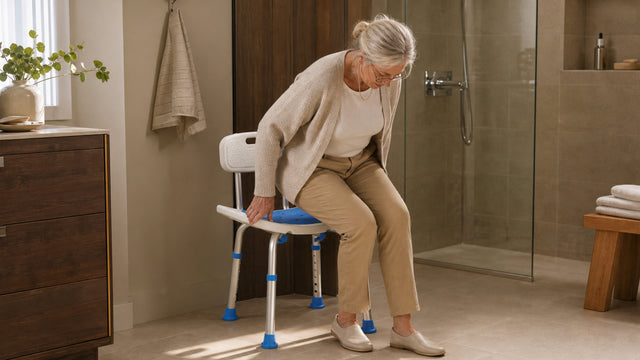
If there's one exercise that physical therapists consistently prioritize for seniors, it's the sit-to-stand. Getting up from a chair, a toilet seat, or a bed is one of the most fundamental daily movements — and for many older adults, it's also one of the first things that becomes difficult. The ability to rise from a seated position without assistance is directly linked to independent living. Practicing it intentionally, with good form, strengthens the exact muscles needed to maintain that independence. It also builds the balance and body awareness that reduces fall risk during transitions, which is when many falls actually happen.
How to do it:
- Sit toward the front of a sturdy chair, feet flat on the floor hip-width apart. Push the chair against a wall so it doesn't slide.
- Cross your arms over your chest or hold them lightly at your shoulders — this prevents you from pushing up with your arms and ensures your legs do the work.
- Lean slightly forward from the hips, keeping your chest lifted and eyes forward.
- Press through your heels and straighten your legs to rise to a full standing position.
- Pause at the top for 1–2 seconds, then slowly lower yourself back down with control.
- Start with 5 repetitions and work toward 10–15 as strength builds. If needed, lightly hold the chair arms on the way up until you build confidence.
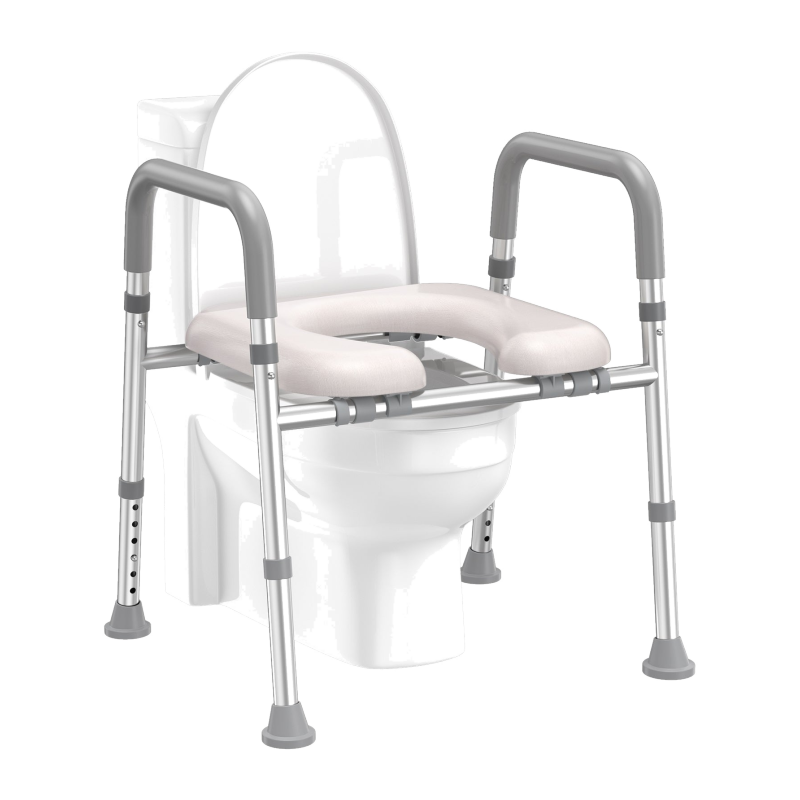
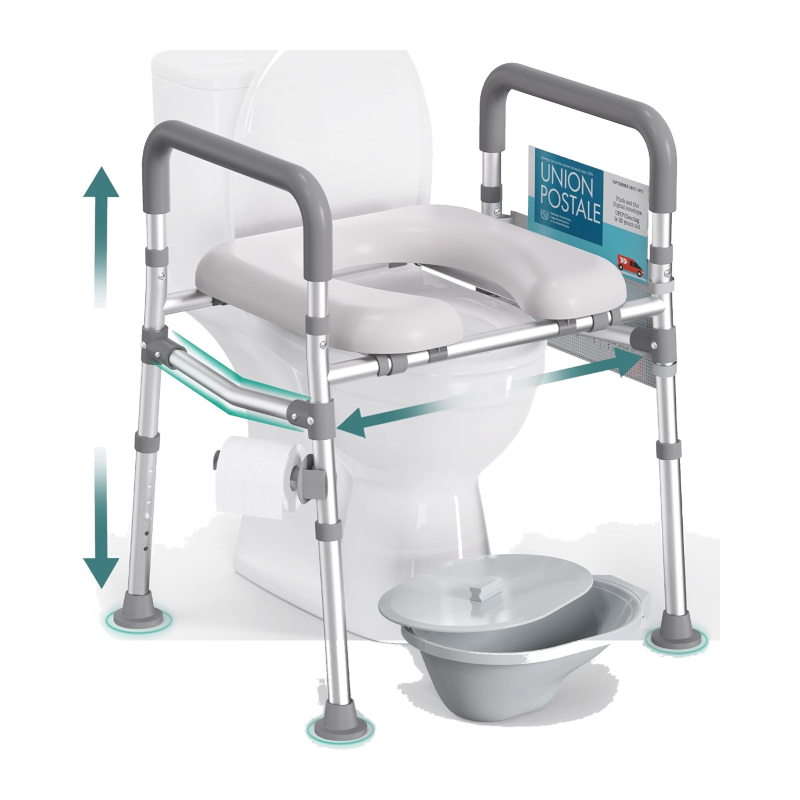
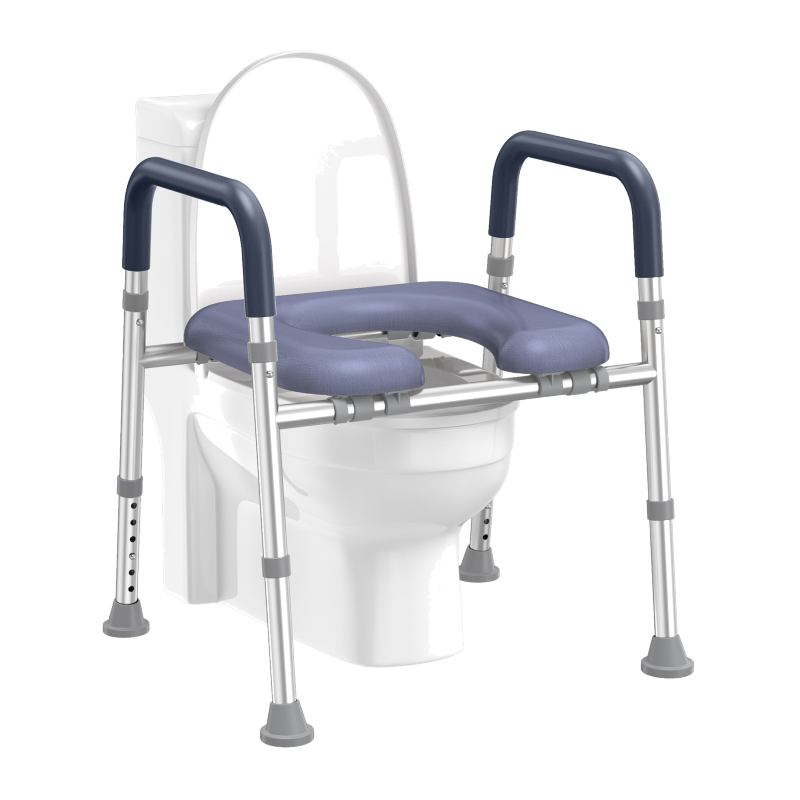
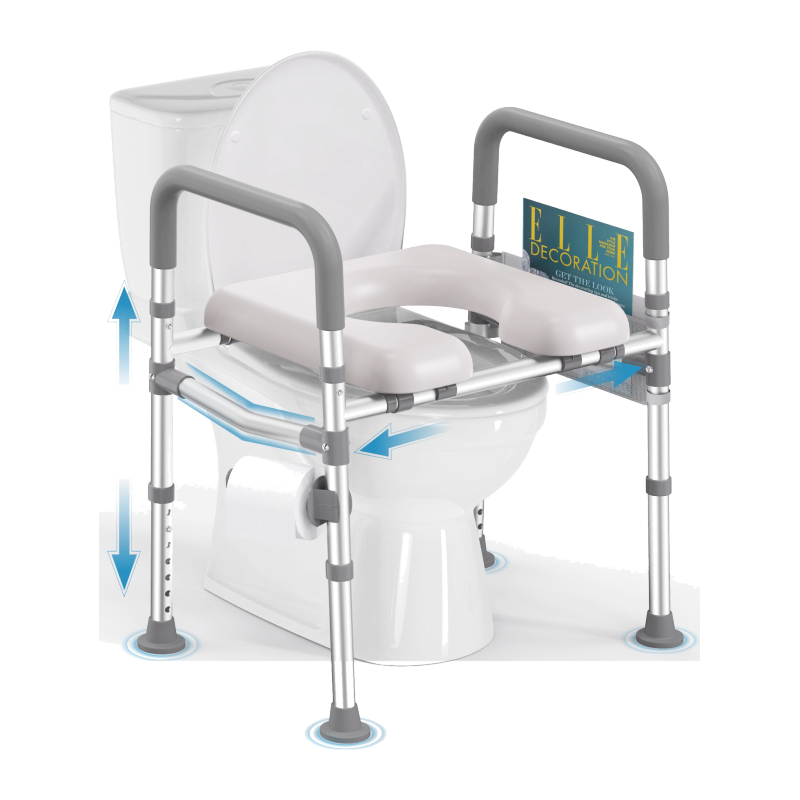
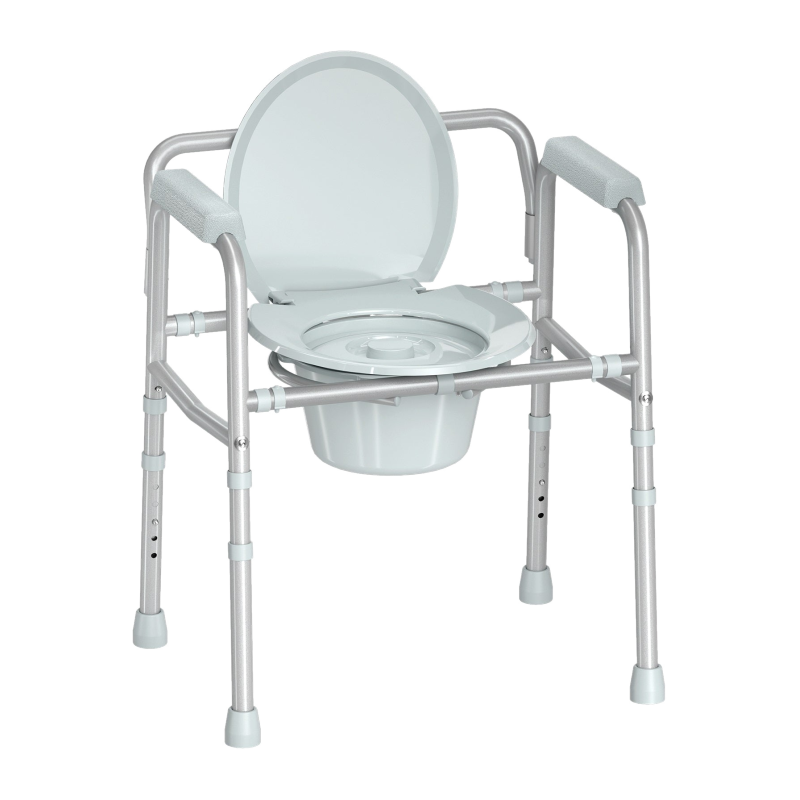
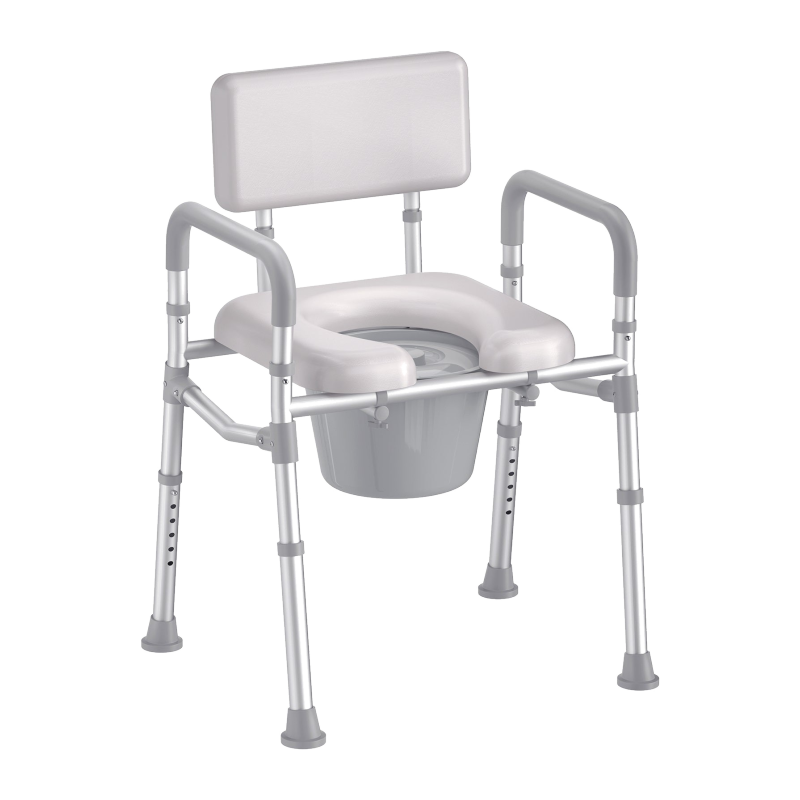
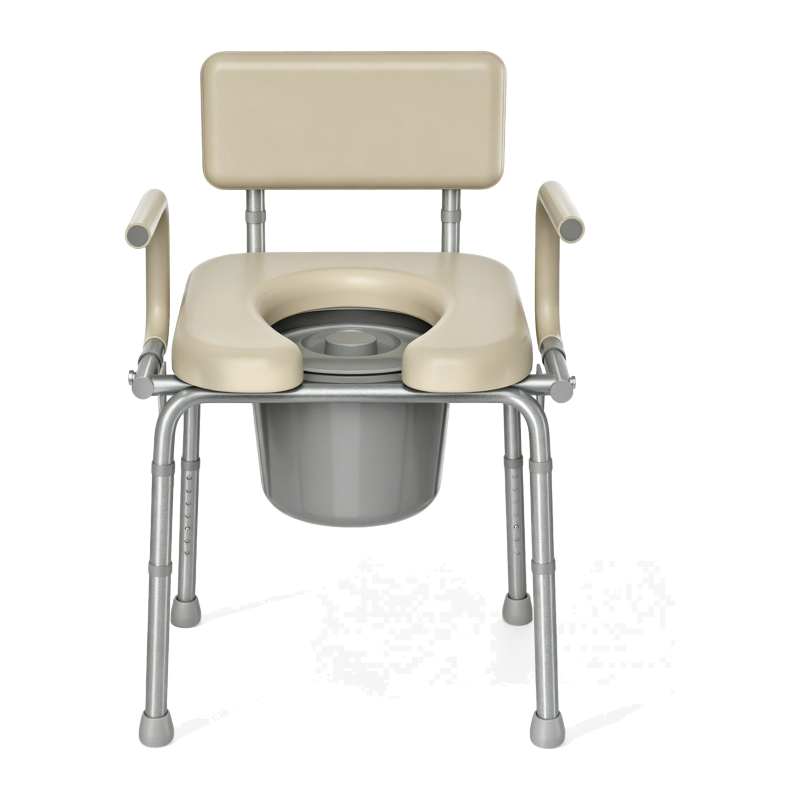
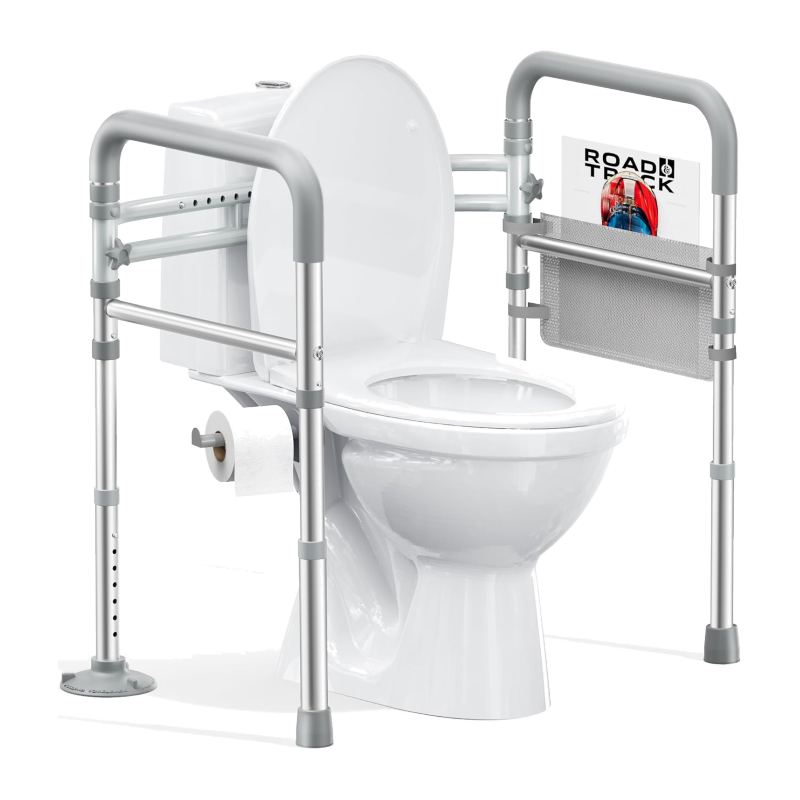
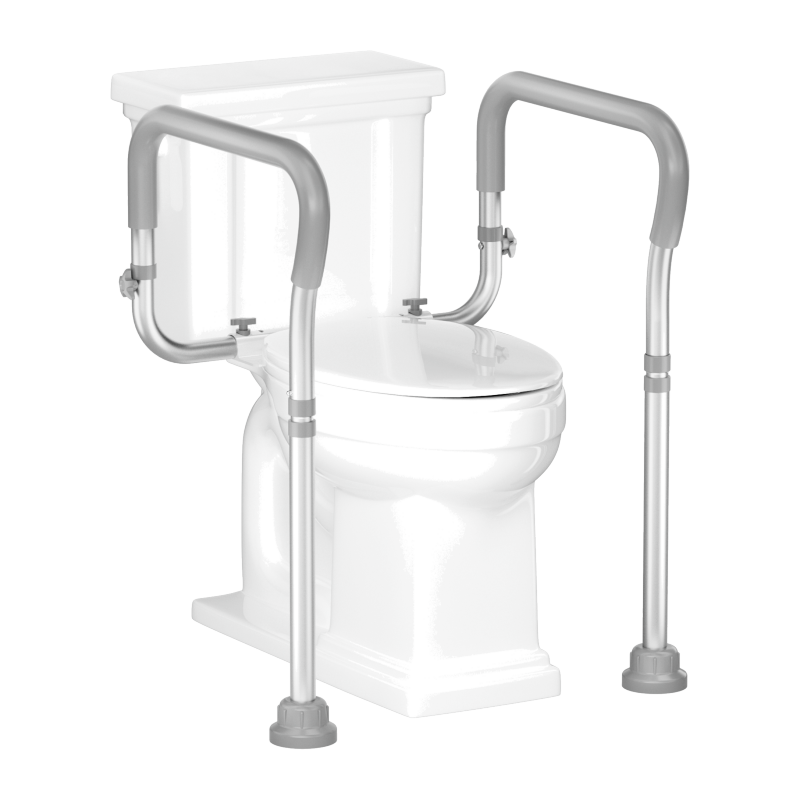
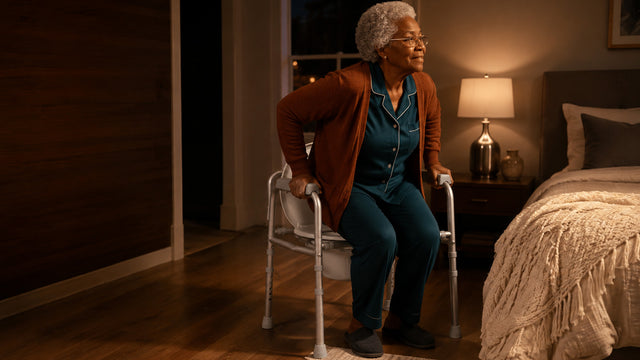
Caregiver note: If your parent or loved one struggles to rise from low seats — like a standard toilet or couch — a raised toilet seat or toilet safety rail can make this transition safer and less effortful every single day, not just during exercise time.
4. Seated Heel-Toe Taps
What it trains: Calf muscles, shin muscles (tibialis anterior), and ankle coordination.
Good ankle mobility is quietly essential for a normal walking pattern and for catching yourself if you start to lose balance. Stiff ankles force the body to compensate, often by leaning forward or shuffling — both of which increase fall risk. Heel-toe taps are a gentle, effective way to keep the ankles supple and the lower legs strong.
How to do it:
- Sit tall with feet flat on the floor, shoulder-width apart and knees at approximately 90 degrees.
- Lift your toes off the ground while keeping your heels planted. Hold for 1–2 seconds.
- Lower your toes and then lift your heels off the ground, pressing through your toes. Hold for 1–2 seconds.
- Alternate in a rhythmic pattern — toes up, heels up — for 10–15 repetitions per cycle.
- Aim for 3 sets. You can gradually increase the speed slightly to add a coordination challenge.
5. Seated Torso Twists
What it trains: Obliques, spinal rotators, and core stabilizers.
Reaching across your body — to grab a seatbelt, check what's behind you, or place something on a shelf to the side — all require rotational strength in the core and spine. Torso twists improve that range of motion while also building the core stability that supports good posture and balance.
How to do it:
- Sit upright with feet flat on the floor and knees at 90 degrees.
- Bring your arms to shoulder height, elbows bent, hands resting on the opposite arms in a crossed position.
- Rotate your upper body to the left as far as comfortably possible, tightening your core as you twist.
- Hold for 2 seconds, then return to center before rotating to the right.
- Perform 10 rotations per side, 1–2 sets. Keep the movement slow and controlled — this is not a stretch to be forced.
Standing Exercises: Building Confidence on Your Feet
Once you're comfortable with the seated routine and feeling stronger in your lower body, standing exercises take things to the next level. These movements directly challenge your balance and build the kind of functional strength that makes navigating daily life — walking across a parking lot, stepping off a curb, carrying groceries — feel easier and more secure. Always have a stable surface nearby to hold if needed: the back of a chair, a countertop, or a walker. Using support isn't a sign of weakness; it's smart, safe training.
6. Standing Calf Raises
What it trains: Calf muscles (gastrocnemius and soleus), ankles, and balance.
Strong calves do more than most people realize. They act as the primary propulsion muscle during walking, and they play a major role in stabilizing your balance when you reach for something, step onto an uneven surface, or navigate a slight slope. Physical therapists consistently include calf raises in senior exercise programs because of their direct connection to walking confidence and fall prevention.
How to do it:
- Stand behind a chair or at a countertop, lightly holding on for balance. Feet hip-width apart.
- Tighten your core and keep your back straight.
- Slowly rise up onto your toes, lifting your heels as high as comfortable.
- Hold for 2 seconds at the top, then lower your heels back down with control.
- Aim for 2 sets of 10–15 repetitions. As you get stronger, try doing them with just one hand lightly touching the support, or no hands at all to add a balance challenge.
7. Side-to-Side Leg Swings
What it trains: Hip abductors and adductors, quadriceps, hamstrings, and lateral balance.
Hip stability is one of the most overlooked components of fall prevention. The muscles on the outer and inner thigh that control how your leg moves sideways are critical for catching yourself when you start to tip, and for maintaining a steady, confident walking pattern. Side-to-side leg swings gently work through the hip's full range of lateral motion while also challenging your single-leg balance.
How to do it:
- Stand behind a sturdy chair, both hands lightly on the back for support.
- Shift your weight onto one leg, keeping that knee very slightly bent — never locked.
- Swing your free leg out to the side, then cross it gently in front of the standing leg. Keep the movement smooth and controlled.
- Only swing as far as your range of motion comfortably allows — this is not a stretch to force.
- Repeat 10 times per leg, then switch. Keep your core engaged and avoid leaning your upper body to the side.
8. Wall Push-Ups
What it trains: Chest (pectorals), shoulders, triceps, and core.
Upper-body strength often gets overlooked in senior mobility routines, but it plays a surprisingly important role in daily life. Pushing open heavy doors, rising from a chair using the armrests, catching yourself against a wall if you stumble — all of these require functional chest and shoulder strength. Wall push-ups deliver that training with no floor work required, making them accessible for virtually everyone.
How to do it:
- Stand facing a wall, about arm's length away. Place your palms on the wall at shoulder height and shoulder-width apart.
- Keep your body in a straight line from head to heels — don't let your hips sag or your back arch.
- Bend your elbows to lower your chest toward the wall, keeping your core tight.
- Push through your hands to return to the starting position, fully extending your arms.
- Perform 2–3 sets of 10 repetitions. To increase difficulty, step farther from the wall; to make it easier, step closer.
9. Heel-to-Toe Walk
What it trains: Balance, gait coordination, calf muscles, and proprioception (your body's sense of position).
This exercise is as simple as it sounds, but it's one of the most effective balance builders available. Physical therapists use it widely because it directly challenges the neurological and muscular systems responsible for keeping you upright while walking. It's particularly good for improving the kind of fine-grained coordination that helps you navigate uneven surfaces, soft grass, or a slightly slanted driveway without hesitation.
How to do it:
- Find a clear stretch of floor along a hallway or beside a countertop, something you can touch if needed.
- Place one foot directly in front of the other, touching heel to toe with each step — as if walking on a tightrope.
- Look straight ahead, not down at your feet. Focus on a fixed point to support your balance.
- Walk 10–15 steps forward, then turn around carefully and walk back.
- Aim for 2–3 passes. Over time, try doing it with your arms crossed over your chest to reduce reliance on arm balance.
A Simple Weekly Routine to Follow at Home
Consistency matters far more than intensity when it comes to building mobility. A 15–20 minute session done four times per week will deliver far better results than one long session done occasionally. The CDC recommends that adults 65 and older aim for at least 150 minutes of moderate-intensity movement per week, along with muscle-strengthening activities at least twice a week. This routine fits right into that framework without requiring gym equipment or a large time commitment.
Here's a simple starting framework:
- Days 1, 3, 5 (e.g., Mon / Wed / Fri): Complete all 5 seated exercises as a circuit (2 sets each). Finish with the heel-to-toe walk.
- Days 2, 4 (e.g., Tue / Thu): Focus on the 4 standing exercises — calf raises, side leg swings, wall push-ups, and heel-to-toe walk — using a chair or wall for support as needed.
- Days 6 and 7: Rest or take a gentle walk. Movement every day is fine as long as intensity is varied.
As you build strength over the first few weeks, you can begin adding the sit-to-stand exercise into both the seated and standing days, since it bridges the two. Listen to your body, and don't rush the progression — real functional strength takes weeks to build, but it absolutely builds.
How Mobility Aids Support Your Exercise Routine
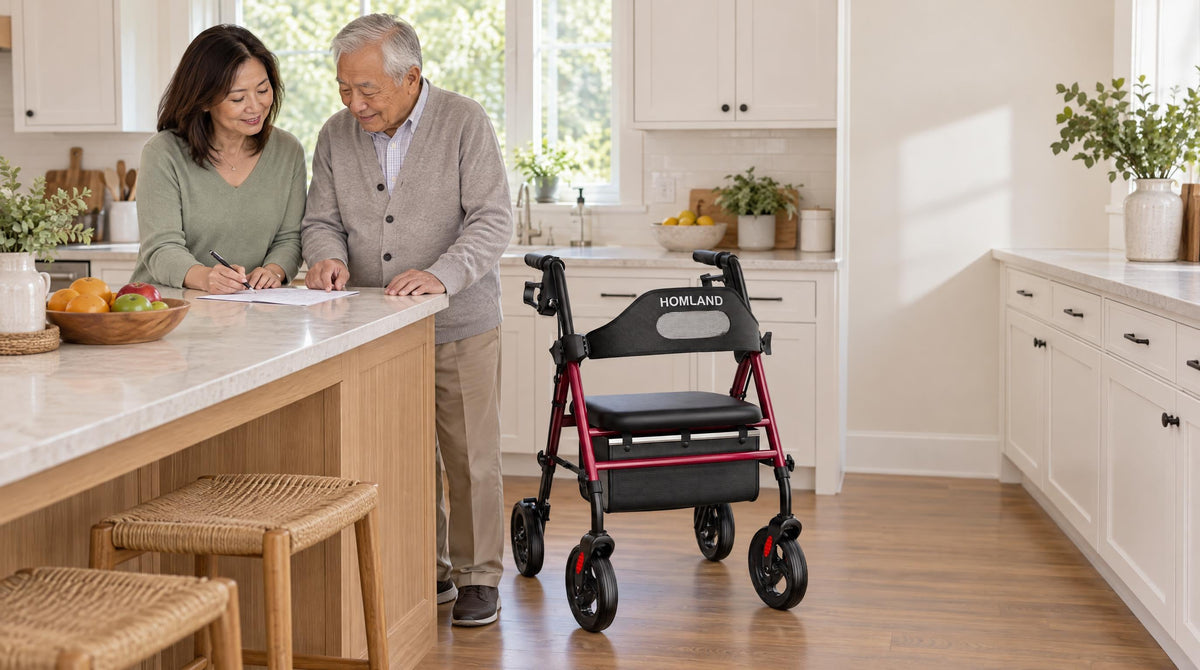
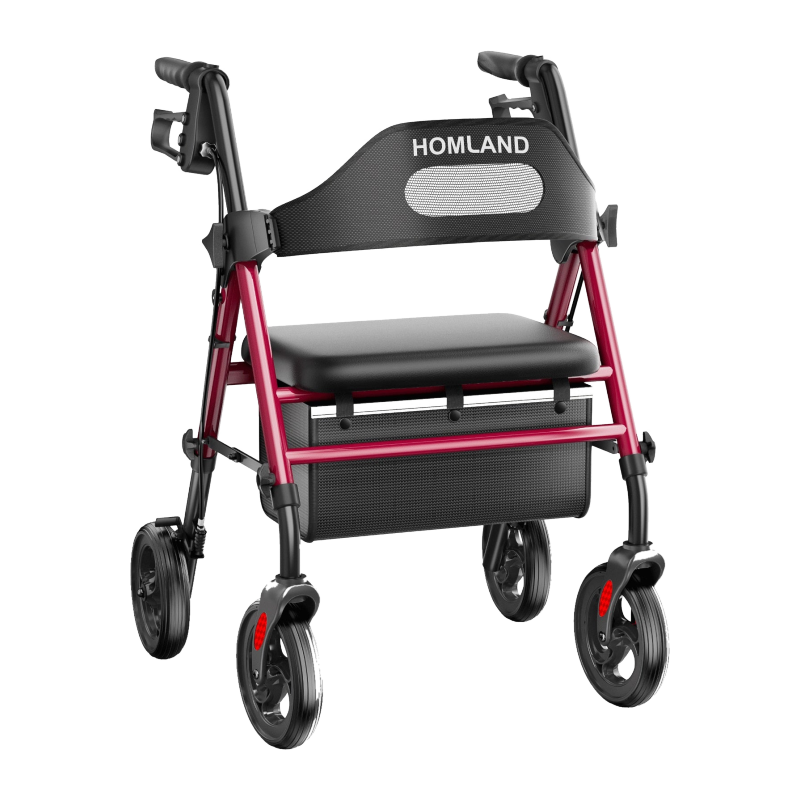
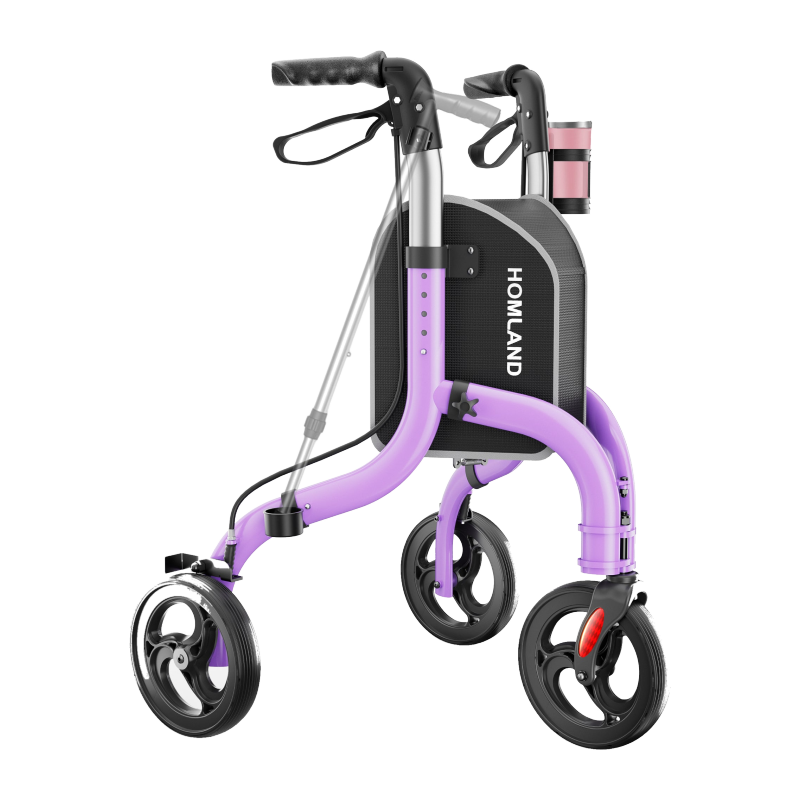
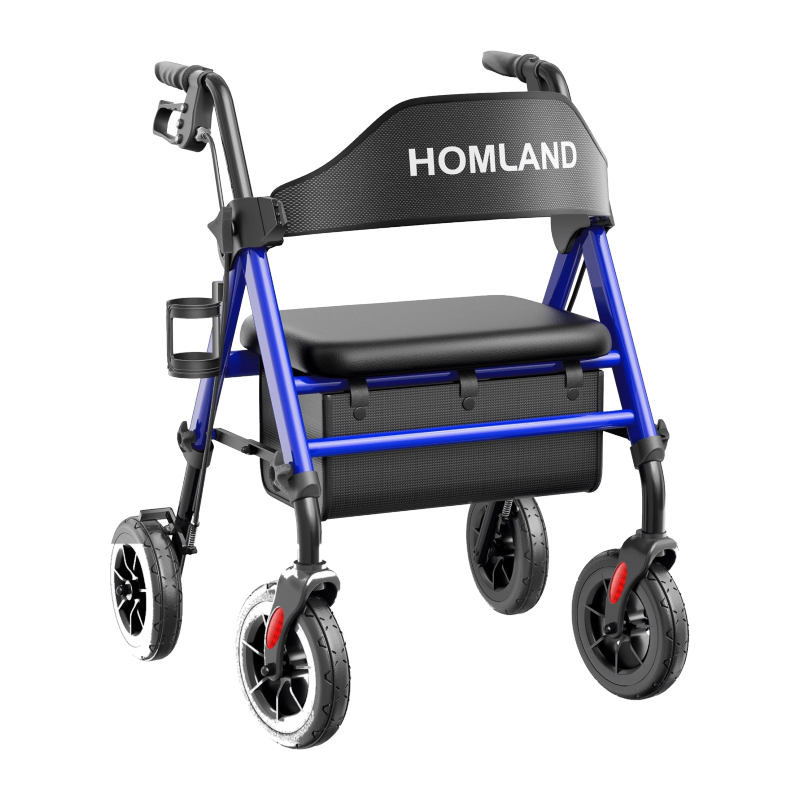
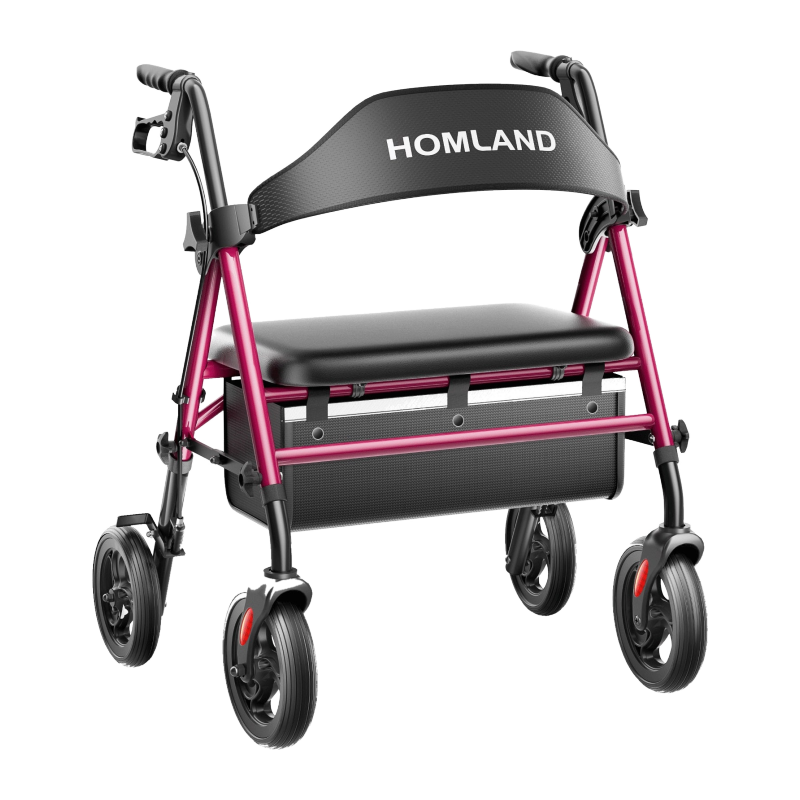
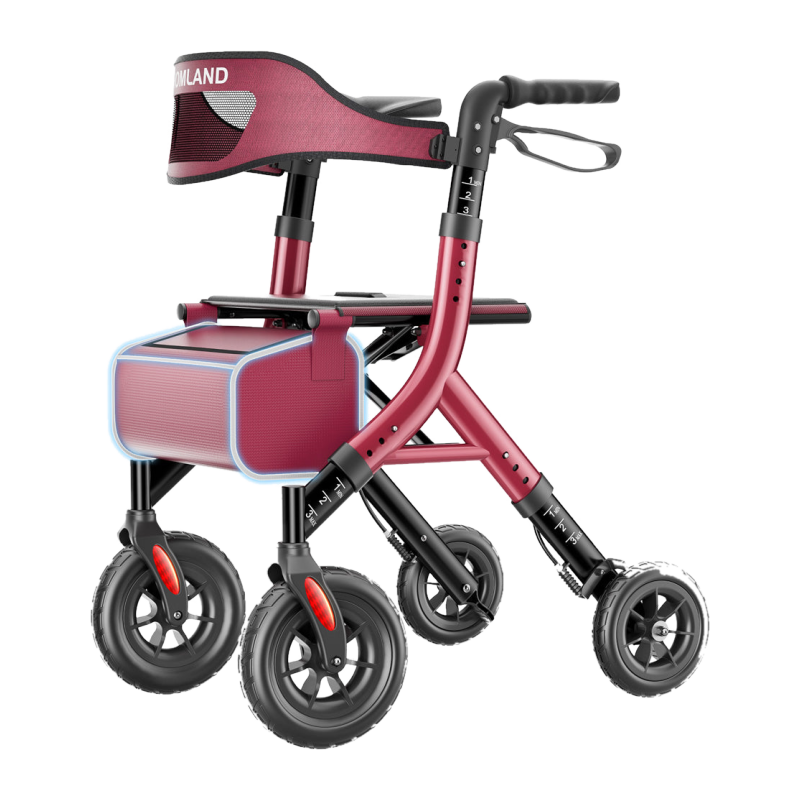
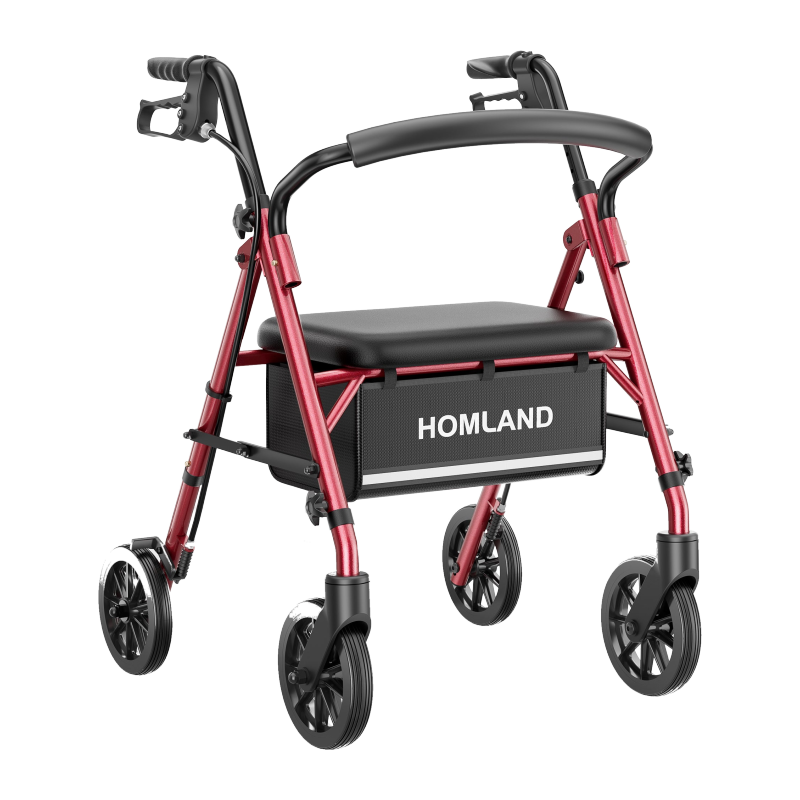
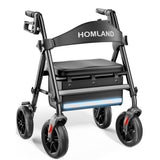
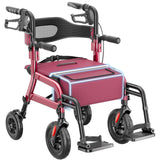
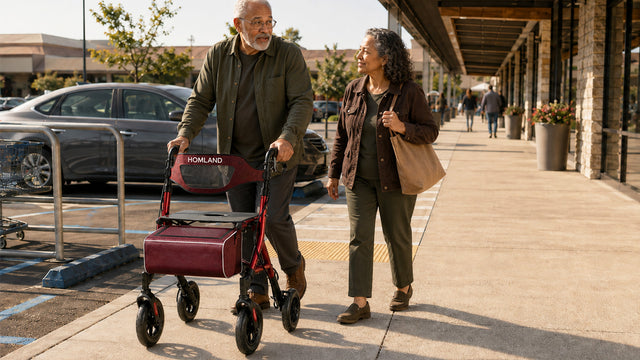
One of the most common misconceptions about mobility aids is that they're a substitute for movement. In reality, they're the opposite — they're tools that make it possible to keep moving safely. Using a rollator walker as a stable support during standing calf raises or side leg swings means you can challenge your balance further than you could without it, because you have a reliable safety net. That's not dependence; that's smart training.
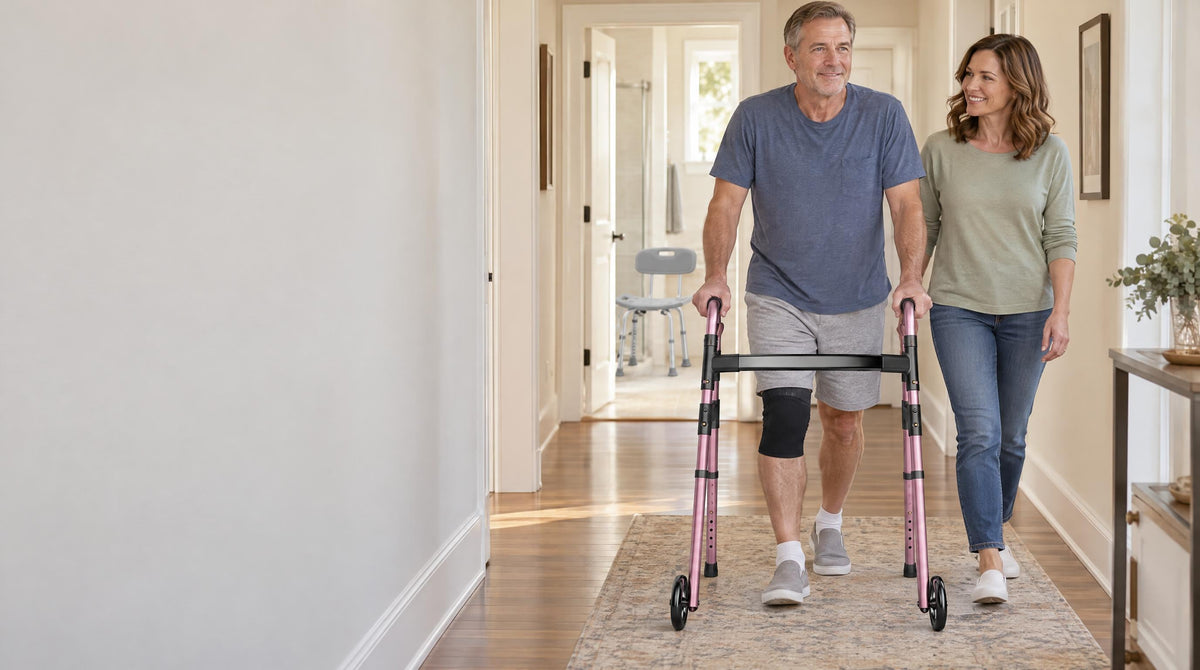
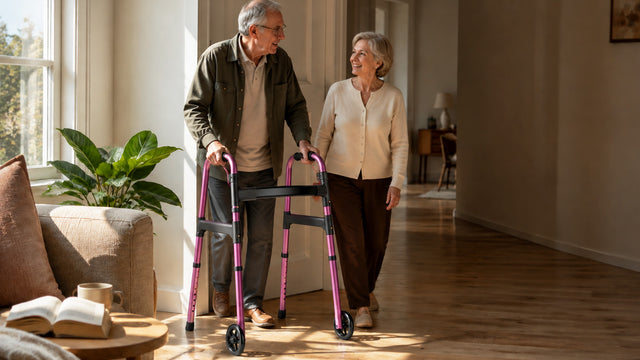
For standing exercises specifically, a rolling walker provides a stable, height-adjustable platform that frees both hands for support while you work through heel raises or side swings. A standard walker is ideal for those who need a firmer, stationary base during early-stage standing exercises. Both options bring genuine safety to the standing portion of a home routine, especially during the first few weeks when balance is still being developed.
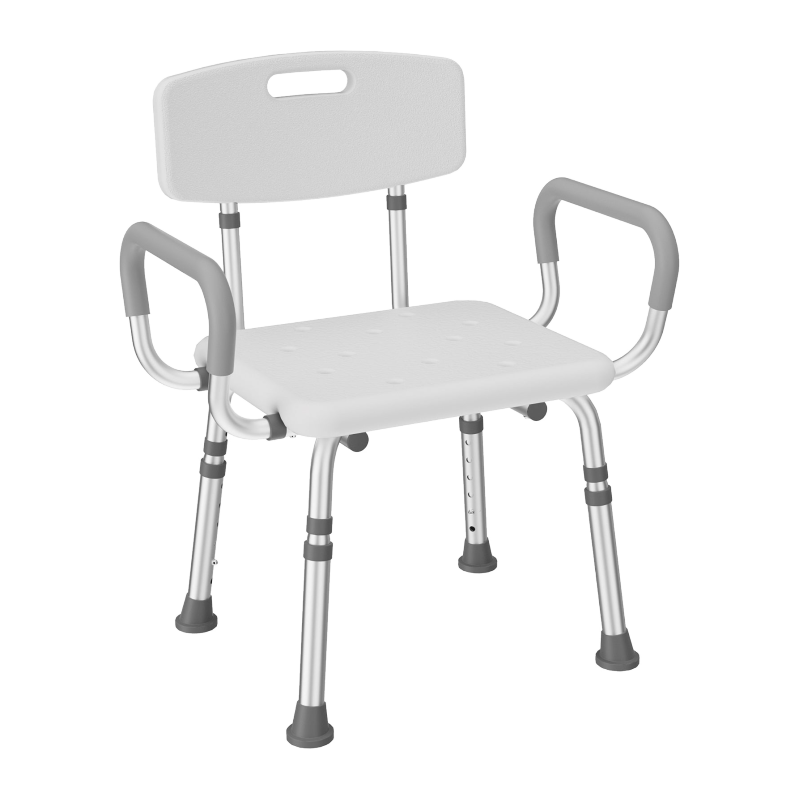
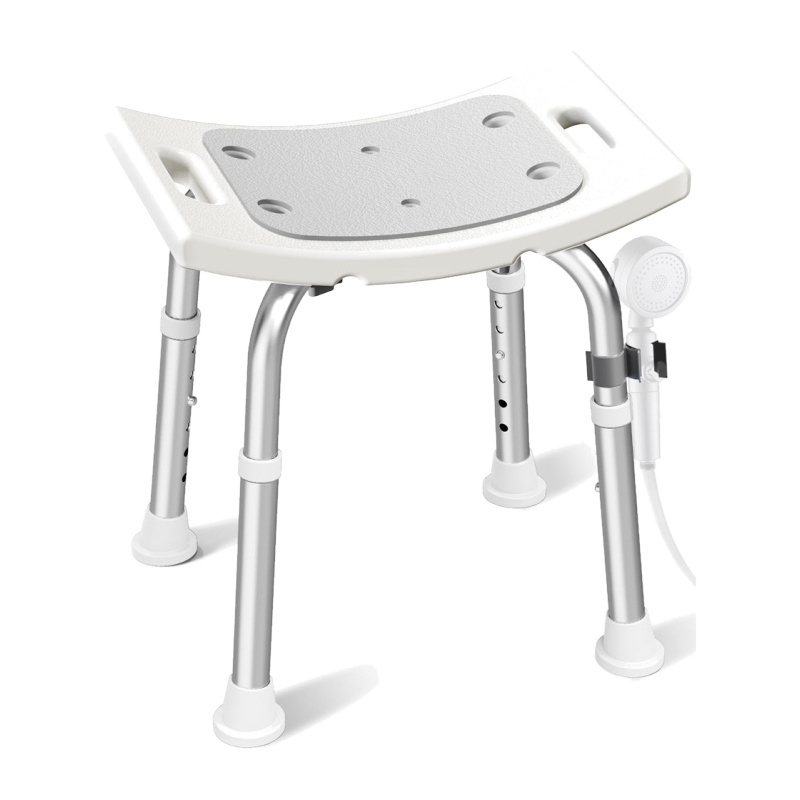
The connection between home safety and exercise also extends beyond the workout itself. Transitioning safely from bed to standing for your morning routine, or lowering onto and rising from the toilet, are daily movements that function as mini exercise events. Bed rails can provide a secure handhold for nighttime repositioning and morning sit-to-stand practice, while toilet safety rails make what would otherwise be a risky transition a controlled, confident one. The right setup at home doesn't just prevent accidents — it actively supports the functional movement goals you're working toward in your exercise routine.
For caregivers and family members choosing these tools: all HOMLAND mobility and bathroom safety products are authorized by licensed Doctors of Physical Therapy, FSA/HSA eligible, and backed by a 1-year manufacturer warranty plus 1-year extended warranty. They ship fast from a US local warehouse — so the support arrives when it's actually needed, not weeks later.
Safety Tips for Exercising at Home
A few practical habits make the difference between a routine that builds you up and one that leads to a setback. Keep these in mind as you get started:
- Always warm up first. Spend 2–3 minutes doing gentle neck rolls, shoulder shrugs, and ankle circles while seated before moving into the main exercises. Cold muscles are less responsive and more prone to strain.
- Move at your own pace. The reps and sets listed here are targets, not requirements. Five clean repetitions done with full control are worth far more than fifteen rushed ones.
- Stay hydrated. Even light exercise increases fluid demand, and older adults are more susceptible to dehydration than younger people. Keep water nearby and drink before you feel thirsty.
- Wear proper footwear. Supportive, closed-toe shoes with non-slip soles are essential for any standing exercise. Avoid exercising in socks or open-backed slippers.
- Clear your space before you start. Remove loose rugs, cords, and any clutter from the floor of your exercise area. A moment's preparation here prevents serious problems.
- Stop if something hurts. Mild muscle fatigue is expected and positive. Sharp, stabbing, or joint pain is not. Stop the movement and rest — and if the pain persists, check in with your doctor.
- Keep support within reach. During standing exercises, a chair, countertop, or walker should always be accessible. Using support doesn't reduce the benefit of the exercise — it makes it safer to do at all.
- Track your progress. Writing down what you did and how it felt — even in a simple notebook — helps you see improvement over time and keeps you motivated to continue.
Every Move Counts
Moving well at home is one of the most powerful things you can do for your independence, your confidence, and your overall wellbeing. The exercises in this guide were chosen because they work — they mirror the movements physical therapists prioritize for building functional strength, improving balance, and reducing fall risk in real daily life. None of them require a gym, equipment, or a lot of time. What they do require is consistency: showing up a few times a week and moving with intention.
Whether you're starting from scratch, recovering from a procedure, or helping a parent stay steady on their feet, the path forward is the same: start seated, build gradually, add standing exercises as confidence grows, and make sure the home environment supports every move you make. The right tools — a reliable walker, a secure bed rail, a well-placed safety rail — aren't just safety products. They're part of a lifestyle that says: this is my home, and I'm going to move through it on my own terms.
Build Your Home Mobility Setup
HOMLAND's full range of mobility and bathroom safety products — from rolling walkers and standard walkers to bed rails and toilet safety rails — are designed by people who believe home should feel like home, not a hospital. Every product is DPT-authorized, FSA/HSA eligible, and backed by a 2-year total warranty. Fast delivery from our US warehouse means you're not waiting long to feel more confident at home.
Browse All HOMLAND Products | Contact Us — We're Here to Help