
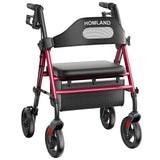
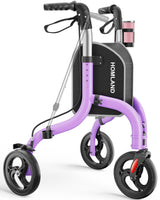
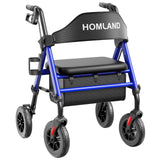
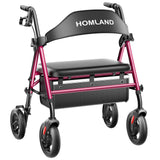
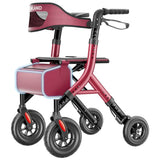
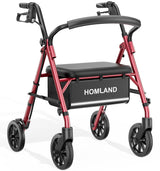
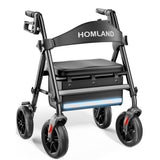
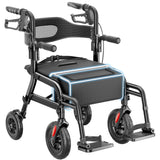



A 3-wheel walker is a lightweight rolling walking aid with one wheel in front and two in back, hand brakes, and a triangular frame. Its single front wheel lets it turn easily and squeeze through tight, narrow spaces. It is lighter and more compact than a four-wheel rollator, but it does not have a built-in seat.
In short: a light, nimble rolling walker with three wheels and brakes — easy to steer in tight spaces, but without a seat.
What Is a 3-Wheel Walker?
A 3-wheel walker is a type of rollator built around a triangular frame: one caster wheel at the front and two wheels at the back. Like a four-wheel rollator, it rolls continuously across the floor and has hand brakes on the grips, so the user controls the pace and can lock the wheels when needed.
The single front wheel is what makes it special. With just one wheel to steer at the front, a 3-wheel walker pivots and turns in very tight quarters — narrow hallways, small bathrooms, and crowded rooms where a wider four-wheel frame would get stuck. It is also lighter and folds down slim, which makes it easy to lift and store.
The trade-off is that a 3-wheel walker usually does not have a seat, and its narrower base is a little less stable than a four-wheel rollator. It suits people who value maneuverability and lightness over the chance to sit and rest.
Who Is It For and When Is It Used?
A 3-wheel walker is a good fit for someone who:
- Can walk steadily but wants light, rolling support that turns easily.
- Lives in a smaller home or apartment with narrow doorways and tight corners.
- Does not need to sit and rest often, and prefers a lighter frame they can lift and fold with ease.
For a caregiver, a 3-wheel walker can be the answer when a four-wheel rollator simply will not fit through the doorways at home. It lets a loved one move confidently from room to room in a compact space, keeping their independence without the frame feeling bulky or hard to manage.
3-Wheel vs 4-Wheel Walker: What’s the Difference?
People often weigh these two against each other. Here’s the short version:
| 3-Wheel Walker | 4-Wheel Rollator | |
|---|---|---|
| Wheels | One front, two back | Four wheels |
| Turning | Very tight — pivots in small spaces | Wider turns; needs more room |
| Seat | Usually no seat | Built-in seat to rest |
| Stability | Good, but a narrower base | Steadier, wider base |
| Weight | Lighter and more compact | Heavier, with more to carry |
| Best for | Tight indoor spaces and steady walkers | Longer walks and anyone who needs to rest |
The simple guide: choose a 3-wheel walker if maneuvering through tight spaces and keeping the frame light matter most. Choose a 4-wheel rollator if the user wants a seat to rest on and the steadiest possible base.
How to Choose and Use a 3-Wheel Walker
A few things worth checking before you buy:
- 1Height fit. The grips should reach the user’s wrists when they stand with arms relaxed. Look for adjustable-height handles.
- 2Wheel size. Larger wheels roll more easily over thresholds and outdoor ground; smaller wheels keep the frame compact indoors.
- 3Brakes. Reliable hand brakes that lock the wheels are essential for stopping and standing still safely.
- 4Storage. Many 3-wheel walkers have a pouch or basket instead of a seat — handy for carrying small items.
- 5Weight and folding. A light, foldable frame is easy to lift into a car and store in a hallway.
- 6Sturdiness. For heavier users, choose a reinforced, heavy-duty model built for extra support rather than focusing on a single number.
To use it safely: stand upright behind the grips, walk into the frame rather than letting it get ahead of you, and use the hand brakes to slow down or stop. Because it has no seat, do not lean back on it to rest.
HOMLAND rolling walkers are engineered for tool-free assembly and adjustable heights, and are FSA/HSA eligible, backed by a US local warehouse for fast delivery and a manufacturer warranty — so choosing one is low-risk.
Frequently Asked Questions
A 3-wheel walker is a lightweight rolling walking aid with one wheel in front and two in back, plus hand brakes. Its single front wheel lets it turn easily in tight spaces, and it is lighter and more compact than a four-wheel rollator, though it usually does not have a seat.
A 3-wheel walker has a triangular frame with one front wheel, so it turns tightly and stays light and compact, but it usually has no seat and a narrower base. A 4-wheel rollator has a wider, steadier base and a built-in seat, but needs more room to turn. Three-wheel models suit tight spaces; four-wheel models suit resting and longer walks.
Yes, for a steady walker who needs light rolling support. It has reliable hand brakes and turns easily in tight spaces. Because its base is narrower than a four-wheel rollator's and it has no seat, it is best for people who can walk steadily and do not need to sit and rest.
Most 3-wheel walkers do not have a seat — that is part of what keeps them light and compact. Instead, many include a storage pouch or basket. If a place to sit and rest is important, a four-wheel rollator is the better choice.