
The HOMLAND Glossary
We're building this glossary one term at a time. Here's what's live so far — more terms are added regularly.
Bathroom & Toileting Safety Equipment
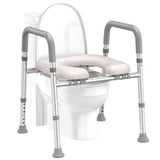
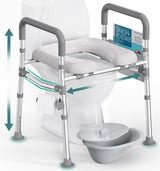
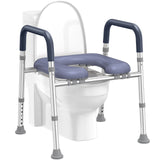
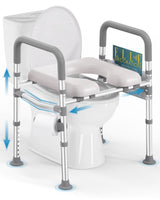
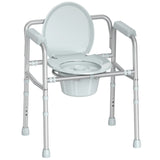
A 3-in-1 commode is a versatile toilet aid that does three jobs in one: it works as a standalone bedside toilet, as a raised toilet seat over an existing toilet, and as a safety frame around the toilet for support. One product covers three needs, making it one of the most practical and cost-effective bathroom-safety aids.
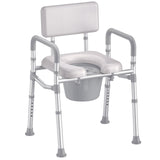
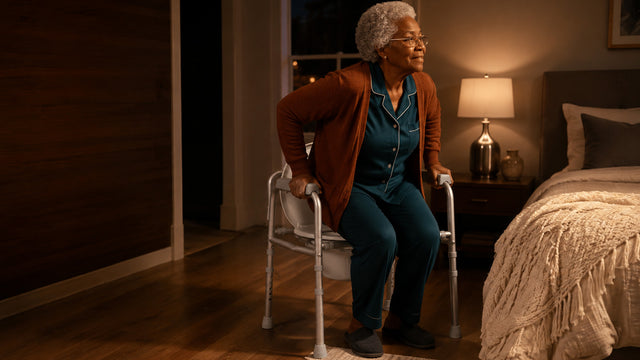
Bedside CommodeA bedside commode is a portable chair with a built-in toilet seat and a removable bucket underneath, so a person can use the toilet without walking all the way to the bathroom. Placed next to the bed or a chair, it brings the toilet within a few steps — a real help for anyone who struggles to reach the bathroom in time, especially at night.
Commode ChairA commode chair is a movable chair with a built-in toilet seat and a removable container underneath, used as a toilet where a regular one isn't within easy reach. It gives a person a safe, comfortable place to go — beside the bed, in the living room, or over an existing toilet — without a difficult walk to the bathroom.
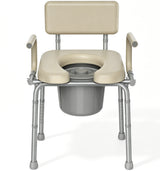
Drop-Arm CommodeA drop-arm commode is a bedside toilet-chair whose armrests lower out of the way, so a person can slide sideways onto the seat instead of stepping around a fixed arm. The movable arm makes side transfers — to and from a bed or wheelchair — far easier and safer for anyone who can't stand for long.
Grab BarA grab bar is a sturdy bar mounted to the wall that gives a person a firm, secure handhold in the bathroom. Placed near the toilet, tub, or shower, it provides something solid to hold while sitting, standing, or stepping — one of the simplest and most effective ways to prevent slips and falls at home.
Raised Toilet SeatA raised toilet seat is an add-on seat that fits on top of an existing toilet to make it several inches taller. The extra height means a person doesn't have to lower down as far or push up as hard, making sitting and standing much easier on the knees, hips, and back.
Shower BenchA shower bench is a wide, water-resistant seat placed inside a shower or tub so a person can bathe sitting down. Longer than a shower chair, it offers more room to sit, shift, or set down a sponge and soap — giving a steady, comfortable place to wash without standing on a slippery floor.
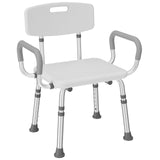
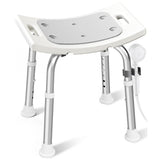
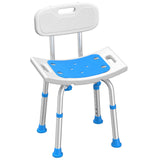
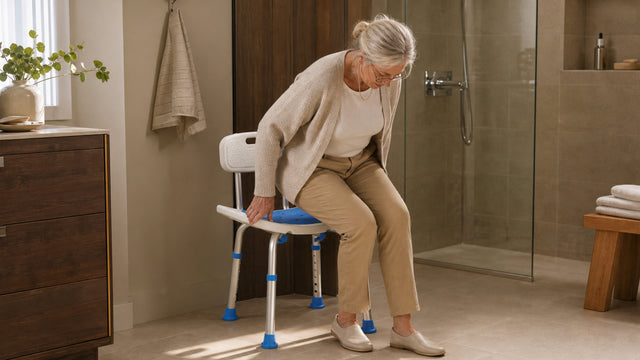
Shower ChairA shower chair is a water-resistant seat that sits inside a shower or bathtub so a person can bathe sitting down instead of standing on a wet, slippery surface. It gives a steady, secure place to rest while washing, which makes showering safer and less tiring for anyone unsteady on their feet.
Swivel Shower ChairA swivel shower chair is a shower seat with a rotating top that turns from side to side, so a person can face the tub, swing their legs over the edge, and turn to face the showerhead — all while staying seated. The turning seat makes getting into the bath and washing far easier for anyone who struggles to twist or step over the tub wall.
Toilet RiserA toilet riser is a device that raises the height of a toilet so a person doesn't have to lower down as far or push up as hard. Also called a toilet seat riser, it makes sitting and standing at the toilet easier and safer for anyone with sore knees, weak hips, or a recent surgery.
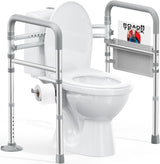
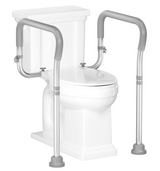
Toilet Safety RailsToilet safety rails are a pair of sturdy armrests that fit around a toilet to give a person something firm to hold while sitting down and standing back up. Often called a toilet safety frame, they add secure support on both sides — turning one of the hardest daily movements into a steady, confident one.
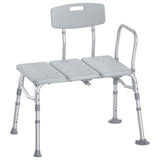
Tub Transfer BenchA tub transfer bench is a bathing seat that straddles the edge of a bathtub, with two legs inside the tub and two outside. It lets a person sit down safely outside the tub and slide across to the inside, so they never have to step over the tub wall.
Mobility & Walking Aids
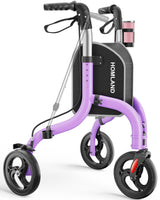
A 3-wheel walker is a lightweight rolling walking aid with one wheel in front and two in back, hand brakes, and a triangular frame. Its single front wheel lets it turn easily and squeeze through tight, narrow spaces. It is lighter and more compact than a four-wheel rollator, but it does not have a built-in seat.
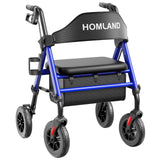
Bariatric WalkerA bariatric walker is a heavy-duty walking aid built with a wider, reinforced frame to comfortably support larger and heavier users. It offers the same steady, everyday support as a regular walker or rollator, but with sturdier construction and a roomier stance, so bigger users can lean in with full confidence.
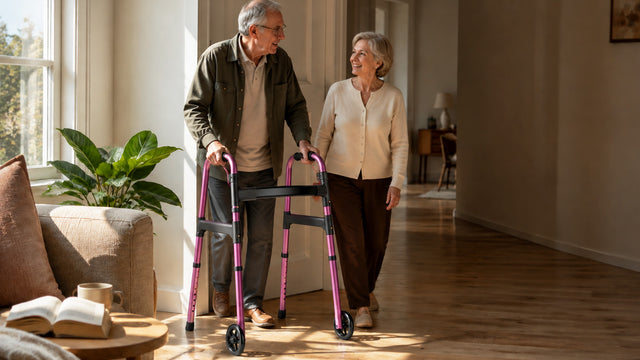
Folding WalkerA folding walker is a walking-aid frame designed to collapse flat for easy storage and travel. A simple button or latch on each side lets the frame fold in seconds, so it fits in a car trunk, a closet, or beside a chair. When open, it gives the same steady, four-point support as a regular walker.
Gait BeltA gait belt is a sturdy fabric strap that fastens snugly around a person's waist, giving a caregiver a secure handhold to steady them while standing, walking, or transferring between a bed, chair, or wheelchair. It is a transfer and safety aid — held by the helper, not the user — that makes assisting someone safer for both people.
Knee ScooterA knee scooter is a wheeled mobility device that lets a person rest their injured lower leg on a padded cushion and push along with their good leg. It keeps all weight off a healing foot or ankle while leaving both hands free, as a steadier alternative to crutches during recovery.
Offset CaneAn offset cane is a walking cane whose handle steps out to the side and then back over the shaft, forming a swan-neck shape. This design centers the user's weight directly over the cane's tip, so pressure is distributed evenly and the cane feels stable and comfortable to lean on — especially for people carrying more weight through the cane.
Quad CaneA quad cane is a walking cane with a four-footed base at the bottom instead of a single tip. Those four small feet give it a wider, more stable footprint and let it stand up on its own without being leaned against anything. It offers more support than a standard single-point cane, while staying lighter than a walker.
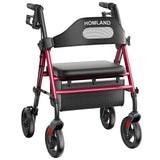
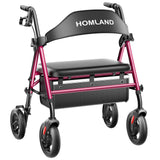
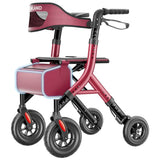
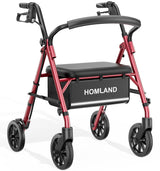
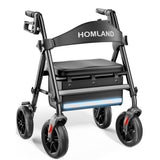
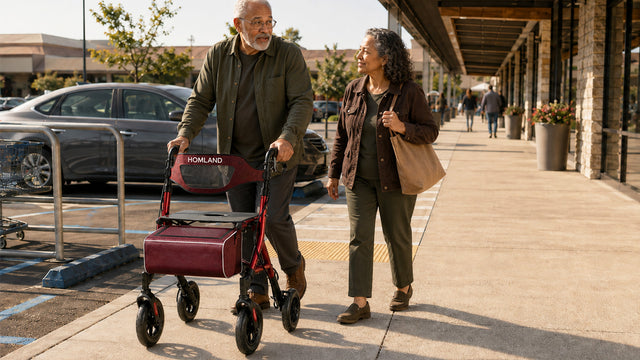
RollatorA rollator is a wheeled walking aid with four wheels, hand brakes, and a built-in seat that helps a person stay steady while walking and lets them sit down to rest whenever they need to. Unlike a standard walker, a rollator rolls smoothly instead of being lifted with each step.
Standard WalkerA standard walker is a lightweight metal frame with four legs and hand grips that a person holds on both sides for support. It has no wheels (or just two small front wheels), so it is lifted or slid forward a step at a time. Because it can bear a person's full weight, it offers some of the steadiest support of any walking aid.
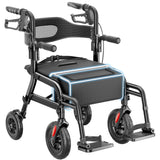
Transport ChairA transport chair is a lightweight, compact wheelchair with four small wheels that is pushed by a caregiver, since the rider cannot self-propel it. Its slim, foldable frame makes it easy to steer through doorways, lift into a car, and store — an ideal choice for outings, appointments, and travel.
Upright WalkerAn upright walker is a four-wheeled rolling walker with raised forearm supports and higher hand grips, so the user stands tall and leans on their forearms instead of hunching over low handles. It offers steady support and better posture, and usually adds hand brakes and a built-in seat for resting along the way.
Walking CaneA walking cane is a handheld mobility aid — a single shaft with a grip on top and a rubber tip at the bottom — held in one hand to add balance and take some weight off a weaker or sore leg. It is the lightest, simplest walking aid, ideal for people who need a little extra steadiness rather than full support.
Clinical, Mobility & Recovery Concepts
Activities of daily living (ADLs) are the basic self-care tasks a person does every day to look after themselves — bathing, dressing, eating, using the toilet, moving from place to place, and staying continent. How well someone manages their ADLs is a common way to measure how much support they need at home.
AmbulationAmbulation is a medical word for walking or moving about on foot. It refers to a person's ability to get up and move from place to place, with or without help. In plain English, someone who is able to ambulate can walk — whether on their own, with a cane, or with a walker.
Fall Risk AssessmentA fall risk assessment is a simple review that looks at how likely a person is to fall, so steps can be taken to prevent it. It considers things like balance, walking, medications, eyesight, and home hazards. The goal is to spot risks early and make daily life safer.
GaitGait is the pattern of how a person walks — the way the legs, feet, and body move together from one step to the next. It includes speed, stride length, rhythm, and balance. A steady, even gait helps a person stay upright, while changes in gait can be an early sign of a higher fall risk.
Non-Weight-BearingNon-weight-bearing means a healing leg, foot, or ankle must carry none of a person's body weight while it recovers. The limb is kept completely off the ground, so weight is supported by the other leg and a mobility aid such as a knee scooter or crutches instead.
Occupational TherapyOccupational therapy helps a person regain the everyday skills they need to live independently — things like dressing, bathing, cooking, and moving safely around the home. An occupational therapist focuses on the practical tasks of daily life, adapting activities and suggesting equipment so a person can do more for themselves.
Patient TransferA patient transfer is the act of helping a person move from one surface to another — for example from a bed to a wheelchair, or from a chair to the toilet. Done with the right technique and equipment, a safe transfer protects both the person being moved and the caregiver helping them.
Physical TherapyPhysical therapy is a form of care that helps a person restore movement, strength, and balance after an injury, surgery, or illness. A physical therapist guides exercises and hands-on techniques to reduce pain and rebuild the ability to walk, stand, and move safely — often as part of recovery at home.
Range of MotionRange of motion is how far a joint can move in each direction — how much you can bend, straighten, or rotate it. It is measured for joints like the knee, hip, or shoulder. Keeping or rebuilding a healthy range of motion helps a person move comfortably and stay independent at home.
Weight-BearingWeight-bearing describes how much of a person's body weight a healing leg or foot is allowed to carry while it recovers. A care team sets the limit — from full weight-bearing, where all weight is fine, to non-weight-bearing, where the limb carries none at all — to protect the injury as it heals.
Product Features, Specs & Standards
"ADA compliant" means a product or space meets the accessibility standards set by the Americans with Disabilities Act, a US law designed to make buildings and facilities usable by people with disabilities. In a bathroom, ADA guidelines cover things like grab-bar placement, seat heights, and clear floor space, so the room is safer and easier to use.
BariatricIn home-care equipment, "bariatric" means designed for larger or heavier people. A bariatric product — such as a walker, shower chair, or commode — is built wider and sturdier than a standard model, with a reinforced, heavy-duty frame and a broader seat or base, so a bigger person can use it comfortably and with confidence.
Weight CapacityWeight capacity is the maximum weight a piece of equipment is designed to support safely. For home-care aids like walkers, shower chairs, and commodes, it tells you whether a product is strong enough for the person using it — a key safety detail that helps you choose the right level of support, from standard to heavy-duty and bariatric.
Aging in Place & Home Safety
Aging in place means growing older in your own home and community for as long as it is safe and comfortable, rather than moving to an assisted living facility or nursing home. It usually combines small home modifications, everyday support, and mobility or bathroom-safety aids so daily life stays independent and familiar.
Fall PreventionFall prevention is the set of steps taken to lower the risk of falling, especially for older adults at home. It combines making the home safer — better lighting, grab bars, clear walkways — with staying steady through exercise, sensible footwear, medication reviews, and the right mobility aids.
Home Health AideA home health aide (HHA) is a trained caregiver who comes to a person's home to help with daily living — bathing, dressing, grooming, moving around safely, light housekeeping, and companionship. Working under a care plan, an aide supports people who need a hand with everyday tasks so they can keep living at home.
Home ModificationHome modification means adapting a home so it stays safe and easy to use as a person's needs change with age, injury, or limited mobility. Common changes include adding grab bars, installing ramps or stair rails, widening doorways, improving lighting, and raising seating so everyday tasks take less effort and carry less risk.
Independent LivingIndependent living means an older adult manages their own daily life — cooking, bathing, dressing, and getting around — with little or no hands-on help. It can happen in a person's own home or in an independent living community, and is often supported by home modifications and mobility aids that make everyday tasks safer and easier.
Respite CareRespite care is short-term, temporary care that gives a family caregiver a break from looking after a loved one. Someone else steps in — at home, at an adult day center, or in a residential facility — for a few hours, a day, or longer, so the caregiver can rest, work, or handle their own life while their loved one stays safe.
Universal DesignUniversal design is an approach to designing homes, products, and spaces so they work for as many people as possible — regardless of age, size, or ability — without the need for special adaptation. Features like step-free entries, lever handles, and walk-in showers help everyone, from a child to a grandparent, use the same space with ease.
Coverage, Insurance & Buying Terms
An assistive device is any tool or piece of equipment that helps a person do everyday tasks more safely and independently when age, injury, or a health condition makes them harder. The term is broad — it covers mobility aids like walkers and canes, plus bathroom-safety gear, grab bars, reachers, and more.
Durable Medical Equipment (DME)Durable medical equipment (DME) is reusable equipment that helps a person manage a health need or stay mobile at home — things like walkers, wheelchairs, shower chairs, and bedside commodes. It is built to be used over and over for years, unlike disposable supplies such as bandages or gloves that are thrown away after one use.
FSA EligibleFSA eligible means a product or service qualifies to be paid for with money from a Flexible Spending Account (FSA) — a workplace health account funded with pre-tax dollars. If an item is FSA eligible, you can use those set-aside funds to buy it, effectively paying with money that hasn't been taxed.
HSA EligibleHSA eligible means a product or service qualifies to be paid for with money from a Health Savings Account (HSA) — a personal health account, paired with a high-deductible health plan, that you fund with pre-tax dollars. If an item is HSA eligible, you can use those savings to buy it, effectively paying with money that hasn't been taxed.
Medicare DMEMedicare DME is durable medical equipment — reusable home-health gear like walkers, wheelchairs, and commodes — that Medicare may help pay for when a doctor decides it is medically necessary. Under Original Medicare, this coverage generally falls under Part B, which covers qualifying equipment prescribed for use in the home.
Mobility AidA mobility aid is any device that helps a person move around more safely and independently when walking on their own is difficult. Common examples include canes, walkers, rollators, knee scooters, and wheelchairs. Each one supports balance, takes weight off tired or unsteady legs, or provides a way to get around.
No terms match your search yet — we're adding new ones regularly.