
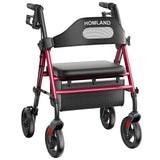
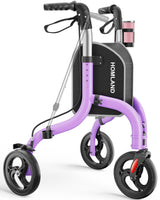
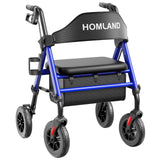
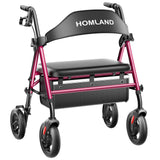

A knee scooter is a wheeled mobility device that lets a person rest their injured lower leg on a padded cushion and push along with their good leg. It keeps all weight off a healing foot or ankle while leaving both hands free — a comfortable, steadier alternative to crutches during recovery.
In short: a rolling, kneel-and-push aid that keeps weight off a healing foot or ankle without tying up your hands.
What Is a Knee Scooter?
A knee scooter — also called a knee walker — is a four-wheeled (sometimes three-wheeled) frame with a raised, padded platform for the injured leg and handlebars for steering. The person kneels their healing leg on the cushion, keeps their good foot on the floor, and pushes forward much like a child’s scooter. A hand brake controls the pace, and the front wheels steer.
It’s built for people who have been told to stay off one foot or ankle while it heals but who can still bear weight normally on the other leg. Instead of hopping on crutches, the user glides along in a stable, seated-knee position.
Most models fold for transport and have adjustable handlebar and knee-pad heights so the fit is comfortable. Steerable models turn more easily indoors; larger, all-terrain wheels roll better over thresholds and outdoor ground.
Who Is It For and When Is It Used?
A knee scooter is a good fit for someone who is recovering from an injury or surgery to the foot, ankle, or lower leg and has been told to keep that leg from bearing weight — for example after a broken foot or ankle, bunion or foot surgery, or an Achilles injury. It’s used while the leg heals, often alongside a cast or walking boot.
Compared with crutches, a knee scooter takes far less upper-body strength, is easier to use over a recovery that lasts more than a week or so, and frees both hands for everyday tasks like carrying a cup or opening a door. Research backs this up: a study of patients recovering from foot and ankle surgery found that the large majority preferred a knee scooter to crutches and reported high satisfaction with it.1
For a caregiver, a knee scooter often means a loved one can move around the house and stay independent during recovery without needing a hand for every step.
Knee Scooter vs Crutches: Which Is Better?
This is the most common question, so here’s the quick comparison:
| Knee Scooter | Crutches | |
|---|---|---|
| Weight off the leg | Yes — the leg rests on a cushion | Yes — but you hold yourself up with your arms |
| Hands free | Both hands free when stopped | Hands occupied gripping the crutches |
| Effort | Low — push with your good leg | High — tiring on arms and shoulders |
| Stairs | Not suitable | Can manage stairs |
| Best for | Recoveries longer than about a week; flat indoor and outdoor spaces | Short-term use, tight spaces, and stairs |
The simple guide: crutches are cheaper and handle stairs, but they tire your arms and take both hands. A knee scooter is usually the more comfortable choice for any non-weight-bearing recovery lasting more than a few days.
How to Choose and Use a Knee Scooter
A few things worth checking:
- 1Height fit. Both the handlebars and the knee pad should adjust so your injured leg rests level and you stand tall without leaning. A good fit prevents back and hip strain.
- 2Steering. Steerable front wheels turn tightly indoors; fixed models are simpler but need more room to maneuver.
- 3Wheel size and terrain. Larger, all-terrain wheels roll more easily over door thresholds, carpet, and outdoor ground.
- 4Brakes and stability. Look for a locking hand brake to hold the scooter still when you get on and off.
- 5Sturdiness. For larger users, choose a reinforced, heavy-duty model built for extra support rather than focusing on a single number.
- 6Foldability. A frame that folds is easier to lift into a car or store in a hallway.
To use it safely: lock the brake, rest your injured knee and shin fully on the cushion, keep your good foot flat on the floor, then release the brake and push gently. Steer with the handlebars and brake before you stop. Always follow the recovery instructions from your care team on how much to be up and about.
HOMLAND knee scooters are engineered for tool-free assembly and adjustable heights, and are FSA/HSA eligible, backed by a US local warehouse for fast delivery and a manufacturer warranty — so recovery gear is one less thing to worry about.
Frequently Asked Questions
A knee scooter is used to stay mobile while keeping all weight off a healing foot, ankle, or lower leg — for example after surgery or a fracture. The person rests the injured leg on the padded cushion and pushes with the other leg, keeping both hands free.
For most recoveries lasting more than a few days, yes. A knee scooter takes less arm strength, is more comfortable, and leaves both hands free. Crutches are cheaper and can handle stairs, where a knee scooter cannot — so the best choice depends on your home and how long you'll need it.
Yes. "Knee scooter" and "knee walker" are two names for the same device — a wheeled frame with a padded platform that supports the injured leg while you push with the other. Some people also call it a knee cruiser.
Yes. Knee scooters are commonly used with a cast or walking boot after foot or ankle surgery — the injured leg rests on the cushion while the boot stays on. Always follow your care team's guidance on when and how much to move.
- Meng, J., et al. — Knee scooter related injuries and satisfaction in patients following foot and ankle surgery. Foot and Ankle Surgery. www.sciencedirect.com/science/article/abs/pii/S1268773121002459