
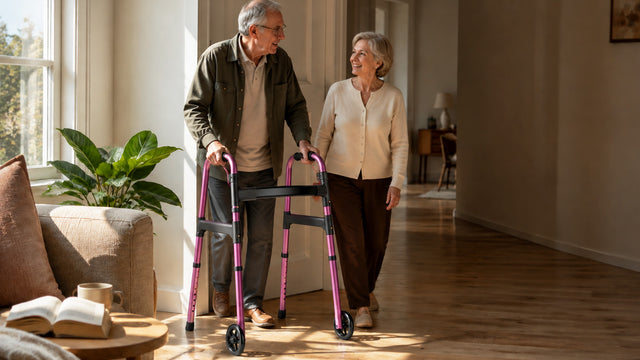
Range of motion is how far a joint can move in each direction — how much you can bend, straighten, or rotate it. It is measured for joints like the knee, hip, or shoulder. Keeping or rebuilding a healthy range of motion helps a person move comfortably and stay independent at home.
In short: how far a joint can move — the amount of bend, stretch, or turn it has.
What Is Range of Motion?
Range of motion, often shortened to ROM, describes the full distance a joint can travel. Bend your knee to sit down, reach up to a shelf, turn your head to look over your shoulder — each movement uses the range of motion in a joint.
Every joint has a normal range, and that range can shrink after an injury, surgery, or a long spell of not moving. When a joint feels stiff or a person cannot reach or bend as far as before, that is a reduced range of motion. When movement is smooth and full, the range is healthy.
The term comes up a lot during recovery, because rebuilding movement in a joint is often a key goal. It is also part of everyday life — comfortable range of motion in the hips and knees is what makes standing, walking, and getting in and out of a chair feel easy.
Who Is It For and When Is It Used?
You may hear “range of motion” from a doctor or therapist, especially after joint surgery like a hip or knee replacement, or after an injury that left a joint stiff. Understanding it helps a person and their family follow a recovery plan and notice progress.
For the person recovering, range of motion is really about getting back to normal life — reaching the top cupboard, stepping into the shower, or bending to tie a shoe. Small daily gains add up to more freedom and comfort.
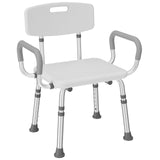
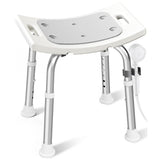
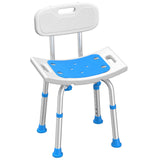
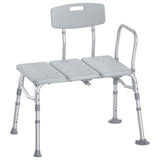
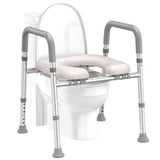
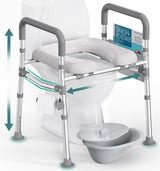
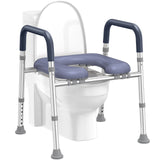
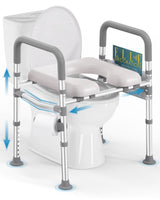
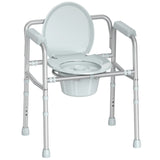
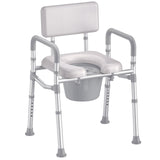
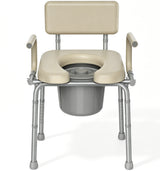
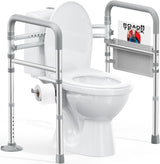
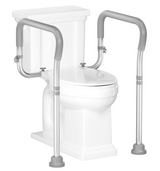
For a caregiver, knowing about range of motion helps you understand why certain movements are hard and where a little help — or a supportive device — makes a task easier. A stiff hip, for example, can make getting off a low toilet or out of a deep tub difficult, which is where the right equipment can help.
Active vs Passive Range of Motion: What’s the Difference?
You may hear the range described in two ways:
| Active Range of Motion | Passive Range of Motion | |
|---|---|---|
| Who moves the joint | The person moves it themselves | Someone else (or a device) moves it for them |
| Effort | Uses the person’s own muscles | The muscles stay relaxed |
| Example | Lifting your own arm overhead | A helper gently raising your arm for you |
| Often used | To build strength and movement together | When a joint needs to move but the muscles aren’t ready |
The simple guide: active range of motion is movement you do yourself, while passive range of motion is movement done for you. Both can be part of recovery, and a care team decides which is right at each stage.
How Range of Motion Affects Daily Life at Home
A few plain-language points on why it matters:
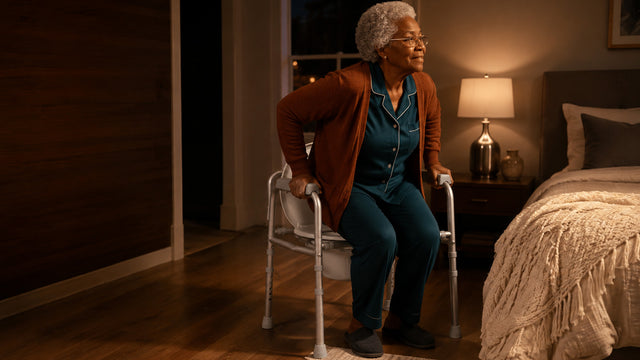
- 1Getting up and down. Comfortable knee and hip range makes rising from a chair, bed, or toilet easier — and a higher seat or a raised toilet seat can bridge the gap when range is limited.
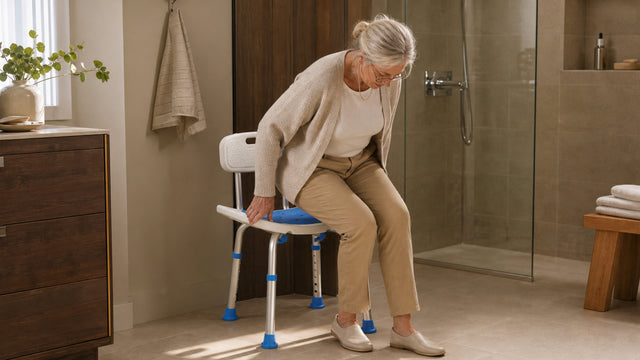
- 2Bathing safely. Limited hip or knee range makes stepping over a tub wall hard; a seat that lets you sit and slide reduces how far the joint must move.
- 3Reaching and dressing. Shoulder range affects reaching and dressing, so keeping the path and daily items within easy reach helps.
- 4Follow the plan. If a care team has set movement goals or exercises, use those as your guide rather than pushing a joint too far too soon.
Frequently Asked Questions
Range of motion is how far a joint can move in each direction — the amount you can bend, straighten, or rotate it. It is measured for joints such as the knee, hip, or shoulder, and a healthy range helps a person move comfortably and stay independent.
Range of motion means the full distance a joint can travel. It describes how much movement a joint has, from fully bent to fully straight. A reduced range of motion means a joint feels stiff or cannot move as far as it normally would.
The definition of range of motion is the extent to which a joint can move through its normal movements — bending, straightening, and rotating. It is often measured to track stiffness or progress during recovery.
Active range of motion is movement a person makes using their own muscles, such as lifting their own arm. Passive range of motion is movement done for them by another person or a device, with the muscles relaxed. Both can be part of a recovery plan.