
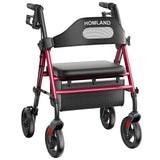
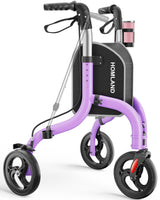
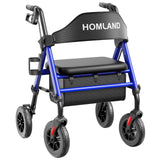
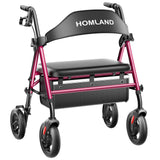
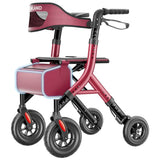
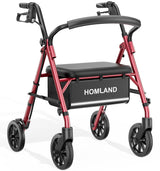
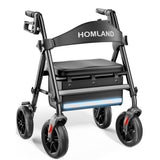
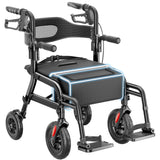


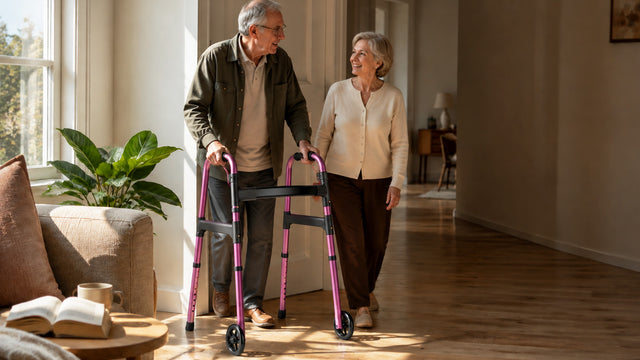
A rollator is a wheeled walking aid with four wheels, hand brakes, and a built-in seat. It helps a person stay steady on their feet while walking, and lets them sit down to rest whenever they need to. Unlike a standard walker, a rollator rolls smoothly across the floor instead of being lifted with every step.
In short: a walker on wheels, with brakes and a seat, made for steady, everyday walking with the freedom to rest along the way.
What Is a Rollator?
A rollator is a type of walking frame designed for people who can walk on their own but want extra stability and a place to rest. It usually has four wheels, a padded seat, a storage bag or basket under the seat, and hand brakes on the grips — much like the brakes on a bicycle — so the user is always in control of their pace.
Because the wheels roll continuously, a rollator suits people who have the strength to keep moving but tire easily or feel unsteady on longer walks. That rolling motion is the main thing that sets it apart from a standard walker, which has to be picked up and set back down with each step.
Rollators come in several styles — three-wheel models that turn easily in tight spaces, four-wheel models with a seat, upright models that let you stand tall, and wider bariatric walker versions built for larger users. The right one depends on where and how far the person walks each day.
Who Is It For and When Is It Used?
A rollator is a good fit for someone who:
- Can walk independently but feels unsteady or worries about losing balance.
- Gets tired on longer walks and would benefit from sitting down to rest.
- Wants to stay active — running errands, walking the neighborhood, moving around the house — with more confidence.
Falls are a real concern as we age: the CDC reports that about 1 in 4 adults aged 65 and older falls each year, and falls are the leading cause of injury in this age group.1 A rollator gives a person a stable base to lean on, which can make everyday walking feel safer — while still keeping them on their feet and in charge of their own day.
For a caregiver, a rollator often means a parent or loved one can keep doing the things they enjoy without needing a hand for every trip across the room.
Rollator vs Walker: What’s the Difference?
This is the most common question people ask, so here’s the short version:
| Rollator | Standard Walker | |
|---|---|---|
| Wheels | Four wheels (or three), always rolling | No wheels, or two front wheels; lifted with each step |
| Seat | Built-in seat to rest | No seat |
| Brakes | Hand brakes for control | None needed |
| Best for | People who can walk but need steadiness and rest | People who need to lean their full weight on the frame for support |
| Effort | Glides with little effort | Requires lifting, so more upper-body effort |
A good rule of thumb: if a person needs to put their full weight down on the frame for balance, a standard walker may be safer. If they can walk steadily but want stability and a place to rest, a rollator is usually the better choice. Some people also compare it to an upright walker, which adds forearm supports for a taller, more upright posture.
How to Choose a Rollator
A few things worth checking before you buy:
- 1Height fit. The grips should reach the user’s wrists when they stand with arms relaxed, so they can walk tall without hunching. Look for adjustable-height handles.
- 2Wheel size. Larger wheels roll more easily over thresholds, carpet, and uneven outdoor ground; smaller wheels turn tightly indoors.
- 3Weight of the frame. A lighter, foldable frame is easier to lift into a car or store in a hallway.
- 4Seat and storage. A comfortable seat and an under-seat bag make errands and rest stops easier.
- 5Sturdiness. For heavier users, choose a reinforced, heavy-duty or bariatric model built for extra support rather than focusing on a single number.
HOMLAND rollators are engineered for home-friendly, tool-free assembly and adjustable heights, and are FSA/HSA eligible, backed by a US local warehouse for fast delivery and a manufacturer warranty — so choosing one is low-risk.
Frequently Asked Questions
They're closely related. Both roll on wheels, but an upright walker adds raised forearm supports so the user stands taller and leans on their forearms instead of gripping low handles. A rollator uses lower hand grips and includes a seat for resting.
Stand upright inside the frame, hold both grips, and walk into the rollator rather than letting it get ahead of you. Use the hand brakes to slow down or to lock the wheels before sitting on the seat. Always set the brakes before sitting or standing.
A rollator has wheels, hand brakes, and a seat, and rolls smoothly without being lifted. A standard walker has no seat and is picked up and set down with each step. Rollators suit steadier walkers who want to rest; standard walkers suit people who need to lean their weight on the frame.
A rollator is used to help a person walk steadily and safely while giving them a seat to rest on whenever they tire. People use it for getting around the house, running errands, and staying active outdoors with more confidence.
- Centers for Disease Control and Prevention (CDC) — Facts About Falls. www.cdc.gov/falls/data-research/facts-stats/index.html