
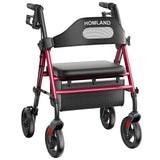
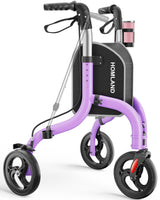
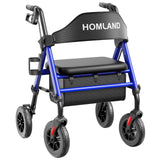
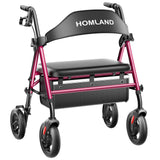
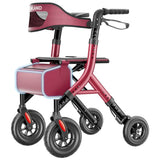
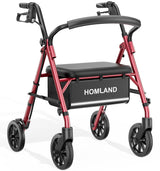
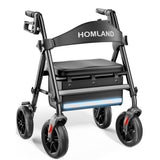
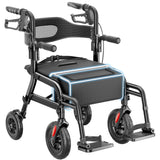
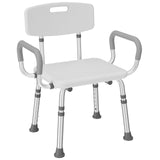
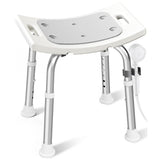
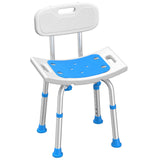
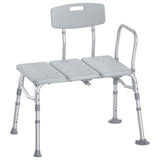
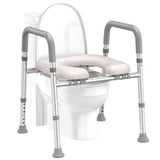
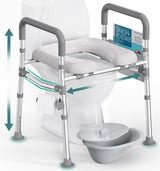
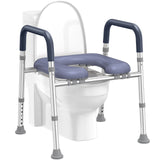
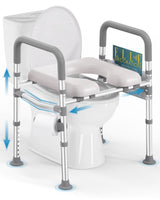
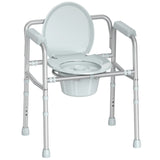
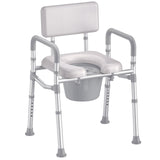
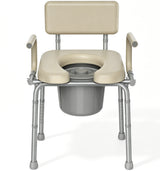
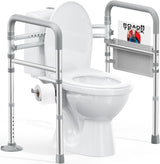
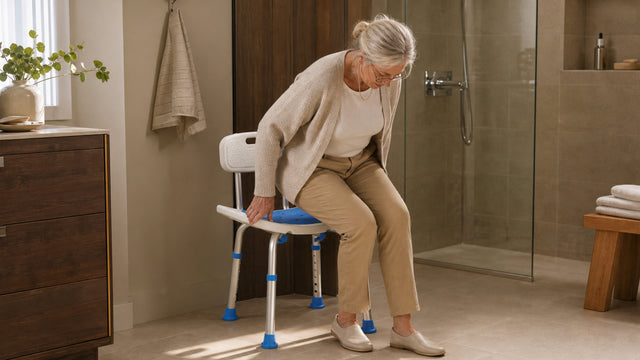



A shower chair is a water-resistant seat that sits inside a shower or bathtub so a person can bathe sitting down instead of standing on a wet, slippery surface. It gives a steady, secure place to rest while washing, which makes showering safer and less tiring for anyone unsteady on their feet.
In short: a sturdy, non-slip seat for the shower, so bathing can be done sitting down instead of standing.
What Is a Shower Chair?
A shower chair is a simple but important piece of bathroom-safety equipment: a stable seat, usually made of rust-resistant aluminum and plastic, that you place inside the shower or tub. The person sits on it to wash, so they never have to balance on their feet on a slick, wet floor.
Most shower chairs have a textured, non-slip seat with drainage holes, rubber-tipped feet that grip the floor, and adjustable-height legs so the seat sits at a comfortable level. Styles range from a basic backless stool to a chair with a full backrest and armrests for people who want more support and something to push up from.
Because the chair sits fully inside the shower or tub, it suits people who can still step in safely on their own. It’s closely related to a shower bench and a tub transfer bench, but the shower chair’s job is simply to give a secure place to sit once you’re inside.
Who Is It For and When Is It Used?
A shower chair is a good fit for someone who:
- Feels unsteady or tires when standing to shower, but can step into the shower safely.
- Is recovering from surgery or an illness and needs to bathe without over-exerting.
- Gets dizzy or short of breath standing for long, and feels safer washing while seated.
The bathroom is one of the most common places for a fall at home — wet, hard surfaces and little to hold onto. Falls are a serious concern as we age: the CDC reports that about 1 in 4 adults aged 65 and older falls each year, and falls are the leading cause of injury in this age group.1 Sitting down to shower removes the need to balance on a slippery floor, which takes a lot of the worry out of daily bathing.
For a caregiver, a shower chair often means a parent or loved one can keep bathing on their own terms, with far less risk and less need for a steadying hand.
Shower Chair vs Transfer Bench: What’s the Difference?
People often weigh these two against each other. The difference comes down to where the seat sits:
| Shower Chair | Tub Transfer Bench | |
|---|---|---|
| Placement | Sits fully inside the shower or tub | Straddles the tub wall — two legs in, two out |
| How you get in | You step into the shower to reach the seat | Sit outside, slide across — no stepping over the wall |
| Best for | Walk-in showers, or people who can step in safely | Bathtubs, and anyone who struggles to step over the edge |
| Footprint | Compact; fits within the tub or shower | Larger; extends onto the bathroom floor |
The simple guide: if the person can already step into the shower safely and just needs a stable place to sit, a shower chair is usually all they need. If stepping over the tub wall is the hard part, a transfer bench is the safer choice. Pairing either one with a wall-mounted grab bar adds another secure handhold.
How to Choose and Use a Shower Chair
A few things worth checking before you buy:
- 1Back and arms. A backrest adds support; armrests give something to push up from. A backless stool is more compact if space is tight.
- 2Adjustable height. Look for legs that adjust so the seat sits at a level where the user’s feet rest flat and standing up is easy.
- 3Non-slip and rust-resistant. A textured seat, rubber feet, and corrosion-proof materials keep the chair safe and long-lasting in a wet room.
- 4Sturdiness. For heavier users, choose a reinforced, heavy-duty or bariatric model built for extra support rather than focusing on a single figure.
- 5Size and fit. Measure your shower or tub floor so the chair sits flat with all four feet steady.
To use it safely, place the chair with all feet flat and steady, step in carefully holding a grab bar if you have one, and lower yourself onto the seat. Wash while seated, then stand up on the non-slip seat area rather than the wet floor.
HOMLAND shower chairs are engineered for tool-free assembly and adjustable heights, and are FSA/HSA eligible, backed by a US local warehouse for fast delivery and a manufacturer warranty.
Frequently Asked Questions
A shower chair is used to let a person bathe sitting down instead of standing on a wet, slippery surface. It gives a stable, secure place to rest while washing, which makes showering safer and less tiring for anyone who feels unsteady on their feet.
A shower chair sits entirely inside the shower or tub, so you step in to reach the seat. A transfer bench straddles the tub wall, with two legs inside and two outside, so you can sit and slide in without stepping over the edge. Chairs suit walk-in showers; benches suit bathtubs.
Set the chair with all four feet flat and steady, then step in carefully — holding a grab bar if you have one — and lower yourself onto the seat. Wash while seated, and stand up from the seat rather than balancing on the wet floor.
Not always. A backless stool works well for someone who just needs a place to sit and has good balance. A chair with a backrest and armrests adds more support and gives something to push up from, which many people find safer and more comfortable.
- Centers for Disease Control and Prevention (CDC) — Facts About Falls. www.cdc.gov/falls/data-research/facts-stats/index.html