
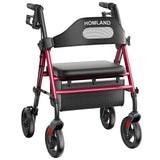
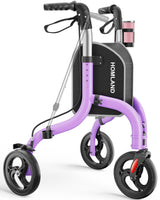
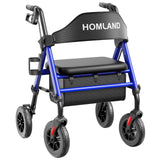
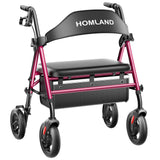
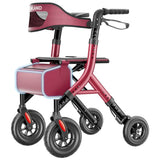
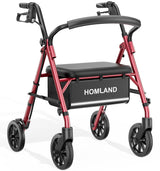
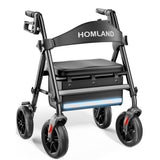
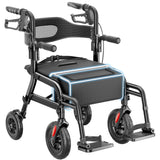
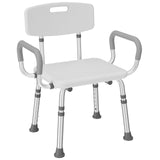
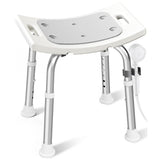
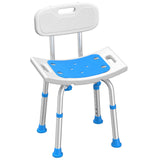
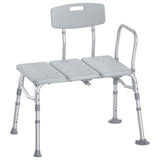



A standard walker is a lightweight metal frame with four legs and hand grips that a person holds on both sides for support. It has no wheels (or just two small front wheels), so it is lifted or slid forward a step at a time. Because it can bear a person’s full weight, it offers some of the steadiest support of any walking aid.
In short: a simple, four-legged frame you lean your weight into and move a step at a time, made for maximum stability.
What Is a Standard Walker?
A standard walker is one of the most familiar walking aids: a sturdy aluminum frame, open on one side, with a handle on each side for the user to hold. The person stands inside the frame, grips both handles, lifts or slides it forward a short distance, and steps up to it — then repeats.
Because all four legs plant firmly on the floor with each step, a standard walker gives a very stable base. The user can lean a good deal of their weight into the frame, which is exactly what someone who feels wobbly on their feet often needs.
There are two common versions. A pick-up walker has rubber-tipped feet on all four legs and is lifted with each step. A two-wheel walker adds small wheels on the front legs, so it can be pushed forward while the rear feet still grip — a little easier to move, while keeping much of the stability.
Who Is It For and When Is It Used?
A standard walker is a good fit for someone who:
- Needs to lean their full weight on the frame for balance, not just a light touch of support.
- Is recovering from surgery or an illness and wants maximum steadiness while they rebuild strength.
- Walks mostly indoors, over short, flat distances, where firm stability matters more than speed.
Falls are a real concern as we age: the CDC reports that about 1 in 4 adults aged 65 and older falls each year, and falls are the leading cause of injury in this age group.1 A standard walker gives a person the most solid base of any common walking aid, which can make those first steps across a room feel far safer.
For a caregiver, a standard walker is reassuringly simple — there are no brakes to manage and nothing to roll away. It lets a loved one move around the house under their own power while staying steady and secure.
Standard Walker vs Rollator: What’s the Difference?
This is the most common question people ask, so here’s the short version:
| Standard Walker | Rollator | |
|---|---|---|
| Wheels | None, or two front wheels; lifted or slid | Four (or three) wheels, always rolling |
| Stability | Highest — full weight can be borne on the frame | Steady, but rolls, so it must be controlled |
| Seat | No seat | Built-in seat to rest |
| Effort | More upper-body effort to lift and step | Glides with little effort |
| Best for | People who need to lean their weight on the frame | People who can walk steadily but want stability and rest |
A good rule of thumb: if a person needs to put their full weight down on the frame for balance, a standard walker is usually the safer choice. If they can walk steadily but tire easily and want a place to rest, a rollator may suit them better.
How to Choose and Use a Standard Walker
A few things worth checking before you buy:
- 1Height fit. The grips should reach the user’s wrists when they stand with arms relaxed, so they can stand tall without hunching. Look for adjustable-height legs.
- 2Pick-up or two-wheel. Choose a lift-and-step frame for the firmest support, or a two-wheel version for slightly easier movement.
- 3Weight of the frame. A lighter, foldable aluminum frame is easier to lift with each step and to store in a hallway.
- 4Grips and feet. Comfortable handles and non-slip rubber tips keep the walker steady and easy to hold.
- 5Sturdiness. For heavier users, choose a reinforced, heavy-duty or bariatric model built for extra support rather than focusing on a single number.
To use it safely: stand upright inside the frame, hold both grips, move the walker a short step ahead, make sure all four feet are planted, then step up to it — never let it get too far in front of you.
HOMLAND standard walkers are engineered for tool-free assembly and adjustable heights, and are FSA/HSA eligible, backed by a US local warehouse for fast delivery and a manufacturer warranty — so choosing one is low-risk.
Frequently Asked Questions
A standard walker is a lightweight four-legged frame with hand grips that a person holds on both sides for support. It has no wheels, or just two small front wheels, so it is lifted or slid forward a step at a time. Because it can bear a person's full weight, it offers very steady support.
A standard walker has no seat and is lifted or slid forward with each step, giving the firmest support because the user can lean their full weight on it. A rollator rolls on wheels, has hand brakes, and includes a seat. Standard walkers suit people who need maximum stability; rollators suit steadier walkers who want to rest.
Stand upright inside the frame and hold both grips. Move the walker a short step forward, make sure all four feet are firmly on the floor, then step up to it — one step at a time. Keep the walker close and never let it get too far ahead of you.
Neither is better overall; they suit different needs. A standard walker gives the steadiest support for someone who leans their weight on the frame, while a rollator is easier to push and lets a steadier walker rest on a built-in seat. The right choice depends on how much support the person needs.
- Centers for Disease Control and Prevention (CDC) — Facts About Falls. www.cdc.gov/falls/data-research/facts-stats/index.html