
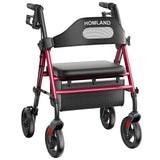
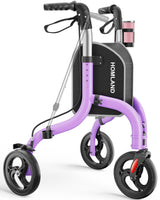
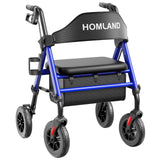
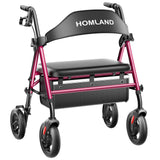
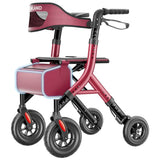
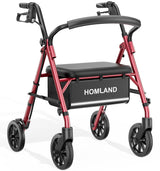
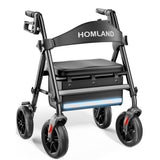
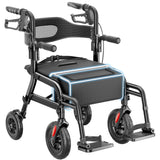





A transport chair is a lightweight, compact wheelchair with four small wheels that is pushed by a caregiver, since the rider cannot self-propel it. Its slim, foldable frame makes it easy to steer through doorways, lift into a car, and store — an ideal choice for outings, appointments, and travel.
In short: a light, foldable chair a helper pushes — made for easy outings and travel, not for self-propelling.
What Is a Transport Chair?
A transport chair is a type of wheelchair designed to be pushed by another person. It has four small wheels, unlike a standard wheelchair’s two large rear wheels, so there are no hand rims for the rider to turn — someone walking behind steers and pushes it using the handles.
Trading self-propulsion for a lighter, slimmer frame is the whole point. A transport chair is easier to fold, lift into a car trunk, and roll through narrow doorways and crowded spaces than a full-size wheelchair. Most have a comfortable seat, footrests, and locking brakes the caregiver sets before the rider gets in or out.
It suits situations where the rider will be pushed anyway — getting through a large store, moving across a hospital campus, or covering long distances on a family day out — rather than everyday independent use where a person needs to move themselves.
Who Is It For and When Is It Used?
A transport chair is a good fit when:
- A person tires over longer distances and has someone to push them for outings, appointments, or travel.
- The household needs a light, foldable chair that is easy to lift into a car and store between trips.
- Getting through tight doorways, elevators, and crowds calls for a slimmer, more maneuverable frame.
For a caregiver, a transport chair is often the practical everyday helper. It is light enough to load into the trunk without strain and narrow enough to steer through a busy clinic hallway, so taking a parent to an appointment or out for the afternoon feels manageable. For the rider, it means staying part of the day out — visits, errands, family gatherings — instead of staying home because the distance felt like too much.
Transport Chair vs Wheelchair vs Rollator: What’s the Difference?
People often weigh these against each other. Here’s the short version:
| Transport Chair | Standard Wheelchair | Rollator | |
|---|---|---|---|
| Who moves it | A caregiver pushes | Rider self-propels or is pushed | The user walks and pushes it |
| Wheels | Four small wheels | Two large rear wheels plus front casters | Four (or three) wheels |
| User’s legs | Rider is seated, not walking | Rider is seated | User walks on their own |
| Weight | Light and compact | Heavier | Light, foldable |
| Best for | Being pushed on outings and travel | Independent or long-term wheelchair use | People who can walk but need steadiness and rest |
The simple guide: choose a transport chair when someone will do the pushing and portability matters. Choose a standard wheelchair when the rider needs to move themselves. Choose a rollator when the person can still walk but wants support and a place to rest.
How to Choose and Use a Transport Chair
A few things worth checking before you buy:
- 1Weight and folding. A light frame that folds flat is easier to lift into a car and store. This is often the most important factor.
- 2Seat comfort and width. Look for a supportive, appropriately sized seat, since the rider may be seated for a while.
- 3Brakes. Locking brakes the caregiver can reach and set easily are essential for safe transfers in and out.
- 4Wheels. Slightly larger front wheels roll more smoothly over thresholds and uneven pavement.
- 5Handles. Comfortable push handles at a good height make steering easier on the caregiver’s back.
- 6Sturdiness. For heavier riders, choose a reinforced, heavy-duty model built for extra support rather than focusing on a single number.
To use it safely: set both brakes before the rider sits down or stands up, make sure the footrests are positioned before moving, and keep a steady pace, easing gently over thresholds and curbs.
Frequently Asked Questions
A transport chair is a lightweight, compact wheelchair with four small wheels that is pushed by a caregiver, since the rider cannot self-propel it. Its slim, foldable frame makes it easy to steer through doorways, lift into a car, and store, which suits outings, appointments, and travel.
A transport chair has four small wheels and no hand rims, so a caregiver must push it — in exchange, it is lighter and more compact. A standard wheelchair has two large rear wheels with hand rims, so the rider can move themselves, but it is heavier. Transport chairs suit being pushed on outings; wheelchairs suit independent use.
No. A transport chair has small wheels and no hand rims, so it is designed to be pushed by someone else. If a person needs to move themselves, a standard wheelchair with large rear wheels is the right choice.
No. A transport chair is a wheelchair a caregiver pushes while the rider stays seated. A rollator is a wheeled walking aid the user pushes while walking on their own two feet. They serve very different needs — one for being transported, the other for walking with support.