
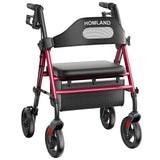
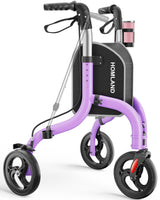
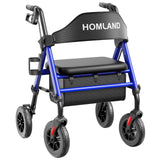
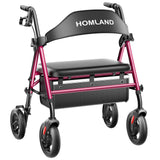
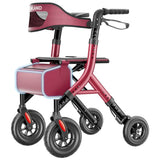
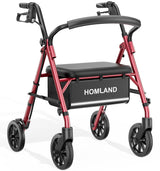
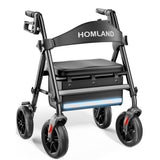
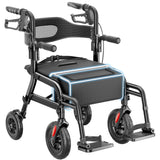
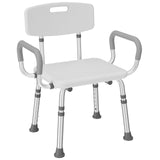
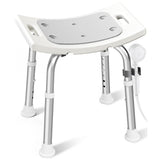
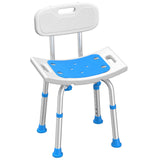
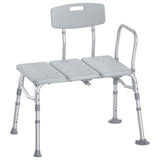
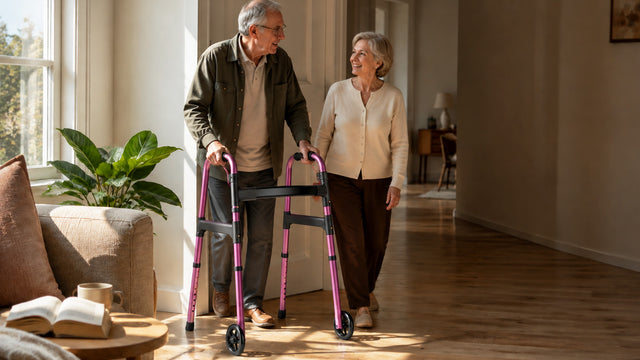
An upright walker is a four-wheeled rolling walker with raised forearm supports and higher hand grips, so the user stands tall and leans on their forearms instead of hunching over low handles. It offers steady support and better posture, and usually adds hand brakes and a built-in seat for resting along the way.
In short: a rolling walker that lets you stand up straight and lean on your forearms, so walking feels taller, steadier, and easier on the back.
What Is an Upright Walker?
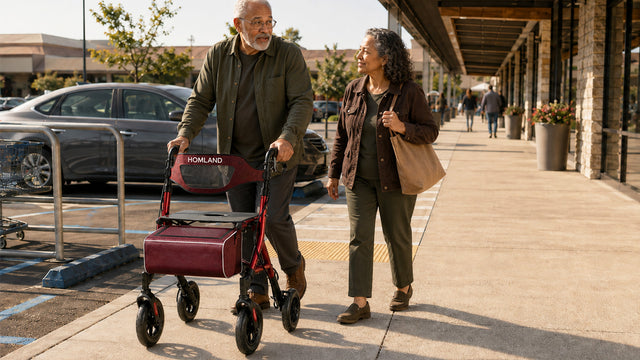
An upright walker is a wheeled walking frame built around one simple idea: keeping the user upright. Instead of low grips that pull a person into a hunched, head-down posture, it has padded armrests at about elbow height and taller handles to grip. The person rests their forearms on the pads and walks tall, with their eyes forward and their weight supported through the arms.
Because it rolls on four wheels and has hand brakes, an upright walker moves smoothly across the floor without being lifted. Most models fold for transport and include a seat, so the user can pause and rest whenever they tire.
That upright posture is the main thing that sets it apart from other walking aids. It can ease the strain a low, stooped walker often puts on the back, neck, and wrists, and it helps the user see where they are going rather than staring at the floor.
Who Is It For and When Is It Used?
An upright walker is a good fit for someone who:
- Can walk on their own but wants more stability and a taller, more comfortable posture.
- Finds a standard walker or rollator leaves them hunched, or bothers their back, wrists, or shoulders.
- Wants to stay active around the house and neighborhood while keeping their head up and their confidence high.
For a caregiver, an upright walker can mean a parent walks with better posture and less fatigue, so getting across the room or out to the mailbox feels less like a chore. It keeps the user on their feet and in charge of their own day, which is exactly the kind of everyday independence that matters most at home.
Upright Walker vs Rollator vs Standard Walker: What’s the Difference?
People often weigh these three against each other. Here’s the short version:
| Upright Walker | Rollator | Standard Walker | |
|---|---|---|---|
| Support point | Forearms on raised pads | Hands on lower grips | Hands on a fixed frame |
| Posture | Stand tall, head up | Slight forward lean | Often hunched forward |
| Wheels | Four wheels, rolls | Four (or three) wheels, rolls | No wheels, or two front wheels; lifted |
| Seat | Usually has a seat | Built-in seat | No seat |
| Best for | Steady walkers wanting upright posture and comfort | Steady walkers wanting stability and rest | People who lean their full weight on the frame |
The simple guide: if a standard walker or rollator leaves the user stooped and sore, an upright walker’s forearm supports can help them walk tall. If they need to lean their whole weight on the frame for balance, a standard walker may be the safer choice.
How to Choose an Upright Walker
A few things worth checking before you buy:
- 1Armrest and handle height. The forearm pads should sit at a comfortable elbow height so the user stands tall without shrugging their shoulders. Look for adjustable-height supports.
- 2Wheel size. Larger wheels roll more easily over thresholds and outdoor ground; smaller wheels turn tightly indoors.
- 3Brakes and seat. Reliable hand brakes and a padded seat make resting and stopping safe and easy.
- 4Foldability and weight. A lighter, foldable frame is easier to lift into a car or tuck into a hallway.
- 5Sturdiness. For heavier users, choose a reinforced, heavy-duty or bariatric model built for extra support rather than focusing on a single number.
HOMLAND upright and rolling walkers are engineered for tool-free assembly and adjustable heights, and are FSA/HSA eligible, backed by a US local warehouse for fast delivery and a manufacturer warranty — so choosing one is low-risk.
Frequently Asked Questions
An upright walker is a four-wheeled rolling walker with raised forearm supports and higher grips, so the user stands tall and leans on their forearms instead of hunching over low handles. It usually adds hand brakes and a seat, and helps with posture, comfort, and steadier walking.
Both roll on wheels and have brakes, but an upright walker has raised forearm pads so the user stands tall and leans on their forearms. A rollator uses lower hand grips, which can pull the user into a slight forward lean. Upright walkers suit people who want better posture and less strain on the back and wrists.
For many people, yes. By supporting the forearms at elbow height, an upright walker encourages a taller, head-up posture instead of the hunched position a low walker can cause. That can ease strain on the back, neck, and wrists, though the right fit and adjustment matter.
Most upright walkers include a built-in seat, so the user can pause and rest whenever they tire. Always set the hand brakes to lock the wheels before sitting down or standing back up.