
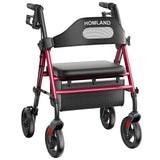
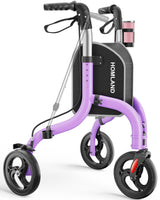
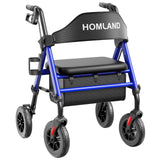
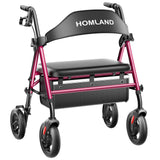
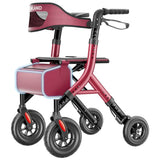
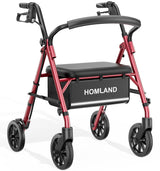
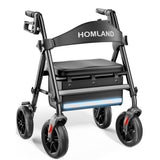
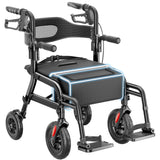
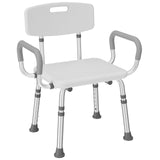
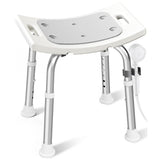
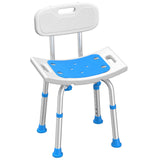
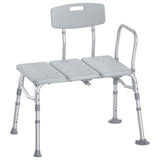
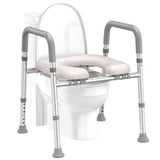
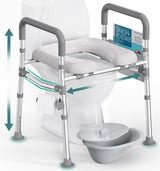
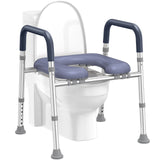
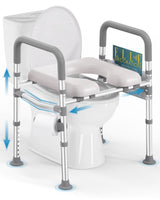
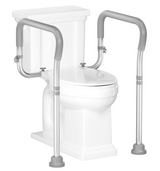
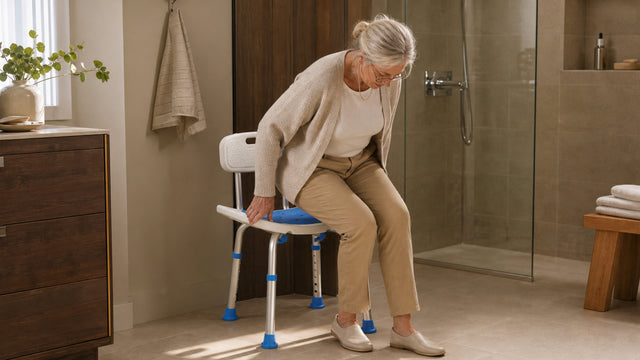



Weight capacity is the maximum weight a piece of equipment is designed to support safely. For home-care aids like walkers, shower chairs, and commodes, it tells you whether a product is strong enough for the person using it — a key safety detail that helps you choose the right level of support, from standard to heavy-duty and bariatric.
In short: weight capacity is how much a product is built to hold, and matching it to the user is one of the most important safety checks when choosing an aid.
What Is Weight Capacity?
Weight capacity is a simple idea with a big impact on safety. Every walker, shower chair, grab bar, or commode is engineered to support a person up to a certain point. That point is its weight capacity — the level the manufacturer has tested the product to hold reliably during normal use.
Think of it as a promise about strength. Below that level, the frame stays steady and secure when someone leans on it, sits down, or pushes up to stand. Choosing a product whose capacity comfortably covers the user is what keeps that promise true day after day, in the moments that matter most — stepping into the shower, rising from the toilet, or steadying a walk down the hall.
Capacity is also why the same type of product comes in different builds. A standard model suits average use, while a reinforced, heavy-duty or bariatric model is built to support a larger person. Rather than fixating on a single figure, it helps to think in these categories: standard for typical use, heavy-duty or bariatric when extra strength and room are needed.
Who Is It For and When Is It Used?
Weight capacity matters to anyone choosing a mobility or bathroom-safety aid, but it’s especially worth thinking about when:
- The user is larger than average and needs a frame built for extra support.
- The product will bear a person’s full weight, as a grab bar, transfer bench, or commode often does.
- You want the reassurance that an aid is genuinely matched to the person, not just close enough.
For the person using the equipment, the right capacity is what lets them lean in without hesitation. Confidence in the aid is confidence in themselves — and that sense of security is part of staying independent at home.
For a caregiver shopping for a parent or loved one, checking capacity is one of the simplest ways to buy well the first time. Picking a model that comfortably covers the user’s needs — and choosing a heavy-duty or bariatric build when in doubt — means the aid feels solid and safe from day one.
How to Choose the Right Weight Capacity
A few practical pointers:
- 1Give yourself margin. Choose a product whose capacity comfortably exceeds the user’s needs rather than sitting right at the edge.
- 2Think in categories. Standard models suit average use; reinforced, heavy-duty and bariatric models are built for larger users and extra sturdiness.
- 3Match capacity to the job. Aids that take a person’s full weight — grab bars, transfer benches, commodes — deserve extra attention to how strong and stable they are.
- 4Consider width too. A larger user often needs both a stronger frame and a roomier seat or base, which is exactly what bariatric designs provide.
- 5When unsure, size up. A sturdier build costs little in comfort and adds a real margin of safety.
HOMLAND builds its equipment with sturdiness in mind and offers heavy-duty and bariatric options across many ranges, so it’s easy to match the right level of support to the person using it.
Frequently Asked Questions
Weight capacity is the maximum weight a product is designed to support safely. For home-care equipment, it tells you whether an aid is strong enough for the person using it. Choosing a capacity that comfortably covers the user keeps the aid steady and secure in everyday use.
It matters because an aid is only safe if it's genuinely strong enough for the person leaning on it. The right capacity keeps a walker, chair, or commode stable when someone sits, stands, or steadies themselves — which is central to preventing slips and staying confident at home.
Pick a product whose capacity comfortably exceeds the user's needs rather than one that sits right at the limit. Think in categories: standard models for average use, and reinforced heavy-duty or bariatric models for larger users. When you're unsure, sizing up to a sturdier build adds a helpful margin of safety.
Heavy-duty and bariatric describe equipment built with reinforced frames and, often, wider seats or bases to support larger users. Choosing one of these is usually a better approach than searching for a single number — the category itself signals extra strength and room.