

You or someone you love has been told a walker would help — and the first question that comes to mind is a practical one: will Medicare pay for this? The good news is yes, in many situations. The less-simple news is that Medicare has specific rules, and knowing them in advance can save you real money and a lot of frustration.
This guide walks you through everything that matters: which walker types qualify, exactly what documentation your doctor needs to write, how to find the right supplier, and what your out-of-pocket costs will actually look like. Whether you're planning ahead after a recent diagnosis, recovering from surgery, or helping a parent stay safely independent at home, you'll leave this page knowing exactly where you stand — and what your next step is.
Does Medicare Cover Walkers?
Yes — Medicare Part B covers walkers, including rollators, when they are medically necessary for use at home. Walkers fall under what Medicare calls durable medical equipment, or DME: reusable devices prescribed by a doctor to help manage a medical condition in a home setting. Coverage is not automatic, but for most people with a documented mobility limitation, a walker is among the more straightforward items to get approved.
The coverage sits under Medicare Part B (Medical Insurance), which is the part of Original Medicare that handles outpatient services and home medical equipment. Once you've met your annual Part B deductible and your claim is approved, Medicare pays 80% of the approved amount and you cover the remaining 20%. If you're enrolled in a Medicare Advantage plan (Part C) instead of Original Medicare, your plan is required to cover walkers at the same level — though the exact cost-sharing and supplier rules may differ.
Which Types of Walkers Does Medicare Cover?
Medicare recognizes several walker categories, each tied to a specific clinical need. Physical therapists often recommend one type over another depending on a person's balance, strength, and stamina — which is why having the right documentation from your provider matters so much.
- Standard walkers (no wheels): A basic aluminum frame with four rubber-tipped legs. Ideal for people who need significant weight-bearing support and can lift the frame slightly with each step. These are the most straightforward to get approved.
- Two-wheel walkers: Standard frames with wheels on the two front legs. Good for people who have enough strength to control forward movement but benefit from a gliding motion rather than full lifting.
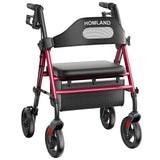
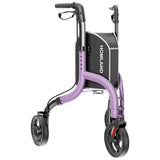
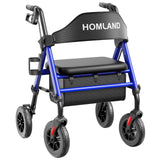
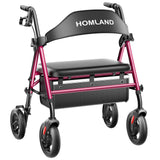
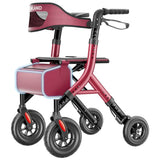
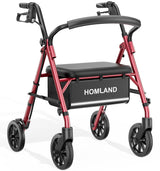
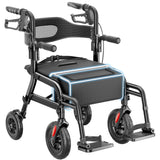
- Four-wheel rollators (with seat and brakes): These offer a built-in seat for rest breaks, hand brakes, and a storage pouch — features that make a real difference for someone managing a condition like COPD or Parkinson's. Medicare covers rollators, but your doctor must clearly explain in the prescription why a standard walker isn't sufficient for your needs.
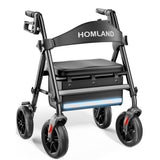
- Heavy-duty walkers: Covered when the same eligibility criteria are met and the user weighs more than 300 lbs. HOMLAND's rolling walker collection includes bariatric models built to support up to 500 lbs — engineered for full confidence, not just minimum compliance.
- Specialty walkers: Forearm (platform) walkers and knee walkers may be covered when a specific medical condition — such as restricted hand use or post-surgical lower-leg recovery — makes a standard design impractical.
Medicare generally covers the most basic model that meets your clinical need. If you choose a walker with upgraded features beyond what's medically required, you pay the difference. Accessories like storage bags, trays, and tennis-ball gliders typically fall outside Medicare coverage, but can be paid for using FSA or HSA funds — more on that below.
Eligibility Requirements: What You Need to Qualify
Four conditions must all be met before Medicare will approve coverage for a walker. Missing even one of them is the most common reason claims are denied, so it's worth understanding each one clearly.
- Medical necessity documented by your doctor — Your provider must confirm that you have a mobility limitation that meaningfully affects your ability to do everyday activities at home — things like getting to the bathroom, preparing meals, getting out of bed, or bathing. Saying you feel "a little unsteady" isn't enough; the documentation needs a specific diagnosis code and a clear explanation of how your mobility deficit affects daily function.
- A written prescription (Standard Written Order) — Your doctor must issue a formal written order that includes your name, their NPI number, the specific type of walker needed, the quantity, the date, and their signature. Verbal prescriptions are not accepted. Physical therapists often play a role here: a DPT assessment can provide exactly the kind of functional documentation Medicare looks for.
- Home use as the primary purpose — Medicare covers walkers for use inside the home. Even if you intend to use yours at the grocery store or on walks around the neighborhood, Medicare's evaluation is based entirely on your mobility needs within your home environment.
- A Medicare-enrolled supplier who accepts assignment — This one surprises many people. You cannot simply buy a walker from any store or online retailer and expect Medicare to reimburse you. The supplier must be enrolled in Medicare and must agree to accept Medicare's approved pricing. If they don't, you may be responsible for the full cost.
A quick note for caregivers: if you're helping a parent or spouse navigate this process, the most valuable thing you can do is prepare for the doctor's appointment in advance. Write down specific examples of how their mobility affects daily life at home — "she can't get from the bedroom to the bathroom without holding the wall" is far more useful to a provider than "she has trouble walking." That specificity is what drives approval.
Step-by-Step: How to Get a Walker Through Medicare
- Talk to your doctor or physical therapist — Start with a face-to-face appointment. Bring notes about your specific mobility challenges at home. If you've had recent falls, surgeries, or a new diagnosis, share those details. The more concrete the picture your provider gets, the stronger the documentation they can write.
- Get a written prescription — Your provider issues a Standard Written Order specifying the type of walker you need and why. If a rollator is recommended rather than a standard walker, the prescription should state clearly why the simpler option isn't sufficient for your condition.
- Find a Medicare-enrolled DME supplier — Use the official Medicare supplier directory at Medicare.gov, or call 1-800-633-4227, to find an enrolled supplier near you. Always ask upfront whether they accept assignment — that means they agree to Medicare's approved price as full payment, so your only cost is the 20% coinsurance after your deductible.
- Submit your paperwork — Your supplier will typically handle the claim submission. Provide them with your prescription, Medicare card, and any supporting documentation your doctor prepared. Keep copies of everything for your records.
- Receive and verify your walker — Once approved, you'll receive your walker through the supplier. Confirm the model is what was prescribed and keep your delivery documentation. You'll need this if you ever appeal a denial or request a replacement.
If your claim is denied, don't assume that's the final word. Many Medicare DME denials are successfully overturned on appeal, especially when the original denial was due to incomplete or vague documentation. Your supplier can often help you understand the reason and resubmit with additional information from your doctor.
What Medicare Actually Pays — and What You Owe
Here's the honest picture of costs. After you meet your annual Part B deductible (set at $257 in 2025), Medicare pays 80% of the Medicare-approved amount for your walker, and you pay the remaining 20%. One important nuance: the Medicare-approved amount is not the same as the retail price. Medicare sets its own fee schedule, and many rollators retail higher than what Medicare approves — but if your supplier accepts assignment, they agree to take the Medicare-approved amount as full payment, meaning you're protected from extra charges.
If you haven't yet met your Part B deductible for the year, that amount comes out of pocket first. For most people, walkers are relatively affordable (many basic models cost under $100), so the deductible may actually exceed the cost of the walker itself. In that case, your out-of-pocket cost could be the full price of the walker rather than 20%. If you have a Medigap (Medicare Supplement) plan, it may cover some or all of the 20% coinsurance — Medigap Plans G and F are among the most comprehensive for this.
Medicare Advantage and Medigap: What Changes?
If you're enrolled in a Medicare Advantage plan (Part C) rather than Original Medicare, your plan must cover walkers at least as well as Original Medicare does. However, Medicare Advantage plans operate their own supplier networks, may require prior authorization before you receive the equipment, and can have different cost-sharing structures — a flat copay instead of 20% coinsurance, for example. Always check your plan's Evidence of Coverage document or call your plan directly before ordering. Network restrictions are the most common source of surprises: buying from a supplier outside your plan's network can significantly increase your costs.
What Medicare Does Not Cover
Knowing what's excluded is just as important as knowing what's included. Medicare does not cover:
- Powered or motorized walkers — these don't meet Medicare's definition of durable medical equipment
- Luxury or cosmetic upgrades — if you choose a walker with features beyond what your doctor prescribed as medically necessary, you pay the difference
- Accessories without a medical function — storage bags, decorative add-ons, and glider pads are generally not covered (though FSA/HSA funds can be used)
- Walkers intended primarily for outdoor or recreational use — Medicare evaluates coverage based on home function only
- Equipment from non-enrolled suppliers — purchasing from a retailer that isn't enrolled in Medicare results in no reimbursement, regardless of the quality of the product
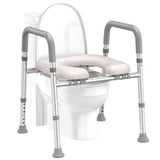
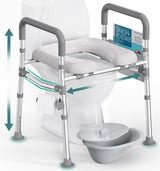
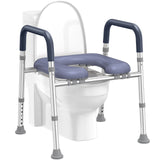
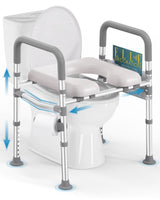
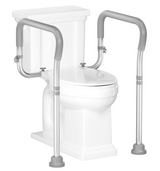
It's also worth noting that bathroom safety aids like grab bars, shower chairs, and toilet safety rails typically fall outside Medicare's DME definition — even though they play an enormous role in preventing falls at home. If you or a loved one needs that kind of support alongside a walker, those products are excellent candidates for FSA or HSA spending. HOMLAND's full home safety product lineup — including shower chairs and toilet safety rails — is FSA/HSA eligible, DPT-authorized, and designed to work alongside your walker as part of a complete independence plan at home.
Walker Replacement and Repairs Under Medicare
Medicare generally covers walker replacement every five years, provided your medical need still exists and the walker can no longer be safely used. The five-year clock starts from your original delivery date. Before that window closes, Medicare may cover repairs when the cost of repair is reasonable compared to replacement. If your walker is lost, stolen, or damaged beyond repair before five years are up, early replacement can be approved — but you'll need updated documentation from your doctor confirming that medical necessity still applies.
One important clarification: the five-year rule doesn't mean replacement is automatic at year five. Age alone doesn't qualify a device for replacement. The walker must genuinely be non-functional or unsafe, and your doctor must confirm that you still need it. If your current walker is still working well, Medicare won't approve a new one simply because time has passed. Any Medicare-approved supplier can also handle repairs to a walker you already own — including replacement of worn parts.
When Medicare Falls Short: The FSA/HSA Path
Here's something many people don't realize: even if Medicare denies a walker claim, or if you want a specific model that isn't available through a Medicare-enrolled supplier, you have a strong alternative. Walkers are fully FSA and HSA eligible under IRS Code Section 213(d). That means you can use pre-tax dollars from your Flexible Spending Account or Health Savings Account to purchase any walker that serves a medical purpose — no prescription required for reimbursement, and no supplier enrollment rules to navigate.
This is particularly useful when you want a higher-quality rollator than a basic covered model, when you need accessories like a walker bag or knee scooter for post-surgical recovery, or when your Medicare claim hits a paperwork snag and you can't wait. HOMLAND's rolling walker collection and standard walker collection are both FSA/HSA eligible, with fast delivery from a US local warehouse so you're not waiting weeks for something you need now. Every walker is backed by a 1-year manufacturer warranty plus a 1-year extended warranty — genuine peace of mind for you and for the family member who helped you choose it.
If you're recovering from a procedure and need lower-leg support specifically, HOMLAND's knee scooters are also FSA/HSA eligible and designed for exactly that kind of short-term, high-mobility recovery need. And for nighttime safety around the bed, bed rails offer that extra point of contact that makes getting up at 2 a.m. feel secure rather than risky.
Common Reasons Medicare Denies Walker Claims
Understanding why claims get denied is one of the most practical things you can do before starting the process. The most frequent causes are:
- Vague or incomplete documentation — "patient has balance issues" is not enough; the record needs specific functional deficits, a diagnosis code, and how the walker addresses them
- Supplier not enrolled in Medicare — buying from a non-enrolled retailer, including many popular online stores, means no coverage regardless of the product
- Equipment deemed not medically necessary — if the clinical notes don't paint a clear picture of daily function being impaired, the claim may be categorized as a convenience item
- Prescription missing required elements — the Standard Written Order must include the doctor's NPI number, the specific equipment type, quantity, date, and signature; any missing field can cause a denial
- Requesting a rollator when a standard walker hasn't been justified — Medicare follows a hierarchical approach; if your documentation doesn't explain why the simpler option won't work, the more advanced model may be denied
If you receive a denial, ask your supplier for the specific reason. In many cases, a letter from your doctor with additional detail — or a corrected prescription — is enough to reverse it on appeal. Don't let a first denial feel like a final answer.
Frequently Asked Questions
Does Medicare cover rollators (four-wheel walkers with seats)?
Yes. Medicare Part B covers rollators when they are medically necessary. However, because rollators are more advanced than standard walkers, your doctor's prescription must explain why a simpler walker isn't sufficient — for example, because you need rest breaks during movement due to a cardiopulmonary condition, or because you need greater stability than a standard frame provides.
Do I need a prescription to get a walker through Medicare?
Yes. Medicare requires a written Standard Written Order from a Medicare-enrolled provider. The prescription must specify your diagnosis, the type of walker needed, the quantity, and the doctor's signature. Verbal orders are not accepted.
Can I buy a walker online and get Medicare reimbursement?
Only if the online seller is a Medicare-enrolled DMEPOS supplier and accepts assignment. Most major e-commerce platforms and general retailers do not meet this requirement, so purchasing from them typically means no Medicare reimbursement. However, those purchases can still be paid for with FSA or HSA funds.
How often will Medicare replace my walker?
Medicare generally covers replacement every five years from the date of delivery, provided the walker is no longer functional and your medical need still exists. Early replacement may be approved if the walker is lost, stolen, or damaged beyond repair before the five-year mark.
What if I want a walker that Medicare won't cover?
You can purchase any walker directly and pay using FSA or HSA funds — no Medicare enrollment required. Walkers are fully FSA/HSA eligible under IRS guidelines, making it easy to access quality equipment with pre-tax dollars even when Medicare coverage doesn't apply.
Does Medicare cover bariatric walkers?
Yes. Medicare covers heavy-duty walkers for people who weigh more than 300 lbs and meet the standard eligibility criteria. The clinical requirements are the same — documented mobility limitation, written prescription, and a Medicare-enrolled supplier.
The Bottom Line
A walker isn't just a piece of equipment — it's what lets someone get from the bedroom to the kitchen on their own, join the family at the dinner table, or step outside on a good-weather morning without needing help. Medicare recognizes that, and for most people with a documented mobility need, walker coverage under Part B is genuinely accessible.
The key is preparation: a clear, specific prescription from your provider, a Medicare-enrolled supplier who accepts assignment, and documentation that ties your mobility limitation to your daily life at home. When the process works, Medicare covers 80% of the approved cost. When it doesn't — or when you want more choice than a Medicare-approved supplier offers — FSA and HSA funds provide a clean, flexible path to the equipment that actually fits your life.
HOMLAND's walking aids are designed for exactly this: real people living at home, moving with confidence, without feeling like they've traded independence for safety. Every product is FSA/HSA eligible, authorized by licensed Doctors of Physical Therapy, backed by a 1-year manufacturer warranty plus 1-year extended warranty, and ships from a US local warehouse so you get what you need without a long wait.
Ready to Find the Right Walker?
Browse HOMLAND's full range of rolling walkers and standard walkers — all FSA/HSA eligible, DPT-authorized, and built for life at home, not in a hospital. Have a question about which model is right for your situation? Contact us and we'll help you find the best fit.