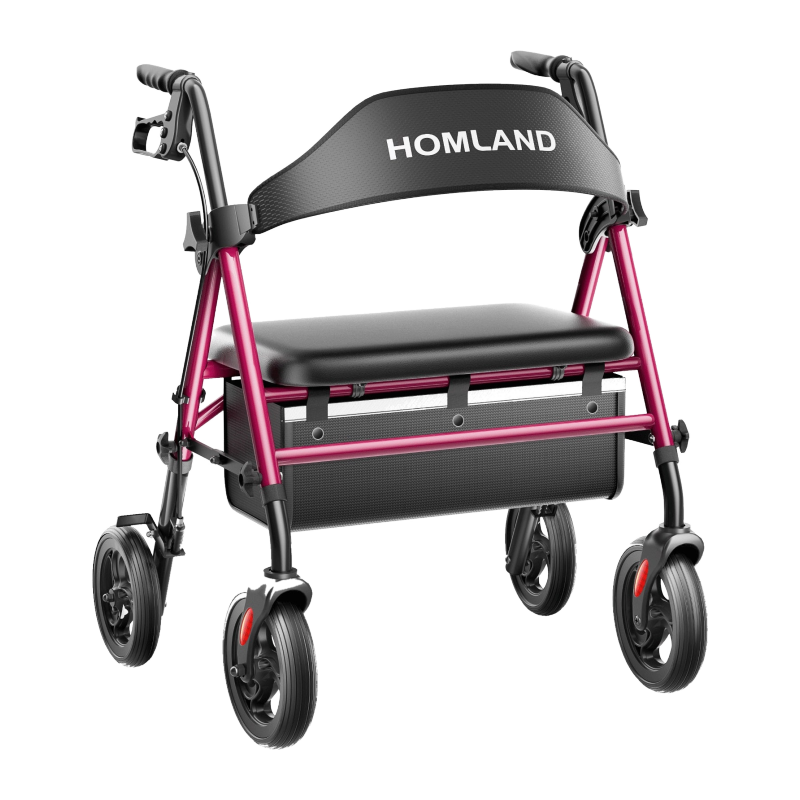
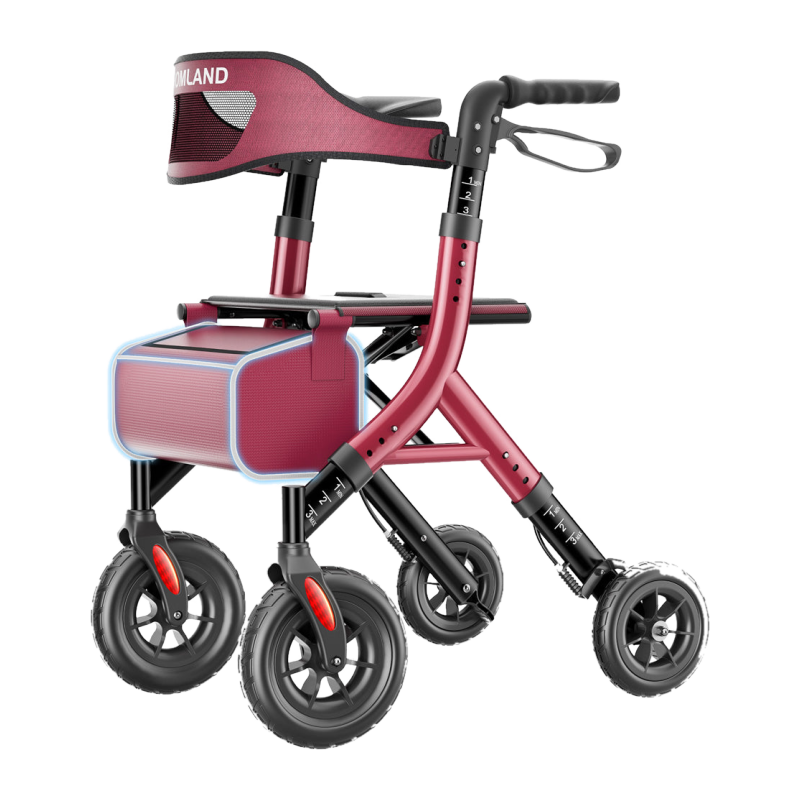
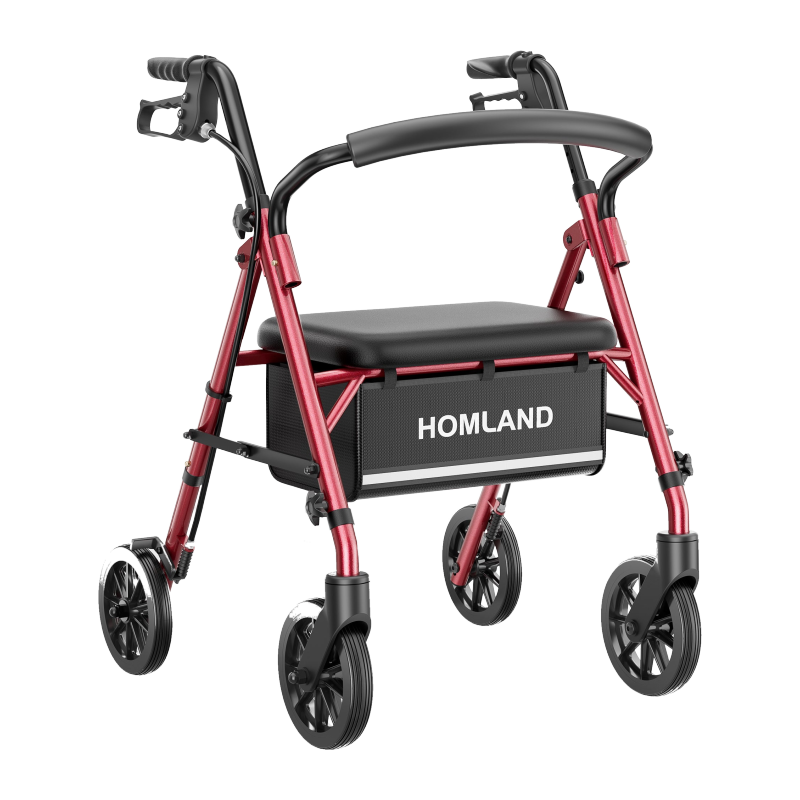




Imagine waking up at 3 a.m. after a knee replacement, needing to get to the bathroom in the dark. There's nothing to push against, nothing steady to hold. That moment — uncertain and a little vulnerable — is exactly what a well-chosen bed rail is designed to prevent. With the right support in place, it becomes a simple, confident movement instead of a stressful one.
Bed rails for seniors are one of the most practical and effective tools for staying safe and independent at home. Whether you're recovering from surgery, managing a condition that affects balance, or simply want the reassurance of a solid handhold when getting in and out of bed, a bed rail can give you back the ease of movement that makes mornings feel manageable again. For families and caregivers, it offers something equally valuable: peace of mind.
This guide covers everything you need to make a confident, safe choice — from understanding the different types of bed rails and the safety certifications that matter, to step-by-step installation tips and the features physical therapists most recommend. HOMLAND bed rails are FSA/HSA eligible, backed by a 2-year total warranty (1-year manufacturer + 1-year extended), and ship from a US local warehouse for fast delivery — so you can get set up quickly and comfortably at home.
Best Bed Rails for Seniors
Safety features, ASTM standards & step-by-step installation — everything you need for confident, independent living at home.
📌 5 Key Takeaways
Verify ASTM F3186-17 Compliance First
The CPSC mandatory standard (16 CFR Part 1270) is the single most important factor before any other feature — it directly addresses entrapment hazards.
Match Rail Type to Actual Need
Transfer support and roll-out prevention are different needs requiring different rail designs. Choosing the wrong type creates risk rather than reducing it.
Gaps Are the Primary Danger
After installation, run your hand along every contact point between rail, mattress, and frame. No gap should be large enough to trap a head, neck, or torso.
Soft Mattresses Require Extra Care
If the mattress edge compresses more than ~2 inches under hand pressure, choose rails with floor-contact support legs to maintain a safe, gap-free fit.
Maintenance Is Ongoing, Not One-Time
Check for loosening weekly, inspect for new gaps monthly, and re-do the full install check after any mattress change or bedding swap.
📊 Safety By the Numbers
🛏️ 5 Types of Bed Rails Explained
Bed Assist Handles
Compact grab point for sitting up and transferring. Lowest entrapment risk. Best starting point for most home users needing transfer support.
Half Rails with Support Legs
Floor-contact legs add stability independent of mattress firmness. Combines transfer support with partial nighttime barrier protection.
Adjustable-Length Rails
Extends for nighttime barrier, shortens for daytime use. Ideal when needs may change during recovery. Look for a clear locking mechanism.
Fold-Down (Swing-Down) Rails
Pivots outward for full caregiver access during bathing or repositioning. Best when caregivers need frequent, unobstructed bedside access.
Dual-Sided Rails
Crossbar connects both sides under the mattress. Best for active sleepers or beds positioned away from the wall.
🔧 Step-by-Step Installation
Read Instructions Fully First
Every model has specific strap routing, positioning, and tightening sequences. Confirm mattress thickness compatibility before opening the box.
Position the Rail at the Head
Align roughly one pillow-width from the top of the mattress — the optimal grab point for sitting up and swinging legs over the side.
Slide the Base Under the Mattress
Push the flat base board fully under the mattress so it lies flat. Fully extend the side flap between mattress and box spring.
Attach and Cinch the Safety Strap
Route the retention strap around a solid structural frame point — not fabric or a slippery cover. Cinch firmly to prevent the rail pulling away during use.
Adjust Height for the User
Set the handle top so it's comfortably reachable from a side-lying position — high enough for real leverage, not so high it creates an awkward angle.
Check Gaps + Perform Stability Test
Run your hand along all contact zones — no gap wide enough to trap a head or torso. Then apply firm lateral pressure from multiple angles. Rail must not shift or wobble.
⚠️ When NOT to Use a Bed Rail
Consult a clinician before purchasing if any of these apply
- Dementia or significant cognitive impairment — confused users may attempt to climb over the rail or become entangled trying to exit
- Very restless or active sleepers — unpredictable repositioning increases the chance of a limb slipping into a gap; use a non-barrier assist handle instead
- Small-framed or particularly frail individuals — standard rail gap dimensions may not be safe; a clinician should assess fit
- Adjustable / power bases — most standard portable rails are incompatible; frame movement can create dangerous gaps
✅ Must-Have Safety Features Checklist
Find the Right Rail for Your Home
HOMLAND bed rails are DPT-authorized, FSA/HSA eligible, and backed by a 2-year total warranty — with fast shipping from a US warehouse.
What Is a Bed Rail (and What It Isn't)?
A bed rail is a support bar or rail that attaches to the side of a bed, giving users something sturdy to hold, push against, or lean on when sitting up, rolling over, or transferring in and out of bed. They come in many sizes and styles — from compact grab handles to longer half-rails that provide both transfer support and a gentle roll-out barrier at night.
It's worth clarifying one important distinction: a bed assist handle (also called a bed assist rail or grab bar) is primarily a transfer tool, helping you leverage yourself up and down with confidence. A half rail or full-length rail is a barrier product — it sits along more of the mattress length to prevent rolling out during sleep. These two categories serve different needs and carry different risk profiles, which is why matching the right product to the right situation matters so much.
What a bed rail is not is a restraint device. It should never be used to prevent someone from getting out of bed against their will or ability. Used correctly — with the right person, the right bed, and the right fit — a bed rail is a tool for independence, not confinement.
Who Benefits Most from a Bed Rail
Bed rails are not just for frail or fully dependent individuals. In fact, they're most useful for people who are mostly independent but need a reliable anchor point during transitional movements. Think of someone who is physically capable of getting up but lacks the core strength or balance to do it smoothly without support — that person benefits enormously from a well-positioned rail.
Physical therapists often recommend bed rails for individuals in the following situations:
- Post-surgery recovery — hip replacement, knee surgery, or spinal procedures that temporarily limit mobility and core engagement
- Balance or dizziness conditions — including Parkinson's disease, post-stroke weakness, or medication-related vertigo
- Chronic fatigue or muscle weakness — conditions like multiple sclerosis, fibromyalgia, or general age-related muscle loss (sarcopenia)
- Nighttime safety concerns — anyone who tends to roll toward the edge of the bed or who moves around a lot during sleep
- High beds — when the distance from the mattress to the floor makes getting up or lying down feel precarious
For adult children or caregivers, a bed rail also reduces the physical assistance needed for daily transfers — preserving both the user's dignity and the caregiver's back. That mutual benefit is part of what makes it such a practical investment for the home.
Safety Standards: What to Look for Before You Buy
Before anything else — weight capacity, price, or design — the most important thing to check is whether a bed rail meets the current federal safety standard. This isn't a minor technical detail; it's the line between a product that has been independently tested for known hazards and one that has not.
In July 2023, the U.S. Consumer Product Safety Commission (CPSC) issued a mandatory safety standard for adult portable bed rails: 16 CFR Part 1270, which incorporates ASTM F3186-17 as its performance benchmark. This standard went into effect for all bed rails manufactured after September 2023. It establishes specific requirements for resistance to entrapment across four identified risk zones, structural integrity, labeling, and retention system performance. Only buy a bed rail that explicitly states compliance with ASTM F3186-17 — and verify recall status at CPSC.gov before purchasing.
Entrapment — where a person becomes caught between the rail, mattress, or bed frame — is the primary documented hazard with adult portable bed rails. The CPSC identified 284 entrapment deaths involving these products between January 2003 and December 2021. The mandatory standard was designed specifically to address these entrapment zones and reduce that risk for future products. This is why buying a recently manufactured, compliant rail from a reputable brand matters so much.
Types of Bed Rails for Seniors
The world of bed rails is broader than most people expect. Here's a breakdown of the main styles, what each one does well, and who it suits best.
Bed Assist Handles
Compact and low-profile, these are the safest and most versatile option for most home users. They attach to the side of the bed (usually by sliding under the mattress or anchoring to the frame) and provide a solid grab point for sitting up, swinging legs over the side, and standing. Because they don't function as a barrier, they carry a lower entrapment risk than longer rail styles. Physical therapists often recommend starting here, especially for users who primarily need transfer support rather than roll-out prevention.
Half Rails with Support Legs
These rails tuck under the mattress and have legs that reach down to the floor, giving them extra stability that doesn't rely solely on mattress weight. They provide a partial barrier along one section of the bed's side — useful for nighttime protection and transfer support in one product. The floor-contact legs mean they perform well even on softer mattresses where a legless rail might shift. These are a good middle-ground choice when both support and some roll-out protection are needed.
Adjustable-Length Rails
These rails can be lengthened or shortened after installation, making them flexible enough to serve as a daytime transfer handle and a longer nighttime barrier — without needing to buy two separate products. If your loved one's needs are likely to change during recovery or over time, an adjustable-length rail is worth the slightly higher investment. Look for models with a clear locking mechanism that holds the extended position securely.
Fold-Down (Swing-Down) Rails
Designed with caregivers in mind, fold-down rails pivot outward and down to give full bedside access for dressing, bathing assistance, or repositioning. When raised, they provide a protective barrier. These work best when there is enough floor clearance beside the bed for the rail to swing outward. They're a smart choice when a caregiver regularly needs quick, unobstructed access.
Dual-Sided Rails
For beds positioned away from the wall, dual rails protect both open sides simultaneously. They're typically connected by a crossbar that runs beneath the mattress, holding both sides in place. If your loved one tends to roll or move actively during sleep, and the bed sits in the middle of the room, dual-sided protection makes sense.
Key Safety Features to Prioritize
Once you've identified the right type, these are the specific features that separate a genuinely safe, well-made rail from one that merely looks the part.
ASTM F3186-17 Certification
As covered above, this is non-negotiable. Look for an explicit statement on the product listing or packaging that the rail has been tested to and complies with ASTM F3186-17. Don't assume — verify. Rails manufactured before September 2023 may still be in circulation without meeting this standard.
Appropriate Weight Capacity
Most standard home bed rails support up to 300 lbs, and some models go higher. Choose a rail that comfortably exceeds the user's weight — not one that just barely meets it. The extra margin matters when someone leans heavily on the rail during a difficult transfer. For users over 300 lbs, look for rails specifically rated for bariatric use.
Adjustable Height
Rail height needs to match the user's bed and body. A rail positioned too low doesn't provide useful leverage; one set too high creates an awkward and potentially unsafe transfer angle. Look for models with multiple height adjustment positions — ideally tool-free — so the fit can be fine-tuned without needing help every time.
Non-Slip, Foam-Padded Grips
Grip quality matters most in the morning when hands may be stiff, or at night when the user is groggy. Soft foam padding over a firm frame gives comfortable traction without being slippery. For users with arthritis or reduced hand strength, wider grips and ergonomically curved handles make a meaningful difference.
Secure Retention System
The way a rail attaches to the bed is as important as the rail itself. Safety straps that anchor under the mattress and around the frame keep the rail from shifting during use — a common failure point on lower-quality products. Check that the strap system is sturdy and that the rail doesn't wobble or pull away from the mattress once installed.
Mattress Compatibility
Not every rail works with every mattress. Very soft or thick memory foam mattresses compress in a way that can create dangerous gaps between the mattress edge and the rail. Many manufacturers provide a rated mattress thickness range — always confirm the rail you're buying is compatible with your specific mattress depth and firmness. A good rule of thumb: if the mattress edge compresses more than about 2 inches under light hand pressure, it may be too soft for certain rail designs.
How to Choose the Right Bed Rail
With so many options available, narrowing the choice comes down to answering a few practical questions in order. Work through these before you shop:
- What is the primary need? — Transfer support (getting in and out of bed), roll-out prevention during sleep, or both? If it's purely transfer support, a compact assist handle is the safest and simplest choice. Roll-out prevention requires a longer barrier rail.
- What type of bed is in use? — Standard home bed with a box spring, a platform bed, or an adjustable/power bed? Many standard rails are not compatible with adjustable bases, so confirm this explicitly before buying.
- Where is the bed positioned? — Against a wall, or in the middle of the room? A wall-side bed typically needs only one rail on the open side. A bed in the middle of the room may need dual-sided protection.
- What is the user's weight? — Always choose a rail rated well above the user's actual weight for comfortable, confident support.
- How thick is the mattress? — Confirm the rail's rated mattress thickness range covers your mattress depth.
- Will a caregiver need regular bedside access? — If yes, a fold-down or swing-away design makes daily care much smoother.
If you're unsure where to start, consulting a physical therapist before purchasing is always a good idea. A DPT can assess the user's specific mobility pattern, bed height, and transfer mechanics to recommend the right category and configuration — reducing the trial-and-error that can make the process frustrating.
You can explore HOMLAND's full range of bed rails, all engineered with tool-free assembly, adjustable heights, and heavy-duty load capacities to suit a wide range of home setups.
Step-by-Step Installation Tips
Proper installation is where safety is either made or lost. A high-quality rail installed incorrectly can be more dangerous than no rail at all — gaps between the rail and the mattress, or a rail that shifts under pressure, create exactly the hazard these products are meant to prevent. Here's how to get it right.
Before You Start
- Read the manufacturer's instructions fully before touching the hardware. Every rail model has specific requirements — strap routing, positioning, tightening sequence — and skipping ahead creates problems.
- Confirm the rail's rated mattress thickness range matches your mattress before you open the box. Many rails are non-returnable once opened.
- Gather any tools listed in the instructions. Many modern rails are designed for tool-free setup, but some use a simple screwdriver or wrench for the initial frame attachment.
The Installation Process
- Position the rail correctly — Align the rail near the head of the bed, roughly one pillow-width from the top of the mattress. This places the grab point where it's most useful for sitting up and swinging legs over the side.
- Slide the base under the mattress — For under-mattress style rails, slide the flat support board or base section completely under the mattress so it lies flat. Ensure the side flap, if present, is fully extended between the mattress and box spring.
- Attach the safety strap — Route the retention strap around the bed frame according to the instructions and cinch it firmly. The strap should pull against a solid structural point on the frame, not just around fabric or a slippery cover. This step prevents the rail from pulling away from the bed during use.
- Adjust the height — With the rail in position, adjust it so the top of the handle is comfortably reachable for the user when lying on their side. It should be high enough to provide real leverage but not so high that it creates an awkward angle.
- Check for gaps — Run your hand along the entire contact zone between the rail, mattress, and bed frame. There should be no gap wide enough to trap a head, neck, or torso. This is the single most important safety check after installation.
- Perform a stability test — Apply firm lateral pressure to the rail from multiple angles, mimicking how a person would actually lean on it. The rail should not shift, wobble, or pull away from the mattress. If it moves, re-secure the strap and re-check the base positioning before use.
Ongoing Safety Checks and Maintenance
Installation is not a one-time event. Bed rails can shift, loosen, and develop gaps over time — especially if the mattress is soft and compresses with regular use, or if the user applies significant daily pressure to the rail. Building a simple maintenance habit protects against hazards that develop gradually.
- Weekly check: Gently shake and press on the rail to confirm it hasn't loosened. Re-tighten the strap if there is any give.
- Monthly check: Slide your hand along the mattress-to-rail gap to confirm no new gaps have opened. Check all contact points, especially after changing bed linens.
- After any mattress change: Re-measure compatibility and re-do the full installation check. New mattresses — especially softer ones — change the gap geometry significantly.
- Check for recall status: Periodically check CPSC.gov/Recalls and the manufacturer's website to confirm the rail model has not been recalled. This is particularly important for rails that have been in use for more than a year.
- Inspect for wear: Look for signs of rust, cracks, fraying straps, or loose welds. Replace any rail showing structural wear rather than attempting to repair it.
When a Bed Rail May Not Be the Right Fit
A bed rail is a powerful tool for the right person in the right situation. But for some individuals, it can increase risk rather than reduce it. Physical therapists and occupational therapists identify several situations where a bed rail is not the appropriate solution.
Dementia or significant cognitive impairment is the most important contraindication. Someone who is confused at night may not understand the rail's purpose, may attempt to climb over it, or may become entangled in an attempt to exit the bed. In these situations, safer alternatives include lowering the bed as close to the floor as possible, using cushioned floor mats on the exit side, and consulting with the care team about bed-exit alarms.
Very restless or active sleepers are also at higher risk with barrier-type rails. If someone repositions unpredictably throughout the night, the chance of a limb slipping into a gap increases substantially. For these users, a bed assist handle (with no barrier function) is safer than any half or full rail.
Small-framed or particularly frail individuals may be able to fit through gaps that would stop a larger person — making standard rail designs potentially less safe for them. A clinician familiar with their specific measurements and mobility can help identify whether a standard rail configuration is appropriate.
If any of these situations apply to your loved one, the right answer is a different solution — not a different rail. Speaking with the user's physician, physical therapist, or home health clinician before purchasing is always the wisest first step when there is any uncertainty.
Frequently Asked Questions
Are bed rails FSA or HSA eligible?
Yes — many bed rails qualify as FSA/HSA eligible purchases when used for a qualifying medical purpose. HOMLAND bed rails are FSA/HSA eligible, which means you may be able to use pre-tax dollars to offset the cost. Check with your FSA/HSA administrator to confirm eligibility under your specific plan.
Do bed rails work with adjustable beds?
Most standard portable bed rails are not compatible with adjustable or power bases, because the moving bed frame can cause the rail to shift or create dangerous gaps as the angle changes. If you have an adjustable bed, look for rails specifically engineered and rated for that bed type, and confirm compatibility with the manufacturer before purchasing.
How do I know if my mattress is too soft for a bed rail?
A widely used check is the "fist test": press on the edge of the mattress with roughly 10–12 lbs of hand pressure. If the edge compresses more than about 2 inches, the mattress may be too soft to maintain a safe, gap-free fit with most standard rails. Very soft, air, and certain memory foam mattresses carry a higher entrapment risk with barrier-type rails. When in doubt, choose a rail design with floor-contact support legs — they reduce dependence on mattress firmness for stability.
Can two people use a bed rail on the same bed?
Yes, if both sides of the bed need support — for example, when the bed sits in the middle of the room — dual-sided rails are available. These connect via a crossbar under the mattress to secure both sides simultaneously. Alternatively, two individual rails can be installed on each side, provided both fit correctly and are individually secured to the frame.
How long does bed rail installation take?
For most modern home bed rails with a tool-free design, installation takes 5 to 15 minutes once you've read the instructions. Models with additional support legs or strap anchors may take slightly longer for the initial setup. After the first installation, adjustments and re-checks are typically quick — just a few minutes per week.
Should I consult a doctor or physical therapist before buying a bed rail?
If there's any uncertainty about whether a rail is the right choice for your loved one — particularly if they have cognitive impairment, significant frailty, or complex mobility needs — yes, consulting a physical therapist or physician first is well worth it. A DPT can assess bed height, transfer mechanics, and risk factors to recommend the safest configuration for that specific person and home environment.
The Right Rail Changes Everything
Getting in and out of bed shouldn't be something to dread. With the right bed rail in the right position, it becomes a smooth, confident movement that sets a positive tone for the rest of the day — and makes the night feel safer too. Whether you're setting up your own bedroom for greater independence or helping a parent feel more secure at home, the key is choosing a product that fits the person, the bed, and the situation — not just the lowest price tag.
Look for ASTM F3186-17 compliance, an appropriate weight capacity, adjustable height, and a secure retention system. Install it carefully, check it regularly, and don't hesitate to bring a physical therapist into the conversation if the need is complex. Independence at home is worth getting right.
HOMLAND's bed rails are authorized by licensed Doctors of Physical Therapy, built with tool-free assembly for fast setup, and backed by a 2-year total warranty so you can shop with confidence. They ship from a US local warehouse for quick delivery — because the right safety setup shouldn't have to wait. Explore HOMLAND's complete bed rail collection and browse all home mobility products designed to help you live life on your own terms — home, not hospital.
Need Help Finding the Right Bed Rail?
Our team is here to help you find the best fit for your home, your bed, and your needs. HOMLAND products are FSA/HSA eligible, covered by a 2-year total warranty, and ship fast from our US warehouse.
Contact Us — We're Happy to Help