



Getting up at 2 a.m. to use the bathroom is something most people do without a second thought. But for someone recovering from hip surgery, managing limited mobility, or simply finding that longer walks in the dark are no longer as steady as they used to be, that same trip can feel genuinely daunting. A bedside commode changes that equation completely — bringing the bathroom to wherever you are, so nighttime and daytime routines feel safe, private, and entirely your own.
This guide covers everything you need to choose the best bedside commode for your situation. Whether you're shopping for yourself or for a parent you care about, you'll find honest guidance on types, comfort features, portability, ease of cleaning, and what physical therapists look for when recommending one. HOMLAND commodes are FSA/HSA eligible, backed by a 1-year manufacturer warranty plus 1-year extended warranty, and ship from a US local warehouse so you're not waiting weeks for something you need now.
What Is a Bedside Commode?
A bedside commode — sometimes called a commode chair or portable toilet chair — is a freestanding, non-plumbed seat that can be placed anywhere in your home. It looks similar to a chair, with a sturdy frame, armrests, a toilet seat, and a removable bucket underneath that's emptied after each use. Unlike a raised toilet seat, which stays attached to your existing toilet, a commode can live right next to your bed, in a living room, or wherever it's needed most. It requires no installation, no plumbing, and no renovation.
The concept is straightforward, but the difference it makes in daily life is significant. Physical therapists often recommend bedside commodes specifically because they reduce the distance and effort required to reach the bathroom — especially at night, when lighting is low, floors can be slippery, and the urgency is real. For anyone who values staying independent at home rather than relying on a caregiver for every bathroom trip, a well-chosen commode is a genuine game-changer.
Who Benefits from a Bedside Commode?
Bedside commodes support a wide range of people — not just those with long-term conditions, but anyone going through a period where getting to the bathroom safely is harder than usual. Think about the weeks after a knee or hip replacement, when every step requires thought and the last thing you need is a fall on the way to the bathroom at midnight. Or consider someone managing a condition that affects bladder control, where reaching the toilet in time can feel like a race against the clock.
People who tend to benefit most include:
- Older adults who find nighttime bathroom trips are becoming riskier or more tiring
- Post-surgery recovery patients — particularly after hip, knee, or spinal procedures — where walking is temporarily restricted
- Those with balance or fall risk concerns, where any unnecessary walking at night raises safety questions
- People managing incontinence who need quick, nearby access at any hour
- Individuals with limited mobility due to a stroke, neurological condition, or chronic illness
For caregivers, a bedside commode also reduces the number of nighttime assists needed — meaning better sleep and less strain for everyone in the household. It's one of those additions to the home that quietly, consistently makes daily life easier for both the person using it and the people who love them.
Types of Bedside Commodes Explained
Not every commode is built the same way, and the right type depends on how you plan to use it, how much space you have, and what level of mobility the user has. Here's a clear breakdown of the main options.
Standard (Stationary) Commode
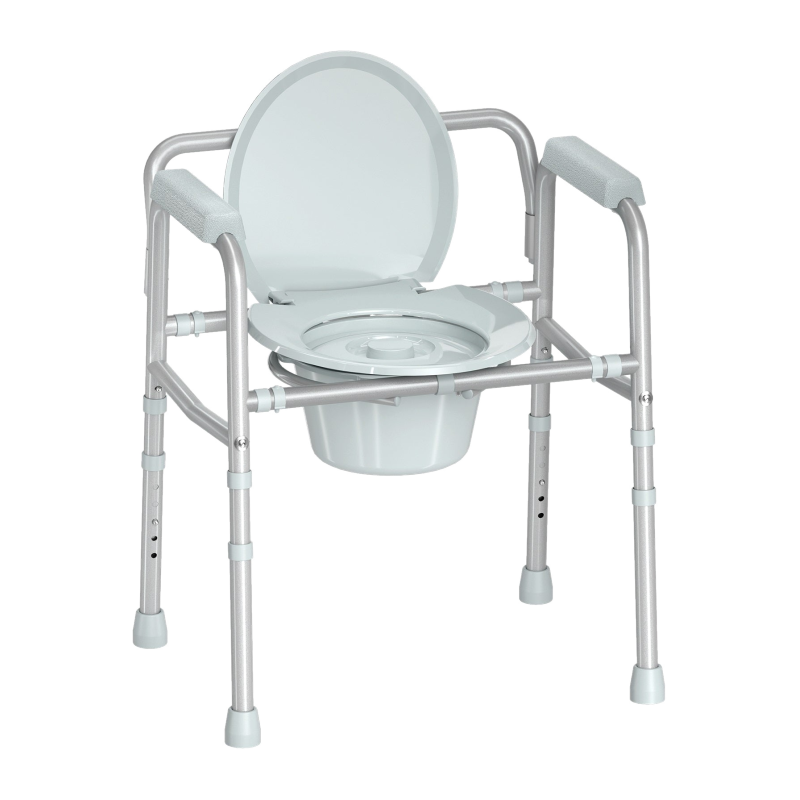
The most widely used type — a four-legged frame with a removable bucket, armrests, and a toilet seat. It sits firmly in place and is carried when you want to relocate it. Standard commodes are practical, easy to use, and well-suited to most adults who need reliable bedside access. They're an especially good fit for post-surgery recovery or long-term home use.
3-in-1 Commode
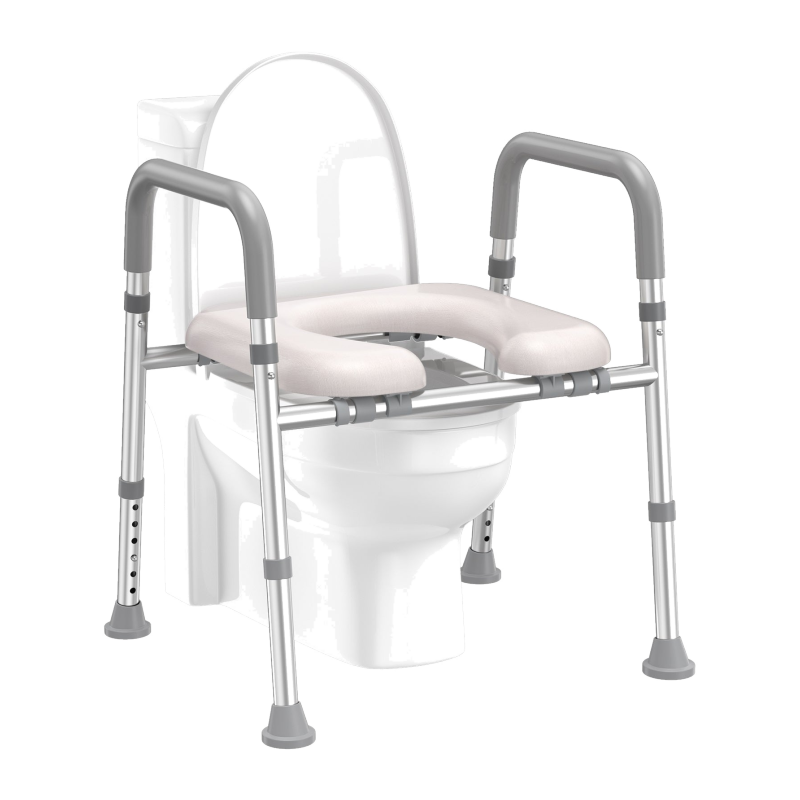
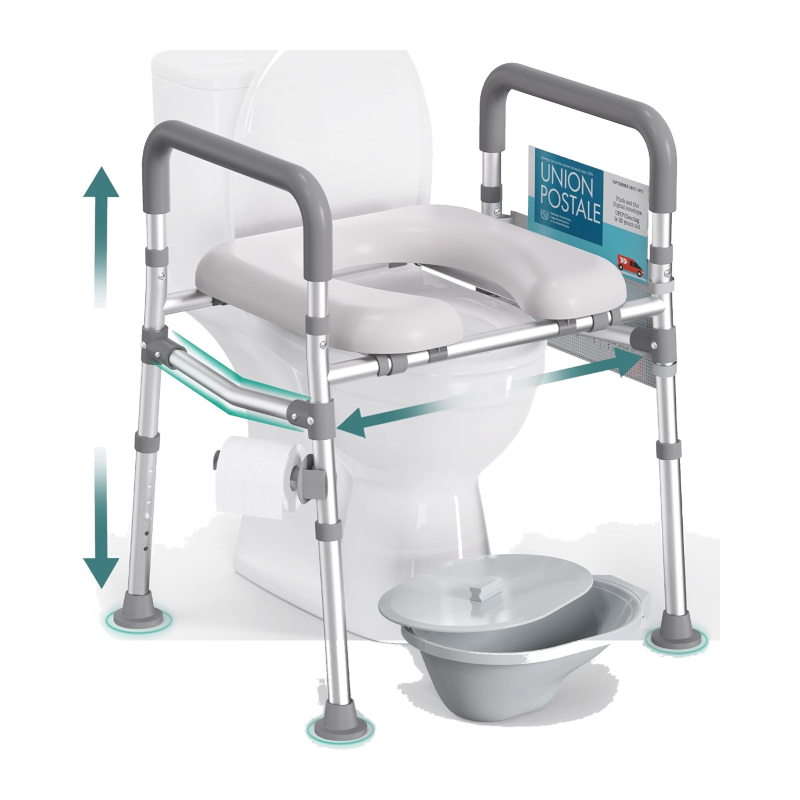
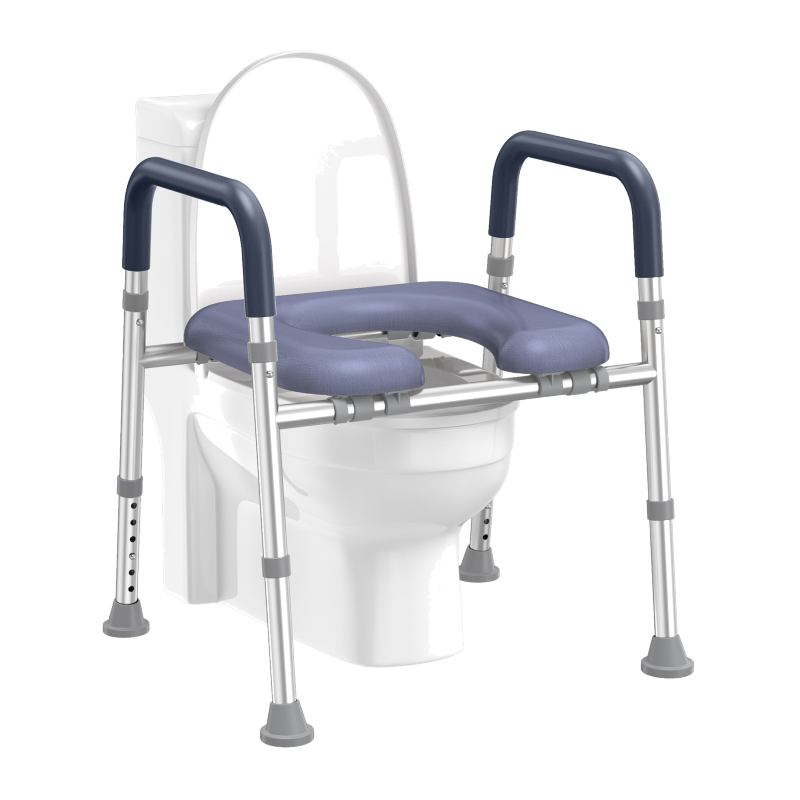
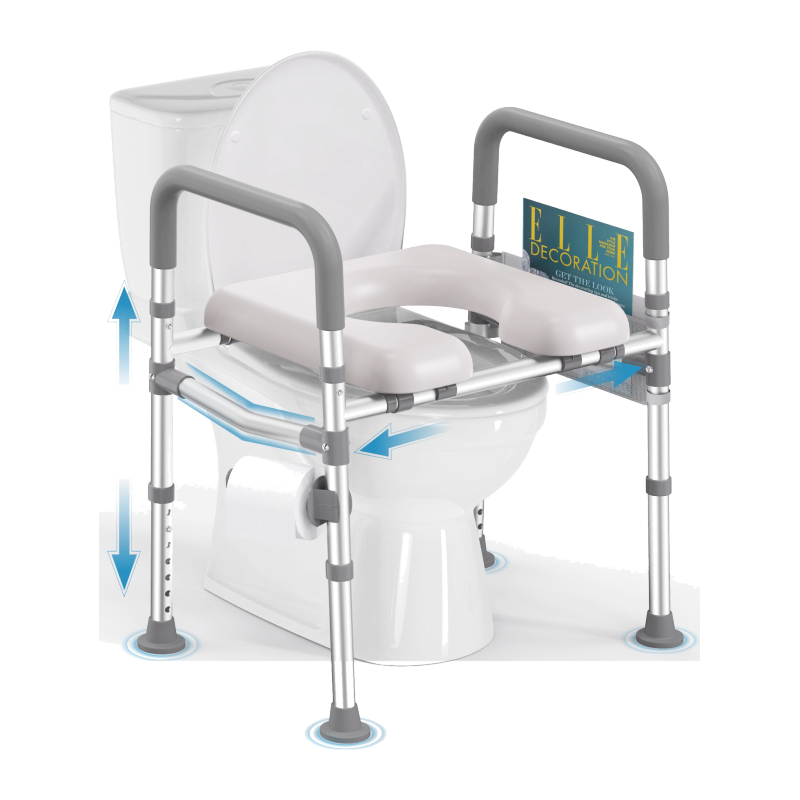
The most versatile choice on the market. A 3-in-1 commode can work as a standalone bedside toilet with its bucket in place, slide over your existing toilet to function as a raised seat, or serve as a safety frame for added support when standing and sitting. If your needs will evolve — for example, if you only need a commode short-term after surgery but want to keep it as a toilet safety aid afterward — a 3-in-1 is the most cost-effective and space-efficient option. HOMLAND's full product range includes 3-in-1 models engineered for exactly this kind of adaptability.
Drop-Arm Commode
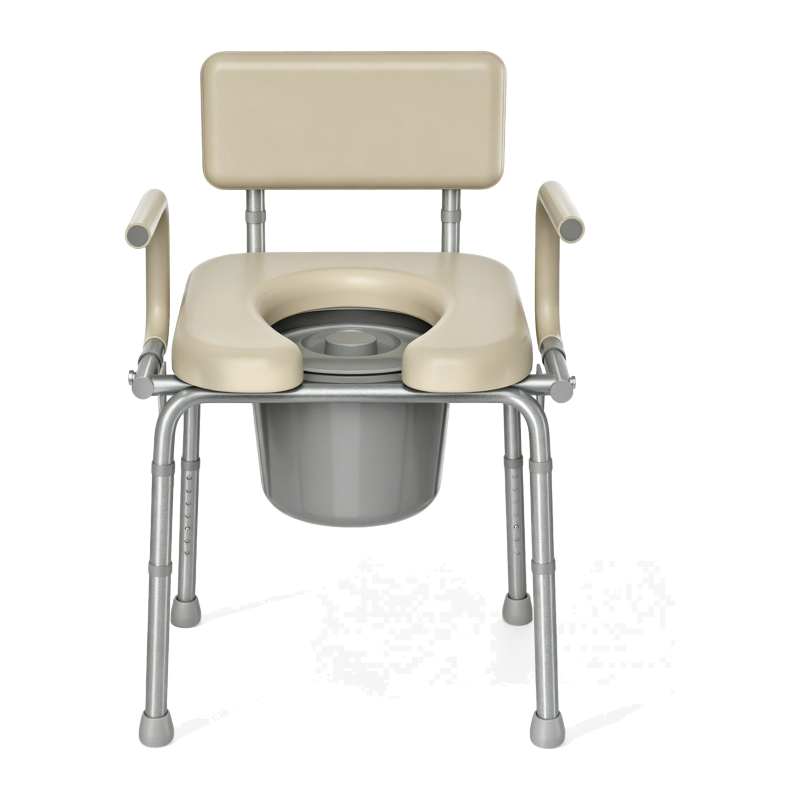
Designed specifically for users who transfer laterally — from a wheelchair, a bed, or another seated position. The armrests on a drop-arm commode fold down or swing out of the way, creating a clear path for a sideways transfer without having to stand fully first. Physical therapists frequently recommend this style for users who cannot easily push themselves to a standing position before sitting. It provides the armrest support when needed, then gets out of the way when you're transferring.
Padded Commode
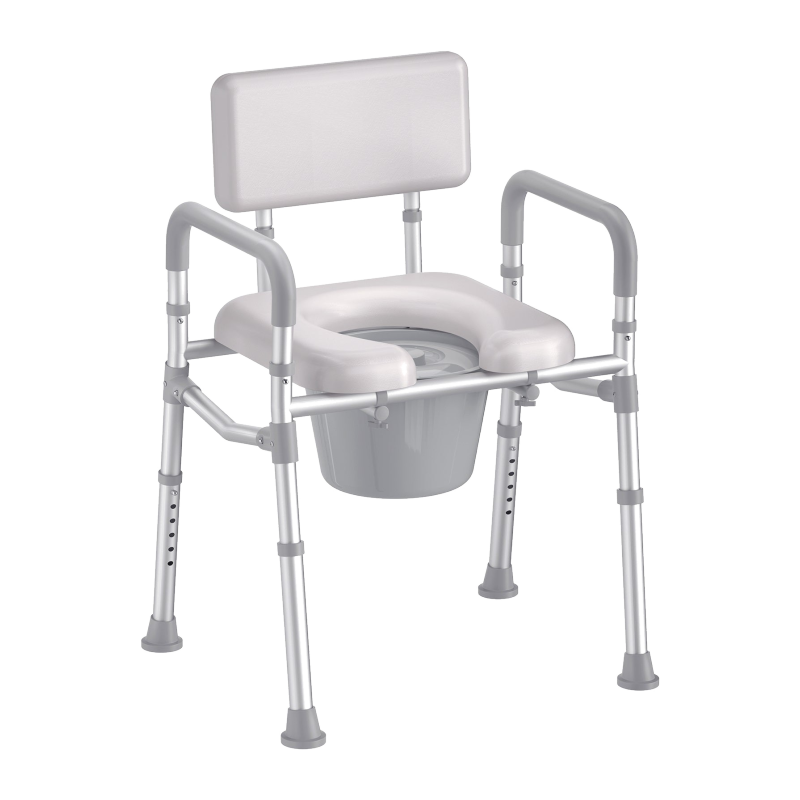
A padded commode adds cushioning to the seat — and sometimes the armrests — using vinyl or foam materials. For users who spend more time seated, have thinner build, or are prone to pressure discomfort, that extra layer of cushion makes a noticeable difference. Good-quality padded commodes use non-absorbent materials that wipe clean just as easily as a hard seat, so you're not trading hygiene for comfort.
Bariatric Commode
Built with reinforced frames, wider seats, and higher weight capacities — typically starting at 300 lbs and going up to 500 lbs or beyond on select models. Bariatric commodes prioritize stability above all else, and many combine their heavy-duty construction with useful features like drop arms or padded seats. If you're near the upper end of a standard commode's rated weight capacity, stepping up to a bariatric model is simply the safer choice, regardless of comfort preferences.
Folding Commode
A folding commode collapses to a compact size for storage or travel. It's lighter than a standard model and a sensible pick for someone who needs occasional bedside access — for instance, when staying at a relative's home — without committing to a permanent fixture. Folding designs generally have a slightly lower weight limit than standard models, so always check the capacity before buying.
Key Features to Look for Before You Buy
Once you've identified the type of commode that fits your situation, these are the specific features that separate a great daily-use commode from one that just gets the job done passably.
Weight Capacity
Always start here. A standard commode typically supports up to 300 lbs, while heavy-duty models can handle from 350 lbs to 500 lbs or more. Choosing a commode rated comfortably above the user's weight — rather than right at the limit — gives you a meaningful margin of structural safety. Lean in, shift your weight, get up in a hurry: a well-rated frame handles all of it without flex or instability.
Adjustable Height
Seat height is one of the most important factors for both safety and comfort. Physical therapists recommend setting the commode so the user can sit with feet flat on the floor and knees at roughly hip level — not dangling, and not squatting deeply. Being able to adjust the leg height means you can dial in that position precisely, rather than working around a fixed seat that's slightly off. If the user has recently had hip surgery, the seat may need to be set a little higher than usual to avoid bending past 90 degrees at the hip.
Armrest Design
Armrests do double duty: they give you something to hold while lowering yourself down, and they're what you push against to stand back up. Look for armrests that are at a comfortable height for the user, and consider whether drop-arm functionality would help with transfers. Padded armrests add comfort for users who spend extended time on the commode or who have sensitive skin on their forearms.
Non-Slip Feet
Rubber-tipped legs grip the floor so the commode doesn't shift as the user sits down or stands up. This is a small detail with a significant safety payoff — especially on hard floors or tile surfaces. Check that all four feet are adjustable to the same height so the commode sits perfectly level.
Seat Shape and Opening
Commode seats come in standard oval shapes and elongated designs. Elongated seats tend to offer more support and are easier to use for hygiene purposes, which is why physical therapists often favor them for users who need a little more room. Open-front seat designs make cleaning after use easier, though they may offer slightly less support for users with limited lower-body control. Also check the width of the seat opening — it should suit the user's body size comfortably without being too narrow or so wide that it provides insufficient support.
Comfort: More Than Just a Padded Seat
Comfort on a commode isn't only about the softness of the seat. It's about the whole experience — being able to sit down without strain, staying stable while seated, and getting back up without a significant physical effort. A commode that's positioned at the wrong height, or that wobbles slightly underfoot, introduces stress and hesitation into a routine that should feel completely natural.
For users with sensitive skin, thinner builds, or prolonged periods of sitting, a padded seat is genuinely worth it. High-quality vinyl padding is non-absorbent, easy to wipe down, and warm to the touch compared to bare plastic — especially appreciated at 3 a.m. For users recovering from surgery around the hip or tailbone, that cushioning can also reduce pressure on healing tissue.
Beyond the seat itself, consider back support. Many commodes include a removable backrest, and for users who benefit from lumbar support or who feel more secure with something behind them, that backrest can be the difference between using the commode confidently and feeling unsure. A commode that lets users customize their setup — height, armrests, backrest — is ultimately a more comfortable one, because comfort is personal. Explore the full range of HOMLAND home-care products designed with this kind of adjustability in mind.
Portability: Moving Through Your Home on Your Terms
One of the biggest advantages of a bedside commode over a bathroom modification is that it goes where you go. Need it in the bedroom at night but want it out of sight during the day? A folding model stores in a closet in seconds. Visiting family for the weekend? A lightweight folding commode travels with you. Spending recovery time in the living room instead of the bedroom? Move the commode there without asking anyone for help.
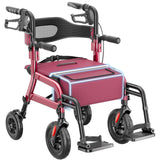
When evaluating portability, consider both weight and fold design. Aluminum-frame commodes are the lightest option — durable enough for daily use but easy to carry from room to room. Steel frames are heavier but offer greater rigidity, which makes them the preferred material for bariatric users or anyone who prioritizes maximum stability over ease of moving. For users who need to be transported on the commode itself — for example, moved from bed to bathroom with caregiver assistance — a wheeled rolling commode with locking casters is a practical solution. You might also consider pairing a commode with HOMLAND's bed rails so that getting from the bed to the commode is itself a safer, more supported transition.
Tool-free assembly also matters more than people often expect. A commode that assembles in under five minutes — with push-pin leg adjustments and a snap-on seat — means you can set it up the moment it arrives, without waiting for a handyperson or digging through a toolbox. HOMLAND designs all its products with tool-free assembly as a standard, not an upgrade.
Ease of Cleaning: Keeping It Simple Every Day
Here's an honest truth: the best commode in the world is the one that actually gets cleaned regularly. If cleaning is a complicated, time-consuming process, it simply won't happen as consistently as it should — which creates hygiene issues and odor buildup over time. Choosing a commode that's genuinely easy to clean isn't just a convenience; it's a hygiene and health decision.
Look for these design features that make cleaning straightforward:
- Removable bucket with a handle and lid — allows you to carry it to the toilet, empty it hygienically, and return it without mess or spillage
- Smooth interior bucket surfaces — reduce the chance of waste sticking, making a quick rinse with a toilet brush and disinfectant all that's needed
- Splash guard — a barrier between the seat opening and the bucket that helps contain mess, especially when the commode is used over a toilet
- Clip-on or snap-on seat — lifts off completely for thorough cleaning under and around the hinges, where buildup tends to happen
- Smooth frame surfaces — wipe down easily with a disinfectant cloth; avoid frames with excessive crevices that trap moisture
Commode liners (also called commode bags) are one of the most underrated accessories in daily commode care. They fit inside the bucket and allow you to simply lift the liner out, seal it, and throw it away — no rinsing required. Some liners include deodorizing agents, which make a significant difference to the comfort of the room between cleanings. Adding a small amount of water to the empty bucket before use also helps waste slide out cleanly when it's time to empty. For users managing their own hygiene independently, liners make the whole process much more self-sufficient and dignified.
For routine frame and seat disinfection, a mild household disinfectant on a cloth works well. Use a non-abrasive cleaner on plastic buckets, since harsh bleach solutions can cause cracking over time. Wiping down the seat, armrests, and frame daily takes about two minutes and keeps the commode genuinely clean — not just visually tidy. If you also use a toilet safety rail in your bathroom, the same daily wipe-down routine applies there too.
Setup and Placement Tips for Safe, Confident Use
Getting the most from a bedside commode is as much about placement as it is about the commode itself. A few thoughtful setup choices make the difference between a commode that becomes a natural part of daily routine and one that feels awkward every time.
- Clear the path. Position the commode so there's an unobstructed route from the bed — no rugs to trip on, no furniture edges to navigate around. The goal is that someone can reach the commode in the dark without having to think about obstacles.
- Set the height correctly first. Before the first use, adjust the legs so the user can sit with feet flat on the floor and knees level with their hips. Everyone's proportions are different, and a two-minute height adjustment makes every subsequent use more comfortable and safer.
- Check that it's level. All four feet should sit firmly on the floor with no rocking. If the floor is uneven, adjust individual legs until the commode is stable.
- Keep supplies within reach. Toilet paper, wipes, or a commode liner bag should be within easy reach from the seat — ideally on a small table or shelf within arm's reach. Don't make the user stretch or twist to reach what they need.
- Place it beside the bed, not in front of it. A side placement allows the user to pivot from a sitting-up position in bed directly onto the commode, which is easier and safer than having to stand fully first.
If the person using the commode needs to stand from a very low bed, pairing the commode with a set of bed rails gives them a sturdy handhold for pushing up — reducing the effort required and lowering the risk of a fall during the transfer. A standard walker or rollator walker nearby also gives an extra point of stability for users who are still building strength or balance.
FSA/HSA Eligibility and What to Know Before Purchasing
Bedside commodes are generally eligible for reimbursement through Flexible Spending Accounts (FSA) and Health Savings Accounts (HSA), making them one of the smarter home-care investments you can make with pre-tax dollars. HOMLAND commodes carry FSA/HSA eligibility, so if you have a spending account balance to use, this is exactly the kind of purchase it's designed for — no extra cost, no paperwork complexity.
For seniors on Medicare, coverage may be available if a physician determines a commode is medically necessary due to an inability to use a standard toilet. In those cases, Medicare Part B typically covers a portion of the approved amount — check with your doctor and Medicare plan for specific details, since coverage terms vary. Regardless of how you pay, HOMLAND backs every commode with a 1-year manufacturer warranty plus a 1-year extended warranty, and ships from a US local warehouse so you receive it quickly. For caregivers researching on a timeline — a parent coming home from a procedure, a family member whose needs have recently changed — that fast delivery matters enormously.
Frequently Asked Questions
How do I know what height to set the commode?
The right height lets the user sit with both feet flat on the floor and their knees at roughly hip level. They should be able to lower themselves onto the seat with a controlled movement — not dropping down — and stand back up without having to rock or lurch forward. If you're unsure, start at the midpoint of the adjustment range and test from there. Post-hip surgery patients may need the seat set a little higher to avoid deep hip flexion during recovery.
Can a bedside commode be used over a regular toilet?
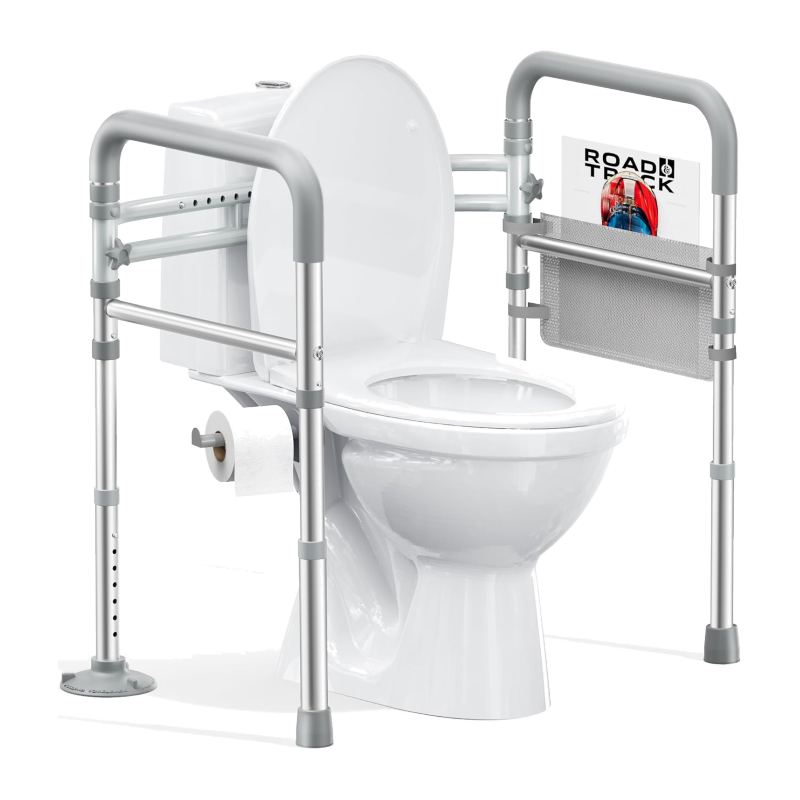
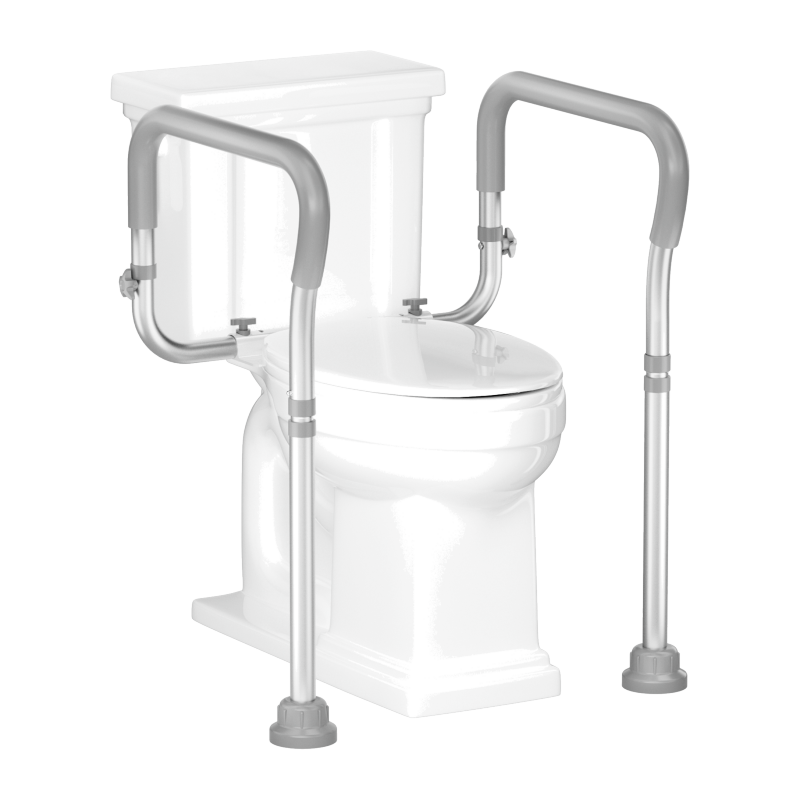
Yes — if you choose a 3-in-1 model. With the bucket removed and a splash guard installed in its place, the commode frame sits over the toilet and functions as both a raised seat and a safety support rail. This is a practical dual-use setup for people who need a bedside option at night but prefer to use the standard toilet during the day. Explore HOMLAND's toilet safety rail collection if a dedicated over-toilet support is what you're after.
How often should a commode bucket be cleaned?
After every use. Empty the bucket into a toilet, rinse it with water, and clean with a mild toilet cleaner or household disinfectant and a toilet brush. Wipe down the seat, armrests, and frame daily. Using commode liners between full cleanings makes the daily routine faster and much more hygienic — they eliminate direct contact with the bucket during disposal entirely.
What's the difference between a standard and bariatric commode?
Standard commodes typically support up to 300 lbs, while bariatric models are built for capacities of 350 lbs and above, with reinforced frames, wider seats, and heavier-gauge materials throughout. If you're near the upper range of a standard model's rating, choosing a bariatric model provides a meaningful safety margin — as well as more comfortable width for larger users.
Are bedside commodes safe for seniors living alone?
Yes, when set up correctly. Stable frames, non-slip rubber feet, and armrests at the right height allow most users to manage independently and safely. Physical therapists recommend placing the commode where there's enough clear space to approach from the side of the bed, and making sure the height is properly adjusted before first use. For additional bedroom safety, bed rails alongside the commode can provide an extra point of support during the bed-to-commode transfer.
The Right Commode Makes Home Feel Like Home
A bedside commode isn't a concession to limitation — it's a practical, thoughtful tool that lets people stay independent, sleep better, and move through their day on their own terms. Whether you're recovering from surgery, managing a long-term mobility challenge, or simply preparing your home so nighttime trips are safe rather than stressful, the right commode is the one that fits your life: the right height, the right weight capacity, genuinely easy to clean, and portable enough to go where you need it.
HOMLAND bedside commodes are designed and authorized by licensed Doctors of Physical Therapy, FSA/HSA eligible, and backed by a 2-year warranty total — giving you and your family complete confidence in the purchase. If you have questions about which model fits your situation best, the HOMLAND team is ready to help.
Ready to Find the Right Fit?
Browse HOMLAND's full range of home-care products — including bedside commodes, shower chairs, raised toilet seats, and more — all designed for independent living at home. Have a specific question? Our team is here to help you choose with confidence.
Contact Us Shop All Products