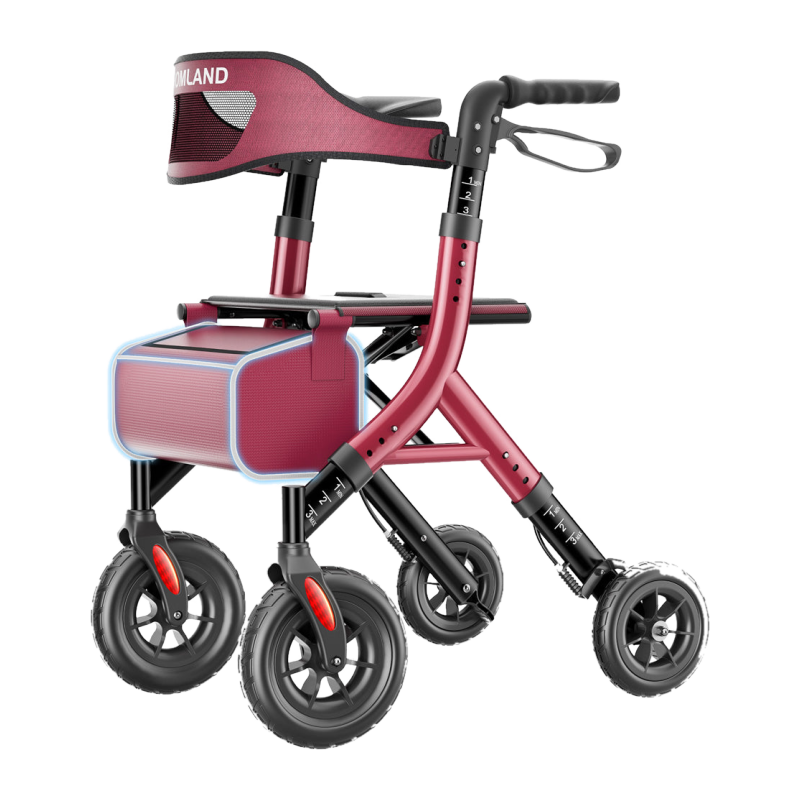

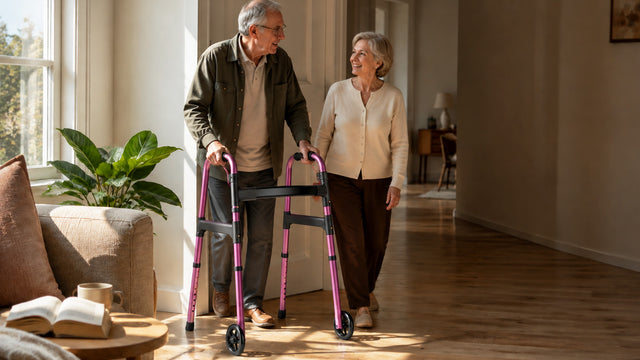

Ask anyone who has found the right rollator walker what surprised them most, and the answer is almost always the same: how quickly it gave me my life back. Not a medical device sitting in the corner. Not a reluctant compromise. A piece of equipment that made it possible to walk to the mailbox again, browse the farmers market without dreading the long stretch between benches, or move through the kitchen in the morning without holding the counter.
But ask those same people what they wish someone had told them before they bought, and you'll hear a very different set of answers. "The wheels were too small for the sidewalk outside my building." "The seat was too high — my feet dangled and I felt unstable every time I sat down." "It was heavier than I expected and I couldn't get it into the car alone." Real users — seniors, post-surgery recovery patients, adult children buying for a parent — consistently say the same thing: the spec sheet doesn't tell the whole story.
This guide does. Drawing on real user feedback, physical therapist guidance, and a close look at today's top models, we've built the most honest, practical rollator review available. Whether you're shopping for yourself or someone you love, you'll find everything you need here to choose with confidence — and none of the hospital-brochure language that makes this kind of decision feel harder than it needs to be.
What Users Really Notice First
When real users describe their rollators after a few weeks of daily use, they rarely lead with frame material or wheel diameter. They talk about how it felt the first time they sat down mid-walk without having to find a park bench. They talk about whether it fit through the bathroom door. They talk about the moment a family member stopped hovering because the rollator finally gave them enough confidence to move independently.
Those emotional moments point to a set of practical details that matter far more than marketing copy. A rollator that's half an inch too wide for your hallway is useless, no matter how many stars it has. A seat that's an inch too tall means your feet don't touch the floor, and the whole point of having a place to rest disappears. Physical therapists who work with mobility aid fittings consistently emphasize that proper fit — handle height at wrist level, seat height allowing feet flat on the floor — matters more than brand recognition when it comes to daily safety and comfort.
The Five Things That Actually Matter to Everyday Users
After combing through hundreds of verified user reviews and the guidance of licensed physical therapists, five themes come up again and again. These aren't spec-sheet checkboxes — they're the things that determine whether a rollator actually gets used every day or ends up folded in a closet.
- Weight and liftability. Most rollators weigh between 15 and 22 pounds, which doesn't sound like much until you're lifting one in and out of a car with arthritic hands or a recently replaced hip. Users consistently report being caught off guard by real-world weight. Aluminum frames tend to be meaningfully lighter than steel, and for anyone who travels or drives regularly, this becomes a top-three concern quickly.
- Brake quality and ease. Brakes are the single most important safety feature on a rollator, and reviews show a wide range of experiences. The best brakes engage with minimal hand pressure — critical for users with arthritis or reduced grip strength — and lock solidly before sitting. A three-mode system (free roll, deceleration, and full lock) gives the most control, especially on slopes or uneven surfaces outdoors.
- Seat size and comfort. A seat that's too narrow, too firm, or too high changes the entire experience. Users who need to rest for 15 minutes at a time at the grocery store or a family event quickly discover that a 12x12-inch padded square isn't the same as a wider, thicker cushioned seat. Seat height should allow feet to rest flat on the floor — dangling feet are both uncomfortable and destabilizing.
- Wheel size and terrain. Six-inch wheels handle smooth indoor floors well but can catch on sidewalk cracks, thresholds, and grass. Eight-inch wheels are the sweet spot for most users who divide their time between indoors and light outdoor use. Anyone who regularly navigates driveways, garden paths, or uneven pavement will feel the difference immediately.
- Assembly ease and fold design. Users who struggle with assembly — particularly those buying for themselves without a caregiver present — consistently flag this as a pain point. Tool-free assembly, clear instructions, and a quick-fold mechanism that doesn't require two hands and a YouTube tutorial are not luxuries. For many users, they're the difference between a rollator that gets set up and one that stays in the box.
Top Rollator Models Reviewed: Real-World Takeaways
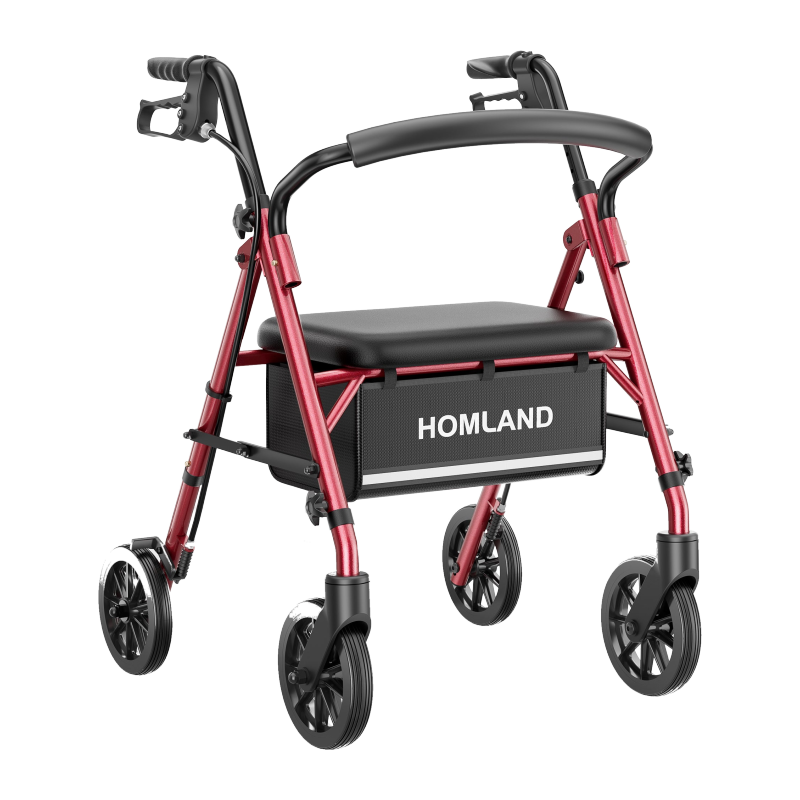
HOMLAND Foldable Rollator Walker — Best Overall
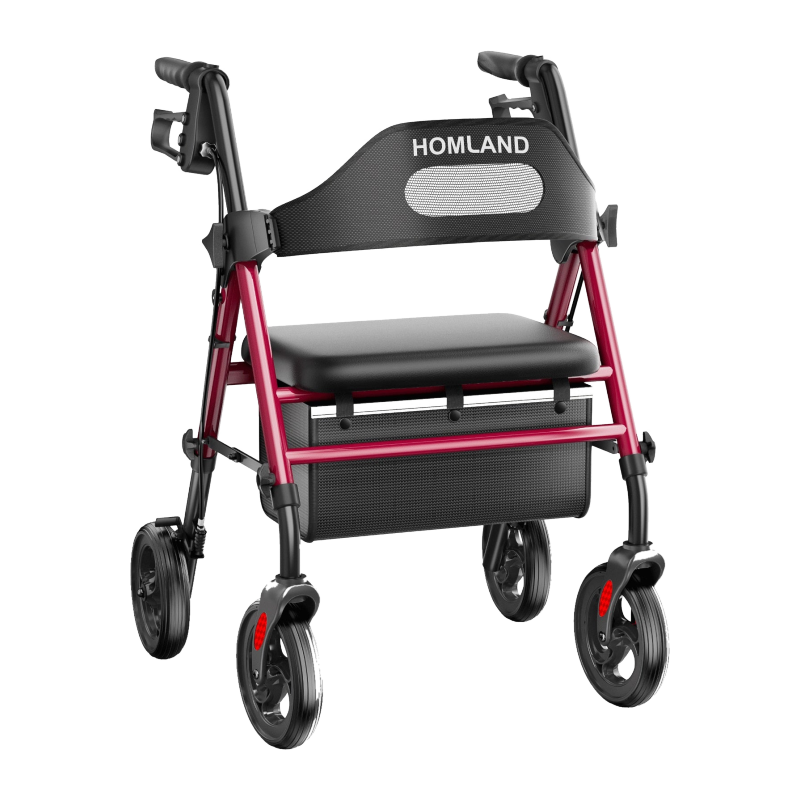
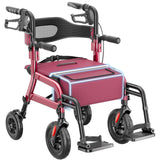
The HOMLAND Foldable Rollator Walker has earned the #1 position on Amazon in the Rolling Walkers category, and the user feedback explains why. Real buyers highlight three things most often: the seat, the wheels, and how easy it was to put together without calling anyone for help. One verified buyer described assembling it alone at age 70, calling the instructions "extremely clear" with all parts accounted for. Another called the build quality "just as good as $300+ models" at a fraction of the price.
The seat is 16 inches wide with 1.9-inch foam padding — meaningfully wider and thicker than many competitors — and the backrest adds genuine lumbar support rather than just a token presence. The adjustable seat and handle heights accommodate users from 4'7" to 6'6", one of the widest ranges available at this price point. For families where a parent and adult child might both use it during recovery, that flexibility matters. The three-mode braking system (free roll, deceleration, and full lock) is specifically noted by arthritic users for requiring minimal squeeze pressure, and the pinch-proof folding points address one of the most common complaints across competing models.
The 8-inch puncture-proof wheels handle the transition from hardwood floors to a cracked driveway to a garden path without drama. Reflective strips on the frame add nighttime visibility for evening walks — a thoughtful detail that users notice and appreciate. The 350-pound weight capacity is reinforced with a double support bar frame, and the rollator comes backed by a lifetime warranty on the metal frame plus a 1-year manufacturer warranty and 1-year extended warranty on non-metal parts. It's also FSA/HSA eligible, and ships from a US local warehouse for fast delivery — worth knowing if you need it quickly after a procedure or discharge.
Best for: Active seniors, post-surgery recovery, users who walk both indoors and outdoors, and households where multiple people may use the same rollator. Worth knowing: At around 20 pounds, it's sturdy rather than ultralight. Users who need to lift a rollator into a car multiple times a day may want to consider one of HOMLAND's lighter aluminum models.
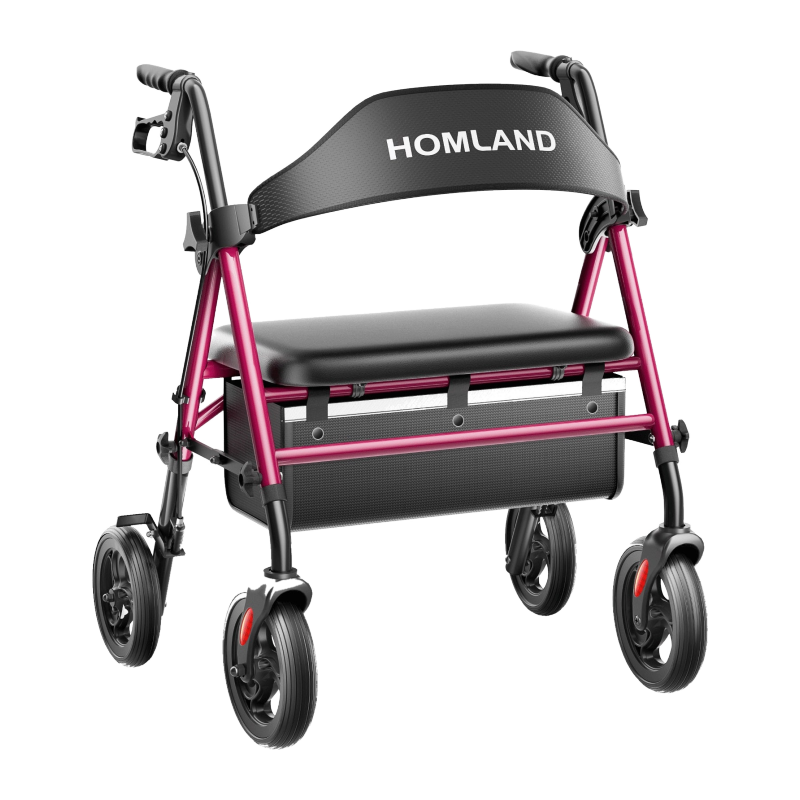
HOMLAND Bariatric Rollator Walker — Best for Larger Users
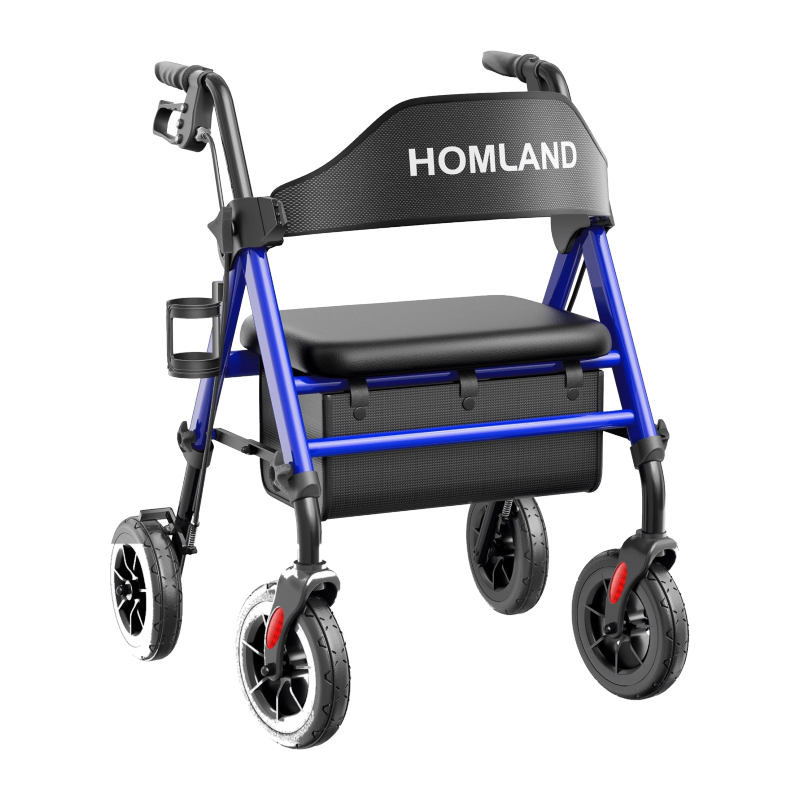
Finding a bariatric rollator that doesn't feel like a compromise has historically been difficult. Most heavy-duty models offer the weight capacity without the comfort or adjustability. The HOMLAND Bariatric Rollator changes that equation with a 500-pound capacity, a 19.7-inch extra-wide padded seat, and dual height adjustment that fits users from 4'7" to 6'4". The handles adjust from 33 to 40 inches and the seat from 20 to 22.8 inches — a range that's noticeably wider than most bariatric competitors and that means the rollator can adapt as needs change over time.
Real users in the bariatric category consistently report that the seat width is the make-or-break feature, and at nearly 20 inches, this one delivers. The 8-inch all-terrain wheels handle outdoor surfaces including grass, gravel, and uneven pathways. The enclosed folding points prevent finger pinching, and the braking system engages smoothly with minimal hand pressure. For caregivers, the reinforced steel frame and responsive US-based customer service are noted as strong reassurance — if a part arrives damaged, replacements come quickly.
Best for: Users up to 500 pounds who want a rollator that offers genuine comfort, not just structural capacity. Also a strong choice for households where a wider, more supportive seat benefits users of different sizes. Worth knowing: The wider frame may not fit through very narrow doorways in older homes — measure your narrowest doorway before ordering.
HOMLAND 3-Wheel Walker — Best for Tight Indoor Spaces
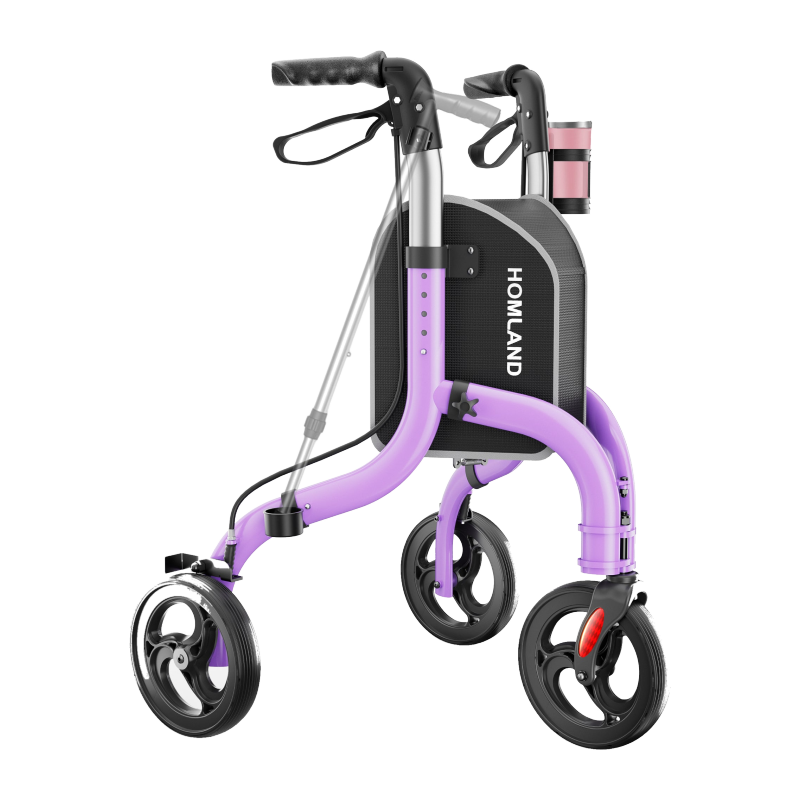
For users who live in apartments or older homes with narrow hallways, a standard 4-wheel rollator can feel like navigating a shopping cart through a galley kitchen. The HOMLAND 3-Wheel Walker solves that with a triangular design that maneuvers through tight corners with ease, weighs just 10.4 pounds, and folds with one hand into a standing position for effortless storage. The 8-inch wheels still handle light outdoor use, and the built-in cane holder and cup holder make it practical for daily outings.
The trade-off with any 3-wheel rollator is the absence of a built-in seat. For users who primarily need walking support and can plan rest stops around benches or chairs, this is a non-issue. For users who need the option to sit down at any moment — mid-walk at a park, mid-aisle at the grocery store — a 4-wheel rollator with a seat will serve them better. Physical therapists often recommend discussing this trade-off before committing to a 3-wheel design.
Other Models Worth Knowing
Beyond HOMLAND's lineup, a few other models come up repeatedly in user discussions and are worth understanding by category.
For ultralight portability: Carbon fiber rollators (notably the byACRE) weigh as little as 10 to 11 pounds and are the go-to recommendation for users who travel frequently or lift their rollator in and out of a vehicle multiple times daily. The trade-off is a significantly higher price point (often $600 or more), a narrower seat, and non-adjustable seat height. For the right user — someone who values weight above all else — the investment makes sense. For most users, a well-designed aluminum rollator provides an excellent balance of portability and comfort at a fraction of the cost.
For upright posture: Upright walkers with forearm armrests (sometimes called stand-up rollators) are designed for users with chronic back, neck, or shoulder pain who cannot comfortably use a standard handlebar design. They're meaningfully heavier than standard rollators, but the relief from sustained hunching is real and frequently cited by users with conditions like degenerative disc disease or post-surgical spinal limitations.
For primarily indoor use: Lighter steel-frame rollators with 6-inch wheels are adequate for smooth indoor floors, hardwood, and low-pile carpet. They're typically more affordable and easier to maneuver in tight kitchens or narrow hallways. The limitation shows up outdoors — 6-inch wheels catch on sidewalk cracks and don't handle grass or gravel gracefully.
Who Should Use a Rollator Walker?
Rollators serve a wider range of people than many assume. The most common users include seniors managing balance changes or fatigue, individuals recovering from hip or knee replacement surgery, and people with conditions like Parkinson's disease, arthritis, or multiple sclerosis who benefit from continuous rolling support and a place to rest. Post-surgery recovery patients in particular often find rollators genuinely transformative — the combination of smooth rolling and a built-in seat means they can be on their feet for longer without the exhaustion that comes from lifting a standard walker with each step.
Younger users with temporary injuries, fibromyalgia, or chronic fatigue also use rollators regularly, and modern designs have moved far enough from the "medical device" aesthetic that many users feel comfortable using them in daily public life. If you're a caregiver deciding whether a rollator makes sense for someone you love, the key questions are: Can they safely operate hand brakes? Do they have enough balance to manage a rolling device? Physical therapists and occupational therapists can help answer those questions definitively, and a brief consultation before purchasing is always worthwhile when balance issues are involved.
It's worth noting that rollators are not designed to bear a user's full body weight. They're mobility supports, not structural substitutes. Users who need to lean heavily on a device to stand or walk may be better served by a standard walker or another support option. The HOMLAND Standard Walker Collection is worth exploring for users in that category.
Rollator vs. Standard Walker: Which Is Right?
Standard walkers provide the most stability because they require the user to lift the device with each step, keeping it firmly in contact with the floor at every moment. That lifting motion is also the main limitation — it's tiring, it requires good upper body strength, and over long distances or multiple daily trips, it adds up. Rollators eliminate the lifting entirely, rolling smoothly with each stride and providing a built-in seat for rest breaks. The trade-off is that they require functional hand brake control and enough balance to manage a device that moves.
A useful way to think about it: if the person needs maximum support to stand and take each step, a standard walker is usually the safer starting point. If the person can walk with light support, tires easily on longer outings, or needs the option to rest without finding a chair, a rollator is likely the better long-term choice. Many users transition from a standard walker to a rollator as their strength and confidence improve during recovery — and some households keep both for different situations and different days.
How to Choose the Right Rollator: A Room-by-Room Guide
The most practical way to think about rollator selection is to picture the actual spaces the device will move through every day — not an idealized outdoor path, but the real environment at home.
- Narrow hallways and doorways: Measure your narrowest doorway before ordering. Most standard rollators are 24 to 26 inches wide. A bariatric model may be 28 to 30 inches. Older homes and apartments sometimes have doorways as narrow as 28 inches, which rules out some wider models entirely.
- Kitchen and living room floors: Hardwood, tile, and low-pile carpet are all manageable with 6-inch or larger wheels. High-pile carpet or thick rugs can be challenging — 8-inch wheels handle these transitions more smoothly and are less likely to catch or tip.
- Getting in and out of the home: Door thresholds, single steps, and driveway surfaces are where wheel size matters most. Eight-inch puncture-proof wheels handle these transitions confidently. If the home has a step at the entry, confirm whether the rollator can be tilted slightly to navigate it, and practice with a caregiver nearby the first few times.
- Loading into a vehicle: This is where weight becomes critical. A 20-pound rollator lifted daily into a car trunk is a real physical demand. If the primary user or caregiver has limited upper body strength or a shoulder or back condition, an aluminum frame or a lighter model will make daily life meaningfully easier.
- Outdoor walks: Parks, sidewalks, garden paths, and grass all favor 8-inch wheels and a sturdy frame. Reflective strips add safety for early morning or evening walks.
For handle height, the Mayo Clinic recommends that the grip should line up with the crease on the inside of the wrist when standing upright with arms relaxed — a slight elbow bend of about 15 degrees is ideal. A rollator that's too tall forces a user to reach up and lean forward; one that's too short causes hunching. Both create avoidable strain over time, and both are correctable with proper height adjustment before first use.
Red Flags to Watch for in User Reviews
Not every rollator review tells the full story, and a high average rating can mask specific problems that matter a great deal to certain users. When reading reviews, physical therapists and experienced buyers recommend looking for patterns rather than isolated comments. A few recurring themes are worth watching for.
- "Heavier than expected" — this comes up consistently across many brands and usually means the listing weight was measured without accessories (bags, cup holders) or that the user's physical situation made even the listed weight a real challenge. Read listed weights carefully and consider whether the person lifting it has any upper body limitations.
- "Brakes stopped working after a few months" — brake durability varies significantly between models. Look for reviews that mention long-term brake performance, not just first-week impressions. Brakes that loosen or lose tension over time are a safety concern, not just an inconvenience.
- "Seat too small" or "feet don't reach the floor" — seat dimensions and seat height range are two separate numbers, and both matter. A user at 5'2" may need a seat height on the lower end of a model's range to sit comfortably. Check both the seat width and the minimum seat height before purchasing.
- "Difficult to assemble" — this complaint is common and often signals either genuinely poor instructions or parts that don't align well. Tool-free assembly with clearly labeled parts and a short setup time (under 15 minutes) is a reasonable standard. Brands that provide video tutorials alongside written instructions score better here.
Frequently Asked Questions
Are rollator walkers FSA or HSA eligible?
Yes, rollator walkers are generally FSA/HSA eligible as mobility aids. HOMLAND rollators are FSA/HSA eligible, making them accessible without a prescription through these pre-tax health accounts. This is often the most straightforward path to purchase for users who don't qualify for Medicare coverage or prefer not to navigate the insurance process.
What wheel size is best for outdoor use?
Eight-inch wheels are the standard recommendation for users who split time between indoor and outdoor environments. They handle sidewalk cracks, grass, gravel, and door thresholds far better than 6-inch wheels without adding significant bulk. For very rough terrain — cobblestone, uneven paths, or outdoor trails — 10-inch wheels offer the smoothest performance, though they typically add weight and width to the frame.
How do I know if a rollator fits my height?
Stand inside the rollator with your arms relaxed at your sides. The grip handles should line up with the crease of your wrist. When you hold the handles, your elbows should have a comfortable slight bend — about 15 degrees. The seat height, when you sit down, should allow both feet to rest flat on the floor. Most quality rollators adjust over a range of several inches for both handle and seat height; confirm the model's specific range covers your measurements before purchasing.
What is the difference between a 3-wheel and 4-wheel rollator?
Three-wheel rollators use a triangular wheel configuration that allows tighter turning and easier navigation in narrow spaces. They're generally lighter and more maneuverable indoors but typically don't include a built-in seat. Four-wheel rollators are more stable, handle varied terrain better, and almost always include a padded seat with backrest. For users who need to rest during outings, a 4-wheel model with a seat is usually the better choice. Explore the full HOMLAND rolling walkers collection to compare both configurations side by side.
Do I need a prescription to buy a rollator?
No. Rollator walkers can be purchased without a prescription from retailers including Amazon and directly from manufacturers like HOMLAND. A prescription is required if you intend to seek Medicare or insurance reimbursement. If you're purchasing with FSA or HSA funds, a prescription is generally not needed. That said, consulting with a physical therapist or occupational therapist before choosing a specific model is always a worthwhile step, especially if balance is a significant concern.
The Right Rollator Changes Everything
The best rollator walker is not the one with the most stars or the longest spec sheet. It's the one that fits the person using it — in their home, on their daily route, with their specific height and weight and strength and habits. Real users are remarkably consistent about this: the features that sound most impressive in a listing rarely determine whether a rollator actually earns a place in daily life. What matters is the seat height that lets you sit comfortably at a farmers market, the brake that engages without strain for arthritic hands, the weight that makes the car trunk manageable, and the wheel size that handles the crack in the driveway outside the front door.
HOMLAND's rolling walker lineup is designed around exactly these real-life priorities — built with 20+ years of manufacturing experience, authorized by licensed Doctors of Physical Therapy, and backed by a lifetime frame warranty plus a US-based customer support team that ships from domestic warehouses for fast delivery. Whether you're equipping yourself after a procedure, choosing a rollator for a parent, or replacing an older model that no longer fits the way your needs have changed, the right starting point is always fit, terrain, and daily use — not brand names or price points alone.
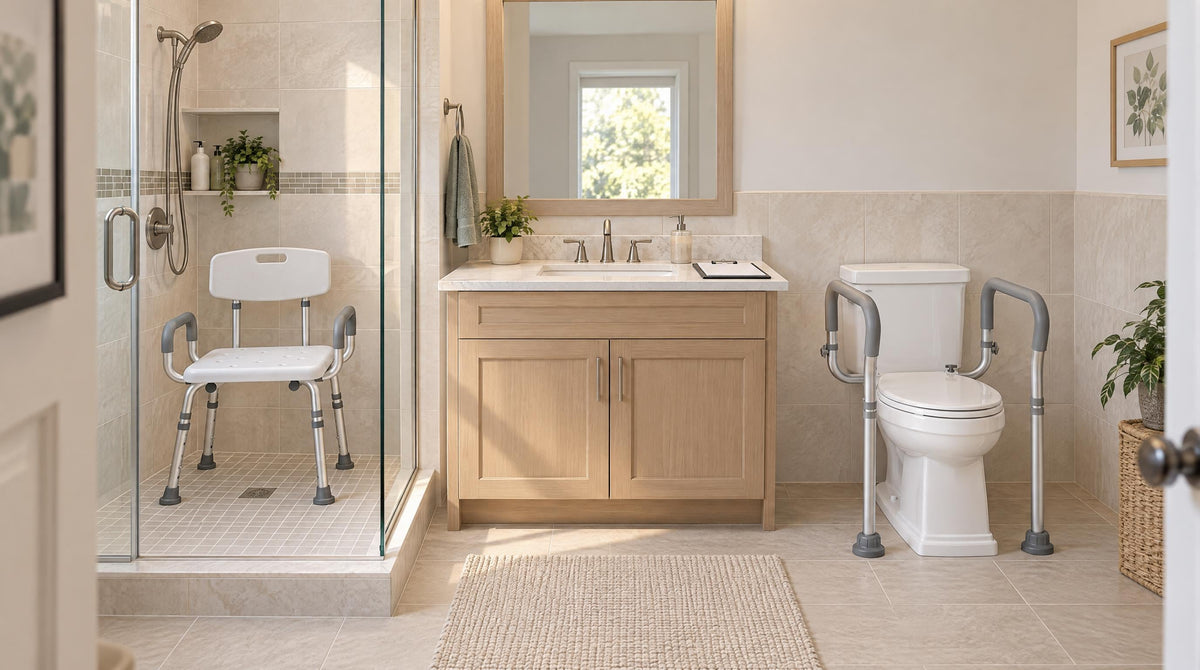
Browse the full HOMLAND Rolling Walkers Collection to find the model that fits your life. And if mobility at home extends beyond walking — to the bathroom, the bedroom, or the transition between the two — explore the complete HOMLAND product lineup, designed to support every part of independent daily living.
Ready to Find the Right Fit?
Have questions about which rollator walker is right for your situation? Our team is here to help — from product fit to FSA/HSA eligibility and warranty details.
Contact Us