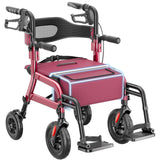
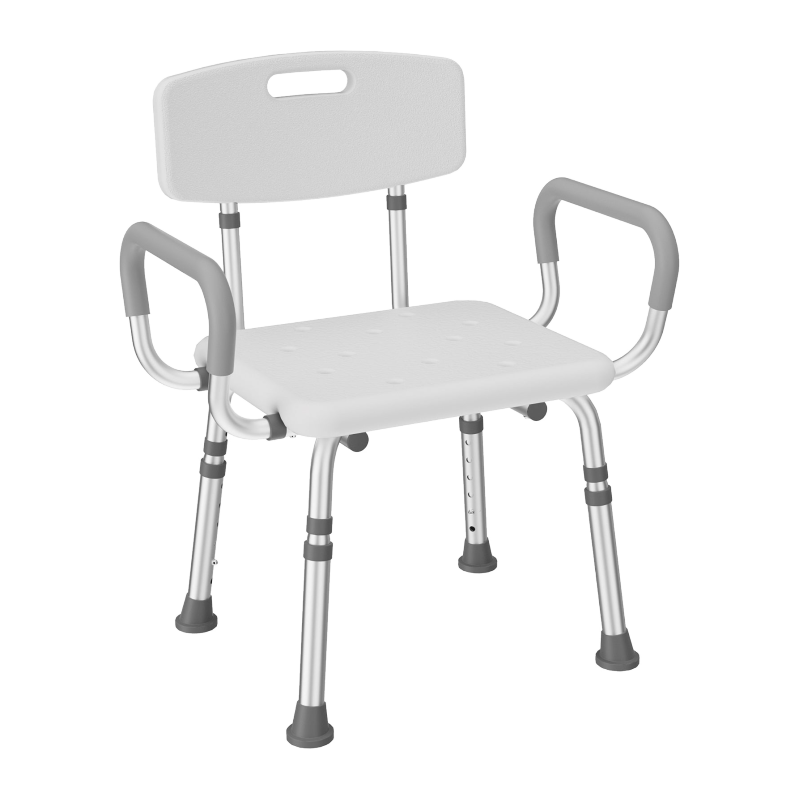
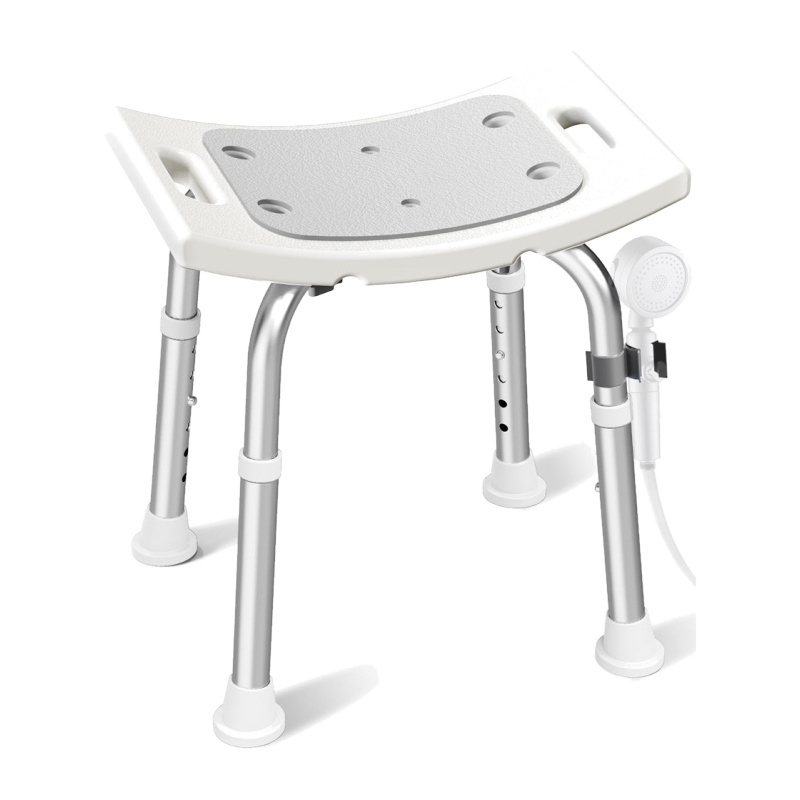
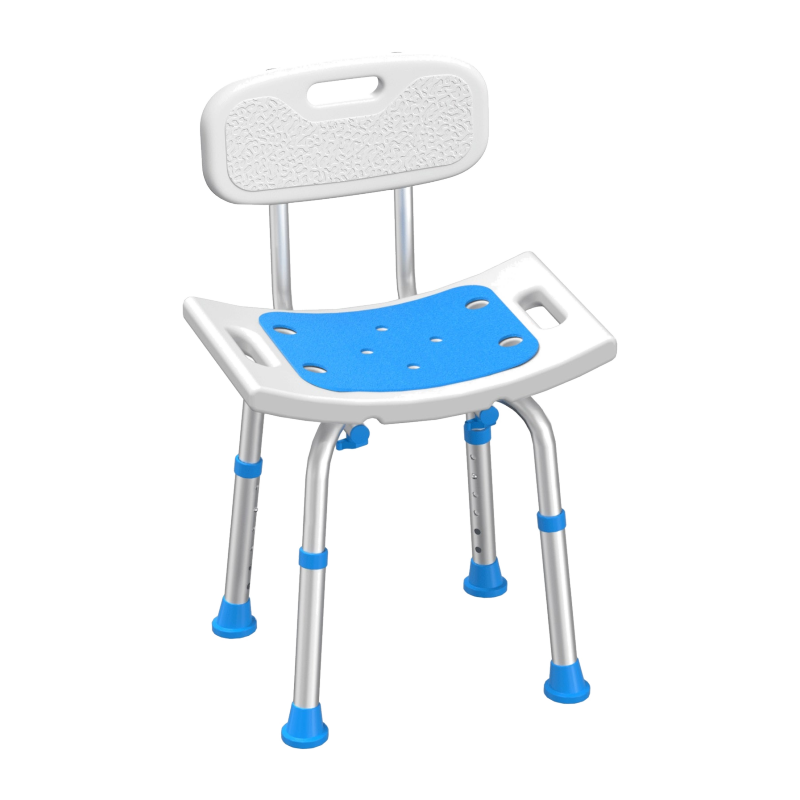
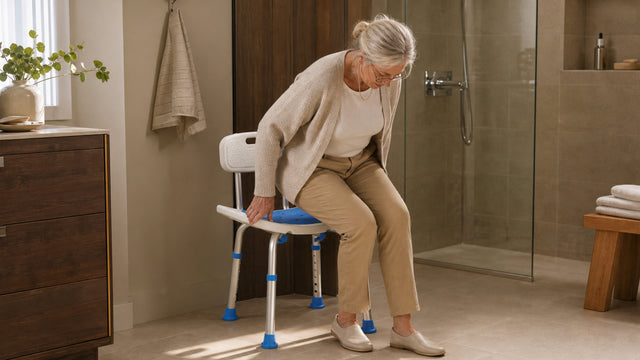
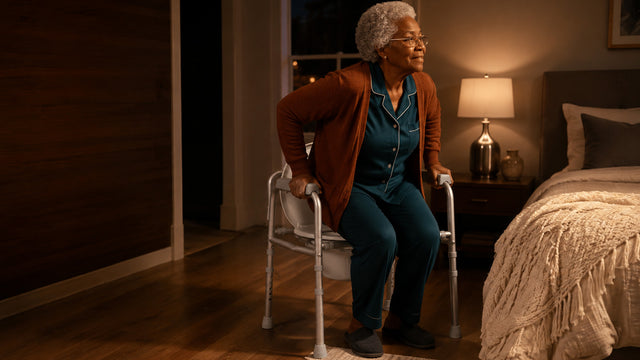

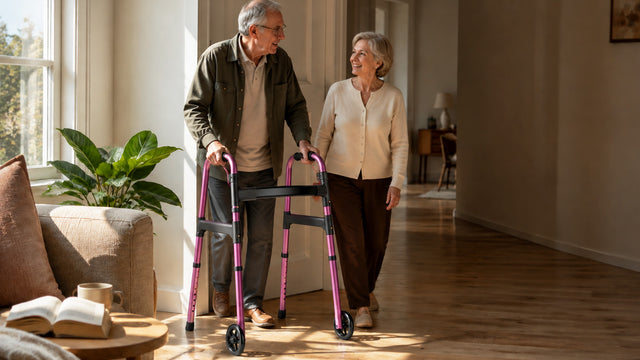

Picture this: your mother has been staying close to home since her knee replacement, not because her recovery is going poorly, but because she is not sure what will happen if her legs get tired halfway down the block. The right rollator walker changes that equation entirely. It rolls with her instead of slowing her down, gives her a place to sit when she needs a breather, and hands her back the confidence to say yes to a walk around the neighborhood again.
But choosing a rollator from the dozens of options available is genuinely confusing. Wheel sizes range from 6 to 10 inches. Some frames are steel, others aluminum. Weight capacities span from 250 to 500 pounds. Seats vary from a thin padded square to a wide memory foam cushion. And then there are brake systems, folding mechanisms, handle height ranges, and storage options to consider on top of all of that.
This guide cuts through the noise with a clear, side-by-side feature comparison of the most important rollator categories. Whether you are shopping for yourself or helping a parent or partner find the right fit, you will leave knowing exactly which features matter for your situation, which trade-offs are worth making, and where HOMLAND's rolling walkers fit into the picture. All HOMLAND rollators are FSA/HSA eligible, backed by a 1-year manufacturer warranty plus a 1-year extended warranty, and ship from a US local warehouse for fast delivery.
What Is a Rollator Walker (and Who Really Needs One)?
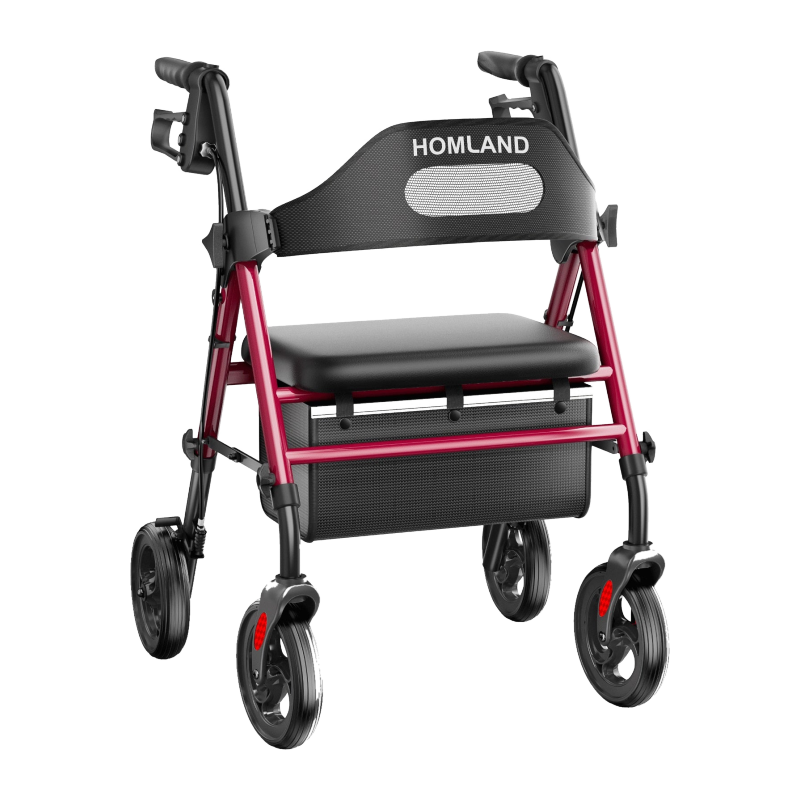
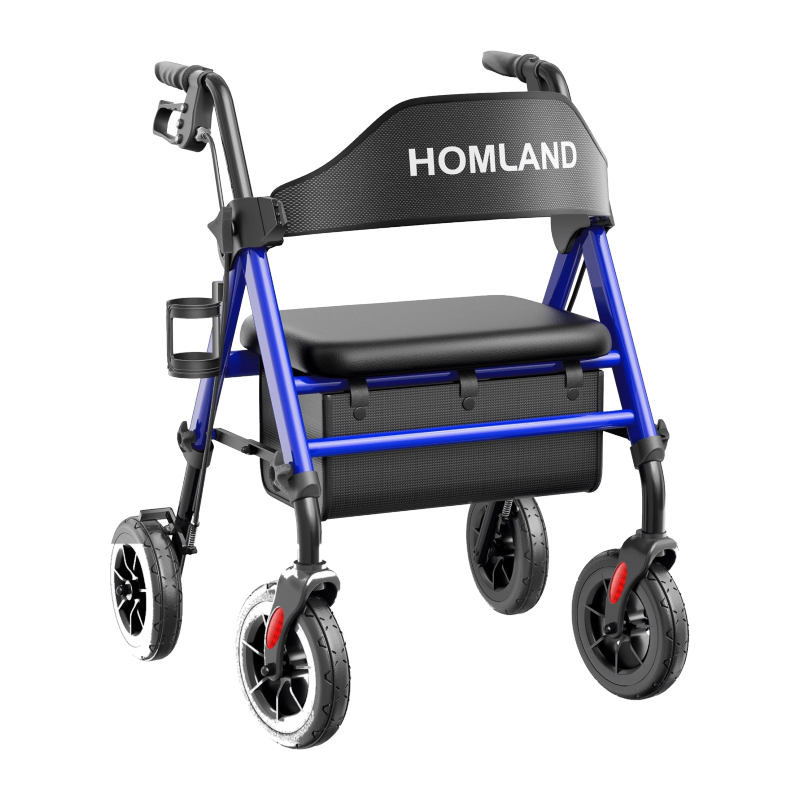
A rollator is a wheeled walking aid with hand brakes and, on most four-wheel models, a padded seat. Unlike a standard walker that must be lifted with each step, a rollator rolls continuously forward, so the user can focus on walking rather than lifting. Physical therapists often recommend rollators for people who have adequate leg strength and balance but need light support, a place to rest during longer outings, or both.
The CDC reports that one in four Americans aged 65 and older falls each year, and fatigue is one of the leading contributing factors. A rollator addresses fatigue directly: when legs get tired, the seat is right there. This is why rollators are popular not just with seniors managing chronic conditions, but also with people recovering from hip or knee surgery, individuals with arthritis who find lifting a standard walker painful, and anyone whose stamina has reduced due to a respiratory or neurological condition.
That said, rollators are not the right tool for everyone. If someone needs to lean heavily on their walking aid for full weight-bearing support, a standard walker may be more appropriate. The decision is best made in conversation with a physical therapist or physician who knows the individual's specific situation.
Side-by-Side Feature Comparison: Key Rollator Types
Before diving into individual features, here is a high-level comparison of the main rollator categories you will encounter while shopping. Each type is built around a different priority, and understanding those priorities upfront saves a lot of confusion.
| Rollator Type | Typical Weight | Weight Capacity | Wheel Size | Built-In Seat | Best For |
|---|---|---|---|---|---|
| Standard 4-Wheel Rollator | 15–22 lbs | 300–350 lbs | 6–8 inch | Yes | Everyday indoor/outdoor use, post-surgery recovery |
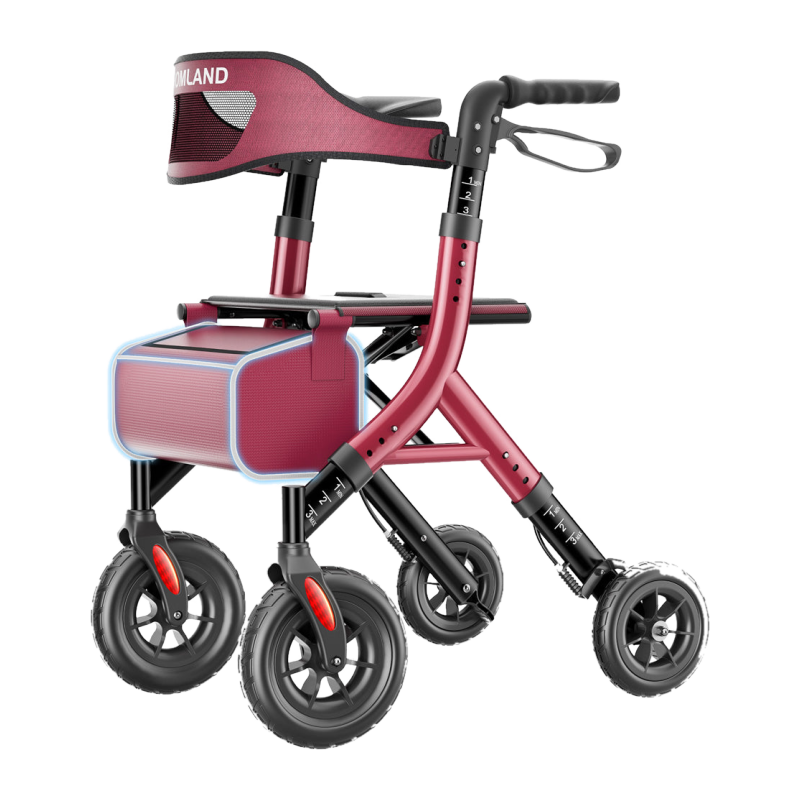
| Lightweight / Ultralight Rollator | 10–15 lbs | 250–300 lbs | 6–8 inch | Yes | Frequent car trips, travel, users with limited upper-body strength |
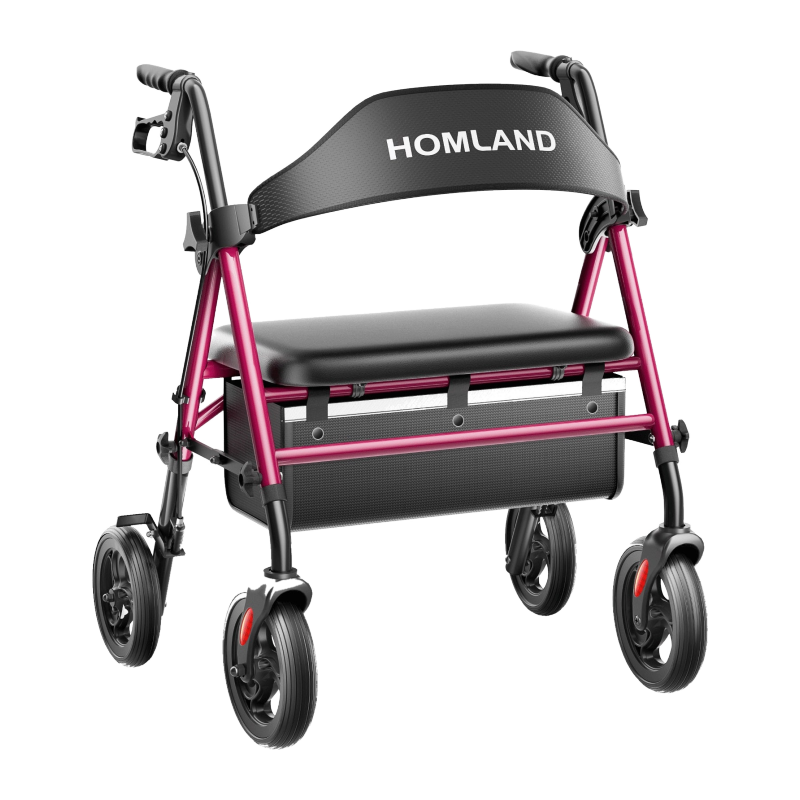
| Bariatric Rollator | 25–28 lbs | 400–500 lbs | 8 inch | Yes (extra-wide) | Larger users who need extra seat width and reinforced frame |
| Upright / Forearm Rollator | 20–24 lbs | 250–300 lbs | 8–10 inch | Yes (shallow) | Users with chronic back, neck, or shoulder pain |
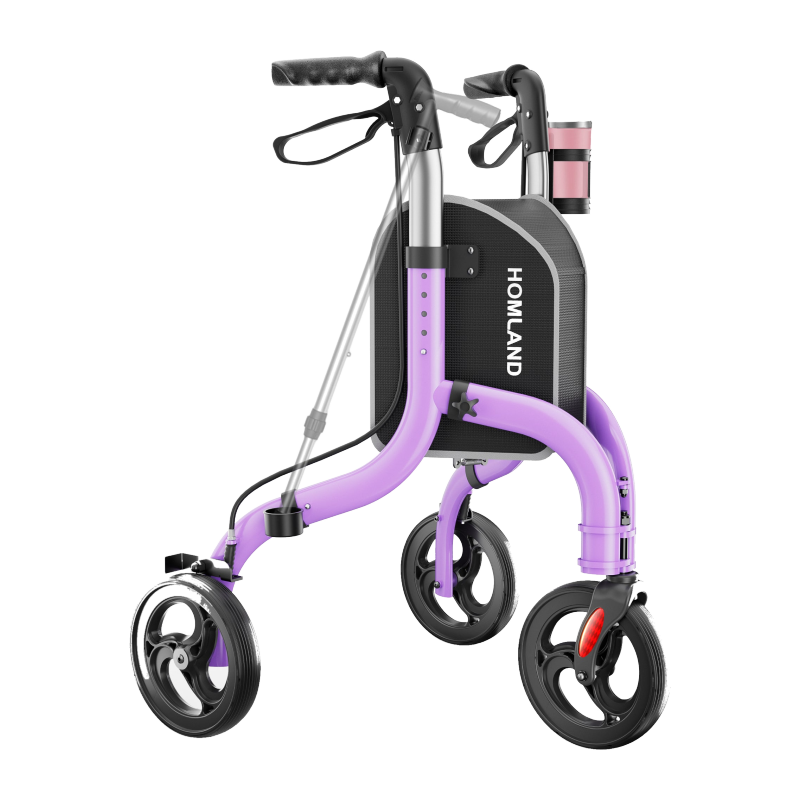
| 3-Wheel Rollator | 10–14 lbs | 250–300 lbs | 6–7 inch | No | Tight indoor spaces, narrow hallways, apartment dwellers |
The right category depends on where you will use the rollator most, how often it will go in and out of a vehicle, and what the user's body dimensions are. The sections below break down each key feature in detail so you can match them to real daily needs.
Wheel Size: The Feature That Changes Everything Outdoors
Wheel size is one of the most consequential specs on any rollator, yet it is easy to overlook when reading a product listing. Small wheels roll beautifully on hardwood and tile. They struggle when they hit a sidewalk crack, a patch of gravel, or a door threshold. Larger wheels absorb those small obstacles and keep the rollator moving smoothly, which matters a great deal when the user's balance is already being tested.
- 6-inch wheels are lightweight and highly maneuverable indoors. They are ideal for apartment use, narrow hallways, and smooth surfaces. The trade-off is that they can get caught on lips between flooring materials and provide a bumpier ride on uneven outdoor terrain.
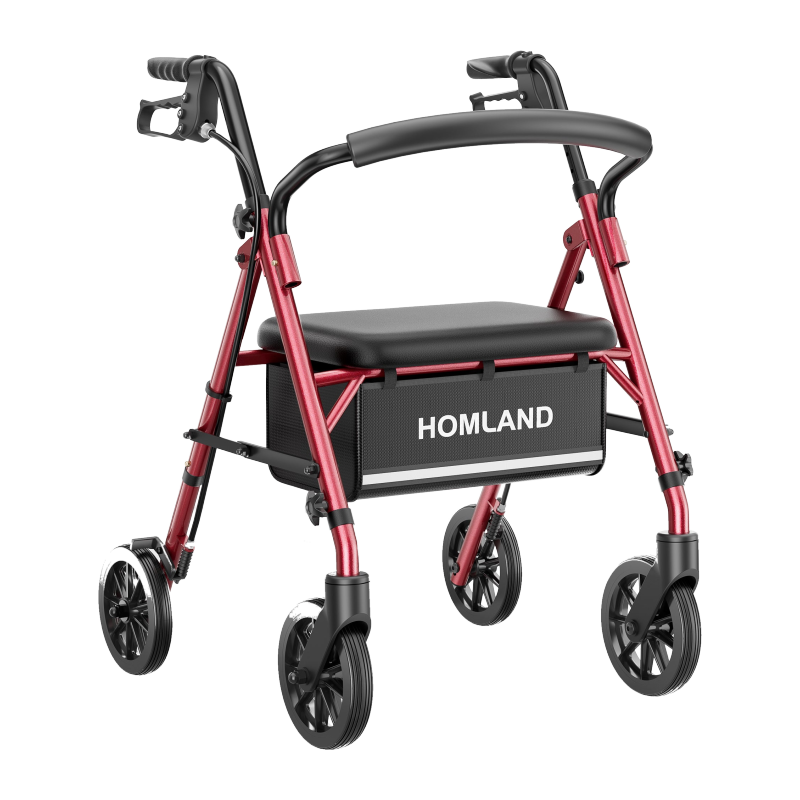
- 8-inch wheels are the sweet spot for most users. They handle indoor floors without difficulty and manage grass, gravel, and cracked sidewalks with confidence. HOMLAND's standard rollator walkers use 8-inch puncture-proof wheels specifically engineered to roll smoothly across both indoor and outdoor terrain.
- 10-inch wheels offer the best outdoor performance, gliding over cobblestone, curbs, and rough ground with minimal effort. They add a bit of width and weight to the frame, which may be a consideration in tighter spaces.
A practical way to think about wheel size: picture the specific surfaces the rollator will encounter every day. The path from the front door to the car, the flooring inside the home, the sidewalk at the grocery store. If any of those surfaces are uneven, an 8-inch wheel is worth the modest extra size. Physical therapists often point out that a rollator that rolls smoothly requires less effort from the user, which reduces fatigue and, by extension, fall risk.
Weight Capacity: Standard vs. Bariatric
Most standard rollators are rated for 300 to 350 pounds. That covers the majority of users comfortably, but it is always worth checking the specification before purchasing, especially if the user will be leaning on the frame or sitting on the seat for extended periods. The weight rating applies to both walking use and seated use, and physical therapists generally recommend choosing a rollator rated for at least 50 pounds more than the user's body weight for a safety margin.
For users who need more capacity, bariatric rollators are purpose-built with reinforced frames, wider seats, and higher weight ratings. HOMLAND's bariatric rollator supports up to 500 pounds and features a 19.7-inch extra-wide padded seat, dual height adjustment, and 8-inch all-terrain wheels. The reinforced steel frame is designed to feel stable and solid at full capacity, so the user never has to second-guess their support. This is especially meaningful for people who are managing weight-related joint pain and need both mobility assistance and the confidence that their equipment will hold.
One thing to watch in bariatric models is seat width versus overall frame width. A wide seat is only useful if the rollator still fits through the doorways in the home. Always measure your narrowest doorway before ordering a wide-frame rollator, and check the product's folded width as well as its open width.
Seat Size and Comfort: Where Real Daily Difference Happens
The rollator seat is easy to dismiss as a secondary feature, but for anyone who spends time outdoors, walks to appointments, or browses a farmers market on a Saturday morning, the seat becomes one of the most used parts of the device. A thin, narrow seat makes rest breaks feel like a minor inconvenience. A well-padded, appropriately wide seat makes them feel like a natural pause in the walk.
Here is what the key seat dimensions actually mean in practice:
- Seat width: Standard seats range from about 12 to 16 inches wide. Bariatric and premium models go up to 19 or 20 inches. If the user is on the larger side or simply values personal space when sitting, prioritize seat width over nearly every other comfort spec.
- Seat padding thickness: Economy models use thin foam that compresses quickly. Models with 1.5 to 2 inches of foam or memory foam hold their shape and feel supportive after 15 or 20 minutes of sitting. HOMLAND's standard rollator includes a memory foam seat that stays comfortable through longer outings.
- Seat height: The ideal seat height allows the user to sit with feet flat on the floor and knees at roughly a 90-degree angle. Seat heights that adjust independently of handle heights give users much more flexibility, particularly in households where two people might share a rollator.
- Backrest: Not all rollators include a backrest. For anyone sitting for more than a few minutes at a time, a padded backrest with appropriate height makes a significant difference in lumbar comfort and overall safety while seated.
A note for caregivers shopping on behalf of a parent or partner: it is worth measuring the person's sitting width and leg length before ordering. Consumer Reports notes that if you cannot test before buying, measuring sitting width and sitting leg length helps ensure a proper fit. A rollator seat that fits well encourages the user to actually use the device, rather than leaving it by the door.
Brake Systems: Safety You Can Actually Feel
Every rollator has hand brakes, but the quality, style, and ease of use vary significantly between models. This is a feature where hands-on testing reveals differences that spec sheets do not capture. A brake that requires strong grip strength to engage is not a good match for someone with arthritis. A brake that locks too easily could cause a stumble if it engages accidentally during a walk.
The most common brake system uses a loop-lock design: squeezing the lever slows or stops the rollator, and pressing the lever downward locks the wheels so the user can sit safely. HOMLAND's rollators feature a three-mode braking system (free roll, deceleration, and full stop), which gives users graduated control. The ergonomic hand grips are designed to be usable with minimal grip strength, which is an important accessibility feature for anyone with hand pain or weakness.
Some premium models add a slowdown or resistance mode that provides gentle braking on downhill slopes without requiring the user to squeeze actively. This is particularly useful for anyone who lives in a hilly area or navigates sloped driveways. When evaluating brakes, consider how easily the lever can be reached from a natural grip position, how much force is required to engage it, and whether the locking mechanism is intuitive to release when standing back up.
Frame Material: Steel vs. Aluminum vs. Carbon Fiber
Frame material affects three things that users care about most: weight, strength, and longevity. Each material makes a different set of trade-offs.
- Steel is the heaviest option, typically adding 4 to 8 pounds compared to aluminum. It is also the strongest, which is why bariatric rollators almost universally use steel frames. Steel handles very high weight loads without flexing, and it is resistant to bending if the rollator is accidentally tipped or dropped. The trade-off is that lifting a steel rollator into a car multiple times a day can be tiring for users with limited upper-body strength.
- Aluminum is the most common frame material in the mid-range category. It is significantly lighter than steel, resists corrosion, and provides enough strength for users up to 350 pounds in most standard configurations. HOMLAND's lightweight aluminum rollator weighs approximately 17 pounds while maintaining a 350-pound capacity, using reinforced aluminum alloy tubing with double support bars for added stability.
- Carbon fiber is the premium option, found in a small number of high-end models priced at $600 and above. The main benefit is exceptional stiffness at very low weight (some models reach as little as 10 to 11 pounds). Carbon fiber does not corrode and absorbs vibration slightly better than metal. For most home users, the price difference does not justify the performance gain unless weight is a critical priority.
For the majority of people shopping for a home rollator, a reinforced aluminum frame in the 16 to 20 pound range offers the best balance of portability and durability. Steel becomes the right call when bariatric capacity is required. Carbon fiber is worth considering for users who travel frequently or who must independently lift their rollator in and out of a vehicle multiple times per day.
Foldability and Portability: For the Car Trunk Test
A rollator that is hard to fold will either not get folded, or not come along on outings. Neither outcome serves the user well. Foldability matters most for anyone who needs to load the rollator into a car, store it in a closet, or bring it in and out of a building regularly.
The most common fold mechanism collapses the rollator front-to-back, bringing the two sides together into a flat package. Some models fold side-to-side instead, which works better in tight spaces where there is not enough clearance to swing the rollator forward. The best designs allow one-handed folding, so the user can hold onto a surface for balance while folding with the other hand.
Beyond the fold mechanism itself, consider these practical factors:
- Does it stand upright when folded? A rollator that stays upright on its own can be parked in a corner rather than leaned against a wall, which is safer and more convenient.
- Does it stay locked when folded? Some models can unfold slightly during transport, which is both annoying and potentially dangerous in a car trunk.
- Folded dimensions: Check that the folded rollator fits in the specific trunk or storage space you have in mind. Rollators that fold flat but remain wide can still be awkward to load.
- Pinch-proof folding points: High-quality designs enclose the folding mechanism so fingers cannot get caught. HOMLAND rollators feature pinch-proof folding points as a standard safety measure.
For caregivers who regularly load and unload the rollator on behalf of a parent, the frame weight and fold design should be near the top of the priority list. A rollator that is too heavy or awkward to fold quickly will gradually get left behind.
3-Wheel vs. 4-Wheel Rollators: Which Fits Your Home?
The choice between three and four wheels comes down to one central question: does the user need to sit down while out? Four-wheel rollators are more stable and almost always include a seat. Three-wheel models are more maneuverable in tight spaces and lighter to lift, but they typically do not have a seat, and their triangular wheelbase is slightly less stable for users with balance concerns.
Four-wheel rollators are the right choice for most people. They work well indoors and outdoors, they include a seat for rest breaks, and their wider base provides better lateral stability. If the home has generous hallway widths (at least 28 to 30 inches clear), a four-wheel model fits comfortably in every room. HOMLAND's four-wheel rollator collection includes standard, lightweight, and bariatric options to match different body types and living situations.
Three-wheel rollators are worth considering for users who live in tight apartments, who primarily need the rollator for indoor navigation, and who have enough balance to manage without a seat. If rest breaks are a regular need, a four-wheel model with a seat is the safer long-term choice. Physical therapists generally recommend the more stable four-wheel design for users with any history of falls or significant balance challenges.
How to Choose the Right Rollator: A Simple Checklist
With all of the features laid out, here is a practical checklist to run through before making a purchase. It covers the measurements and questions that matter most, in the order they should be answered.
- Measure wrist height in shoes. Stand upright with arms relaxed. Measure from the floor to the wrist crease. This is the ideal handle height. Make sure the rollator's adjustment range covers that measurement.
- Measure the narrowest doorway in the home. Standard doorways are 32 to 36 inches, but older homes can be narrower. Compare this to the rollator's open width before ordering.
- Identify the primary surfaces. Mostly indoors on smooth floors? A 6-inch wheel model is fine. Regular outdoor use on sidewalks, grass, or gravel? Choose 8-inch wheels or larger.
- Check weight capacity with a margin. Select a rollator rated for at least 50 pounds above the user's current weight.
- Consider how often the rollator will go in a car. If it travels daily, frame weight and fold mechanism are critical. Aim for under 20 pounds if the user is lifting it independently.
- Think about seated use. For short rest breaks, a standard seat is fine. For 15 or more minutes of sitting at a time, prioritize seat width, padding thickness, and backrest height.
- Check hand strength for brakes. For users with arthritis or reduced grip, look for brakes that engage with light pressure and ergonomic grips. Test if possible before purchasing.
HOMLAND's entire rolling walker lineup is designed with tool-free assembly, adjustable heights, and ergonomic grip systems built in. Every model is authorized by licensed Doctors of Physical Therapy and is FSA/HSA eligible, so the purchase can be made through a flexible spending or health savings account without a prescription in most cases.
FSA, HSA, and Insurance Coverage
Rollator walkers are FSA and HSA eligible in most cases, which means you can use pre-tax dollars from a flexible spending account or health savings account to purchase one without needing a doctor's prescription. This is often the simplest and fastest way to cover the cost, and all HOMLAND rollator walkers qualify.
Medicare Part B can cover rollators as durable medical equipment when a physician prescribes the device for in-home use. After meeting the Part B deductible, Medicare typically covers 80 percent of the approved amount. The rollator must be purchased through a Medicare-enrolled supplier, and a written prescription confirming medical necessity is required. Medicare Advantage (Part C) plans also cover rollators, often with different cost-sharing arrangements depending on the plan. If you are pursuing Medicare coverage, speak with your doctor first and confirm that the specific model you want is available through a Medicare-enrolled supplier.
For families managing a purchase out of pocket, HOMLAND's standard rollator walkers are priced accessibly and arrive with a 1-year manufacturer warranty plus a 1-year extended warranty, along with a lifetime warranty on the metal frame. Orders ship from a US local warehouse, which means most customers receive their rollator within a few business days rather than waiting on overseas shipping.
Frequently Asked Questions
What is the difference between a rollator and a standard walker?
A standard walker has four fixed legs and must be lifted with each step. It provides maximum weight-bearing support and is often recommended immediately after surgery or for users with significant weakness. A rollator has wheels on all legs, hand brakes, and usually a built-in seat. It rolls forward continuously without lifting, making it less fatiguing for users who can bear their own weight but need balance support and a place to rest. If you are unsure which type is appropriate, a physical therapist can assess the situation and make a specific recommendation. HOMLAND offers both standard walkers and a full rolling walker collection to cover both needs.
How do I know if a rollator seat height is right for me?
Sit on a firm surface (like a dining chair) and measure the distance from the back of your knee to the floor. That measurement is your ideal seat height. When seated on the rollator, your feet should rest flat on the floor and your knees should be at a comfortable angle, not pulled up or stretched out. Most rollators offer seat height adjustment within a range of three to five inches, so check that the model you are considering includes your measurement within its range.
Can I use a rollator on carpet?
Yes, most rollators roll on low-pile carpet without difficulty. Thicker or plush carpet creates more rolling resistance, which can make the rollator harder to push. Eight-inch wheels with a smooth tread generally handle carpet better than six-inch wheels because their larger contact surface distributes resistance more evenly. If the home has a mix of flooring types, including area rugs with edges, this is worth factoring into wheel size selection.
Are rollators safe to sit on?
A rollator seat is safe to use as long as the brakes are fully locked before sitting. Always engage both parking brakes before lowering onto the seat, and confirm the frame is fully open and locked. Never sit on a rollator that is in motion. The seat is designed for stationary rest breaks, not for use as a wheelchair or transport seat. When in doubt, follow the usage guidelines in the product's manual, and consult a physical therapist if the user has balance or strength concerns that make independent seating challenging.
What accessories should I look for?
The most useful accessories are an under-seat storage bag (for keys, a phone, a small water bottle, and other daily essentials), a cup holder, and reflective strips for outdoor evening use. Some rollators include these as standard features. HOMLAND's aluminum rollator models include a storage pouch and cup holder. Additional accessories such as cane holders and tray attachments are available separately for users who need them. Avoid overloading any storage bag beyond the manufacturer's recommended limit, as uneven weight can affect the rollator's balance during use.
The Right Rollator Gives Back More Than Mobility
Choosing a rollator is not really about picking a product. It is about deciding which features will give someone the confidence to keep doing the things that matter to them: the morning walk, the trip to the pharmacy, the visit with grandchildren across a grassy yard. The right combination of wheel size, seat comfort, frame weight, and brake quality can make the difference between a device that gets used every day and one that sits in the corner.
For most people, an 8-inch wheel, aluminum-frame rollator with a padded seat and a three-mode brake system covers the full range of daily needs without being too heavy to manage. For larger users, a bariatric rollator with a wide seat and 500-pound capacity provides that same confidence at greater scale. For the most active users who travel frequently, a lighter frame is worth prioritizing even at some cost to seat size.
HOMLAND's rolling walker collection is designed around exactly these priorities, with every model built to be assembled without tools, adjusted to fit a wide range of heights, and backed by US-based customer support. Explore the full lineup and browse all HOMLAND mobility and home safety products to find the combination that fits your home, your body, and the way you want to move through your day.
Ready to Find Your Perfect Rollator?
Browse HOMLAND's full collection of rolling walkers, all FSA/HSA eligible and backed by a 2-year warranty. Ships fast from a US local warehouse.
Shop Rolling WalkersContact Us