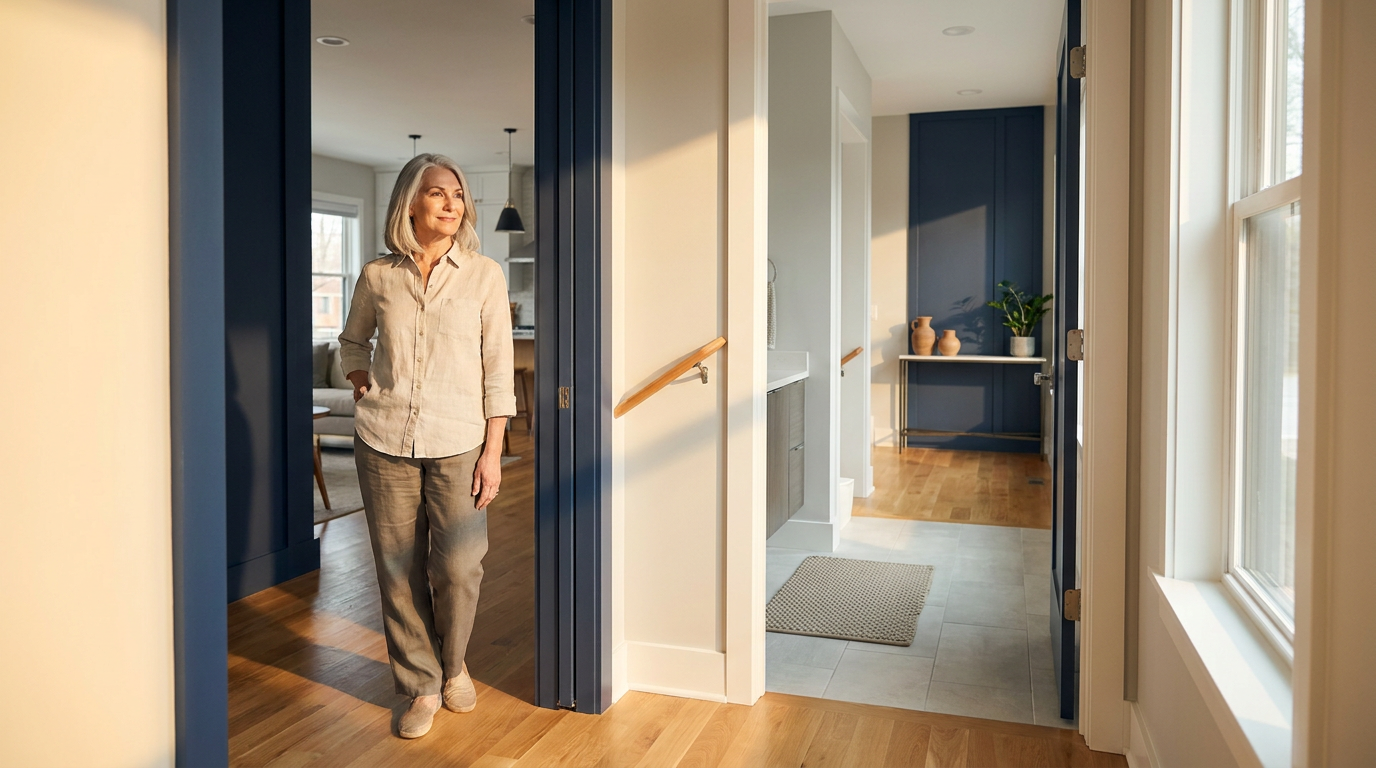

Picture this: it's early morning, and getting from the bedroom to the kitchen feels like a calculated risk. Not because you can't walk — you can — but because that slight unsteadiness makes every step feel less certain than it used to. A good walking cane doesn't just give you something to lean on. It gives you back the confidence to move through your own home on your own terms.
According to the CDC, one in four older adults falls each year, and many of those falls happen at home during everyday movements. A well-chosen walking cane is one of the most effective, low-profile tools for reducing that risk — without turning your home into a care facility. But with so many styles, handle types, and materials on the market, choosing the right one can feel overwhelming.
This guide breaks it all down in plain language. Whether you're shopping for yourself after a hip replacement, or helping a parent find more stability around the house, you'll find everything you need here — from cane types and proper fit to PT-informed walking technique and smart buying tips. And if you want the short version: look for a cane that fits your height, matches your grip strength, suits your daily routine, and — when you're ready to buy — qualifies for your FSA/HSA benefit.
What Does a Walking Cane Actually Do?
A walking cane does more than steady your stride. Used correctly, it redistributes weight away from a weaker or injured leg, reduces pressure on painful joints, and widens your base of support so your body can balance more easily. Physical therapists often describe a cane as a "third contact point" with the ground — and that extra point of contact changes everything for someone dealing with arthritis, recovering from surgery, or simply noticing that their balance isn't quite what it was.
Beyond the physical benefits, there's a real emotional dimension too. The fear of falling can quietly shrink a person's world — causing them to skip errands, avoid stairs, or stop walking the dog. A properly fitted cane can restore the confidence to do those things again. It's not a sign of decline; it's a smart, proactive tool for staying active and independent at home.
Is a Cane Right for You?
Canes work best for people who need support on one side of the body. If you're recovering from a hip or knee replacement, managing arthritis in one leg, getting your balance back after a minor stroke, or simply finding that you reach for the wall more often than you used to, a cane is likely a great fit. Physical therapists often recommend canes as a first-line mobility aid precisely because they're lightweight, unobtrusive, and easy to use at home.
That said, a cane isn't the right tool for every situation. If you need support on both sides, experience significant balance problems, or feel unsteady enough that one point of contact doesn't feel reassuring, a standard walker or rolling walker may serve you better. Think of it as a spectrum — and it's always worth asking a physical therapist which option matches your current needs. If you're exploring the full range of options, browse all HOMLAND mobility products to see what's available.
A cane is typically a good fit if you:
- Need extra support on one side of your body
- Are recovering from a one-sided injury or surgery (hip, knee, ankle)
- Experience joint pain in your back, hips, or knees while walking
- Want a small boost to your balance and confidence on uneven surfaces
- Are coming back from a minor stroke affecting one side
A walker or rollator may be a better option if you:
- Need bilateral (both sides) support to feel stable
- Have significant balance issues that a single point of contact won't address
- Lack the hand or arm strength needed to grip a cane safely
- Feel uncertain or fearful walking even short distances at home
The 4 Main Types of Walking Canes
Not all walking canes are built the same, and the type you choose will have a bigger impact on your comfort and stability than most people realize. Here's a clear breakdown of the four main styles and who each one suits best.
1. Single-Tip Cane
The single-tip — also called the single-point cane — is the most familiar style. It has one rubber tip at the base, making it lightweight and easy to maneuver around furniture, through doorways, and on smooth flooring. It's the go-to choice for people who need a modest boost to their balance or want to take pressure off one leg. If you're a few weeks out from surgery and your strength is mostly back, a single-tip cane is often all you need. One practical note: it doesn't stand on its own when set down, so you'll need somewhere to rest it — a chair arm, countertop, or wall.
2. Quad-Tip Cane
A quad-tip cane has a four-pronged base that distributes your weight across four contact points instead of one. The result is noticeably more stability — especially when you're standing still, transitioning between sitting and standing, or navigating uneven terrain. Physical therapists frequently recommend quad canes for people recovering from a stroke, those with one-sided weakness, or anyone who has experienced a recent fall and needs more reassurance underfoot. The trade-off is a slightly bulkier profile that can be harder to navigate in very tight spaces. On the plus side, a quad cane stands up on its own — a small but genuinely convenient feature.
3. Folding (Collapsible) Cane
Folding canes collapse into a compact size for easy storage in a bag, car, or drawer. They're ideal if you only need your cane part-time — at a family gathering, on a shopping trip, or during travel — and want something you can tuck away when you don't need it. Most folding canes are single-tip, though quad-tip folding versions exist. One thing to keep in mind: the folding joint is a potential wear point over time, so inspect it periodically and replace the cane if the mechanism feels loose or unstable.
4. Offset Cane
An offset cane features a bend near the top of the shaft that positions the handle directly over the cane's center of gravity. This design distributes your weight more evenly down the entire shaft rather than concentrating it at a single point, which reduces strain on your wrist and makes longer walks noticeably more comfortable. Offset canes are often the recommendation when someone needs to use a cane consistently throughout the day, because the handle geometry does more of the work for you. Many people with arthritis or wrist pain find the offset style to be a game-changer.
Choosing the Right Cane Handle
The handle is the one part of the cane your hand never leaves — so comfort here matters more than it might seem. A handle that doesn't fit your grip or puts pressure on the wrong part of your palm can cause wrist fatigue or hand pain that compounds over time. Here's what to know about the most common handle styles.
Derby Handle
The derby is a classic curved handle — thicker than a round crook, with a shape that naturally cradles the palm. It's one of the most widely available handle types and tends to be especially comfortable for people with arthritis in their hands or fingers. The ergonomic curve means you don't have to grip as tightly, which reduces strain on the joints. If you're not sure where to start with handle styles, the derby is a safe and proven choice.
Round (Crook) Handle
The round or crook-style handle is the most traditional design — the kind you picture hanging on a coat rack. It's easy to hook over a chair back or doorknob, and many people prefer it for shorter, occasional use. However, it distributes pressure onto a smaller area of the palm, which can become uncomfortable during extended walks or for anyone with hand pain. It's a style choice as much as a functional one.
Offset / Ergonomic Handle
As described above, offset handles position the grip over the shaft's center of gravity. When paired with a padded or contoured grip surface, they reduce both wrist strain and hand fatigue significantly. Physical therapists often point to ergonomic offset handles as the most comfortable option for people who use a cane every single day. If comfort is your top priority — especially for all-day use — this is the handle to prioritize.
Secondary (Sit-to-Stand) Handle
Some canes include a secondary handle lower on the shaft, designed to help with the sit-to-stand transition. For anyone who finds pushing up from a chair to be the hardest part of their day, this extra grip point makes a meaningful difference. The cane is slightly heavier and bulkier with this feature, but for the right person, that trade-off is absolutely worth it.
Material Matters: Aluminum vs. Wood
Most walking canes fall into one of two material categories: aluminum (or other metals) and wood. Aluminum canes are the more versatile choice for most people — they're lightweight, durable, and typically height-adjustable, meaning you can dial in the exact fit without cutting anything. Aluminum is also the material used for quad-tip and folding canes, so if either of those styles appeals to you, you're almost certainly looking at aluminum. The one aesthetic downside is that plain silver or gray metal can feel a bit plain — though plenty of aluminum canes now come in colors and patterns that make them feel much less utilitarian.
Wooden canes have a warmth and elegance that aluminum simply can't replicate. For someone who wants their cane to feel like an accessory rather than a medical device, wood is genuinely appealing. Wooden canes are typically single-tip and fixed in height, meaning they need to be cut to size rather than adjusted. If you go this route, take a careful measurement before cutting — because unlike adjustable canes, you can't undo a cut that goes too short. Both materials are solid choices; the decision usually comes down to whether you prioritize adjustability or aesthetics.
How to Get the Right Cane Height
This is the step that most people skip, and it's the one that matters most. A cane that's even an inch too tall or too short can throw off your posture, reduce the support the cane provides, and — in some cases — increase your fall risk rather than reduce it. Getting the fit right takes about two minutes and makes a lasting difference.
Here's how to measure properly:
- Wear your regular walking shoes – The heel height affects the measurement, so wear the shoes you'll actually use the cane with.
- Stand naturally upright – Let your arms hang relaxed at your sides. Don't slouch or stand extra straight.
- Measure from wrist crease to floor – Have someone measure the distance from the crease of your wrist (where your hand meets your forearm) straight down to the floor. That number is your ideal cane height.
- Check your elbow angle – When you hold the cane at that height, your elbow should have a natural, comfortable bend of about 15 to 20 degrees. If your arm is nearly straight, the cane is too short. If you're bent noticeably at the elbow, it's too tall.
For people who need adjustability — or who want to avoid cutting — look for a height-adjustable aluminum cane with a push-button or twist-lock mechanism. These let you dial in the exact height and make small adjustments over time as needed, which physical therapists generally recommend over fixed-height options for most users.
Weight Capacity: Don't Skip This Step
Every cane is engineered to support a specific maximum weight, and using a cane beyond its rated capacity is both a safety and a durability risk. Most standard canes support up to 250 to 300 lbs, which is sufficient for the majority of users. If your body weight is higher than this, look specifically for a bariatric or heavy-duty cane rated for 350 lbs or more. The weight rating is almost always listed in the product description, and it's worth double-checking before you buy — especially online where it can be easy to overlook. Leaning on a cane with full confidence is exactly what it's there for, so make sure the capacity actually supports that.
Cane Accessories That Make a Real Difference
The right accessories can extend the life of your cane and meaningfully improve your safety in specific situations. Here are the three most useful ones to know about.
- Replacement rubber tips: The rubber tip on the base of your cane is what gives it traction on hard floors. Over time it wears down — and a worn tip on a tile or hardwood floor is a genuine slip hazard. Check it every few months. When the tread looks smooth or the tip wobbles on the shaft, it's time to replace it. Replacement tips are inexpensive and easy to find.
- Wrist strap: A wrist strap keeps the cane connected to your arm when you need both hands free — opening a door, carrying a bag, or steadying yourself on a railing. It also prevents the cane from clattering to the floor in a restaurant or store, which anyone who has experienced that moment knows is both startling and inconvenient.
- Ice/snow tip: If you live somewhere with cold winters and still need to get outside, a spiked ice tip that flips over the rubber base gives you dramatically better grip on slick surfaces. Most versions flip back flat when you come indoors, so you're not scratching hardwood every time you step inside.
How to Walk Safely with a Cane
Even the best cane won't help if it's held on the wrong side or moved in the wrong sequence. Physical therapists are consistent on this point: technique matters just as much as equipment. The good news is that correct cane technique is straightforward once you understand the logic behind it.
On flat ground:
- Hold the cane on your stronger side – This feels counterintuitive, but it's correct. The cane on your stronger side supports the weaker leg opposite it, just as a natural walking partner would. Holding it on the injured side concentrates all the load where you're weakest.
- Move the cane and your affected leg forward together – The cane and the weaker leg advance at the same time, as a unit. This mimics the natural opposition of walking and keeps your balance stable throughout the step.
- Step through with your stronger leg – After the cane and affected leg are planted, bring your stronger leg forward to complete the step.
- Keep the cane close – Don't reach too far forward with the cane. Move it roughly one step's length ahead — no more — so you're always within its support, not chasing it.
On stairs:
- Going up: Step up with your stronger leg first, then bring the affected leg and cane up to meet it.
- Going down: Lead with the cane and your affected leg first, then step down with your stronger leg. The memory cue physical therapists often use: "Up with the good, down with the bad."
When a Cane Isn't Enough
A cane is a powerful tool — but it's the right tool only for certain situations. If you're finding that the cane doesn't feel reassuring enough, that you're still grabbing walls or furniture for support, or that your balance issues are affecting both sides equally, it may be time to consider a walker or rollator. That's not a step backward — it's a smart adjustment that keeps you moving safely and independently at home.
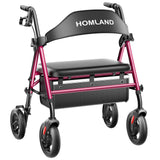
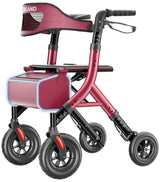
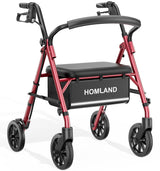
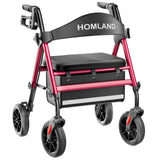
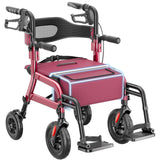
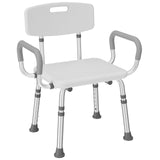
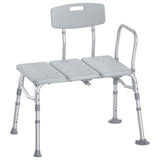
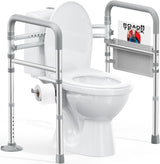
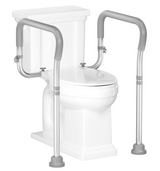
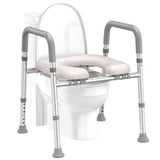
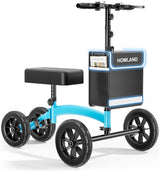
HOMLAND's rolling walker collection includes 3-wheel, 4-wheel, upright, and bariatric models — all designed with the same "home, not hospital" approach that guides every HOMLAND product. There's also a standard walker collection for those who prefer a more traditional frame. If you're recovering from a lower-leg injury and need to keep weight completely off one foot, a knee scooter may be the better short-term solution. And for bathroom safety — one of the highest-risk areas for falls at home — consider pairing your mobility aid with a shower chair or toilet safety rail for whole-home confidence.
Your Quick Buying Checklist
Before you add a cane to your cart, run through this quick checklist to make sure you've covered the important bases:
- ✅ Type: Single-tip for minor balance needs; quad-tip for more significant instability; folding for portability; offset for all-day comfort
- ✅ Handle: Derby or ergonomic offset for arthritis or daily use; round for occasional or aesthetic preference; secondary handle if sitting/standing is difficult
- ✅ Material: Aluminum if you need adjustability or a quad/folding style; wood if aesthetics are the priority
- ✅ Height: Measured wrist-crease to floor, with your regular shoes on; elbow bent 15–20 degrees when holding
- ✅ Weight capacity: Confirmed to meet or exceed your body weight
- ✅ FSA/HSA eligibility: Canes are typically FSA/HSA eligible — check whether your chosen product qualifies to make the most of your benefit
- ✅ Warranty: Look for products backed by a manufacturer's warranty for purchase peace of mind
Frequently Asked Questions
Which hand should I hold my cane in?
Hold the cane in the hand opposite your weaker or injured leg. If your right leg is the affected one, the cane goes in your left hand. This mirrors the natural mechanics of walking and provides the most effective support. Holding the cane on the injured side concentrates load on your weakest point rather than distributing it, which defeats the purpose.
How do I know if my cane is the right height?
Stand naturally in your usual shoes with the cane beside you. The handle should be level with the crease of your wrist. When you hold it, your elbow should have a relaxed, slight bend — around 15 to 20 degrees. If your arm is nearly straight, the cane is too short. If you're bending your elbow significantly, it's too tall. Either scenario reduces the support the cane can provide and adds strain to your shoulder and back.
How often should I replace the rubber tip?
Check the rubber tip every few months, or any time you notice the cane slipping or rocking on hard floors. A worn tip — one where the tread has gone smooth or the rubber is cracked — should be replaced promptly. Replacement tips are inexpensive and widely available; measuring the shaft diameter (usually 3/4" or 1") is all you need to find the right size.
Is a cane FSA or HSA eligible?
In most cases, yes — walking canes are considered a qualified medical expense and are eligible for purchase using FSA or HSA funds. This makes them a smart way to put pre-tax health benefit dollars to work on equipment that genuinely improves your daily quality of life. Check the specific product listing or your plan documentation to confirm eligibility for the item you're purchasing.
Should I see a physical therapist before choosing a cane?
It's not required, but it can be genuinely helpful — especially if you're recovering from surgery, a stroke, or a significant fall. Physical therapists can assess which type and height of cane is best suited to your specific gait and balance profile, and they can teach you proper technique so you get the maximum benefit from day one. The American Physical Therapy Association notes that improper fit is one of the most common contributors to walking aid-related falls, so a brief professional assessment is a worthwhile investment.
The Right Cane Changes More Than Your Balance
A well-chosen walking cane is about far more than not falling. It's about walking to the mailbox without hesitation. Navigating a family dinner without mapping out every chair within reach. Going to bed at night without dreading the trip to the bathroom. These everyday moments add up — and the right mobility support makes all of them feel easier and safer.
Whether you're shopping for yourself or helping someone you love find more confidence at home, the key is matching the right type, handle, height, and capacity to your specific situation. Take the two minutes to measure properly. Check the weight rating. And if you're unsure whether a cane is the right step or whether a walker might serve you better, reach out to the HOMLAND team — they're here to help you find the right fit.
All HOMLAND mobility products are authorized by licensed Doctors of Physical Therapy, FSA/HSA eligible, and backed by a 1-year manufacturer warranty plus a 1-year extended warranty. With US-based local warehouse fulfillment, fast delivery means you're not waiting weeks to feel more stable at home. Explore the full range of HOMLAND home mobility products and find what works for your life — because home should always feel like home.
Ready to Move Through Your Day with More Confidence?
Explore HOMLAND's full range of home mobility solutions — from walking aids to bathroom safety — all designed to keep you independent, comfortable, and safe at home. Have a question about which product is right for you? Our team is ready to help.
Contact Us Today